Prayers Answered

Hello from Costa on ulica Karmelicka,

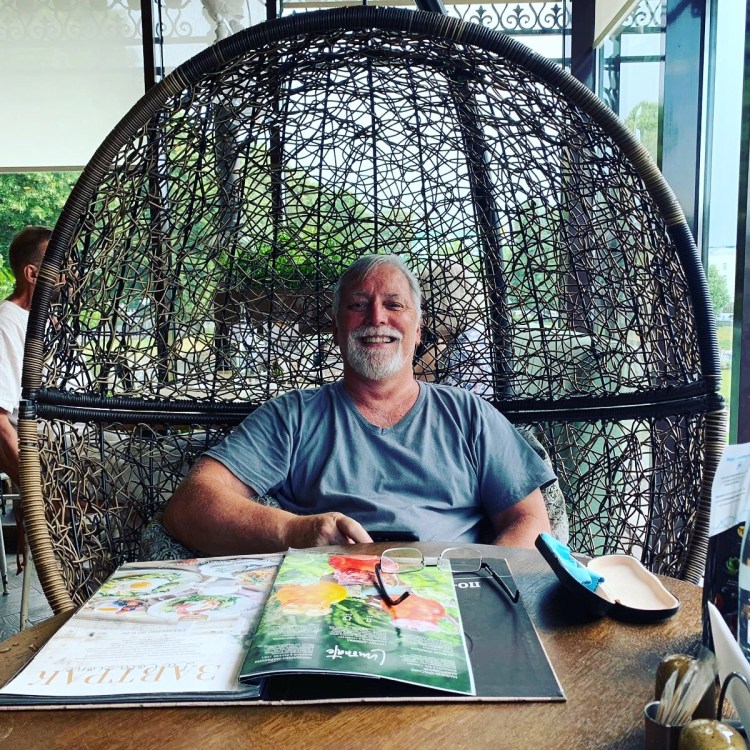
It is always interesting to return to somewhere you have been before. The change in perception that occurs from familiarity is a difficult thing to quantify, and if the return is more than once, understanding the changes that occur go beyond mere perception to emotion. I think of how Riverside, the blue collar suburb of sorts where I grew up in Sioux City was my home for the great majority of my childhood. Yet, in a sort of reverse of what I am alluding to, it has been so long since I spent time there that some of the memories of places that no longer physically exist (like my grade school). How much of our emotional, spiritual attachment is based on the physical experience? How is it that memory is evoked by movement, sight, repetition? These are things I lay awake sometimes and ponder. I am sitting in a coffee shop I came to my first time in Kraków. However, a barista from my summer work here who worked at a Costa I had immigrated to is now at my original Costa hang out. Each Costa carries memories with it. I was unaware that Mariusz had transferred, but he saw my Facebook post and let me know. It was nice to connect a familiar face from my extended summer to the Costa of the past 5 years.

More importantly is how my geographic awareness of Kraków is so much more acute than in my previous visits. It is interesting to me how summer for me leaves more lasting impressions for me. Is it because of language? Is it because I walked so extensively and spent so much more time taking in things. I also think the light of the summer and the longer days also affect my ability to assimilate things. I think part of it is that I am happier and more energetic.

However, as I walked to Dom Profesorski this morning, the memories of students from each year I have been here came teeming back. To see some of my own students on this year’s trip as well as long-time colleagues here for the first time was quite a boost to my morning. I am only here for not quite a week, but even the few days of refacing my summer steps in the winter season has come something to assimilate this Krakówian (a sad attempt to connect Polish with an English adjectival ending) experience even more. As I sit in Costa and work on my last blog of 2018, I realize things still do not slow down.

Yet, I cannot remove the poignant memories of my first visit to Kraków and Poland. I had left Wisconsin and said an incredibly emotional final goodbye to an amazing woman who had become my mother and so much more. I was coming to the ancestral country of her husband, a person I had not met. I remember Lydia’s Christmas Eve Polish conversation with the spirits in them corner of her room. I had asked her if George (Zdzislaw) was there. She nodded in the affirmative. I then asked her if she was ready to go home. She shook her head decidedly and sternly in the negative. She knew what she wanted to the very end.

Four years ago I was wandering across center city Kraków for the first time being shown around by Robert, Maria’s father. Ironic, how a student connection created what had become an integral part of my life. It was a day much like today, a bit grey an while chilly and damp, not anywhere really cold. We went into the church where Saint Pope John Paul II had served as the Archbishop of Kraków. I lit a votive candle and prayed. I actually took the time to reach out to George specifically in the prayer. I asked him to convince her it was time to come home. It was the first time in my life I wanted to let someone I do loved go. It was the first time in my life I remember reaching out to someone I believed to be beyond the bonds of this life to request their intervention into the world I knew. In spite of my theological foundation, I wondered the how, but believed more in the reality of its possibility. As I raised my petition, i remember my eyes filling with tears, but also feeling a sense of calm, believing it was time to let her go. Again, for the first time in a very long time, I prayed for what was best for the other. I remember telling Robert what I had done as we left the confines of this holy space. The remainder of my day was preparing for a New Year’s Eve that would be spent with the Paras.

What happened in the next 24 hours or so still amazes me. I would go to sleep on the first of January, ready to imagine a new year. I had not been long when my cell rang. It was Nathan telling me that Lydia had passed away. It was still January 1st in Wisconsin. To this day, and particularly on this same day of the year, four years later, I am as convinced as ever that my being in Poland, George’s ancestral county an in the parish of the former Archbishop had consequences for the simple, yet fervent, prayer of a dutiful, surrogate son. This fall my Bible as Literature students asked me how I understood the workings of faith. When I am asked such things in that class, my default is to remind them it is not a religion class, but rather a literature class. Yet much like my confessions professor in seminary as we pushed him on his opinion about something about the Lord’s Prayer, I allowed for an answer. I said both simply and humbly that faith for me is best understood through the single verse out of Hebrews. “Now faith is the assurance of things hoped for, the conviction of things not seen” (Hebrews 11:1). This has been my foundational verse for most of my life, and even more so as a seminary student, pastor, and beyond. To pray requires faith. To pray requires both a sense of assurance and of hope. To pray to that unseen requires a strong conviction (or maybe even a simple one) that your words actually are heard and make a difference. Then there is a belief that what happened in the next 24 hours were a consequence of the said prayer. The very fact that I am recounting it four years later illustrates that somehow I have the assurance of this thing hoped for.

Today as I sit in Costa, I cannot help but remember the various student groups who have been here in this amazing city on the last week of December into January. My first year, there were three students in particular. Joe had been a student in my Foundations class and would go on to graduate school, not just anywhere, but in Israel. I am quite sure that what he learned from Dr. Annamaria Orla-Bukowska had a profound influence on what we would study. The next sure I was fortunate to come along in a different way, as part of the faculty-led program. Again, some of the most amazing students were on the trip. I think of a veteran military student who would come back in Krakow the following summer to study Polish and work on his dual citizenship. I think of another student with aspirations to go to work in the Peace Corps and was accepted until his health created a difficulty. I think of a young woman who was both an outstanding student and absorbed every cultural event or exhibition we visited like a insatiable sponge. There were students the next year who are now here for the third time leading others, that is how much Krakow has influenced them. Last year, we were blessed to have the president of the Alumni Association for the university come and accompany us on part of the trip. During those years, I was fortunate enough to visit places like Budapest, Lviv, and Prague. Twice I have gone to Austria, and Lydia’s beloved city of Wein, but I need to go back on my own and spend some time. As I returned for this trip, I have met the group at their accommodations on ulica Garbarska, but I am not traveling with them. In fact, I am traveling on my own  with a most dear person and on Thursday will be flying to Italy to visit my great friends, Marco and Belinda and their two amazing children. It will be the first time I have been in Italy since 1981. After a week there, I will be going to Spain and visiting my friend, Elena, a former student at MTU, and one who visited me on my second trip here to Krakow. This visit is a promise kept. I think the important part of all of this is how the amazing connections and people I have met have changed my life and made is such a blessed one.

As I finish this blog, I am reminded of that first journey. It is now still the first of January in the States, but it is early on the morning of the 2nd here in Krakow. I walk up this morning about 2:00 a.m. It was exactly the time Lydia passed on four years ago. I did not realize it at the time, but the time corresponded to my answered prayer. It is interesting how I believe those spirits and powers outside out lives work both in ways too subtle for us to realize and sometimes in ways to obvious to miss. I know that the people who I met from Comforts of Home, Lydia’s abode for the final almost four years of her life, still influence me. Carissa, the administrator who treated Lydia as her own grandparent if you will, Angie, Breanne, Leah, Leighann, Marissa, Mindy or Stacey, and others whose names escape me at 6:00 a.m., will always be dear to me for the care you provided her. It is now the beginning of yet another year. I wonder what prayers are being offered even today as those individuals in the twilight of their lives are struggling with the most simple of tasks. I wonder about those amazing caregivers who give more of themselves than even they realize and for so little monetary compensation. I wonder about even my own existence when there are sometimes more maladies than I could have ever imagined to manage for an aging, but still small-child at heart, traveling professor who seldom grows old of learning something new. What are the prayers I will offer as I finish this blog. I think my prayer is simple and yet profoundly difficult.

As I read the news in America from here in Central Europe, I pray that our elected leaders can learn to listen to those who have elected them (and I realize the cacophony of voices is difficult and painful to hear for all the disharmonious sound) and act for the mutual benefit of the country that has elected them. I pray that a President who was duly (and embarrassingly at times) elected might realize that the tweeting that he does has consequence, whether it be some random thought or his real intention, and when he puts things in public, it is done as the President. I pray that we can see a global and civilization that needs care and mutual respect for all people, that the desire to have freedom and the ability to thrive is a human desire not a gift that belongs to only certain people on the winning side of a wall. As I travel and see students from Bloomsburg once again, I hope they will see the profound goodness of the places they visit and remember the profound evil that we as humans can unleash given the right circumstance (their visit to Auschwitz this weekend). It is all here in this beautiful country called Poland. I pray for all my friends and even those outside that realm that they might be blessed with health, with a sense of happiness or contentment, and that the things they do will be a blessing to those around them.

Welcome to a new year and bless you all. Thank you for reading.

Dr. Martin

Walking and Wondering

Good early (sort of) evening

My intentions of writing more this month have been hijacked by the end of a semester, managing my health yet again (I know it has daily requirements, but it has created yet another dilemma), and attempting to get ready for some holiday things, which have all gone by the wayside as the health issues have taken center stage yet again.  As I write this I am in my at home office upstairs between 5:00 and 6:00 a.m. trying to get some things accomplished before the day gets hijacked by other requirements. IF I am to be completely candid, parts of what followed began last summer, and I will try to work them into this entry, but then again, doing so might reveal how randomly my brain seems to work, and that might not be the best thing into which I should offer insight being as some of my followers here are my students.  One of the times I was working on this blog was while students were filling out evaluations; I actually do not worry about evaluations and there is so much that can be learned by them. I also realize the difficulty in the use of such instruments on a variety of levels, but there is no simple way to have students respond to an opportunity to give some sort of response when it is one of the few times they have power (and they really do). They believe all too often they are the customer in what has become our business-based educational system. It is not by accident that we have an Education Secretary, one who is immersed in the Republican Party, charter schools and voucher programs, and has made her fortune with her husband through Amway, perhaps the most Ponzi-ed of all companies in American history. I do know people in Michigan who have directly benefited from the charter schools she has specifically implemented, so I need to also be truthful in that disclosure. However, the idea that students are customers-first is fundamentally flawed for me (another blog posting).

As is the case for most of us, the end of the year creates a time where we often reflect, ponder or imagine what might be in the future. There is so much I have pondered as I have considered the year that is almost over. I began the year in Europe and I will end it there. Yet that is not anything particularly new; it is, I realize, how I have begun every year for the last four, and a few earlier in my life also. On this day four years ago, I began a journey of a different sort. It was the day when I began a final journey with Lydia. It was the day she crawled into bed and really did not get up or eat again. It was the day when I began a watch that I could not finish. Thank you even today to Nathan Langton and his family for doing that. I think about the life you lived and how your life of travel and destiny took you places that you perhaps never imagined. Traveling has become my second education, and integral to my life. I know that some of you will say that seems to be a normal process for me, but it has not always been so. I grew up not knowing much outside my own little town of Sioux City, Iowa. Travel for me was across town and a big trip might be 50 miles away to Beresford, South Dakota. Seldom did I get beyond the tristate area of Sioux City, South Sioux City, NE or North Sioux City, SD, one could be driven to in 10 minutes and one could be walked to in 10 minutes. My first plane ride was to MCRD, San Diego.

One of the times I attempted to create this post, I had just returned from a leisurely three-plus mile walk around the Mayberry of the Eastern Shore. Cape Charles, VA, also known as Cape Chuck or simply by its zip code of 23310, is a sleepy, but waking-from-its-slumber town that offers a place with beautiful scenery, quaint little businesses and a changing landscape that seems to illustrate that its ability to stay off the radar day has perhaps come to an end. Through the graciousness of a colleague and another mutual friend, I have had the opportunity to visit here four times over the last 2+ years. Even in that time the development had picked up and businesses have sprouted up in once abandoned store fronts from a post-WWII era. Once a harbor on the Chesapeake, it no longer had the influx of people and commerce and got a bit forgotten. Somehow the rediscovery has changed both the view and the visitors. I think that is how life works. We discover ourselves and we are discovered by others, sometimes in spite of ourselves. I am still, at times, trying to figure out who I am and what I want. What I believe more and more is we are a somewhat dichotomous, contradictory, paradox (how is that for redundancy, but done intentionally). We both want and push away; we both yearn for and reject the very thing we desire. I think this is the thing I have most realized about myself. Is my life little more than a phase, traveling, both literally and figuratively, from one thing to the next, seldom cognizant of where we will end up? Certainly we can breakdown our lives into phases or segments. Surely we can imagine those what if?moments where a single decision could have moved us in a very different direction than what has occurred. My first philosophy professor is probably smiling from wherever he is as I wonder how much determinism is actually who we are.

This morning up early, I have been working on multiple things as I write this: a winter term class, a Facebook post, course content, managing recommendations. There are those who believe we are on break now so there is nothing to do. I have done some relaxing (mostly sleeping and recuperating) this past week, and there will be some more, but there are so many things I still want to accomplish and explore. I think that has always been my difficulty. It is more than merely a cliché phrase of “too much to do and too little time.” It is not an imperative that is imposed upon me, it is me wanting to do what Robin Williams noted for his students in Dead Poets Society . . . it is about believing I have something to contribute. I am not always sure what that is, but I am passionate about figuring it out. This past week I received in the mail my offering to the Facebook empire through the form of a picture album of the time I have been on this social media country. I had inscribed on the first page: “If I make the lives of others more meaningful, I make my own life more meaningful.” It is something I have said for quite sometime, and I can say without hesitation, it is my life. There are times I have lost sight of that. There are times when I have helped others expecting something back. That is a problem and something I have noted in these posts, before. Help with expectation is not really help, it is self-serving. It is something I am trying to change in myself. It is also about boundaries and there again is another post. We are certainly the products of our past. The baggage we carry from all sorts of ways can keep us from reaching or even attempting to reach our potential. More significantly, it can keep us from imagining such potential.

I see this on a daily basis when students are either not willing or incapable of seeing beyond the immediate. When I hear something like “but I tried really hard,” and their work does not demonstrate an end product that even reaches mediocre. Some might question my standards and expectations, and that is fair, but I expect little less than the best they can do. Why? It is all about what my previous provost noted is potential. She noted that all people have potential, and on that I will agree. It is encouraging, motivating, requiring them to use that potential that I believe education is about. Again all three of those adjectives are necessary if potential is to be even within the realm of becoming reality. I think this is what John Keating (Robin William’s character) was trying to get his students to realize as he asked them to gather round. There is an irony when he asks what verse will they contribute a Ethan Hawke was in his first real starring role. Robert Sean Leonard, who plays the tragic character of Neil Perry (and is almost 50, what the heck??), has done quite amazing things from that first acting gig. Gale Hansen, who played Charlie Dalton (Nuwanda), has gone on to be a film executive. I took the time to look up some of the others as it was known to some that Robin Williams wanted to work with beginning actors in this amazing film. I have read that there was a grave concern about the movie even being accepted and I listened to a funny quip when the screenwriter was told by someone the title was made up of three terrible words. The significant part of the movie for me has always been Keating’s push to make the students think for themselves. Something outside the norm in the crackerjack 50s where everything was to be predictable and measured. I am not sure we are that different now. While there are certainly a lot of things that are open for consideration that were beyond the imagination in 1959, there are still too many cookie-cutter ideas that control who we are and what we think. Go to college! Study the right things! Do what is successful and will make you money! As I have asserted in other posts, there is so much in our system that screams out . . . just do what you know works. Do not think for yourself, merely jump through the educational hoops and it will all work. I know students who do remarkably well in college and they hate their lives. They are studying something because their parents told them this is what they will do if they want their parents to foot the bill for their education.

As someone who straddles the line of a liberal arts background, and with apologies to my dear colleges in Mathematics or Sciences, and as someone who wants to puke every time I hear STEM at the expense of the liberal arts. I teach writing for the real world, a world in desperate need of qualified individuals from every background who are necessary if we are to have a cooperative and thoughtful world. I teach students how to become people who will use their communicative skills in vocations across the spectrum. The importance and use of critical thinking and thorough analysis is not the property of the STEM academics. It is a liberal arts foundational principle. Sorry! I guess my rant side came out for a moment. I was blessed to teach a Bible as Literature course this fall and I had a terrific group of students. More importantly, a number of them spoke about how much they learned in the class and how they will take what they learned about both study and critical thought with them long after the course. That is what I hope happens in all of my classes. I tell them regularly, I do not want them to memorize things; I want them to synthesize things. I want them to think and analyze things. I want them to question, albeit respectfully, but I do expect them to use their brains, their voices, and their determination to become something more than they were when they came into my class. As I write this, I just heard that General James Mattis has submitted his resignation as the Secretary of Defense. This four-star Marine General certainly has a widely considered history as a Marine officer, but he demonstrated today that he is principled. He is considered an intellectual combat officer and one who is both thoughtful and eager to engage and defeat enemy. It will be interesting to see what follows in terms of replacement and the condition of the Pentagon. The reason I raise this issue is we live more and more in a world that seems to have lost its direction, either in terms of a moral compass or in sense of any consistency.

All of this has me walking, wondering, and weighing what might happen next. I am concerned because there is little long-term consideration of the consequences. I speak regularly about the importance of understanding what it means to claim something, to be actively involved in it, to determine some of the possible outcomes, but also to understand what others might do in response. This is what I study most. How does what we do affect the audience for whom it is intended? Those of my student who might read this are probably rolling their collective eyes. As you consider this over next few weeks, I hope you have a blessed and memorable holiday season.

With that I leave you this scene from Dead Poets . . . enjoy.

Thanks as always for reading,

Dr. Martin

More than a Dirt Nap

Hello from my office on a Friday afternoon,

Between meetings and a couple of other things (including grading), I am considering some things in light of my Bible as Literature course and wanted to write. This past week, my Bible as Literature student have asked interesting and thoughtful questions about life (and beyond), and while it is not a religion class, when you are using the Bible as one of the central texts of the class, it is not surprising they might ponder and ask things that demonstrate they are trying to figure out questions of context, authority, and authorship and how those concerns might push them to consider what they have heard (either within their church background or without a specific church background), be taught, or as part of their own maturing and growing process. I think I have been pondering a bunch of things in response to their inquiries.

Certainly, an element of that is understanding one’s mortality. If my adoptive mother were alive, she would be 98 years old tomorrow (she lived to the age of 68). In terms of my own life, it is 32 years tomorrow that I had my first major abdominal surgery, while I was an intern pastor in Big Lake, MN, at the hospital in Coon Rapids, MN. I still remember how terrible the prep was for all of that and how I learned quite positively that I was allergic to erythromycin. Most assuredly, other things have happened since then to remind me of my own mortality, and that is more a case of reality that I would have ever imagined. Today as I searched another situation, I found that another person for whom I have an unparalleled appreciation and to whom I owe so much for their care was my cousin, Joanne Wiggs. I found out that she has passed away and joined her husband Jim, who had passed only 9 months before. They were both so good to me. I am sad more than some know that so much had changed in a situation that I was not involved in either service. They were one of the last few people I visited before leaving the Midwest to come back to Pennsylvania. They had grace and charm (both of them) in ways few people ever have, and I imagine ever will. It gets back to some of what I addressed in my last blog about civility and decorum. I remember my father thinking that Joanne was the most consummate hostess ever, and he was correct. I am sorry they are both gone. The picture at the beginning of the post is my picture of them about 9 1/2 years ago.

That was a slight digression, but an important one. It is sad to lose people. This morning what I woke up thinking about was the idea of religion and dying. It was not a morbid idea for me, but rather one of systematics. I do have students in my BAL course who claim to not believe in God, are unsure there is a higher power, and imagine nothing occurring when one passes except we bury them and continue on with our life. Hence my rather stark title. What actually happens when we die? Do we end up in some sort of purgatorial, soul-keeping holding cell until a second coming? Do we die and immediately we are away that there is something beyond, be it heaven (or some kind of eternal bliss) or hell (for me, the condition where there is an absence of anything good)? Certainly the fact that a number of students take a Bible as Literature course can be traced to a number of reasons (and some of it is getting credits to graduate), but I think for many it is their first foray into making whatever faith they come to college with their own versus it being merely what their parents tell them to believe or model for them. I think what I realized this morning in my early morning puzzling was a sort of if there is no real God and there is nothing beyond our demise, then it really is a dirt name, and nothing else need be considered. One of the students working on their paper stopped by yesterday and asked me how teaching the Bible as Literature affected my own personal faith. This is another thing I have deliberated upon a number of times. However, I think for me that is one of the amazing things about faith. From where does it come (which I, of course, have some specific thoughts ~the power of baptism), but assuredly, there are those who argue that it comes from our own human frailty. It was interesting to listen to one of my students from another class address some of that very thing this past week. Because I no longer wear a clergy shirt, and formerly being a pastor is not something I generally address, when students find out that is part of my background, I get a wide variety of questions.

Yet as I have noted, teaching the Bible as Literature class might be the thing that most affects my own piety as well as the practice of that. Faith is best described for me in Hebrews 11:1. I said this when I was in seminary; I stated it as a pastor, and now as the professor, it has not changed. I think back to when I was  a Sophomore in college and one of the freshmen students told me they could prove that God exists. They thought they would have an ally in this bit older pre-seminary student. They were not sure what to respond when I told them they were full of S____T and that I did not believe them, promptly followed by challenging them to do so. There is little one can say, calculate or demonstrate that proves God with any finality. It simply does not work. However, that sort of logic also works the other way, there is little that can be calculated or reasoned that proves there cannot or is not a God. In addition, I will go as far to say that much of the damage done to faithful people or their faithful attempts to be faithful are done by well-meaning (and sometimes less than well-meaning) Christians. I call them evangelical bulldozers. They think they can rollover or flatten any dissension about one questioning how God works. Their arrogance frustrates me (my rhetorically correct response to them). Posolutely, throughout Christian history, the role of the church by its arrogance, its abuse of power, and its dissemination of doctrine that instills fear more than most anything else, has created more questions than it has perhaps answered.

This semester I focused on the issue of contextuality in terms of the Bible being written by specific people at a particular point in history, noting that all writing is affected by the culture in which it is created. I tried to help my students see some of the things they merely accept without question because it is in the Bible and why that can be problematic for them. I think the response of a student this semester to the temptation story in Genesis 3 will be a life-long memory. Suffice it to say when I asked how it was Eve spoke “snake” or the snake spoke “human,” my student was a bit perplexed. She placed her head into her hands and shook her head overwhelmed by the indubitably unexpected consideration my question created for her. My comment to all my students is the same, but in this BAL course, the statement is a bit more profound. I tell them regularly that God gave them a brain to do more than hold their ears apart, and furthermore, they should use it. I wonder in my own piety which God would I like to meet? What I mean by such a statement is that I know the Bible demonstrates (or figuratively illustrates) both a powerful and complex God. What are those specific moments when we would hope to have our Moses-type encounter with God? Where is God at those moments? Who is the God we would hope to meet? I think for the most part, I would like to meet God and speak with him at those times when most of what I see does not make sense. I think I would like to meet (and yes, arrogantly ask) God when I am those times where things seem the most unfair. Those are the times when I question God’s power or ability to intervene. Those are the times that the consequence of our supposed sinfulness most vexes me. I wish our selfish arrogance did not have so many consequences.

There is much more to say about all of this, but as we head this Sunday into the liturgical season of Advent, the paraments (the colored cloth in the chancel area) will be blue. Blue is a color of both comfort and hope. It is a season where the haunting music that foretells the Christmas story reminds us of what is coming. While I am not a proponent of Christmas in the stores at Halloween or before, after Thanksgiving the Advent season is actually one of my favorite times. I think that was something that started earlier in my life, but it was something that really was instilled in me when I traveled around Germany during the advent season in 1985. There is something about organ music and chorale music that will always life my spirit in ways few things can. Awake, Awake for Night is Flying, O Come, O Come Emmanuel, Lo How a Rose E’er Blooming, Come Thou Long Expected Jesus, Comfort, Comfort Ye My People are some of the things that come to mind. I think there is something haunting, and yet the melancholy of the season also has an undertone of hope. That returns me to my cousin, Joanne and her husband, Jim. The two of them created an amazing marriage and the love they had for each other was something all of us can only hope to find. They were married for 62 years and only apart for 9 months after his passing. The unquestionable affection and love they had was never someone could not see or feel. The way in which they made you welcome in their home was encompassing. Their home on Summit Street was more of a home to me through the years than my own. They were also people of immense and prodigious faith. They attended mass every morning and I learned much about my own faith watching them practice theirs. . . . this little exercise had me searching cemeteries back in Iowa. I remember going to Graceland Park and Floyd cemeteries before every Memorial Day growing up to clean and do yard work on the graves of the family, my father’s in Graceland and my mothers in Floyd, which for those not from my hometown is named after the only person to die on the Lewis and Clark Expedition, and he is buried above the Missouri River a bit south of my hometown. So indeed, they are all in the dirt, some in caskets and vaults and some cremated. Is there a purgatory type of thing happening there on the Morningside portion of Sioux City and what was called the South Bottoms where Floyd Cemetery is? Is there something more? Is it merely a dirt resting place and there is nothing more? There are times I struggle yet to understand how it all works and what it all means, but as I enter the season of Advent and I remember the birthday of a mother tomorrow and an older brother on Tuesday, I find that for my own piety, I believe there must be something more. It is more than ashes to ashes and dust to dust. Indeed, as I once intoned, “Almighty God, source of all mercy and giver of comfort: Deal graciously, we pray , with those who mourn, that, casting all their sorrow on you, they may know the consolation of your love . . . ” (Occasional Services Book). With that I offer the following in this season of Advent. I hope you might find peace and comfort in its music.

Thank you always for reading.

Dr. Martin

Living on Borrowed Time

Hello on a mid-to- late Saturday evening or night,

Today time was spent helping one of my surrogate children get a new puppy. Not surprisingly, it is the same surrogate that brought a kitten into the house a few summers ago. So in continual rain, the drive was made from the acre to Elmira, New York, a little over two hours, to pick up a little black cocker spaniel puppy. My first dog at my grandmother’s was a black cocker spaniel named Penny. Some of the earliest pictures I remember in my life were feeding that dog. I also remember that she was incredibly sweet and mild mannered.

The rain and early darkness made for a little stress on the drive and on the way home this little fluff ball both pooped all over Ashley; fortunately, I had thought to bring a couple towels. We were more than 20 minutes back on our little over 2 hour ride back when that traumatic event occurred. The next exit led to cleanup and a towel going over a railing into a ditch. About 40 minutes later the food eaten before we picked her up was also up and all over Ashely. This is not appreciated, and I pulled over to a gas station and bought tissues to manage the latest gastronomic mishap. However, puppy feel asleep after that and with the exception of fog, rain, and occasional high-beams, the remainder of the trip was rather uneventful. On the other hand, I struggled a bit with my own gastrointestinal issues, but nothing showers and washing machines could not manage. The second issue for about the last 36 hours has been the sugar level, but I upped my Metformin so hopefully that will assist. Three straight reading above 200 does not make me happy.

More importantly, I want to reflect on the report released by more than 10 government agencies about the issue of climate change. In spite of its release on the day after Thanksgiving, which has angered some people, I would like to believe it has, and hopefully will, cause a variety of people from every walk of life a sense of pause. Certainly, the terms of global warming, climate change, and such are ideographic in nature. I also know that some of you will ask what I mean by this. Ideographic terms are terms or phrases that have been tossed around, for better or worse, and now have a host of things, again both positive and negative, associated with them that when employed bring the entire gamut of thoughts, understandings, and most importantly, emotions with them. This is the most straightforward way I can explain such, but if you want to consider this more deeply, look up Michael McGee, one of the foremost scholars in this area. John Lucaites and Michelle Louise Condit are two more profound scholars in this area.

We are consumers and we want to believe our consumption is without consequence. It does not matter what it is, we want it now; we want convenience and we want to live our lives with the ability to be spontaneous . . . and we would rather not be bothered with any such requirement to consider the cost, at least generally not beyond the present amount that is from our wallets or purses, our checkbooks or our credit cards. The long-term is a different consideration and we generally prefer to not be bothered with the hypothetical as we want to call it. I am not sure we can call it hypothetical any longer. I am. Not sure how long we have honestly been beyond the hypothetical, but I am quite sure it is longer than most of us wish to admit. As I live far enough away from the coast, I do not think I have a great deal to worry about, but then I did not think where I lived on a hill high above the Susquehanna River that I would ever have to worry about water in my basement, but I have learned, in spite of the French drain, and the swale in my yard, the significant hill that goes up long beyond my back yard cannot manage all the water the clay-based soil collects when we have more than 13 inches of rain in a few days. Or then after saturated soils, anymore water will just roll down the hill, and that is where I am. What I know is the water table seems to be higher than one might have thought. In addition, this is not the first time we have had such rain in the last decade. I did not live here during the previous down pour and saturation, but I did live in Bloomsburg. From a distance, (and the distance being closer than I might realize) I have witnessed two devastating floods in the Baltimore area where people have lost their lives. What has happened in California in the last decade is unprecedented, and, again, I have know people who live in those areas. In the latest and most tragic fire in terms of loss of life, I have colleagues who teach at the University of California-Chico as well as a very special person I was blessed to meet the summer I was in the wineries in the Placerville area. I was in the Battery Park area of NYC following SuperStorm Sandy, as it was called. I know people in the Dominican Republic who have had to worry about the hurricanes that have been stronger and more frequent in the past few years. If you think carefully about the list of events here, there is really no place in the country that has not felt some greater degree of Mother Nature’s wrath in the not-so-distant past.

While I am aware that everyone on either side of the aisle has something that state in this argument or discussion, there seems to be a bit of a Pascalian wager at work here. Again, if you are not sure what I am positing here, it is worth looking up. Pascal was a 17th century French mathematician (Oh those mathematicians, Dr. Kahn!!). What I am implying here is that what if the newest report is the most dire of consequences? Does that mean there are no consequences for what we do? Daily life should tell us that sort of belief process is seriously flawed. What are the consequences? How can we determine without doubt what might happen. Certainly our ability to extrapolate, which is what we do to some degree with our daily weather reports should provide us some degree of understanding, and by extension concern. I am beyond frustration with a leader who is content with the response, “maybe he did; maybe he didn’t.” May we are responsible; maybe not. What sort of imbecile is content to kick every important can down the road for the next person to manage. This sort of logic (or lack thereof) is akin to if I do not get caught then I am not wrong. Perhaps we need to send a really large Shop Vac to Washington, D.C., and much like raking the forest or having a King Kong sized Roomba, we need to empty out the White House and suck up all the dust and trash that seems to be accumulating. I know that is strong language, and to some extent, I apologize, but the logical process coming out the 1600 Pennsylvania Avenue will have consequences that I believe are beyond catastrophic. I remember Lydia saying regularly, “Michael, it will be a catastrophe.” Ironically, she said this most about the weather. I wonder what she would say about some of this. It is interesting that she was a strong, economic conservative when it came to monetary policy, and she was proud of her Republican registration. On the other hand, she believed strongly in the protection of the environment and was not afraid to speak out strongly about that. It makes me smile when I think about putting the “I voted Obama” sticker on her back in 2008, without her knowledge. She chased me around the yard. But I digress, The Art of the Deal seems to be anything but. I have read the book, but I found it boastful and full of hyperbole (imagine that). I have done some follow up concerning the significance of the book and what I find interesting is the co-author, which is really the author by most accounts, has given some of the royalties he has received to the National Immigration Law Center. How ironic, again!

The point is quite simple: whether or not you buy into all the conversation about climate change, when all the significant countries of the world, save one, have signed on the Paris Climate Agreement, when the great majority of science demonstrates there is a change in temperature, ocean levels, the depletion of the Arctic ice cap, and other measurable issues; when carbon emissions have been shown to be a problem in terms of greenhouse gases, why would it not be reasonable to respond in a manner that would create at the very least a slowdown of this incredibly serious problem? This is what has been on the radar of people since the 1960s. Certainly there has been fits and starts, but the Paris Climate agreement, after America bailed on the Kyoto Protocol, was something certainly be an important part of. Certainly, I am sure that not every part of it is palatable, but we have a responsibility as one of the most economically prosperous and largest consumers of energy on the planet to do something of substance. To pull out of that agreement as one of the most powerful and industrialized countries is beyond embarrassing, it is unconscionable. This is where I find what Congress has done also beyond comprehension. The Republican Party has fallen lockstep behind this sort of ridiculousness. Again, before you think I buy into everything, I do not, but to throw the proverbial baby out with the bathwater does not usually work. One only need to look to the French Revolution, as I noted in a recent blog. I believe we are in for our own Reign of Terror with what is happening in the executive branch of our government.

Again, I do not say these things haphazardly or lightly. In fact, it pains me to say this, but let me offer some other points that I believe take the very fabric of who we are and throw them into question. First, for the President to try to politicize the military is fundamentally against what our military has been back to the revolution. The military is for national protection; it should not be employed for the President to use to merely carry out his political agenda. That is what dictators do. I know some will question that, and probably with validity, but to try to speak with the military in a phone call and use them for political purposes in that conversation is wrong. I believe the tear gas that was used over the weekend on people seeking asylum is also beyond what I ever hoped I would see our government do. To allow military force at the border is a sort of martial law, in my opinion that is both dangerous and unnecessary. It does, however, fall in line with question both the Justice Department or the Intelligence Agencies when they do not give someone the information they want. It is in line when you call out the judiciary and get a response of the SCOTUS Chief Justice that supports the federal judiciary. Again, the reason I raise these issues is there is a pattern that seems to be occurring that fundamentally undermines how our democracy works. Once you lose democratic values and principles, what do you have? Franklin Roosevelt, the President elected four times, but who said that should never happen again, noted, “Democracy cannot succeed unless those who express their choice are prepared to choose wisely. The real safeguard of democracy, therefore, is education.” So many of my students note they do not really like politics or they do not know enough to vote. While I was pleased to see the percentage of 18-25 year olds voting go up by double digits this a few weeks ago, I can appreciate their opinion about not liking politics. They have good reason to not like the way we are managing our political house at this time. The lack of decorum, civility, and self-centered manner in which many of our elected leaders acted should not be appreciated. In terms of the second point, not knowing enough is not acceptable. It is our responsibility to know what is happening. This is what Roosevelt is referring to in his note about the importance of elections.

While there is certainly more I could write, but I think it is enough for the moment. What I know is I believe we are on borrowed time, and that make the time we have precious. To squander it is arrogant, selfish and stupid. To not prepare and change is to play Russian roulette with one empty chamber instead of one bullet. I do not like those odds. I will leave you with this as we head into this season of Advent, this season of preparation. I think we need to consider what it is we might want to prepare for.

Thank you as always for reading.

Michael

Understanding Giving Thanks

Hello from Fog and Flame,

It is the day before Thanksgiving and I am working on a variety of things. I have pretty well completed one of my classes, at least finishing in terms of putting up any information for the remainder of the semester, and yet, I have a number of other things to manage. In spite of the hectic pace (which I have decided somewhat stubbornly to change), the holiday in its nostalgic way, has causes my thoughts to focus a great deal about Thanksgiving and what the holiday means to me. Because of some other work I need to manage, I have been pushed to consider the issue of thanksgiving even more. As I write today, the temperature is dropping and there are more things in front of me than all the things on the proverbial Thanksgiving table, but much in the same manner, I will work through them. Some of them remind me of what it means, however, to be thankful or enveloped with a sense of gratitude. More and more, I am realizing how fortunate I am. I have always been fortunate when I think about it carefully. Even in the most difficult of moments, I have had options. Never have I been told there is nothing to be done or never have I been faced with only consequences that would create more hurt than good.

As everyone has headed off to be with family or friends for our break, I am reminded and cannot help but reminisce about the amazing Thanksgiving feasts (and they were certainly that) from when I was growing up. As I have noted in other posts, my grandmother owned a bakery and there were more breads, pies and other things that graced our table than one could even begin to imagine. The aromas of bread, pies, turkey, cranberries, and all the things you want to each, but could never hope to manage (the proverbial eyes-bigger-than-stomach ~ oh if that were still the case) met you as you opened the door. Being on a 2,500 acre farm in South Dakota, Aunt Helen had a garden of perhaps a half of acre. This meant I learned to eat and appreciate vegetables in ways most could only ponder. Swiss chard is, to this day, one of my favorite veggies. I loved Brussel sprouts, any kind of winter squash, root vegetable, and most any manner you might prepare them. Certainly the food was delectable, and to this very day, there are some dishes that I believe the Thanksgiving tradition is not met without a bountiful helping of scalloped corn (as we called it) or the long-term, slowly-cooked cranberry sauce with amazing spices. Driving to South Dakota (even though it was barely an hour away) could always be an adventure. Winter storms on the prairie are quite different than what I have experienced here in Pennsylvania. I remember whiteouts and an auto accident trying to make the way back from Hot Springs, SD to St. Paul, MN. I remember barely making it to an airport to fly to Europe in 1985. I remember a 1957 Chevy blowing a piston when I was in elementary school as we traveled to Beresford, SD. Maybe it was that state. Hmmmm? What I remember more importantly, however, was the incredible love, kindness, and gratitude my Great Aunt Helen and my Grandmother Louise always showed to each and to all of us. They were so excited to have everyone gathered around the table. They illustrated in the most profound and inclusive manner what it meant to be thankful.

This now Thanksgiving morning as I walk around my house, an old farm house that has some characteristics of my aunt’s and my grad mother’s house, I cannot help but feel their presence in this place, and that gives me both a sense of joy and yet a yearning for that time when I understood and experienced unconditional love from two of the most incredible women, with whom God ever graced this earth. Together they demonstrated an amazing tolerance for others and the way the supported and loved each other was an example for all people, but especially siblings. They went through difficult times, but the love and support they had for each other everyday of their life was beyond palpable, it was fundamental to their very being.

On this day of Thanksgiving, at least the American version of it, I have decided to remain at home, in a sort of solitary and reflective way. That was a conscious decision. So much like Scrooge in his childhood, everyone has left school and gone to somewhere to celebrate, before you feel sad for me, fear not. I am enjoying the time to merely remember and intentionally recollect that matters to me, to consider what (as well as who) we have become as people, as a nation. It is 55 years ago today as an 8 year old I watched as the rest of the country (and perhaps the world) did as we mourned a President assassinated at 46. At 8, I did not understand either how young that was or the magnitude of the tragedy our country was feeling. I remember spending hours and days in front of the television. I remember being amazed by the pomp and solemnity that characterized the casket in a Rotunda, the procession of a horse-drawn caisson, a riderless horse and a 3 year old saluting his father’s flag-draped casket. I remember watching an assassin being assassinated on live television. All of this was shortly before Thanksgiving that year. Even for an 8 year old, I knew the world had changed. I would not understand the change then and I am not sure I understand it now. However, much like 911 changed our understanding of American and the world at the turn of this century, I feel 112263 did the same. Perhaps the loss of a President was profound in a different way because many felt America had come into her own as a power and democratic force for good and this fairytale existence of helping the world and the world being a better place was shattered. Again much like 911 burst our bubble of aqua-security, we were forced to see alternative forces in the world in which we live.

I am sincerely concerned about our democracy and the forces in our world once again (and yet even though the forces, while in plain sight) are more insidious than ever. The issue is too many do not want to pay attention, content with the latest sound byte or 280 character epistle. Instead of working on our mutual humanity, the seeds of division, mistrust, and suspicion are being sown at every chance. Before you think I am pointing fingers at only one person, or one branch of government, I am not. I will certainly not absolve that person or branch, but the problem began long before 2016. For the better part of the last 25 years, since the Contract for America, which I believe was a Contract on America, the tone and conversation that has come out of Washington has been anything but civil, anything but grateful. Ironically, at least for me particularly as a current Pennsylvania resident, the braintrust (and I was this term both as oxymoronic and terribly intentional) or person responsible for this collapse in civil discourse was born in Pennsylvania, and even in our state capitol, of Harrisburg. A state that was founded on tolerance and good will seems to have birthed someone who was hell-bent on implementing the opposite. A hypocritical person, who was instrumental in pushing an impeachment for lying about sexual impropriety was simultaneously doing the same thing while his wife was in the hospital with cancer, and yet he was held up as a moral paragon. Again, I do not condone was WJC did in this way as President. I believe (and others more astute than I have written formal pieces about this) that the 50th Speaker of the House of Representatives did as much as anyone to start us down the path that has led to the election of the outsider, would-be-politician. Again, I can understand why people of all backgrounds from every corner of this country are fed up with the politics as usual. There is a significant part of me that can understand how we have elected what I believe to be the worst grand experiment the country has every started or employed. As the attacks on the judiciary, the intelligence community’s conclusions, and on anyone who seems to disagree continue, what have we become on a day when we pause to give thanks?

What I hope is happening is that people are actually listening, paying attention and questioning, on both sides of the aisle. What I hope is that people will continue to question our elected leaders and hold them accountable. That is what democracy is all about. That is why we have the opportunity to go and cast our votes every couple of years. The turn out for this immediate past election gives me something for which to be thankful. While I am not into blue or red waves, I am into the waves of democracy rolling down like righteousness as noted in the Old Testament book of Amos. I know that was not what Amos was referring to, but he was referring to justice, and the importance of justice and equality in this world is what we believed in from the outset . . . I also realize we did not do it so well, in spite of the Hallmark version many want to believe in about those first Thanksgivings. What we did have in that first couple years was Native American people reaching out to assist, protect, and support those huddled on the Mayflower because they could not stand the winter. What we had was the Native Americans teaching the Pilgrims how plant and survive . . . as noted in an article I read from the History Channel earlier today, it was, unfortunately, the only time Native Americans and we immigrants really treated each other with dignity and respect. Ironic that it was the immigrants that created the heartache and problems for those already here. Seems we believe much the same today. Ironic that we were all immigrants at one time hoping for something better, but we have lost track of what it means to hope for something better and seem to have little empathy or compassion for those who want nothing more than we did.

So . . . for what am I thankful when it seems there is so much to be concerned about? First, I am grateful that I have a job that I love. I am grateful that I have colleagues and friends who bless me with their presence in my life. I am grateful for a family that raised and supported me, even though it was not always as I thought it should be, I know I am much more fortunate than many. I am grateful that I can merely write this blog and question the path I believe we are taking as a country and it is okay to do so. I am grateful that in spite of more things that I could have ever anticipated in terms of my health, I am still fortunate enough to have good health care and manage those issues. I am incredibly humbled that I have been able to meet so many astounding people from around the world in my 60+ years and I have memories that I will treasure for every day I am blessed to still walk this earth. Happy Thanksgiving to all, be you in America or somewhere else. I wish you each a time to ponder and realize what gifts you have been given.  In light of us growing and trying to manage a better world with gratefulness and moral courage, I offer this. My thanks to a Lieutenant General for his moral courage and patriotism.

Thank you as always for reading.

Dr. Martin

The War to End All Wars

Hello from a Starbucks in Selinsgrove,

Hiding away and working, but trying to imagine the feelings of not only the important players on the stage in France 100 years ago, but also the simple people, those in France where much of the carnage of a trench war was fought to the families who lost loved ones in a war that was fought to stop war. Were we as countries that idealistic a century ago? Certainly I write on the Centennial of that event with the privilege of hindsight, but did we have a more optimistic spirit a century ago? Did we simply believe the nationalism that was prominent that day would recede into a historical footnote and cooperation would prevail? Was the title of this blog something that was a sincere hope or merely a slogan for a weary and war-torn world? By the time I would be born less than 40 years later, we would already fight another World War, one that this time would encompass the globe. The nationalism of Germany, which occurred with perhaps some justification in light of Article 231, the Fascism of Italy and the imperialism of Japan certainly speak to the consequence of nationalism, which is certainly rampant today.

During the last five years as I have traveled to Central and Eastern Europe, the rise of nationalism in Hungary and Poland or the division in Ukraine has demonstrated that nationalism is alive (and as an oxymoron, well). Brexit in England and the, what I deem as troublesome, red MAGA caps are both examples of globalistic rebellion. Today, the French President Emmanuel Macron addressed the consequences of these current nationalistic moves that sweep our world. He said, “Nationalism is a betrayal of patriotism” (11Nov18). He noted that such actions threaten the very democracy two World Wars fought to preserve (11Nov18). He went even further calling nationalism treason (Breitbart). I do wonder what those WWI veterans would think about the wars we wage now. Certainly the equipment would boggle their minds. The firepower and the way we use our strength and might. What would they think of the bravado of people like Kim Jung Un, who should be seen as an adversary, Rodrigo Duterte, who is an ally, but somewhat dubious, or Vladimir Putin, who certainly rules Russia with a stronger iron fist than our President seems to believe? What would they think of not only our military technology, but our personal technology and how it is used?

Before you believe I somehow see a century ago as preferable to now, I do not, and there are numerous and significant reasons to feel that way. I do believe the Americans, those perhaps born in the recent shadow of our own civil war, were, however, at least beginning to realize the need for a world who gave more than a rat’s ass about other countries. I also believe our government was quite imperialistic, but the consequence of being pulled into WWI would push some to see the significance of a need for at least some global care, and mutual concern. I also realize there were still a number of social and political battles that would take another half century to begin to confront. Many are still being confronted and perhaps we have backslid a bit or a lot, depending on your viewpoint. It is interesting to me that I find I am much more accepting of the other than I was as a child growing up in NW Iowa. I do not think it was that I did not accept, but I had little to no exposure to the other, and most of what I knew I saw on television. I did grow up knowing there were certain terms I was forbade to use, but I just this week in corresponding with an high school classmate, she noted the struggle one of our Native American classmates had and how it affected him for years following high school. I remember him well, and while I merely thought he was quiet, I had no idea he was so bullied because he did not fit our WASP neighborhood and high school. I do not believe I even had a black person in my school until I was in 12th grade and we had redrawn the boundaries of our city high schools. What I realize now is how we are privileged as whites, and even more so as white males. I remember writing a blog about this around four years ago. I wanted to defend my white privilege because I had worked so hard for where I was. There are some remnants of that thought process, but at this point, I mainly want to see all people valued and respected. I find myself believing more and more that when one of us is discriminated against, it hurts all of us. I find myself believing more and more that we need to see our place in the world as important, as significant, but not as the moral/political exemplar. In fact, it seems as if we are anything but presently, and that is not a comment pointed only at the executive branch of our government. As I have noted lately, the lack of civility and the unwillingness of our legislative branch to work in a bipartisan manner is unconscionable. I listened to a GPS episode in which Fareed Zakaria interviewed the French President after the commemoration of WWI, to which I referred earlier in this post. I find myself agreeing with most everything the French President asserted, and his contention that Europe needs to care for Europe and not see America as the primary fall-back for the EU made a lot of sense to me. I find President Macron’s approach to be moderated and thoughtful, but also realistic in the present world.

There is little doubt that the last two years have created some concern for our European allies. There is little doubt that the MAGA doctrine has had consequences that push the United States off the pedestal and has made the torch of the Statue of Liberty lose some of its luster, if you will. I am not saying that having all of NATO work together a bit more thoughtfully, both in terms of finances and non-financial resources, is wrong, but the manner in which the message has been delivered (tweeted, which is an entirely separate problem) has serious rhetorical issues. You cannot go around threatening the rest of the world and then believe they want to work with you or will trust you to work with them. Again, I find all of this a bit embarrassing, but it seems there is little our President finds embarrassing. Over the past few days, I have had both my Russian students and my American students ask me what I thought about our elections. I think the elections did little more than illustrate what any thinking person should already realize. We are as divided and polarized as ever. While I am a bit hopeful because we have a better checks and balances in our legislature, I am not convinced that the probably next (and former) Speaker of the House is the best way to proceed (and it pains me to say that). I believe she did a pretty good job as speaker the first time, but it seems that we are in such a different world now, and she is almost as polarizing as Sec. Clinton was. I have little doubt that President Trump will blame the House for everything he can for the next two years. If the Democratic-led House does not manage things that demonstrate a clear sense of caring for things that go beyond the beltway, I believe the damage that will be done to the Democrats will have generational consequences, but the immediate consequence will be an additional term for the current occupant of the 1600 Pennsylvania Avenue, and that causes me more concern than I even have words.

The reasons for concern are legion, and it is not by accident that I use that term. I do not think the Democrats have a good plan for the next two years or beyond, and no matter how carefully I look, I see little in terms of a plan that demonstrates how we can move the country forward in a manner that respects all of us. The lack of respect that has been revealed in the last two years goes beyond what I ever thought possible. I will also say that I do not believe President Trump is responsible for all of that. I read an article recently that points a finger (at least legislatively) at Newt Gingrich. I think there is a lot that rings true in that argument. I think there are certainly ways to govern that do not have to make the opponent the enemy, but somehow we have forgotten that, or perhaps we no longer believe it. I am all about being passionate about one’s beliefs or positions, but as I note for my students, the reason for argument is to reach consensus. One can point out the differences of a position without making the other out to be an idiot or the enemy. It seems the wars we wage today are class wars, and speaking of the French, that has disastrous consequences for them following their revolution of 1789. It was not called the Reign of Terror for no reason. It seems the wars we wage today are about education, location, or even occupation. We pit the educated (whom we now vilify or certainly those who teach are vilified) against those we deem uneducated. My father did not go to college, but he is one of the wisest people I have ever met. Education is about more than higher education (and I say that as a college professor). We seem to continually pit those in urban or suburban areas against the rural parts of our country. Again, seeing the rural folk as uneducated or parochial. Having grown up in NW Iowa, I know rural and many of those who live on or work on farms or in our agricultural sector or doing manual labor should not be treated as somehow less because they do not wish to have the hustle and bustle of the ‘burbs as a way of life. On the other hand, those who live in the ‘burbs or in the city have certainly valid concerns about what is happening in many of their neighborhoods and the violence that seems to plague our inner-city locales. I have both groups of students in my classes and I see how differently they understand the world in which they live and both hope to grow old. Then there is the issue of what someone does to make their life manageable. This is also complicated. From issues of job security to job availability, how do we make it possible for everyone to live a life that has meaning and quality. The complication of this question goes far beyond what I can do in a blog post, but it is significant. I see too many students who come to college and waste money and time. I seem too many people who are told that if you do not go to college you cannot be successful. Again, this might prove to be surprising for some.

I do believe there is a lot of positive consequences to a college education, but that is not just about a job. On the other hand, I do not believe that everyone needs to, or should, go to college. I do believe that working in the trades, which has a long history (and a successful one) in my family, is certainly a valid and thoughtful vocation, one that can make a difference in other people’s lives. What makes someone successful? What is success? It is more than money; it is more than prestige; it is more than collecting the most or biggest toys. There is so much I could say, but I need to do some other work, so I am off, but I leave you with one of my favorite scenes from my favorite move, Dead Poets Society. The amazing Robin Williams, as Mr. Keating, speaks to his students about the importance of thinking and learning. Perhaps we can all learn something from what is said here.

Thanks as always for reading.

Dr. Martin

So Fifty Years Ago . . . Or Thirty . . . Or Twenty . . .

Hello on a chilly and somewhat sobering (and not of the alcohol persuasion) Friday evening,

I am wishing I was in front of a roaring fireplace and sort of tucked in for the evening. It was a long week and it seemed as if there were no easy or slack minutes, or even moments in the day. It seems the weeks of the semester are beyond the cliché of flying by, I am not sure what metaphor I might use. Suffice it to say being at this point of the semester is beyond overwhelming with the work left, and yet necessary to complete it successfully. I also realize for many, it is merely stating the obvious as their lives are no different. Yesterday I took my Bible as Literature class to the United Lutheran Seminary – Gettysburg Campus to do research for their papers. It was really an outstanding day, albeit incredible long when my alarm went off at 4:15 a.m. to be ready to be on the road an hour later. Their day was filled with research and study, many went to an optional chapel service, which had its own sort of redux moment for me and more of a “did-that-really-happen” moment for my students. More about that to come, but it was quite amazing for me to watch, listen, and ponder to their thoughts and reactions. This is the fourth time I have taken students to ULS as it is now titled, for a research day, and it might have been the most productive and successful visit yet. The students all sat in one particular study room, at it certainly appeared that they found that space, camaraderie, and mutual focus helpful. As with every trip, they have eaten in the seminary refectory and that too went well when I got the entire refectory audience to sing happy birthday to one of the students. Finally, a visit to the Seminary Ridge Museum (Seminary Ridge )seemed to captivate the students’ minds before we returned to Bloomsburg by supper time.

I am not sure if it is because of my love of history, or perhaps my penchant for remembering things (sometimes important and more often seemingly mundane), that causes me to remember dates, times, places, or events with a kind of clarity that can almost haunt me, but the title of this post demonstrates some of that. This time the years all end with the number eight. I think in light of the trip to the seminary, I will begin as a sort of in media res. This past week I remember rather vividly that it was thirty years ago the 23rd that I was ordained as a pastor. That was a celebratory day for my little congregation in Riverside because another of their sons or daughters had become a pastor. It was one of the few times I ever saw my father cry, and I think somehow even my mother was proud of me that day. I was married to Susan at the time and I think she was happy and proud too, though being the spouse of a pastor and moving halfway across the country would prove to be much more difficult than either of us would realize. I think being a pastor’s spouse probably did as much to doom our marriage as some of my own mistakes. I remember the service pretty clearly. When I consider the participants in my ordination, it is a bit startling to reflect on what has happened in the interim period from October 23rd, 1988 to now. My ordaining and presiding pastor, the Reverend Doctor Greg Witte, left the clergy roster not that many years later. My quasi-brother-in-law, Rev. Randy Kasch, has just retired from parish ministry. The preaching pastor, and person who most influenced my belief that I might be called to parish ministry, the Rev. Frederich Peters, is still living out his elderly years in Oregon. I can still hear him call me Mikey. One of the three people (all from that family) who can refer to me as such, and I actually appreciate it. The Reverend Karsten Nelson is still in parish ministry on the suburbs of the Twin Cities and the Reverend Linda Johnson-Prestholt is a pastor in NE Iowa. The people who were there to sing, including my best friend in life, Peter, has passed away, but I wrote of that in my blog at other times. For me the day was beyond overwhelming, disconcerting, and incredibly frightening. I remembered the stories of Martin Luther, himself, and how at his first mass he felt paralyzed with fear at the awe of the calling to be a priest. I felt much the same. The vows I had taken only hours before pushed me toward feeling under-prepared, incapable, and even unworthy. I remember as everyone felt excited and supportive, I went to bed early because I was literally sick. While I believe the Holy Spirit helped me accomplish some amazing things as a parish and campus pastor, and there are some profound things I miss by no longer being on the clergy roster, the Holy Spirit continues to bless and direct my life more completely than I am often cognizant of. Again, perhaps some of my most significant ministry has occurred since I resigned from the roster. I certainly made mistakes as a pastor and my humanity and childhood baggage affected me more than I would anticipate.

That brings me to the 20 years ago. That is when I would resign. By that time I was in a different place, a different state, a different marriage, and even a different sort of call. I would realize more profoundly than I ever had, the power that some are given, some believe they have, and perhaps most acutely, the power they will use. I have written about this before. However, while I struggled mightily at that time, and sometimes still do, I have realized that the church is nothing more that a human institution that too often falls short of its own calling. My dissertation on Bonhoeffer reminds me of this fact on a regular basis. The church once had a more profound role in American culture, and I believe the church could, and perhaps should, still have such a role. Where I struggle with the church is in how it maintains what it deems scriptural integrity, but too often support societal positions that discriminate, support the powerful at the expense of the poor, and claim the moral high ground when the actions of its membership demonstrate anything but . . .

It is barely 24 or maybe 36 hours since I wrote on my blog and we have managed to arrest a person described as a everyday guy who went to church and lifted weights. In less than a day later, a hate-filled, bigoted, anti-Semite walked into a Pittsburgh synagogue and opened fire on worshiping men and women, killing a couple in their 80s, brothers in their 50s and a 97 year old woman, and he has been posting anti-Semitic rants for some time. And my struggle is profound! While I support our Constitutional rights and freedom of speech, where are the boundaries? While I know some will find this difficult, what is the influence of, or to what degree can we connect, the Tweets and tone of a particular Tweeter-in-Chief to the seeming continued downward spiral in our national conversation? Putting more armed guards at schools, churches, public places in general only supports a culture that argues only a gun can keep us safe. What have we become (and I use what purposely)? All of this will give me yet another opportunity to reflect, but I will return to my initial blog intent. I do believe the place we were 50 years ago, the year 1968, has incredible connection to this weekend, but I will not go completely down road in this blog.

I was all of 12 years old that spring and summer of that fateful year in our national history. From the beginning of the year I heard the word Tet, but I did not know what it meant. I knew we were in Vietnam, but I had little idea that I would someday go there too. By April, Dr. King would be assassinated, and I realized that was both terrible and important, but had no idea nor the degree to which those things would be true. In June, another assassination and the 3rd grade memory of my parents and I watching the television for three long days on a late November weekend came rushing back. This time a younger brother would be laid to rest and the world I knew as a middle schooler would tragically become more violent as riots and tensions across the country about justice and equal rights, civil rights, and a war in a far away land would boil over in Chicago, Detroit, Newark, Baltimore, Washington, D.C., and in other places. I remember being warned by my parents even in my relatively small NW Iowa community to be careful and to not say anything that could be construed as inflammatory. What I know now is that year would lead to a profound change in how we saw “the other,” something I would not realize for decades, or after a lot of growing and even more significant changes in my viewpoint about both the world and the people in it.

Certainly the 60s is complex and there are amazing books authored about that time. One of my colleagues noted a book about this very year, it is titled 1968: The Way We Were. I think many of the positive consequences, and certainly some of the more profound negative, come from that period, and are possibly directly connected to that traumatic moment, the 525,600 minutes that were 1968, in our history. We believed (perhaps not corporately or societally, but enough in individuality) somehow the way to stop political movements or individual political ambition was through assassination. We (certainly many) believed the way to respond to violence was with violence. We believed as a country we could impose our political desires and practices on people and cultures through money and military. Unfortunately, little has changed, and, at least in my humble opinion it is now more pronounced, more extreme and more hateful. However, lest you think I only see negative consequences, certainly concern for our planet, our environment, issues about feminism certainly come to the fore in that time. Without a doubt, all of them have gone through various iterations, as the political powers change, the way in which we respond seems to sway in those proverbial winds. The issue is profoundly more complex than what I offer here in a small blog post, but the point is 50 years ago changed the trajectory of our country. I am not sure I see that consequence as a positive thing from my station in life. There had been an appeal to our better angels as of late. I think we need every angel we can summon.

As always, thanks for reading.

Michael

What Does It Take?

Hello from about 35,000 feet and above the Colorado/Utah border, perhaps a little west.

It has been some time since I’ve made a cross-country trek, either by air or land; in fact, it is the closest I’ve been to Placerville since shortly following Lydia’s passing. I believe that is the longest stretch of time away from the vineyard since I was first there in 2006. Such a realization prompts me to think about the trips made, but also the time that has lapsed or how many things have changed from the simple and individual/personal, and the more significant and globally, if you will. While I have flown to the west a number of times, I think it is the first time I have been on a trans-continental flight from coast to coast with no intermediate plane-change. It is a 5 hour 23 minute flight and it has been for the most part smooth, though we are hitting a bit of turbulence as I am writing this (I should note that I have proofread and edited this because doing it on my phone was a bit more laborious that thought, and by what I see, not as successful).

Ironically, I found my way to Placerville-and even Tahoe eventually-because I had come to a conference about 12 years ago right now. The conference was in San Francisco and I drove up to Placerville, and the vineyard called Miraflores, to visit a sort of distant relative and her husband and their daughter. It was the most amazing day trip and I met some of the most wonderful people. Two of those people have become important friends. Marco is truly a Renaissance person, and is now married to an equally wonderful woman, named Belinda. Together they have created the most wonderful family with two of the most stunningly beautiful children that I believe I have ever met. The second person is Fernando. He is hard working, gracious, and brilliant in both what he has learned and how he understands. Since then, I have also learned a lot more about wine and how amazing it is not only as a beverage, but as the management of a simple (or maybe not so simple) fruit. I remember during the time immediately following that visit, I was fortunate to take Peter D’Souza’s “Wine and Spirits” course. I actually sat in and donated wine the second time I took that same class. Wine is a completely natural product and if you choose to minimize residual sugars and ferment methode ancienne, you have gotten back to basics about as close as perhaps possible. Wine offers the possibility of making dining an experience versus merely a meal. I remember the first time I compared how the wine tasted unadulterated, or with a clean palate and then what you received from the wine when paired with food. I was stunned that you might use a bold and hearty red wine with a grouper, for instance. Of course, I need to add that the grouper was blackened and served with a raspberry buerre rouge sauce. It was heavenly and it began an culinary affair between that gulf coast fish and me that continues to this day. Understanding or pondering our relationship with food and beverage is a complex, and generally misunderstood science/consideration/hobby/need. The reasons for our poor, or often unhealthy, interactions are a combination of simple lack of knowledge, more significantly our being too lazy to find out, and finally a lifestyle that screams more is better and faster is okay. So we gorge ourselves on processed sugars, even when the brand says “Nature’s Promise” and a label check illustrates 25+ grams of sugar per serving. Those of you who know me, know I love to eat, but not just for the sake of eating. I am all about eating for the experience.

As I have traveled to Poland, Hungary, Czech Republic, Ukraine, Austria, Slovakia, Ireland or most anywhere not in the States, going out to eat is something you do for an evening. It is an event. My students are often ready to dine and dash, not in the criminal way, but in a behavior that demonstrates a lack of etiquette or a lack of manière formelle appropriée. The difference in both portion and pace allows for such a much more appetizing experience as well as a more enjoyable interaction with everything and everyone. Think for even a moment. How often are you looking at your watch, flagging down your server or demonstrating visible frustration when you food does not arrive on your schedule? We want to “relax” by going out to eat and having our meal prepared, but we simultaneously stress out because we want to control their kitchen. It makes no sense. I think the sort of “eating as a habit or requirement” is an additional difficulty for us. Growing up we had specific times you were to be at the table to eat. Breakfast was the only one with flexibility, lunch and supper (dinner) were 12:00 and 5:00 period. If you were late, too bad. Even Sunday’s noon meal time was sacrosanct. Two of the biggest arguments my mother and I ever had were because of that time commandment. What was interesting in retrospect was my father could have been out an hour before and eaten, but it was 5:00 p.m. so you ate again. There was nothing about being hungry, or so it seemed; you ate because it was time to eat. It was a chore, an obligation or a habit, and for me, realizing that I was struggling with IBDs long before I knew what they were, eating was anything but pleasant. Learning that dining could be and memorable experience, a healthy and enjoyable opportunity is something that I am still learning.

. . . It is Sunday about 5:23 a.m. and I am sitting on the plane waiting to depart Reno and fly the first leg to Denver. I was blessed to work with a really brilliant colleague, who understands theory as if she were reading a children’s literature book. Our presentation went well and I am looking forward to the next step of writing the chapter for the book that is hopefully following. The OSCLG Conference is always a good group of people and the presentations thought provoking in a manner that compels one to look at the significance of communication in our polarized climate. I also got to see two of my mentors from graduate school, Drs. Patricia (Patty) Sotirin and Victoria (Vickie) Bergvall. They are both outstanding scholars, but more amazing people. For them to say that our presentation was important and shows promise was quite a positive reinforcement.

I am again flying, but in an aisle seat, so it is not quite so stifling or uncomfortable. In light of my post’s focus, I am unfortunately admitting that the food at the conference was not that amazing. While the food at the SF conference four years ago was superb, this food did not quite match up. Yesterday, however, I did take a bit of a respite from the conferencing and found my way down to Miraflores. What a nice thing to be back in the vineyard again. They were in the middle of crush and harvest was about two weeks from being complete. Victor happened to be there and it was nice to see him. Fernando is now in charge with Marco in Italy and there was a little barrel tasting and the Cabernet was stunning. Smooth, great black cherry fruit and a delightfully smooth finish. It will be stunning. The best thing is they have started to work with a shipping company so I can get the wine at the door. I will need to follow up with Cantiga. I think some of my best food memories have been in Placerville. The summer I spent there was stunning and I learned so much about the oenology, the viticulture of the Sierra Nevada area, and all the complexities of getting a block of grapes from vine to bottle. I need to check on Ted sometime and see if he is still bottling, making some kick-butt hot sauces and other things. I am still grateful for how he taught me to make quesadillas. Sometimes a simple twist moves a food from the category of blasé to something close to exquisite. It was his combination of cumin, coriander, and cardamom (a somewhat surprising spice usually used Scandinavian cuisine), that shocked a relatively simple Mexican stable into my nightly go-to, and better yet, it was quite healthy.

As I wing my way back East, I am reminded of the profound changes the past 12 years have sort of bestowed upon me. I was living in Wisconsin and had finished what had been perhaps my most successful year at UW-Stout. I felt like maybe the dark cloud that had enveloped my first couple years had dissipated. I had move into the little carriage house and between work and Lydia, my life was busy, but good. I had endured another surgery a year or two before and felt like I was healthier than I had been for some time, maybe since my initial diagnosis with UC, which was now properly diagnosed as Crohn’s (Preparing to land in Denver and we are bouncing as we approach on final descent). My neighbors on the other side, both Stout faculty and a couple who epitomize good parents and incredibly faithful souls sort of adopted me also. Yet, within a couple of years, there would be significant changes and I would find that being on the market for a new position would be necessary. A move to Pennsylvania after a year of playing both sides of a coin would ensue and a new life close to an old place would follow. Health things, as I have learned since my late 20s would create more needs and different concerns, but somehow I have been blessed and through a variety of doctors and other avenues, I think I am probably as healthy as I have been for a long time. As important, and in someways more so, I have been pretty successful professionally. I guess that is most apparent to me in that I am beginning my 10th year in the same location (the longest I have remained stationary geographically since childhood). So much has happened in that there are no longer relatives in Riverside or the Northside of Sioux City. I certainly have important and people dear to me in Menomonie, but Lydia has been gone almost 4 years. I have renewed some friendships in PA and lost some. I have been blessed by new people, and I have been fortunate enough to travel in ways I could not have imagined. I have met people from across Europe and learned anew that while our place in the world is certainly important, we are not as significant as we have been led to believe, and we are probably not as influential as we once were.

This morning, as I drove from Tahoe back to Reno, I listened to an hour program from the BBC, examining the global economic crash of 2008. I wondered what Lydia would have thought of how it all shook out. Her memory was waning and the dementia was ramping up during that time. What enthralled me was the comprehensive and expansive consequence of the collapse on a global scale and I learned more completely about the difference between Keynesian economic stimulus theory versus austerity. I would have loved to listen to Lydia address that practice and why it is or is not the thing to do. The program is a three part series and something I think I need to get a hold of an something to give a listen. While it might seem I have strayed from my initial point, and in addition my title of “[w]hat does it take? Perhaps the picture of the balancing dancer will clue you in that my seemingly wandering post has not gone totally awry.

Something I am still working on, and trying to master more than as simply a concept is balance. Somehow, in theory, it does not seem difficult. Imagine the extremes and try to find the place in the middle. One can eat in a healthy manner and still eat in a way that offers the experience about which I wrote in the initial part of my blog. One can find a place between being incredibly OCD and not managing anything in a organized manner. One of the things I believe has happened at Miraflores was finding the space between spending exorbitant amounts of capital on making the best wines in the Northern California region and focusing those resources in a more systematic way that did not compromise quality. That seems to have happened. Marco spoke about the winery being taken to the next level. I need to speak to Victor about a project. Listening this morning to the BBC I learned about the balance of spending and tightening when there is an economic crisis. I think I should chat with Nakul about a possible article on that. The initiating and practicing of balance is a balancing act in and of itself, and too often, our human nature gets in the way of common sense that would allow for balance to be a more incorporated life philosophy. What does it take to practice balance, it takes some of the things I spoke of in my previous post. It takes patience and a willingness to step back and think. It requires us as individuals to consider the needs of the other and how our needs affect more than ourselves. It obliges us to realize the difference between needs and wants. Too often we mistake our wants for needs. What I realize now, as some quite a bit older than I was, as a high-schooler, is that I always had what I needed growing up, but I did not always have, or immediately get, what I wanted. I did not comprehend the value of those lessons until much later in life. It was yet another example of balance. I was also afforded some special opportunities: private music lessons, involved in a special audition-only children’s choir (as an update-I have board the plane for AVP, and while we pushed back from the gate on time, 27 minutes later we are still waiting to take off). I am starting to fade from being up at 3:00 a.m two of the last three days. Again, that is the age showing me the difference yet again.

I think the simple idea, but difficult to employ, practice of a balanced life is something that was probably apparent more than I knew and certainly necessary more than I realized. Oh, if I had only understood and practiced it sooner. Maybe age and experience are what it takes.

Thank you again for reading,

Dr. Martin

Walking in the Other’s Shoes

70e349a3df0c42efbd7e47ce883a8e82-70e349a3df0c42efbd7e47ce883a8e8Good early evening from my office,

It is always interesting to see how people respond to the plight of their fellow humans. How is it we can be both the most caring, empathetic of all creation, and simultaneously the most cruel and ruthless? How is it we can teach our children how to respect, act graciously, and use their manners and as adults exhibit precisely the opposite? I remember the infamous parental phrase growing up: “Do what I say and not as I do.” As if that oxymoronic sentence made up for the contradictions that screamed out loud to our wondering eyes and ears. That saying, it seems to me, has come back to roost. Did we really believe that those who watched us would not learn more from our actions than our words? Did we believe that the habits we exhibited would not stick with our sons and daughters, our nephews and nieces, our granddaughters and grandsons more profoundly that any platitude we might have uttered? I am quite sure if any of us were to think more carefully or critically, to analyze more thoroughly or completely, we would come to the conclusion that the infamous cliché of actions speaking louder than words would be there as the third ghost in The Christmas Carol pointing out the error of our ways and perhaps offering one last chance to atone for our failings.

Of course, it is easy for me to lay out such a dictum when I have never been a parent. It is easy for me to look at the students in my classes and see the good people they are, but often how woefully under-prepared they are to do college level work as I read their blogs, intros or other assignments. I see their eyes and their furrowed brows and I feel their fear of possible failure and certain struggle more than they might know. One of my students asked thoughtfully and honestly today how was it that I managed the course load I did as an undergraduate student, managed the other things I was involved in, and somehow managed to graduate pretty successfully? It was a fair and important question. My answer was also honest and simple. I had failed the first time. I got sent home and I was embarrassed. When I went back to college I was scared. Plainly put, I was not sure I could actually do it. I had never pushed myself in high school and in the service when I did well, people were amazed and actually thought I had cheated because nothing in my academic record implied I was capable of anything beyond what was deemed average. I remember once being put in the corner and screamed at and told I was stupid, only to find out I had a 100% average in a Communication and Electronics (Field Radio Operator School) course. I was petrified. I would note that I did not end up with a 100%, but I did do exceptionally well.

Again, please do not put me up on some sort of pedestal for what I have noted in the last couple blogs; please do not hold me up as some paragon of goodness, for I am anything but. I am simply a person who has learned from his mistakes. I am a person who has realized painfully how what he has done at times has hurt or created difficulty for others. For those things, I am often ashamed and struggle with the guilt dealing with the proverbial error of my ways. As I have often noted in my blog, somehow it seemed to take me longer to grow into what or where I should have been for my age. There are probably more reasons for that than I am able to figure out, but at this point, I know only a couple of things. I try to do the best I can at most anything I attempt, and second, when I fail, I do not blame someone else. The consequence of that, I believe, is that I try to be more gracious with where I find the other than I might have been at some time earlier in my life.

Graciousness, forgiveness, and empathy are perhaps three things that seem to be sorely lacking in our society at the present time. It is always interesting to listen to both sides of an argument, and there have certainly been both sides of the current Supreme Court situation spoken about on campus over the past few weeks. I would note this first. While I have my viewpoint, and certainly some of my students know what that is, I try carefully and intentionally to respect their view point also. I understand the power dynamic of a classroom, but college is where people should be allowed to speak their mind and figure out both what they think as well as why they think it. I understand well, having grown up in Iowa, attending school at a small Lutheran liberal arts college in Nebraska, the more conservative viewpoint on things. I grew up where hard work and “keeping your nose clean” was not merely a saying, but it was expected. I grew up with a father, who might be honestly more liberal than I am. I am certainly more conservative than my sister (who was a biological sister) was. At this point, I know why I believe what I do. Some of it is because of my upbringing; some of it is because of my education and personal experience, but all of it is because I read, I ponder, and I think. I do not simply accept the latest sound byte that is trending, and I can be persuaded to consider something different. Why? Because I do not know everything, and I do not see all the angles of something. What frustrates me is not a difference of opinion, or even an argument over a position. What frustrates me is when someone is not willing to speak about an issue in a civil manner. What hurts me is when someone I respect is not willing to return that respect. What does it mean to be gracious? It has to do with compassion and mercy. These are not merely nouns, they are verbs. How do you comport yourself? How are you able to act when you are accused of something or questioned? How are you able to respond to the needs of another? Compassion and mercy are something that only we as humans seem capable of understanding, and not only what the words mean or how to employ them, but the consequences when we fail to do so. Forgiveness might be the most powerful thing we have in our relationships with our fellow human beings. What does it mean to forgive, and not only in a religious sense of the word, but in a community building, societal managing, interpersonal understanding from one to another? How doe it feel to say “I am sorry” to another and not receive some sort of forgiveness or absolution for the failure we have confessed, so to speak? I do not believe we can be merciful or forgiving without empathy. Empathy has to do with tenderness; it has something to do with our ability or capacity to imagine ourselves in the other person’s position or situation.

It seems to be we are severely lacking in all three of these things in terms of how we treat others in our country and the world at the present time. We have become predominately selfish. Some will say I have worked for everything I have and I should not have to share, but that is not what we were taught even as children. Before you want to run down some anti-socialist rabbit hole: stop. That is not what I am trying to argue. What I mean is the opposite of being merciful or compassionate; it is being unwilling to imagine the plight of the other. To care only about ourselves. That is selfish, and the consequence is division. Compassion is to have some empathy for the struggle of the person next to us, but that does not mean the other has no accountability. Yet, what is a reasonable expectation, and can we give care to the other versus only taking care of the other? The second thing we have become is fearful, and fear is often followed, and quickly I might add, by anger. The fear we have come to demonstrate of the other is palpable. It is unmistakable to such a degree that we have gone down a different rabbit hole, if you will. The recoil of the United States, Great Britain, and a number of other European Union countries should create serious alarm. While that is the case for some, the anti-globalism that President Trump espoused at the United Nations last week should disquiet us. It should serve as a tocsin for us, but too many see it as a positive thing. There is a lot more reason for us to work together as a world order than to turn our backs, but that does not seem to be where we are.

Most of us are not in the one-percent (hence the one-percent), and acting  as we often do creates division, dissension, and conflict. We want to believe we are so important or better than the other, but are we? Yet, we do not see the consequence of this. If we are divided and unwilling to work together, the one-percent keep their power and their money and we are given what is left over, and that is not nearly enough for the 99%. Think about it (and that is precisely what the one-percent does not want to happen). If we are so busy fighting among ourselves, we have no chance of changing what is problematic. We will continue to lose the middle class; we will fight to somehow manage the spoils, and spoiled and rotten they are. Most of us will never walk in the one-percenter’s shoes. Nor do I want to do so. I would be much more content to have a country that cares, a country that leads by an example of goodness and charity. I would much rather somehow help someone a bit less fortunate to become more fortunate. I would rather see the smile on their face and feel the warmth in my own heart. Some things can only change if we are willing to do the heavy lifting and commit ourselves to creating a more just and thoughtful world. In spite of the present situation in our government, perhaps we can make small differences in our own spaces. My former graduate department chair referred to them as small potent gestures. Perhaps that gesture needs to be more than flipping off the person with whom we have a disagreement or a struggle. Perhaps the gesture is to walk both metaphorically and literally down the street with each other shoes one (and if they do not fit, perhaps the pain of that is what you need to realize. I am reminded again of the Phil Collins song about paradise. The world seems to be anything but. However, maybe we can create a small sense of it by our graciousness, our forgiveness, our empathy. I would like to also to say thank you for your incredible kindnesses in response to my last posting.

Thank you as always for reading.

Dr. Martin

An Amazing Dèjá vue

Hello from the porch of the Highlights Foundation Barn and Lodge,

Earlier this afternoon I was honored to attend and witness the marriage of a former student to her love and the beginning of their lives as formally known as husband and wife. It is amazing how differently I look at the events from periods in my life that are long past. Amazing how I felt, in some way, like my own child was coming down that aisle in the Catholic Church this afternoon. Amazing how I was not that interested in how all the other people looked or who was there, in part because I know only a couple people from either the bride’s or the groom’s families, though I expect more of them have heard of me. Not because I am famous or amazing, but because a young freshman student in a writing class allowed me some sort of entreé into her life beyond merely being a student in class. It is always beyond our immediate comprehension how people might enter or (for that matter) leave our lives. Mariah, in spite of being a business, and ultimately supply chain management, student, her work in the writing center and her work in the then named Living and Learning Community (LLC) offered continual opportunities for our lives to cross paths more extensively. Phone calls on more road trips than either can count, dinners with small groups, conference photos being sent from southern beaches and a motorcycle ride on Harleys with her father allowed Mariah to become more than merely someone in a class. That is one of the richest blessings that can happen for us as professors and mentors. So to be here this day is both joyous and humbling.

The Catholic Church in Honesdale exhibited both traditional Roman iconography, but also illustrated, as I examined the sanctuary, a strong Irish presence. Almost every stained glass window was a memorial to someone with an Irish name. The statuary in the chancel and the stations of the cross were appropriately somber and neo-classical and the painting of the apostles in the upper reaches of the nave were also impressive. As the service began and Mariah entered the sanctuary with her father, she was even more radiant and beautiful than I could have imagined, and that is saying something. The sparkle in her eyes and the radiance of her smile would have brightened the entire church without a single luminary needed. The conversation as a musical number based on 1 Corinthians 13 was sung actual added the Mariah-touch I expected to manifest itself somewhere. Her being completely silent and not adding commentary (if only between the two of them) and beaming that astounding smile would have been miraculous, but also sad, and certainly not appropriate as there was no reason for sadness.

As I write this, the sun is shining, there is a nice fall breeze, and sitting outside the venue waiting for others to arrive is calming and enjoyable. I will admit knowing so few is a bit uncomfortable, but I will manage. There was an option to stay here for the evening and I have chosen to do so. I am hoping to get some work done, and I often accomplish more when I go hide away. . . . it is about 5 hours later and the meal and the people I was sitting with were so wonderful. I am about 75 yards from the barn and the party is cranking up . . . it is sort of fun to listen to them as I sit in my little cabin and do some work. It is barely 8:00 p.m. and I am actually pretty tired. I am seriously considering taking my evening meds and going to sleep. I think I would probably be asleep in less than 15 minutes. It was really quite the wonderful day. The weather was fall like, but the sun and the breeze were just cool enough to let you know there was a season change, and with the sun and the protection of the trees, it was more than pleasant. The day has been a wonderful 12+ hours of conversations with friends and colleagues at the @APSCUFLA and then a drive from Harrisburg to Bloomsburg, a quick stop, where I saw a glimpse of another former student who stayed last night even though I was not there. Unfortunately, and quite sadly, I did not have time to wait for them to get up, and had to leave for the wedding. The drive to the northern tier of counties in Pennsylvania was quite nice. There are a hint of colors beginning, but I am afraid all the precipitation we have had might mute the fall splendor. However, as noted above, the wedding was very nice. Simple and somewhat expected in terms of scripture and music, but I say that as a former pastor and one who has been in more weddings in my life than I probably have fingers and toes . The move toward barn receptions (I think this is the third one I have come to) is really quite wonderful. I was also at a barn dinner for the Bloomsburg Theatre Ensemble about two weeks ago. Barns are such amazing structures, and even if they are new, in a relative sort of way, there is this feeling of bygone times, of history and events that made people who they are and they were the thing that keep families together. I am reminded my visiting my Uncle Melvin’s and Aunt Helen’s farm in Southeastern South Dakota. I remember going their once with a friend and loving walking around the farm with her. It is one of my favorite memories.

At this point you might wonder what the dèjá vue part of this blog is. Well, it is quite amazing. On an October day in 1991 I was driving from Lehighton, Pennsylvania to outside of Pittsburgh to participate in a Catholic wedding for a family friend, and as I drove across the state on a Friday, I listened with almost complete attention to National Public Radio and the Senate Judicial hearing with Dr. Anita Hill and then nominee for SCOTUS, Judge Clarence Thomas. Thursday and Friday of this week, I listened to almost the entire day’s hearing between the same committee, with some of the same members, and Christine Blasey Ford and the latest nominee to be accused once again of sexual improprieties (and I use this term with a complete tongue-in-cheek manner for a reason, which I hope will become clear), Brett Kavanaugh. What pushes the repeating nature of this is again, I am at a wedding in a Catholic Church that I had to drive to, and once again, I am in Pennsylvania. The numerous parallels are striking, and astoundingly, so are the responses of the Senate, the country, and what is being debated. Certainly, it was the Senator from Pennsylvania, the late Arlen Specter, who eviscerated Ms. Hill. This time, the Republicans ran for cover when it came to questioning Dr. Ford, but did their level best to poke holes in what she had alleged happened to her. My sister-in-law and I, it seems fall on the diametrically opposite sides of this debate as I found out in a FB post earlier this evening, but I think what I find most perplexing about this current debate can be spelled out in three points.

  1. First, the fact that Dr. Ford had spoken about the attack years ago, but chose to keep his name confidential demonstrates some class on her part. The fact that she spoke on more than once occasion in the past that her attacker was a high-powered judge, who might be elevated to the Supreme Court cannot be ignored, and finally, the fact that she came forward only after being “outted,” by whomever it was, again, illustrates that she preferred to allow it to be investigated behind close doors versus what has happened. Again, there are a number of things to be considered here, but I am merely noting this as a general point. Finally, I think her testimony was calm though emotional, respectful and questioning only when she was unsure of something, and finally, done in a way that did not seem to try to overplay anything, but try to be truthful and honest. Again, I could argue a number of things rhetorically, but will not.
  2. Second, I did not see the initial part of Judge Kavanaugh’ s response, and had only watched clips, but before writing this, listened to his entire statement. What I hear is a classic version of “he said/she said.” Again, stepping back a moment, who has something to lose in all of this. Dr. Ford gains nothing by coming forward, but notes she felt it was a civil duty. She, I think, would not claim she has won anything by doing this. In fact, the denouement has required her family to move from their house and now have security guards, and that was before she testified. She will forever be a footnote in the history books regarding the confirmation, or lack thereof, of Judge Kavanaugh. On the other hand, what does he have to lose? A great deal, and I do understand he has lost a great deal already. Should the now ordered FBI investigation shed light on the more than one assault of which he has been accused in a way that deems their allegations credible, he will not be confirmed and I would imagine there could be additional consequences. One of my colleagues, who has a JD, noted that Maryland has no statute of limitation on sexual assault. If Dr. Ford was 15 years old, I would imagine there are other possible complexities. Simply put, I do believe Judge Kavanaugh could lose much more than he already has. So would it be more possible for him to feel the necessity of hiding something? No brainer. Yet, there is, for me, a much more difficult issue in his response, and it is not his denial. It is the tone and the language he used to deny. His anger, his vitriol and the partisan accusations that go back 20+ years were a bit over the top. Can I understand his frustration, probably not to the degree I should, but regardless, the demeanor he exhibited in the hearing was completely unprofessional and as much below what I believe someone serving on the Supreme Court. Of course,  I feel much the same about the the unprofessionalism and ridicule that often comes from the person who nominated him. So much more that could be said, but I will not.
  3. Third, and this is the most troubling point for me of the three. What we have witnessed in our United States Congress is also below what anyone should believe appropriate or be willing to accept from our elected leaders. I have no problem with spirited debate. I have no problem with disagreement; and finally, I have no problem with questioning the positions and ideologies of the opposition, but the manner in which it has been done over the last three decades needs to stop. For the Republicans to keep Judge Garland from even getting a hearing and then arguing a week longer to investigate when there is a serious character concern is more than disingenuous. It is unconscionable. For Lindsey Graham, for whom I have some very strong appreciation, to act as he did the other day is embarrassing. What has happened to the nomination and confirmation process of the Supreme Court will have long-term consequences that will probably last longer than I might be alive. To have so little civility or decorum among our elected leaders from the very top down only serves to tell our citizens there is no need to be civil or reasonable in their own lives. Again, common sense says something very different, but I fear for where we are headed.

The repeat of history I have experienced over the past few days does not create any sense of comfort or hope for our collective good will. Regardless of what happens with this FBI investigation, the damage done to the Congress and the Supreme Court is already being felt. If we fail to listen to yet another female, who is brave enough to come forward with nothing to gain and most everything to lose, we set back some of the progress that has been made. Yet, I do not believe we live in that same world that Professor Hill had to navigate as I was making my way across Pennsylvania almost 27 years ago to the day. We are in the different place, but we have a long ways to go. It is not easy to come out of the shadows of sexual assault. It might be even more difficult when you are a male. If you have gotten to this point of my post, I will ask you to be seated.

When I was still eighteen or maybe barely nineteen, I was stationed at Kaneohe Marine Corps Air Station. I was younger than many in my Battery, and certainly smaller. I also did not know how to drink and had minimal tolerance. The beginning of one weekend I came back to the barracks and I was more than intoxicated. I was flat out drunk. I had gotten into the shower to clean up and then go to bed. I was naked as I walked back to my bed and at one point needed to be directed toward my rack. I crawled into bed and was about 90% passed out. That is when another Marine, a Corporal, who had been selected as the Marine of the Base for his outstanding work and character, showed up by my bed. He pulled my arm up behind my back and told me if I did not get up and dressed and come with him, he would break my arm. He was both bigger and stronger, and I was not sober. I did as told and he took me out the back steps and we ended up in his car and then down by the beach across base. At that point, he forced me to perform oral sex on him and he anally raped me. He told me if I told anyone he would kill me. This happened on one or two other occasions and I worked hard to make sure I was never alone again for months. Did I think about telling someone? Yes, but he was an awarded Marine across the base, and I was not nearly as amazing. I was also new. I said nothing, but tried to figure out how to protect myself. As noted, it did happen at least one more time and perhaps a second. I am honestly not sure. Up to this point, there are only three people who have ever heard this story. Now many more will. Do I remember everything that happened? I do not. Even when I was not intoxicated. I remember being fearful; I remember being humiliated; I remember feeling shame and rage, but also feeling helpless to do anything. This happened in 1974 during the summer, but I could not tell you a specific date or time. I could tell you the person’s name because it is burned into my memory, but I choose not to do so. I could tell you I believe he was from around Chicago, but I am not 100% sure of that.

Some of you will be shocked by this revelation. The few of you who know might be shocked that I have actually admitted this in my blog, but there is a certain sense of freedom in finally saying this happened to me. Did it have consequences? Of course it did. Do I know what all of those consequences were or are? Probably not. I remember when I was first diagnosed with ulcerative colitis, I was asked if I had ever had sex with a male (this was in the early days of understanding AIDs). I did not understand the question, but I lied at the time because I was embarrassed. I could certainly say I did not have sex with a male willingly. Since then, I have been tested more than once for general reasons, and fortunately there was no such consequence of that assault. I have also learned to forgive and move on, but this admission allows that moving on to be a bit more complete. Do not feel sorry for me as I am okay, but there is so much more to our lives than people often know.

In spite of all you have read here, I am blessed to be here and alive. I am blessed to be at the wedding of my former student, Mariah. I am blessed in so many ways. I hope we might find a way to come together as a country regardless of what happens this next week and put the good of the country before our own partisanship and difficulties. I hope we can move forward and treat each person with the civility and respect they deserve. I hope we can find the good in the other rather than work to see what we can pick on and tear down so that all that is left is a shell of a human. I think on that note, I will lay my head down to sleep and pray for a better country tomorrow. What I know for the day is it has been a wonderful one to be allowed to share in the lives of so many.

Thank you as always for reading,

#MeToo,

Michael