Hello on the second day of May,
There is little doubt that we are in a polarized environment. Daily, and I am guilty of falling into some of this behavior, though I generally try to remain respectful, the lack if willingness to listen to the other, when compassion seems to be merely a pipe dream, when there seems to be so little empathy from our head of state, is something that wears on me. I worked quite diligently to be rhetorically appropriate when listening to the steady stream of bullying or belittling, to the justifications that many, who claim Christianity as their moral compass, seem content to espouse. I think of all the people who are struggling, yet we somehow believe that a small check will fix it all. I wonder how large corporations have no struggle taking money that was meant for small businesses (and I know it is not every large business). I find it beyond comprehension that we cannot come up with a national strategy for testing when we have the most innovative and thoughtful minds and one of the largest economies in the world. I am stunned that citizens believe it is reasonable to storm a state capitol with guns demanding their freedoms at the expense others (this is a health crisis). This is not an issue of the individual, it is an issue of the community. Again, another issue for another time.
I have pondered at times what evokes the emotion of empathy in a person. Perhaps conversely, what is it that seems to keep others from feeling or showing, empathy for another? Perhaps (oh dang, there is that word), particularly because we have societally become so dichotomous, which is not conducive to being empathic. Maybe we are more likely pathetic, but that is not quite the same. Doing some research on this idea, it seems, and not surprisingly so, the ability to be empathetic is both a cognitive and an emotional response in a particular part of our brain. It is also a building block of morality (The Psychology of Emotional and Cognitive Empathy). It seems more and more I find Bonhoeffer and his work popping up again and again. I think I need to read his little book Life Together again. To understand or engage in the cognitive aspect of empathetic response requires some skill. It is necessary to be able to perceive and process the emotions of the other. That requires a person to be able, as well as to be willing or open. Willing or open to what? Walking in their proverbial shoes or so it would seem. Being willing to help, to understand, to feel compassion, particularly when someone is a stranger or stigmatized is one of the most enduring forms of empathetic behavior. What seems to be certain is empathetic behavior requires a combination of both cognitive and emotional processes. Another thing illustrated in studies is that external factors play an incredibly important role in how one either develops a personal sense of empathy or how they might actually lose the ability to even feel empathy. A recent study done by the University of Michigan reveals that college students are 40% less empathetic than students in the 1980s or 1990s (Empathy, Exploring Your Mind). While such a statistic is frightening, if external factors affect the human’s empathetic ability in both directions, perhaps it is time to treat others with the empathy we might hope to receive.
While I have been pointed and serious in my disdain for the attitude that promotes bullying, disrespect, self-centeredness, or any other trait that seems to not put country first, and I still hold those concerns, the idea of America first has been co-opted by an incredible misunderstanding of what makes us all great. What makes any single person or collective group of people great is their ability to be empathetic, to care deeply about the other and to look upon them without judgement. I understand as well as anyone how difficult it is to not make assumptions about someone. There is a reason we note that first impressions are lasting. Additionally, I am painfully cognizant of how past experiences can color or affect our ability to see beyond those impressions. Regardless, how often do we make snap judgements about something or someone only to find out we were less than accurate? Too often we allow the hurts and the mistreatment or mistakes of our past to hinder what we might accomplish going forward. Again, I know this well because I lived it. As I have noted in the past two blogs, my sister, Kris, has been gone for 12 years. We were adopted, but she was my sister, my biological sister; she was my younger sister, and I have always believed her to be the much more intelligent of the two of us. Since my last post, one of her classmates noted how shy she was, how quiet she was. She was that way because she was frightened. She was that way because she struggled to understand the abuse she had endured (while we were all abused to some degree) and why someone supposedly wanted us both only then seeming to hate us. She suffered the abuse the worst of us all (there was an older brother). Many things that happened to her would put a parent in jail today, or at the very least, we would have been removed from that house. I do not say this to point fingers at my mother because I realize now she was mentally ill. What is amazing for Kristy, as she was known to her classmates in elementary school, was in spite of the abuse, she never lost her ability to care or be empathetic toward others. So while she hurt terribly inside, she was never bitter. She did turn to other things to try to manage that hurt, but regardless, she had an unlimited ability in caring for the other. As I reread her autopsy report the other day, in many ways it is amazing she lived as long as she did. I am not even sure she realized she had a previous heart attack. One of the things I think about at times is various parts of her are living in other people today, and not only the normal things that you might expect through organ donation, but even the bones from her arms and legs were given for others. It was how I believe she would have wanted it. She was always ready to care for those who struggled more than she, and that was no minor thing because she struggled mightily because of the abuse she had both suffered and tolerated. In many ways she had more patience and perseverance than I did. I could not keep my mouth shut (I know that does not surprise most of you), and I verbally fought back. It was for that reason I knew as soon as high school was completed, I needed to leave. How drastic was I in making sure I could leave? I enlisted in the Marine Corps at 17 years old, standing only 5’4″ and not even weighing enough to pass the physical when I went to the AFFEEs Building in downtown Omaha, NE. I had to gain three pounds in an hour to make it. After eating an unbelievable amount of baker items, I still went to the drinking fountain when I was 3/4 of a pound light to make weight. That gives some indication how badly I wanted to be away.
That struggle with my mother would continue for the remainder of her (my mother’s) life. We did not really speak to each other the last three years she was alive. If you go back to a blog the summer of 2014 (July), you will see that I have forgiven her. What I know is the lack of empathy we experienced growing up affected my sister and me very differently on one hand (almost polar opposites) and on the other (almost a carbon-copy). While the things told to us about our worth caused us both harm, I worked as hard as I could to prove that description wrong (and sometimes I struggle even yet to prove it). For Kristy, it created a hurdle she never cleared. On the other hand, we both learned to be empathetic almost as a consequence of experiencing none ourselves. I sometimes wonder what she would think of our world now. I wonder how strongly she would speak out against the injustice she sees. Undoubtedly, she would have things to say, or she would work to circumvent them. And yet, there are other changes, she would embrace: the changes in acceptance of LGBTQA people would overjoy her. As we bicker, fight, protest, and argue the path forward in this present world, those arguments are very simple. They are based on selfishness. I realize I say that as a person who still has their job, a paycheck, can pay my bills, and this lockdown, this social distancing really is an inconvenience. Yes, I am privileged. I can sit here in my comfortable house and do my work. I can go and buy food and even prepare it for other people if I so choose. I can do my job perhaps even better than I imagined, though it is taking more hours and more wear and tear on my eyes. Empathy is about seeing what something does to the other; it is trying both to understand their experience as well as actually feeling what they are feeling (this goes back to my earlier research). It requires cognition and emotion. We have had examples from former Presidents of that empathy. President Reagan’s speech when the Challenger exploded is a prime example of our President being empathetic. When President Obama, who was known for being rather stoic and criticized for being aloof (or even too intelligent) cried after considering the children who died at Sandy Hook. He felt the sorrow that any parent must have felt. He understood the tragic depth of loss, which should never occur in an elementary school. He also understood the recalcitrance of some in Congress, and their eventual failure to pass a bipartisan bill by a Republican Senator from here in Pennsylvania, and an incredibly conservative Democrat from West Virginia, both members of the NRA and gun owners themselves, two members who have A grades from the NRA. While I have been hard on President Trump during this pandemic, and yes, even before, I want to focus not on him, but the 60,000 people who have lost their lives in the first 1/3 of this year. I would hope that each of them had people who cared for them, who loved them, who, unfortunately, but appropriately, are mourning their loss. This is the reality of where we are and the fact that we are not able to test adequately, how many more have died who are not included. Depending on what, where, or who you read, they argue the numbers are significantly higher. In fact, statistics show that the number of people who have passed away in the country during the past four months is almost exponentially higher than the typical late winter/early spring in our country during similar periods.
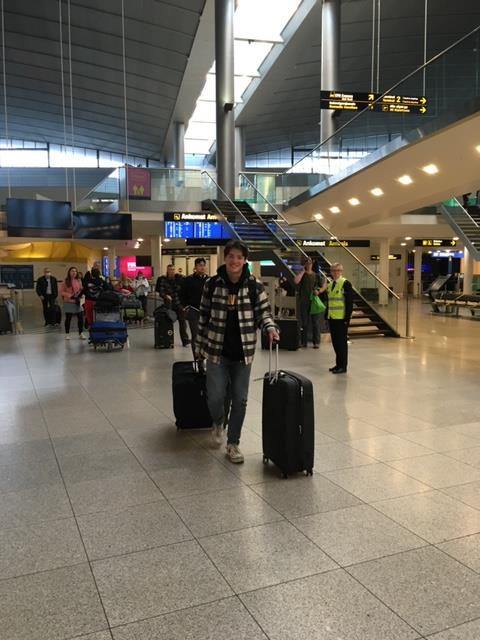
Each and every one of these deaths is not a number; they are a human being. They are a family member. They loved and were loved. Do not doubt, I understand there are people scared about their livelihoods, I know some of these people personally, so please do not think I am merely sitting idly in my security. I will not say what I have been doing because this is not about me. It is about each and every single person who has lost their life because of this terrible virus. If we only see them as a block of 60,000 (and counting), we fail the empathy test. Even those who have not been a victim of Covid-19, as they have spent their last days, hours, or minutes, they had to do it alone. That is not how we are supposed to leave this world. We are social creatures, and that social element is Biblical for those wondering. The tragedy for those surviving is not something easily overcome. Empathy is an necessary component if we are to get through this as a country, and a country that will hopefully be better on the other side. The picture included is because I want to dedicate this blog to a doctor I did not know her, but a number of people where I live do. Many of you might have heard about her in the news this week. Dr. Lorna Breen was an Emergency Room doctor in NYC, and an outstanding one. She battled this virus at the epicenter where 10s of thousands have died. In the city that never sleeps. She lost her life in an incredibly tragic way because of what working on the front lines did to her. She not only treated thousands of patients, she contracted this terrible virus. She is certainly not a number. Dr. Breen, the daughter of a surgeon, grew up only 11 miles away from Bloomsburg. She grew up in the town where I work with students and doctors and teach in their medical school. In my somewhat idealistic hope, I want to believe the better angels will come forth. I want to believe that we will somehow come out of this better. I want to believe the love we have for others can rekindle an empathetic spirit that can transform our country, our world, and hopefully set an example for future times when our world struggles again with some situation that calls for our mutual care. That time will come; in fact, it might become the rule rather than the exception. So much for idealism. In spite of the loss of so many, if we can reach down deep and find the empathy we need, I believe the love each of them shared with those of us still here will go on.
I wish each of you a sense of love and comfort in this time. Thanks again for reading.
Dr. Martin