Hello on a Saturday morning,
Being principled is something I ponder on a regular basis. It is something that seems conceptually straightforward, and then again perhaps not, but it certainly is not something easy to manage. Principles are related to one’s morals, their values, but most importantly, their actions. When speaking to my students, regardless the class, there was always an ethical component to the course. It might be understandable to ask why I might choose to include this, but I hope it is as possible to comprehend the significance of doing it.
Undoubtedly, the importance of an ethical process seems as extreme as ever. Regardless your perspective, people from all backgrounds seem to bemoan the unethical behavior of those with whom they disagree. Of course, all too often that it not as much an ethical question as it is a process or outcomes issue, but that is a concern for a different post. The point is ethics or the adherence to an ethical methodology is a complex thing. The commitment to following through with a particular set of values or morals is not a simple understanding of something being right or wrong. And that is because we do not have the same values, morals, or understanding of how to employ them. Some of this is cultural and some of it is environmental experience. I would like to believe we all begin with some of the same basics, but even watching young children, and their different behavior toward others causes me to question what it is that teaches or establishes the basis for living a life informed by a sense of morality or structured by a set of values.
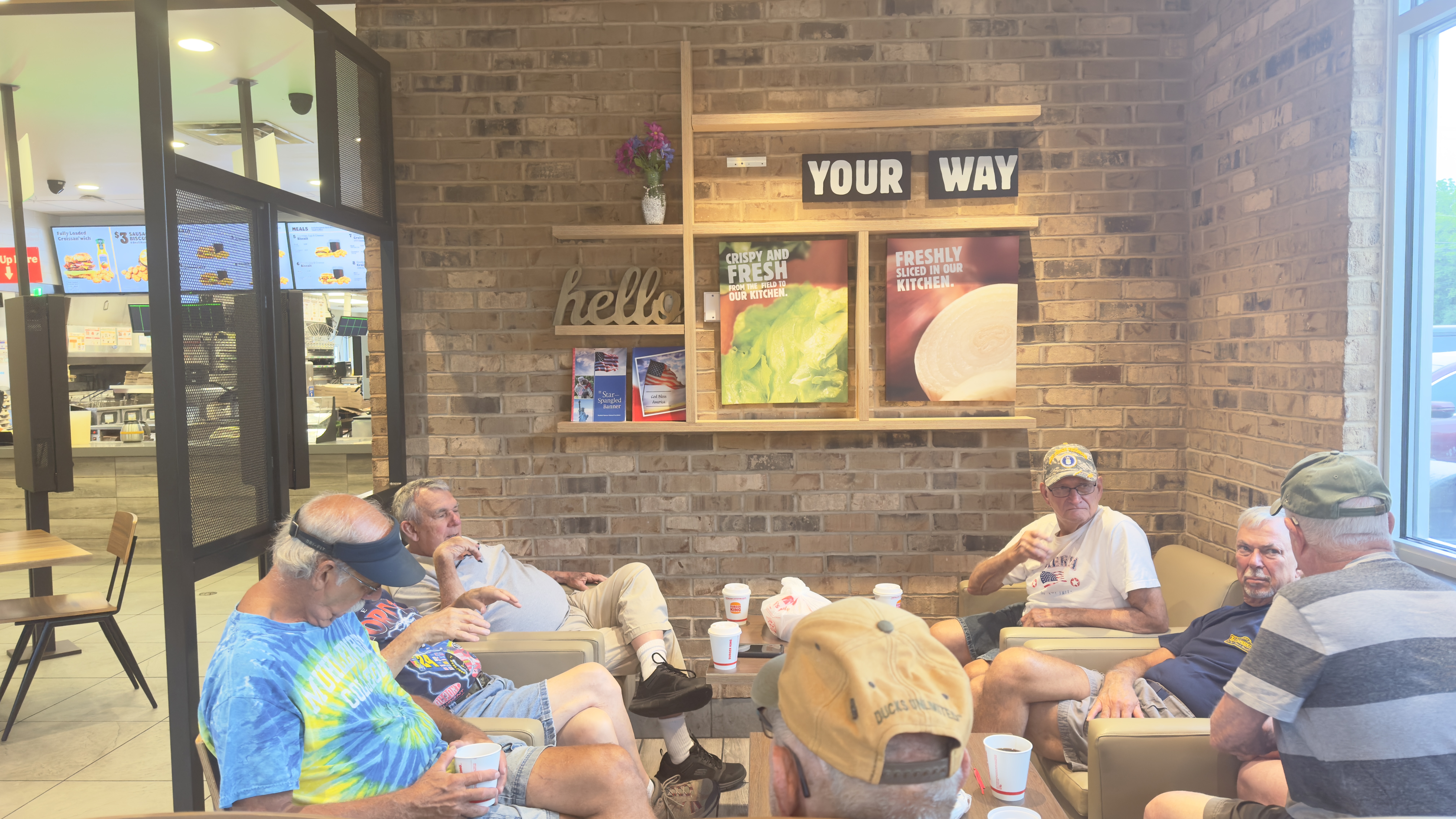
And yet are there some foundational moral statutes, some essential values, that we hold as basic to establishing a society that can function in a manner that provides some sense of safety, some expectation of normalcy? I think perhaps being truthful, committing oneself to not stealing or injuring another might be a place to start. And yet even those behaviors are suspect when we consider how we employ the economics of our current world, when we look at what is happening in Ukraine, the Middle East, or even on our streets. And yet, it is not the intention of this blog to fall into some sense of despair by our failures. In my last blog, I spoke about the group of men I often have more coffee with, though I have been out and about and away for more than a week to 10 days. Most of them have been married to their spouses for a half a century. One particular gentleman lost his wife a year or so ago, and she was in a memory unit for some time because of advanced Alzheimer’s, but he visited her almost daily. He would share pictures of her in her earlier years, telling stories of their owning a family restaurant on Main Street. Another currently is losing his wife to cancer, and he has been in every hospital in three or four counties trying to get her the best care possible. Their commitment to caring for each other is a testament to the things I listened to during the homily at a wedding this past Friday evening. The priest spoke about an incredible love that comes not from ourselves, but rather is instilled in us from a heavenly Creator. Regardless the piety you might have, surely a commitment to a love that seems beyond our human understanding or ability comes from somewhere other worldly. It is not a perfect thing, but it is an evolving, dynamic sense of selflessness that might surprise even ourselves. My father referred to it as the ability to give 150% to the other. He noted it is about willing to give the extra when one’s partner cannot give their part.
I admire when two people can do that for the other day in and day out, turning the days into weeks, months, years, and decades. It is a difficult thing to admit I was not capable of doing that. I was too fragile in my own sense of self to maintain that sense of commitment to a spouse. That fragility created a sense of unworthiness, a sense of loneliness, even when married, that undermined trust, eroded our mutuality, and often left me wondering why I struggled so much. What I have been compelled to realize is in a first marriage I was more in love with the idea of being married and having a family than I was in love with the other person. That is painful to realize, and taking responsibility for my failure has been a long time in coming. Certainly, there were other things that eventually led her to file for a divorce, but I have learned to own my part of that. I owe her a multitude of apologies for my failures. As some know, I was almost 29 the first time I was married and that will be 40 years ago this month. I was a very different person. On the outside, most thought I had my life together pretty well. Nothing could be farther from the truth. I was searching for a sense of worth in almost every area of my life, but I could not find it.
The second time I found myself married I was 40 years old. And as I tell people to this day, if there was a person I have loved in my life, it was my second wife. In fact, I still love her in some ways. I tell people if she walked in a room I was in, even now, I would be a bit of a mess. It would take incredible thought and fortitude to remind myself that our relationship was not healthy. Again, I have some responsibilities for that failure. My inability to work with the difficulties that characterized our marriage taught me a lot, and in fact, I am still learning. I have been single now for a quarter of a century. Not what I expected, but probably what I needed. Even in this past 6 months a reconnection with a profoundly talented, attractive, and good person, something that was intentionally planned did not convince me to abandon my singleness. While on one hand that was disappointing, it was also instructive. It pushed me to understand things about myself. It forced me to question quite honestly what I am capable of doing. It also pushed me toward embracing the immediate plans post retirement, which will be a solitary adventure for the near future.
As I look at some of those dear to me, I see various examples of commitment to another, to the long-term. I think of my dear cousins, and how even among them there are differences. When I look at my nieces and nephews, again, there is no recipe card for success. What makes any relationship successful? It is not merely staying together for me; there is something more. And yet, what is it? Again at the wedding this weekend, as I am prone to do, I observed all the people, pondering all the different ways I saw this commitment to another. I listen to people and take in the comments, both positive as well as some less so, imagining what it is that keeps them together.
Certainly, their sense of commitment is sometimes due to the fear of what might happen if they decide to split up. Sometimes they stay because it is supposedly easier; and sometimes it is a true sense hinting the vows once made. There is certainly a difference between loving someone and liking them. I once wrote I think my father loved my mother, but I do not think he liked her. That was a commitment to a vow, and yet, I am not convinced it was a healthy way to live. That too gives me pause. However, I did watch my father give my mother every chance to live, even after she had died on that bedroom floor. That will be 35 years ago tomorrow that he had to left her go. That is stunning to me. It is also 100 years ago tomorrow that Lydia, the last person who was like a parent to me, was born. Happy Century, Lydia. In someways, I was committed to caring for Lydia as I was to anyone. She had been a widow for almost a decade, and would live almost two decades longer than her husband. She taught me about commitment in ways I had not previously experienced. When she and George came to America during the post-WWII era, they committed themselves, as many others who chose self-exile to becoming Americans, often giving up their language, their food, and much of their culture. That takes profound fortitude, unparalleled desire, to change almost everything, to adapt on the fly. I remember Lydia telling me she took diction tutoring to try to eliminate her accent. It never worked, and that frustrated her.
And yet she was as committed to her new country as anyone born here, perhaps even more. She never missed the opportunity to vote. She paid significant attention to both national and local issues, and she was unabashedly opinionated about the importance of democracy. This sort of intentionality is something we could all learn from. It is much like the same intention, the consistency I see in my morning colleagues to their significant others. I am in awe of this ability to another person. I wish I was more successful in that ability. The picture above is of Lydia in her yard, shortly after I met her. In spite of her patriotism, she was still a proud Austrian. Her love of Strauss was never lost, and I often this Strauss piece as a way to finish this post
Thank you as always for reading.
Dr. Martin