deoch don doras

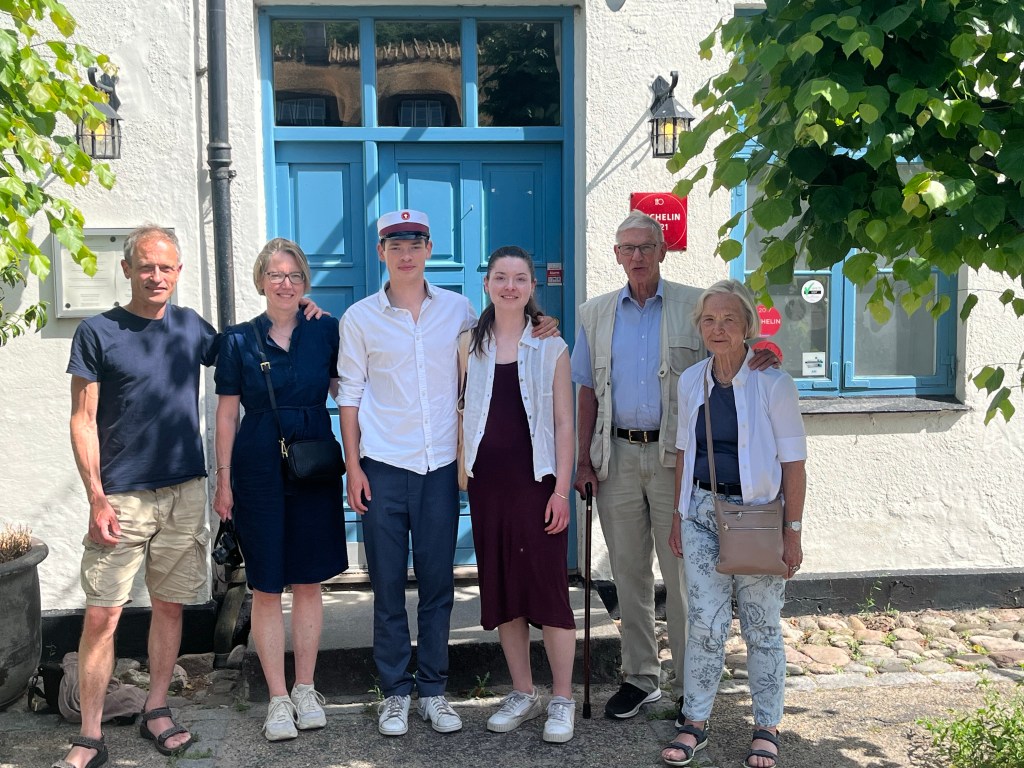
My cousin, Suzanne, and her husband, Randy (Photo from Facebook)

Hello from Starbucks in the Commons,

We are in the throes of the end of the semester, and I am doing a boatload in individual student conferences. The days have blended together so much that earlier today I was quite sure it was Thursday instead of Wednesday. Part of my cluelessness is the craziness of the overloaded semester and part of it is a combination of a lack of a vehicle, obstinacy in terms of asking for help, the closure and relocation of my medical clinic, which have all resulted in no B12 shots for four months. Then there is the vertigo, which has returned over the last couple days. Perhaps the good thing is it has compelled me to focus on my health a bit more thoughtfully than I have as of late. While I have flippantly noted growing old is not for sissies, it is a truism. And then there is doing what one should to maintain their health . . . it takes time and intentionality, and it requires a commitment. My reality has been that is is such a commitment that requires so much time that I find myself annoyed, and at times overwhelmed. Part of that means slowing down, and those who know me are aware that is not really in my nature.

For those who do not know, the most significant, or greatest, percentage of my ethnic heritage is Irish. The phrase that titles this post is Irish and it means “a drink for the door” or “the parting glass.” It might initially seem apropos because of the stereotypic Irish-person, but the lyrics of the song reveal something much more poignant, “and since it fell into my lot that I should rise and you should not . . . “ These words push us to realize the frailty of our lives. It seems that somewhere around this time each year, my body struggles to manage some homeostatic balance because of the long-term consequences of Crohn’s. My next week and a half or so is filled with numerous doctors’ appointments, seeing a variety of specialists. Nothing overwhelming, but the results of bloodwork and other tests offer some insight into a body my gastroenterologist describes as an upside-down jigsaw puzzle. At this point, initial bloodwork shows some treason for concern. The problem areas seem to indicate continued and perhaps elevated issues. I am pretty sure another appointment with a doctor is on the horizon. Additionally, perhaps more discipline and attention is also needed from me. The visit to the Balance Clinic was quite the experience. I detest nausea more than any possible thing, so 20 minutes of trying not to vomit was great fun.

This week I had a conversation with a graduating senior, a Marine Corps veteran, and an all round exceptional person. We were discussing at what age might a person be categorized as old. Even though I am probably four decades older than this student, we had a incredibly similar idea of who would be considered as officially old. For the student, it was 80 and for me, 90. I think what surprised me most, reflecting on this conversation, was the personal reality that old, regardless the age is getting more and more unavoidable. Of course, there are the arguments, it is a number, it is an attitude, and all of that is certainly valid, but each day the amount of time used or lived versus the time that remains moves indiscriminately toward the older side. I am reminded of my father noting that things will move forward and time will pass more quickly. As usual, he was more than correct! As I write this a couple of weeks have flown by, the semester is completed, grading is in process, and I am realizing the summer will be a whirlwind.

Last night I was shocked by a Facebook message about the health of someone for whom I have incredible care and appreciation. I have spoken of the pair many times, and I have been blessed to have them in my life for many years. They have never seemed to be their age, and certainly did not appear to be the age they are. In the period of 36 hours or so, all of that changed. There is progress, but that progress has taken weeks into months. And the health issue was profound. I am poignantly reminded of the frailty of our taken-for-granted daily lives. I am feeling confounded by the reality of mortality. It is not something I know nothing about; it is not something I do not even expect, but I am profoundly aware of how it always seems to take us by surprise. Certainly the loss of someone in a way or time that seem premature is always alarming, but even when someone has lived a full life (and I realize premature and full life are subjective), there is no less alarm . . . I often told parishioners and family members who struggled with even an expected loss, we are never ready. Why is that? Perhaps that is a moot point. Perhaps it is not the question. Perhaps it is merely we need to seize the fact that we are merely mortal and live with an appreciation of what the day offers. And yet, that seems so frickin’ (my half-hearted attempt to be rhetorically appropriate) cliché. It that all there is? Indeed, it seems my Irish heritage is more thoughtful about all of this than I might realize.

But since it fell into my lot
That I should rise and you should not
I'll gently rise and softly call
Good night and joy be to you all

Fill to me the parting glass
And drink a health whate'er befalls
Then gently rise and softly call
Good night and joy be to you all

What are we guaranteed? Nothing, actually . . . what do we deserve? Nothing actually . . . What are can we expect? Nothing, actually . . . and I could continue, and some would argue I am merely being cynical or morbid, but I am not. I see this realization as freedom. If we have no guarantees, we are provided an opportunity to make something happen. What makes a life successful? What makes a life one that one might believe well lived? Easy questions, right? Perhaps they are more answerable than we often believe. I was once told if you significantly influence the lives of 10 other people you are successful. Certainly, there are a number of questions that one can ponder about that statement, but I prefer to take it as general face-value for the moment. If somehow people are better off, and realize that change that moves them into a new successful place, and then connect it to something they received from you, you can count that person. In terms of life and success, it is difficult to not equate success in our free enterprise world as something related to possessions or value, but I believe success is something that is way beyond what is found through a routing number of an account; it is something that is far beyond the stuff we have. For me success is related to contentment, to a sense of tranquility, to a feeling of accomplishment, not in some grandiose, overly-recognized manner, but as an internal sense of enjoyment of a peaceful process that allows one to go about their life without a need to keep accomplishing. Perhaps it is a reminder of that phrase, well done, good and faithful servant. Perhaps it is as noted above – – – good night (or day) and joy be to you all.

I am reminded of the novel, The Book Thief, by Markus Zusak; he makes the narrator of the novel Death. Yes, you read that correctly. I have used this novel in my freshman writing class a few times, and it is always interesting to see how the students react to such a narrator. What I believe is so profound about the novel and its macabre voice is that you could easily find yourself feeling sympathetic to Death. That is not something most would imaging possible. I sometimes find myself wondering why death is so frightening? I understand the separation; I know what it is to feel the pain and sorrow of loss; I realize there is the complete finality of absence, at least in this existence, and if you have hope or faith in something beyond, we are told there is a reunion, but that does little in the midst of the loss felt when death comes to pay its visit. Perhaps death is only an event, the cessation of living. Perhaps it is something kinder than the Grim Reaper. As Zusak writes, Is death as amazed or haunted by us as we are of it? It is something to ponder . . . why you might ask? Perhaps if we can come to terms or some understanding of this event (this person?), our struggle with, our fear of, our fascination with and of could become somewhat non-consequential. Perhaps our often, non-successful attempt at a celebration of life would indeed be more appreciative life our deceased loved one or acquaintance actually had.

Perhaps the words “gently rise and softly call” offer the spirit needed. Again as my memory serves, there was a particularly poignant episode where the members of the 4077 believed Colonel Potter was ill because he had called them all together, but it was instead to toast the memory of his comrades of the Great War. He wanted to toast the memory of those who had passed with those who were living. In his gentle, wise, and caring way Sherman Potter reminded us that death cannot take away those memories, those experiences, this life-creating moments that are embedded into our being. Earlier this evening, as FB is so capable of doing, I was blessed to see images of my beautiful cousin, Suzanne. The images brought to life again the unparalleled beauty, the captivating goodness, and the wonderful empathy I remember of her as we grew up. She was angelic, almost other-worldly, and yet she was as strong and capable as she was gentle and ethereal. Those are the things I see even today in her eyes, her smile and her beauty. In early June, she would be 65. I know her sisters and Randy miss her deeply and profoundly, but she is part of them; they live their lives in a manner that provides more to enhance her memory than they might know. Suzanne, if you know from where you are what I write, may I offer this humbly: I too miss you and your kindness and beauty were more important to me as I struggled to find joy as a child. Your acceptance of your small, meek, and frightened cousin, and the love of you and your sisters did more to give me hope than I ever realized. I was in awe of all of you, but we (you and I) were closest in age. I remember your voice, your indefatigable smile, and your gentle goodness. I am still realizing how astounding you were. Thank you for those memories. Thank you for the goodness you imparted to your remaining sisters. They are incredible ambassadors of your goodness, and simultaneously amazing each in their own way. My life is profoundly better because they are back in my life. The choice of the video below, which is a from the group Celtic Woman, reminds me of listening to music that was not always mainstream with Kim, the now matriarch of the Pilgrim girls. What I have re-learned about them in the last year and a half is how incredibly talented and aware they are of their world. The intro to the sound is moving apropos. This is in that spirit.

In spite of all the health issues in my life, I continue to live. I have been blessed, for reasons unbeknownst to me, to continue on this side of the line between here and the other. Perhaps one of the reasons is to write about what crosses my mind about this life. As I finish this post, all I know is I believe we are all called to gently lift a parting glass. Suzanne, to you, your wonderful parents, Don and Virginia, and your beautiful sisters: good [day] and joy be to you all. I love you.

To everyone else, thanks for reading.

Michael

Attempting to Understand our Inhuman Behavior

Hello from my office on a day that seems to hint a seasonal change,

The desire for Spring only grows more fervent as each day seems to say we’re not there yet. It is amazing how easily we are spoiled by a few warm days and the incredible natural motivator, also known as the sun. This winter has hung in there in ways I do not remember recently. We have not gotten the snow, but the bitter, cold, damp reality of Pennsylvania in March has been front and center. It is now almost the middle of April, and while I see daffodils, hyacinths, and other Spring flowers, little on my daily walks to the university has felt like we are on the summer side of March 21st. These days only push my intentionality to move somewhere outside the states when I retire. Some would argue I do not need too many more reasons, but I will add to my rationale anyway possible.

Over the past week, while watching the news, reading various opinions, and trying to wrap my brain around all that is going on, I have come to one conclusion, and it is a startling one for someone who is generally optimistic in my views of human nature. I want to believe in the goodness of people, and generally I do. I believe when people are offered an opportunity to stand up and make a difference, to do something for the common good, most often they will. I witnessed that these last weeks when so many people stood up to assist a family when they lost everything to a fire. I have witnessed it in my classes when I speak with my students and they offer their sense of what is happening and how they hope for better. That very ability to yearn for goodness is an important thing. I see it when people are willing to spend over $12,000.00 to support students who are often maligned for their choices, their identity, or their stance on individual rights. Indeed, there is goodness in the world. The millions of Ukrainian citizens who have been forced to flee their homes, cities, and country have been supported by other countries, opening arms, buildings, supplying food, clothing, and other things (and I realize there is much more that needs to be done). My heart hurts for my friends, acquaintances, and others throughout the European continent, and for those I care about in Russia also. It is easy to become overwhelmed, disillusioned, or to come to the conclusion that the entire world has lost it, but I do not want to allow for such pessimism.

As some of you know, my dissertation is on Dietrich Bonhoeffer, the German Lutheran pastor who was hanged for his involvement in the plot to assassinate Hitler. My work in trying to understand the incredible effectiveness in the communicational processes of an Austrian and his unparalleled ability to convince one of the most gifted nationalities in history to exterminate another group is mind boggling to me. And now, another group of people, under the spell, or so it seems, of a 21st century madman, who seems hellbent to destroy another group of people, and those profoundly close ethnically, linguistically, and religiously. How does this happen? How does one person convince the great majority of an entire country that what he is doing is reasonable, justifiable, necessary? All of these are difficult and complex questions, and there will be books written about this time, but allow me to offer some initial thoughts. First, Ukraine is much more complex as a country than most Americans realize. There are those who are probably supportive of the Russian invasion, and yes, those in the Donbas region. There are those who live in the southern part of the country that do not consider what is happening in Ukraine to be completely wrong. Ukraine is a complex compilation of people, religions, and ethnic connections. It might even be said that some of what Vladimir Putin has argued about Ukraine as a country has some validity. All that being said, what about the Russian mindset as they find themselves in the midst of being named country non grata? The 19th century Russian scholar Boris Grushenko noted this about their ability to suffer. “To love is to suffer,” he said. He would continue noting the only way to avoid suffering is to not love, but to not love also is a type of suffering. Consider what that says. It matters not whether we love or fail to love, we suffer. To suffer is also to suffer . . . we are happy when we love, but we will also suffer . . . is there any escape? If Grushenko is accurate, we have no options. And yet, are we that doomed? What happens when we consider this sort of self-reflective understanding of our psyche? Experiments about the consequence of self-reflection seemed to indicate the opposite (Wray Herbert). Interestingly, the difference between Russians and Americans seem to be more about the communal versus the individual. Russians, according to the experiments, are more focused on harmony in terms of their interpersonal and therefore the individual is thoughtfully connected to the larger context. Americans’ love affair with this sense of rugged individualism focuses on the personal. Again, according to the experiments performed, this immersion within one’s oself can more regularly lead to distress and depression. So what are we to say about the current state of Russia and its decisions?

While America is a relatively young country in the scope of civilized nations, we have been stable (for the most part). Our Civil War is the only real significant upheaval in our society since our independence (I realize some might argue our current situation post- January 6th is important, but hear me out for the moment). Russia, in just the 20th century went through two revolutions, two World Wars (they occurred on their soil), and a Civil War . . . and their own socioeconomic struggles and political upheaval in the 1990s has left them disillusioned. It has also affected their national and individual identity, created uncertainty about their future, and a simultaneous concern or melancholy as well as a nostalgic hope and connection to their socialist past. This is an oversimplification of their politics, but it is offered to provide some foundation. This does not even begin to consider their ethnical or national identity. In the United States, we have created this unique idea of State’s rights under the overarching idea of e pluribus unum. In spite of our current struggle with what occurred in our last election, we have managed to maintain this idea of 50 cats, but all cats, under a big umbrella, so to speak. The size of Russia as a federation (as they call it) is enormous, and it is a country of conquest. The 2010 census showed that there are 200 ethnic groups within the Russian Federation. Those most are Slavic, there are Turks, Mongols, Tatars, Ukrainians, Bashkirs, Chechens, and that is just the beginning. The Russian poet, Fyodor Tyutchev (1866) once said, “You cannot understand Russia with your mind . . . you can only believe in it.” In my reading, and in my experience, Russian people are respectful and emote little initially. Additionally, they take pride in their appearance. They are honest about their opinions, and are more than willing to share them, seeming to be more bold than perhaps they really are. They are incredibly connected to family and they desire to make personal relationships to be willing to trust, but there is still a caution they employ. There is a reason for networking and it is generally to create opportunity. I believe there is an authentic element to my Russian acquaintances that is refreshing if you will . . .

So a week has past and the world seems to be on a crash course for something. If I were to put all the events in the past eight days into some kind of box or storyboard, I think the cartoon Family Circus might appropriately characterize my life. From an amazing dinner to an Elton John concert, from school meetings and grading to Zoom meetings with other faculty and alumni, from celebrating Easter to waking up to a mid-April snowstorm, and finally from remembering the passing of my best friend on this date to worrying about another as they struggle to manage their life, it seems each day has created some collage of experience, thought, and consequence that has the appearance of an entire room of stuff thrown into a toy box haphazardly. Any attempt to structure it all will require significant thought, consideration, and effort. Perhaps that is the real truth to our lives. Structure is fundamental to our health, be it physically, mentally, or emotionally, but creating structure requires constant effort. It is hard work, but it is also habitual. The more careful and consistent we are the more we become habitual ironically by habit. That is just the way I seem to function most effectively. The consequence is also important. Those around us know what to expect; they know just what our capabilities are. I have witnessed once again what happens when one seems to have no capability to manage things. In spite of our incredible resilience, there is a threshold, a point when our body cannot respond to our actions. This is the case for us both individually and societally.

Inconsistency creates chaos. That is my mantra for the moment. The chaos one can create be they a single person in a relatively small group or the leader of a country is self-evident in my own view at this moment. As importantly is the domino-like fallout or consequence of their action. Perhaps this is the most poignant element or truthful aspect of our being inhumane. Our selfishness, or self-centered desires, for assuaging our wants, our needs, our irresistible habits create hurt for others. This narrow-sighted process leaves destruction both visible and unseen. Selfishness and abuse of power changes the hopes and dreams of those far beyond what can be understood or imagined. Perhaps selfishness is the ultimate example of our inhumanity. There is much more that could be said, but I have other work to do. Working on a summer syllabus and CMS work needs to occur so my students can know what is coming more than a day or two ahead. In the meanwhile I find it necessary to pray for those both near and far, hoping our inhumanity might be lessened.

Thanks as always for reading.

Dr. Martin

When it’s more than hypothetical; when it is beyond and something somewhere else

Hello on an evening at the end of a long week,

The past few weeks have been a whirlwind of emotions, events, and the wondering of how we have created the world we have. I started a blog post about my older brother who has been gone for two score plus five years, which is still in process. How did so many years pass? Seems like so much longer at moments and simultaneously like merely a few. I can ponder that Thursday, February evening, and picture it in my mind and feel it in my heart as if it happened yesterday. What I remember most about my brother’s death was how tragic and compassionate it was, all at the same time. A second profound element of his passing was the experience of seeing my father cry for the first time. My attempt to hug him seemed so inadequate at that moment. I had never experienced a death in my family, and for the first experience to be a 26 year old man was not something I imagined possible. The hypothetical became real. And as significant, I had not even fathomed the hypothetical at that point in my life. The experience changed a number of things for me.

Since that time, between simple reality, experience as a parish pastor, and living for the spans of time I have, death is a part of life. It happens. That is not to understate it’s finality or our frailty when confronted, but it seldom shocks me anymore. I remember the first time I was in an emergency room with a deceased person or the first time I convinced a person to put a gun down in the waiting room of a hospital. The reality of death is something I never expected to know so well, but perhaps I am fortunate. I also realize some might interpret that statement as I have a healthy dose of morbidity, but fear not, I love life. Yet in my piety, I still am astonished by the ironic reality of the liturgical statement “this is the gate to eternal life.” It is pronounced as a casket or urn is readied to be lowered into the earth. Again, depending on one’s faith, there is an incredible questions about what happens on the other side of life. Beyond life is hypothetical, but life is something we hold on to ferociously.

The other thing astounding me presently are the actions of President Putin and his decision to attack his Ukrainian compatriots. I use this word intentionally because ethnically the connection between Ukraine and Russia is profound. Etymologically, they are strongly connected. Religiously, they belong to the same Orthodox family, under the umbrella of Christianity; and it appears they have the same profound sense of nationalism. This is something the Russian President seemed to overlook or misjudge. Since the actual invasion by the Russian military, my own images of streets in Lviv on an Orthodox Christmas, my sitting at lunch with four incredibly talented young musicians from Kyiv while in Kraków the summer of 2019, and my being blessed by the friendship of one who is unparalleled in both his brilliance and his kindness are real experiences. Therefore, my heart aches. As I read the news articles, by the dozens, consider the opinions of those much more learned than I, or as I have conversations with others, I am compelled to remember those who are ethnically and politically on the opposite side. Indeed, there are of Russians not supportive of their President’s decision. As I read about a fire at a nuclear facility, I am reminded of my former student’s mother who grew up around Chernobyl, and her life-long struggle for health. I am reminded of their dinner in my own home in Bloomsburg. I am reminded of three perfectly wonderful Russian students who are caught in the middle of this political and military morass. I visited them in Moscow the same summer I met the Ukrainian students. None of this is hypothetical. These are my life experiences; so the indiscriminate bombing and killing of so many is abhorrent to me on a personal level. As I read the morning news of increased shelling, even this is not something imaginary to me. I am frightened because my own military background informs me of the consequences of what is happening. Being a member of an artillery battery, I am well aware of the destruction of such firepower.

Furthermore, and perhaps even more disconcerting, I am embarrassed by my own country’s continued flirting with a past President, one who, in my opinion, exhibits too many characteristics akin to the Russian ruler, one who has noted the Russian’s authoritarian style or creating of rules to make him ruler for life is to be admired. And most recently said things about his genius, which might serve only to embolden this despot, as if that is needed. Information discovered and revealed by the Congressional Committee investigating the infamous January day should serve the populace, pushing us to see and ponder what the disregard for democracy does. The insurrection at the Capitol that January day should serve as a wake up call in a myriad of ways, and yet I fear it is used too often to drive the wedge of partisanship only deeper. I realize before I write this next section, there are those who will disagree with me vociferously, and I am fine with your disagreement, but I would simultaneously ask you to explain with facts why you disagree.

In the last week I have read opinions, focused on foreign affairs, on military strategy, or on global economics, those positing an argument I believed to be true as soon as Vladimir Putin crossed into Ukraine. Some have questioned the timing of this invasion. Why did he wait until President Trump was out of office? One might argue President Biden is weaker. I respectfully disagree. In fact, I believe that the current administration is managing this global disaster better than we managed Crimea. So again – why now? One could come to the conclusion he did not want to create an issue with President Trump. Surprisingly to some, I believe that is correct, but not for what would usually be a logical reason (you do not want to raise the ire of another super power). I believe the reason President Putin chose to wait until our former President was out of office is simple. Wait and see if the President you helped elect would be re-elected? Нет – did not happen. So NATO in concert with President Biden is a new concern for Russia. This means the unwitting ally President Trump was is no longer able to dismantle NATO as he inappropriately tried to do. If NATO is reinvigorated the likelihood of Ukrainian membership would be elevated. The weaker NATO, which played into Putin’s plan was no longer as likely. Even a hypothetical of a World War under our previous Commander in Chief petrifies me. While I am frustrated with prices, with other issues, President Biden has an extreme dossier of foreign policy experience. President Trump was unwittingly helping Russia (or perhaps there is more to Russia – or President Putin having the self-proclaimed master of “the art of the deal” over a barrel and consequently President Trump was being dealt) or he was a stranger bedfellow then we want to know. All of that is for another time.

As we move into the reality of present-day Europe, I believe we (or at least my parents) have witnessed this situation before. When Hitler invaded Poland in September of 1939, the world was stunned. Of course, from the time Hitler became chancellor until his actual blitzkrieg of Poland, the entire intervening period revealed how Hitler made pacts with various entities or governments to limit resistance. Additionally, he claimed the persecution of Germans living in Poland as a pretense for his decision to invade. The present parallel between Putin and Eastern Ukraine is impossible to overlook. Additionally, he accused France and Great Britain of moving to encircle Germany. The parallel of Putin accusing NATO of the same as well as enticing Ukraine to become part of NATO and the EU again is unavoidable. Third, the non-aggressive nature or response to the annexation of Crimea in 2014 is similar to what Hitler did to the Sudetenland, that area of the Czech Republic earlier in 1939. What is referred to as Chamberlain’s policy of non-aggression, mostly out of fear of Germany, and our present resistance to militarily respond to Vladimir Putin is not again all that different. I am well aware of international norms and managing within parameters, but when is the time to be preemptive? As I write this, the latest news is that the Russians have cut the power to the Chernobyl nuclear plant. According to sources, 48 hours is the window until there are more profound consequences. This affects the entire world, but certainly all of Europe, including Russia will be immediately affected. I am not a war monger by any means, but it is time to act. Something needs to happen to save the world from a person who seems to have no regard for anything or anyone. During this week I have spoken with a friend, somewhat-colleague, and brilliant person I was blessed to work with in Kraków. Within a single phone call/video chat, she taught me more about Ukrainian/Russian history than I have ever known. I wonder how the Russian President can make the decisions he has, and she explained things more clearly than anyone. Bottom line or the ultimate consequence of what she shared is we need to be profoundly concerned about what Vladimir Putin is willing to do. In numerous ways, the seeming strategy of Russia pushes us back to medieval time. Indeed the idea of scorched earth is a more recent term, but the idea of siege goes back to Biblical times. It seems this is Putin’s strategy, and certainly the result is a Ukraine that will take decades and trillions of dollars to rebuild. What does Putin prove? That is a tougher question. While sources seem to indicate 50% of the country still supports him, it also appears that support is generational. The fact that the majority of younger people do not support the present policy is also of consequence.

This past week, almost daily, I have reached out to my young friends on both sides of this geo-political mess. It is at times difficult to remember I care for all of them. And yet, I do. I am continually astounded by the selfishness of our human nature. I want to hold on to an idealistic hope that we have some innate goodness in us, but as I see the pictures, listen to the news, watch the videos, it is hard to believe one person can convince so many that such disdain for life is appropriate. In the meanwhile, I will continue to reach out to those who matter to me: I will not cease in my raising of prayers, still hoping that a God might divinely intervene into our inhumanity; I will support as I can to make whatever small difference I can. It is the beginning of break for us. I am hoping to get some medical issues managed, get my semester squared away for the remainder of an academic year, and get ready for the whatever life might offer yet. The video below is something I have I posted before, but as thousands of young people, civilians, and soldiers are losing their lives because of a madman’s ego, this Sting song from his album Dream of the Blue Turtles seems apropos. For all who have lost their sons or daughters, my heart again aches. Indeed, the rich wage war, but it is often the poor who die.

“If the Russians Love Their Children Too”

Thank you as always for reading.

Dr. Martin

Clear and Present . . .

Hello on a Winter’s Evening,

It has been Estonian chilly out, and as I write this most of the Eastern seaboard is getting pounded by a nor’ easter. We have a flurry or two, a biting wind, and some iciness, but for the most part, we escaped this round. Of course, for what will be the third weekend in a row, next weekend seems to be another possible storm. Since our somewhat I’ll-fated, but adventurous Christmas trip, it felt like I was back in the Upper Peninsula at times. I love freshly fallen snow before humans mess it up. I love a beautiful, scenic, postcard-like view of trees draped in snow, muffler-like against the winter elements. I remember driving the two-lanes highways in the Keweenaw on early Sunday mornings as I headed to a rural parish to serve as their Sunday morning pastor. The beauty of the day often masked the clear and present danger of sliding off the road. In fact, one particularly beautiful, but snowy morning I did slide off the road in my Toyota 4-Runner. The 4-Runner was buried in snow 1/2 way up the doors. Someone stopped and took me to church. As I got out of the last church service my vehicle was there; it had been pulled out by an 18 wheeler. Amazing, and there was no damage. I have never really worried about driving winter roads, but our recent trip might have instilled a bit more cautiousness.

The phrase “clear and present” implies a number of things depending on circumstances. I remember the phrase all the way back to my time in the Marine Corps. I remember doing simulations in Field Radio Operator’s school where we were in foxholes calling in fire-strikes. I remember working on what were called hip shoots with 105 and 155 howitzers. I remember sitting in an embassy compound. While we were not always sure exactly from where the problem might come, we did realize the constant possibility of the danger. Indeed there was some clarity about our present situation. Certainly, there were variables, but my training and the world (even in the chaos of Saigon) seemed predictable. Predictability is fundamental to feeling safe or comfortable. I actually addressed that struggle in a recent blog. The clear and present of anything seems oxymoronic in our current world.

It seems the last five years have taken away any reasonable chance of predictability. And before you believe I want to blame it all on 45, I do not. What I do believe is 45 capitalized on the unpredictable atmosphere of our country. What I feel with every ounce of my being is former President Trump is a genius in using people’s fear to generate anger. However, what is more important to understand is from where does our societal fear come? What has created that sense of trepidation among us? This is a difficult question, and one where I am unsure if the answer is profoundly complex or unexpectedly simple. For the sake of the blog, I will go down the simple route. Yet, let me offer a disclaimer: simple is not synonymous to easy. The answer might be simple, but the effort needed to accomplish the task is extreme; it is life altering; it is continuous. I believe much of our fear comes from selfishness. One of the first things we are instructed about as small children is to be polite and share. It is not always something that comes easily, or perhaps naturally, but it is learnable, manageable. While it is perhaps more than the Golden Rule, that is a good place from which to begin. It is the embodiment of be gentle, and be kind. Gentleness is not weakness; and kindness is not naïveté. In fact, an argument can be made that both attributes require incredible resolve and strength. Too often we choose the easier path of becoming angry. Earlier in my life, when pushed too far or hurt, I became angry. Looking back, the times I lost the most or caused myself the most grief were when I did not control my anger. Clearly, and in that particular moment, my inability to be gentle or kind created hurt both for the other and myself.

Over the last week I looked forward to getting the car returned (it is still in Nevada) from an ill-fated problem with a cabled-tire (used to manage ice and snow). As of the moment, a second attempt to get the car back to Bloomsburg has hit a snag, so it’s on to Plan C. What is that plan? Presently, I have no idea. It is 12:45 a.m. and I am waiting for a phone call. I have a couple logistic issues to clarify, and then a couple possibilities to chase down in the morning. Clearly, and presently, I am scrambling to figure it out. Who could have predicted such a snowstorm of unexpected events? Those acquainted with the saga will understand the pun in this account of “the adventure of Bruce.” Only heaven knows what will happen next. It has been a significant reminder of how little control we have of external factors, even when we plan well. And then there is perception . . . Most of my adult life, I have said, “Perception is reality until proven otherwise.” One of the things perhaps most significant is the love and care I have observed between a parent and their children. It was a remarkable thing as I listened and then experienced that concern over the last week plus, and then just how much over the last 36 hours or so. It is really heart-moving. Those times show me what I might have missed in my life where I have never been a parent.

This week at school, as we are back in person, meeting students in various modes is always like starting from scratch. Every semester is a new experience; every class has its own personality, regardless of whether it is a traditional face-2-face course or remote; regardless of whether it has a number of students previously in another class or two or not. It has been a busy week and then, unexpectedly, YFU, the sponsoring agency for Georg, decided because of my rule violations (my decision to get him home quicker, safer than my trying to travel across the continent again, and on time for school, albeit with his parents’ knowledge and support) have removed Georg from my home for the remainder of the year. A new host is being sought. There have been tears on both sides of the Atlantic, messages and emails to and from, but the State Department has rules. The consequence of what it does to Georg (as he is safe, sound, and was content) is irrelevant. Platitudes of we realize this is hard on him, but . . . They are only worried about their reputation and accreditation. I guess I can understand that, but I certainly do not appreciate it. Individually, I have been discarded like a leper with COVID. People who a week ago still were inquiring if I would host again (which was three weeks after I was severely admonished, but told just behave going forward) push their collective action on higher ups, and spout the corporate mantra. Again, not a surprise. The fact they were not on the same page, or their communication either by phone or web is inconsistent, while also not surprising is swept aside, all in the cover of compliance. I have had to work with alternate possibilities to get things posted or communicated even back with Anton. I understand the idea of clear and present here also. There should have been better clarity on my part as the circumstances in California were changing hourly, but trying to call every few hours during a holiday week seemed to be a bit unwieldy and even more so problematic. It is also clear in the present moment, YFU does not care about the situation on the ground, they care only about their rules and reputation. Yet, even now, I can even find some empathy for them in that response. I might have to dig a bit, but I am able to do so. Additionally, it makes it possible for those delivering the message the opportunity to not really be involved with the individual student or host. The infamous don’t kill the messenger syndrome is alive and well. Just follow rules. It is not about people, it is about compliance. What that does, however, is make their entire idea of working toward understanding a sham. Am I frustrated and angry? Of course, there was no additional communication or questions after they told me just do not do it again. The next communique 30 days after was “we are removing him.” I am angry because of what it does to Georg. They have made a choice that hurts someone I love. I am frustrated and angry because I feel betrayed and lied to. The YFU representative hid behind the decision was made above their pay grade. Incredible, that it matters not what I have done up to now which would be seen as stellar – which is what I have been told. Amazing, that what I was assured of going forward was garbage. And as is often the case, “but I didn’t do it” was the blanket response, from here in Bloomsburg on up. So now what?

Georg will be moved temporarily to the place this entire difficulty began until there is a permanent family. Perhaps a phone call to speak with us before escalation might have been a reasonable thing. As I tell him, it is ultimately my fault because I did not make phone calls. How ironic- a person with a penchant for rules called others before calling me . . . that started the ball rolling. And now in the present, we clearly have a new circumstance. Georg will be in a new home, but fortunately on campus everyday. He will be incredibly busy with the play and other things until the middle of May. In the meanwhile, I will do my best to let him know he is just as important to me. I will be available as appropriate, but as I told him, he will need to be as wonderful in his new host home as he was in mine, a home which is now ours. Tonight our little family chatted, perhaps for the last time in the upstairs where we have watched movies, one of Georg’s favorite things. Tonight we watched Dead Poets Society. How apropos to illustrate that conformity does not serve everyone equally. Perhaps being taught how to think rather than told what to think might still be preferable. Seems that might have been useful in the present. Life is about choices and obviously, in spite of best intentions, my choices created a profound consequence for a number of people, Georg, his family, Kelli, and for those with whom he will now live. In spite of the change, Georg, Kelli, and I have created an incredible little family. The bond will remain. Georg’s family will be my family also. We (his parents, sister, and I) actually spoke about that this morning. Sometimes lessons are difficult. Sometimes they are painful. And yet they can provide opportunities. I am not sure what is the most important lesson here, but I am sure some want to say “just follow the rules.” Generally, I try to do so, though sometimes with a bit of attitude. That has really been the norm. I am not one to purposely get in trouble. At the moment, my desire to be rhetorically astute is waning, and quickly. And yet, there is something more important. He is 6’3”. He loves OJ. He detests broccoli and Brussel Sprouts. He is an intelligent and reflective young man. He is a dancer, a soccer player, and a dog lover. And regardless the actions of an organization, he is my Estonian son.

Georg, you know how I feel. Please continue to be the amazing young man you are. I love you. To everyone else, thank you for reading.

Dr. Martin

Well Done Good and Faithful Servant

Hello from my kitchen island,

To say I have spent significant time here at my kitchen island since returning from our Christmas adventure would be a profound understatement; it is after 10:00 p.m. on a Saturday evening, and here I am. I have been diligently working on both the current Winter Term class and preparing for a semester that begins on Monday, albeit online for the first week. It changes some things, but it is manageable, though it is a pain for some situations, but the need to be cautious in our current world makes the inconvenience bearable, at least for me. It is an amazing thing to get ready for a semester. It seems not matter how hard I work at it, I never feel as prepared as I would like. It reminds me of something I wrote in a recent blog about working and never feeling like it is enough or that it will get easier. I am not sure whether or not that is a good thing or not, but it seems it is the reality of things. Maybe that is why people hope for retirement, work toward retirement, consider retirement a victory of sorts. I am not sure.

When I was a parish pastor, there were different elements of the liturgy that spoke to me and to my soul in a way that was different than all the other scriptural things that are tied to the propers and ordinaries of each week. It is the phrase that is the title for this blog. It is a phrase that is used for a number of instances and settings within the church, but the time it is most poignant is when someone passes from this life. This past week, such an occurrence happened; it happened unexpectedly and tragically. And yet, it happened. Life is something precious, and there are few who would argue that sentiment. Life is something miraculous, and again, few will disagree. And yet, life is fragile and fleeting, and too often we fail to consider that reality. I think about those who passed when I was a parish pastor. Certainly, there were those who lived a long and incredible life (those around them even used such phrases). On the other hand, there were those who left this worldly existence long before we were ready to let them go. In those instances, we feel cheated; we feel disillusioned, and we might feel as if it is all senseless. And yet, who are we to question?

This evening, Georg and I attended the dramatic and stunning The Mountaintop, by the playwright Katori Hall, who is from Memphis, so her decision to develop this incredible piece about the last two days of Martin Luther King Jr.’s life at the Lorraine Motel in Memphis was perhaps a labor of love in a very different manner. If you have not experienced this profound dramatic interpretation of Dr. King’s last moments, you should. It will leave you with some profound questions. While there were several things that caused me pause, the specific issue which affected me the most was Dr. King’s struggle with what his role on earth was and how he understood his life. There were other elements, but I do not want to be a spoiler. Suffice it to say, there were elements (many quite unexpected) that relate to the title of this blog. How do we understand these profound words? What does it mean that lives can be understood in their totality as well done? I ponder this idea more often than not. It was something that struck me every time I officiated a funeral or committal service. It is something I still ponder when someone I know (or even someone I might hear about) passes from this life to beyond.

What allows for the profundity of that statement to be a truthful one? How is that decided, or by whom? Undoubtedly, those who know us have opinions or beliefs about the life we have led. Most assuredly, there is some sense of what we have done as well as what we have left behind. And yet, who really knows or is capable of deciding either our goodness or faithfulness, and to what or whom? One of the things I was very careful about when I worked with end of life situations was to avoid any statement that projected some sense of what happened after life. Some might argue I was waffling or being unfair. I would argue that I am not God, nor do I wish to be. And of course, then there are those who believe there is no such thing. And yet there is the finality that occurs when someone leaves this world. Is it that we will never again interact with them? Is that all there is? If so, the idea of “well done” seems to be merely a human evaluation and the second element of the statement seems much more temporal. It loses the need to ponder, at least in my eyes.

This week I reacquainted with a young amazing person I have known for about 7 years or so, perhaps more, but I am unsure. She was a server at a local restaurant, and incredibly kind. She ironically lives close to my old Wisconsin stomping grounds, and we ran into each other three times in a week. It was an unexpected blessing to be able to speak with her and hear more about her life now. She also told me some of her own faith story, which I found fascinating. She is a profoundly talented and exceptionally good person. I told her that she gives me hope in a world where there is so much difficulty. It was a time that made me smile. On the other hand, it was a week of mourning and a profound sense of loss. The tragic passing of an amazingly talented, dedicated, and profoundly kind and thoughtful colleague has our campus community reeling and trying to figure out what next. There are so many questions for many, but it seems unlikely there will ever be sufficient answers. That is the very nature of loss. Rational and irrational questions, rational and seemingly irrational emotions sweep over us in a tsunamic manner, often taking away our breath and leaving us feeling disillusioned or frightened.

For me this is precisely the time, much like the Psalmist lament that I realize I am incapable of making sense of the nonsensical. It is indubitably the moment when discernment pushes me to believe in something much larger than myself. It pushes me back to those times when I was a seminarian sitting in Dr. Fred Gaiser’s class and he reminded us of how dependent we were on the mercy of a loving God to find some sense in our pain and anguish. It reminds me now of how Dr. Gerhard Forde wrote in his book, Justification: A Matter of Death and Life (It was reprinted in 2012, but I read it in the seminary in the mid-1980s), “theologically, the answer to the question what must [we] do to be saved is nothing. Shut up and listen for once in your life.” While I do not have the page number, I have this passage memorized since I first read it as a student, and in his Confessions class. It profoundly affected my theology and what I would call now my pedagogy or practice as a pastor. I think it is a particularly significant statement when we find ourselves feeling overwhelmed, despairing with no sense of help, or managing such pain that is appears it can never end.

This week I looked at pictures of my colleague from earlier in their life. I listened to stories of their ability to see both the big picture and realize the minute consequences of an action. I recounted my own experiences with them and how they made a difference for a student, allowing them to travel and experience things that I imagine changed that student’s life. I watched, and my heart ached, as people I respect and admire were brought to tears because of the gargantuan change this loss brings to their daily lives, perhaps more profoundly on a personal level, albeit professional as well. My mind races and my soul yearns for a do-over if one could allow such a thing, but much like the drama of the play I watched this evening, death allows no do-overs. In it we have a closure, and simultaneously we are torn open by the loss of one loved. There is a ripple effect of this loss that is, at present, too overwhelming to realize, and yet, we have no options to stop the work, ignore the realities of the change, or dismiss whatever our own lives require us to manage. This reality forces us to face our own fragility and realize we do not live in isolation. We affect each other more profoundly than we often imagine. If we can see the positive in that mutuality, perhaps we would be more able to help each other with the words of this title. Perhaps the idea of being understood as a good and faithful servant is something for this life as much as the next. Perhaps the words or kindness of telling someone well done could make the difference needed.

We are mutually dependent, profoundly delicate, and intrinsically flawed in our humanity. If there was anything I was reminded of this week it is that. The play tonight that focused on the last days of Dr. King’s life; the loss of an exceptional person, who was first human and then a spouse, a parent, an offspring, and a colleague has left me shaken and hurting. It pushed me to reconsider my journey in this world and reminds me that there is nothing guaranteed. There are no certainties in my world. It is up to me to live in a way that I hope others might believe is well done, that I have been good and faithful, and yes, that I have served others. I am grateful for the interactions I was blessed to have with my colleague. It is profoundly evident that they loved the university and were excellent in their work. All accounts spoke about the importance of the two sons and how much they were adored. And yet, we are fragile and life is terminally tenuous. There is so little I am assured of as I write this, but in my own fragile faith, I want to reach out in my own individual way and offer this: Well done, good and faithful servant. May you be at peace.

Thanks for reading.

Dr. Martin

Traveling through the Decades

Hello from the porch of my home away from home,

During two weeks during the month of July I managed a driving “walk about. It was a journey ultimately covering 3,800 miles and some interaction with things that cover the entirety of my three score plus almost six years of existence. From specific dates as early as 1958 to dates including 1970, 1973, 1978, 1983, 1984, 1993, or as recent as 2019 and memories in between, those 15 days were engulfed with long-forgotten images reimagined and a deluge of emotions that have connected me with every phase of my life. The opportunity to meet with relatives, extended families of those relatives, former classmates, childhood friends, mentors, and simply other people, who made my breakfast at a coffee shop was life-giving and rejuvenating. To return and walk around places from my past, to drive highways that once were commonplace has been comforting in ways unanticipated. It has freed my mind of clutter and spoke to my soul in a way seldom experienced. Contented and peaceful are perhaps the two best adjectives to describe my daily mood as I traveled. While there was a plan, there was no required schedule during the interludes from place to place. To be able to interact with no pretense, to reacquaint after decades seemed effortless. Effortless accurately describes much of how I have felt this entire trip.

As I initially wrote this I was sitting on the back porch of 721, as I fondly and lovingly refer to that location in Newton, IA. Lee and Judy, my first host family home from the year I traveled on a Lutheran Youth Encounter team have become a life-long gift. I cannot help but contemplate that it was 2/3s of my life ago I was introduced to a couple I now warmly refer to as my older siblings. Lee and Judy Swenson welcomed John and me into their home in June of 1978. I can state with complete surety that a breakfast conversation in that kitchen changed the course of my life. As I returned to Newton late last night, Lee and Judy were waiting for me. I walked in and exclaimed, “I’m home!” As gracious as any 50s television show family, I walk into such incredible ambiance and care. I have told Judy more times than I can count, there is no home like 721. This morning we reminisced about the various times I have stopped over the 4 decades. And that does not count the three times we were in Newton during our travel year of 78-79.

As I return to this post, I am reminded of the peripatetic aspect of my life. Paragraph to paragraph, chapter to chapter, this year of my long and winding journey was particularly poignant as I reconnected with extended family over the 12 days, the reality of life’s twists and turns was front and center. In spite of the many trials we have all faced, it was profoundly evident. that I come from an incredible resiliency. The hurdles some of my family face daily humbles me. It compels me to first be grateful for the blessings I too often take for granted. While I have had significant health struggles, and will likely have more, there is so much for which I am grateful. I have been blessed to establish a life that has been rewarding and enjoyable. The other thing that astounded me was the unequalled level of patience I saw demonstrated. That too was (and remains) humbling to observe (to understand).

As the calendar informs us of a new cycle the changes from leaving a home I loved as much as anywhere I have lived, to moving and creating a home with two wonderful people, and with it schedules, dinners, soccer games, writing assistance, motorcycle trips to surrounding diners for Saturday breakfast, and being closer to a family most dear have made for a memorable fall. Trips and events like The Nutcracker have reminded me of the amazing world that is in my own backyard.

And now as I write this it is December, and almost New. Years That gives some indication of life since then. On the 19th of August, Georg, my new exchange student from Estonia, arrived. School began the following week and it never slowed down since. I am not complaining as it has been incredibly productive, but the juggling act that is life has been a bit overwhelming at times. Kelli, my senior supply chain student, and another surrogate offspring, has been a joy to have in the house. She and Georg are like siblings and it is actually sweet and enjoyable to observe their interaction. It was very nice that they both texted me more than once in an evening to check on my schedule as they wanted to wait for me so we could eat together. There have been moments when I realize what I missed never being a parent. While I am content with where I am, there are still glimpses of what might have been. I think the most interesting thing for me is that I believe I could have been a good parent. Something I always worried about. I have been asked a number of times over these past years about my not having children. I have been asked about my being single. I have been asked about if I wished my life to be different than it is. I think I can say quite assuredly that I am content with where I am. Is there a sense of solitariness or loneliness at times? Most certainly. It might be why most of my life is centered around people-oriented tasks. Are there times I wish I had some large family or kids, grandchildren, and perhaps even great-grandchildren? The simple answer is yes, but I ponder if it is because we often imagine the things we do not have.

This summer into fall, a number of decisions were made, and perhaps as importantly, I realize that when I make decisions, and particularly decisions of consequence, I seldom reconsider or even revisit that choice. I am not sure if that is a benefit or detriment, but at the moment, I am inclined to see it as something positive. Moving forward and doing the best I can with the choices made allows for progress, and it minimizes regret. Some of those decisions are significant like giving up my sabbatical, or deciding on a retirement date. All of that has long-term consequence and has resulted in making profound changes. As noted other places, one of those changes was in selling my home, fondly and lovingly known as The Acre. That decision is one of the most momentous ones made in my entire life. The reasons for that profundity are multi-layered, but a number of people have asked if I feel sad. I do not. Are there things about that house I miss? Of course, but I know why I made the decision and I believe in terms of moving toward where I want to be or go, it was the best path forward. One of the things I know is that I have too often become attached to things, and things are only that – things. They do not make us or provide any real intrinsic value. People often identify us by those things, but that is a surface identity. What I realize now is I am more affected by the relationships I have and not the stuff I have. As I noted in the title here, the decades have created the person I am. Some of the most important things I have are what I have been able to re-establish this past year. Those were not things, but people. As I began this blog, way back in July, the opportunity to reacquaint with my cousins might be the most important thing I have done in decades (and that is a literal statement). I was in my early thirties and they were still in their twenties. We are now all septuagenarians. First, how did that happen? Second, why did I take so long? I have no adequate answer to either question. As I have been explaining to my freshmen as they have worked on their Google Map/memoir project, we do not become the people we are by accident. We are molded, often without our realizing it. We are imbued with values and morals, with hopes and dreams often subconsciously. Nevertheless, we are products of a canoecopia (and considering I went kayaking and paddleboarding with them the first night there) of a paddling journey if you will, as we navigate our way through experiences, relationships, and emotions. The things we were influenced by are those things we believe have value. As I consider each of the sisters, I am in awe of their kindness, their loving care for each other, and of the profound beauty they bring to other people’s lives. The admiration I had for them growing up grew exponentially as I spent time with them this past summer. In some more than others, the physical resemblance to their mother is beyond apparent. The kindness, hospitality, and inquisitiveness that was in both of their parents permeates each of them. It is humbling to be their relative, but it is also inspiring. It reminded me of why they were so integral to my life as a child. One of the things that comes through my blog as a recurring theme is the feeling of safety, the feeling of acceptance. What I realized this summer and as I have reflected into this fall is they made me feel valued and accepted when we visited and shared time as children. When I was around their family, even in spite of my mother, I felt safe. That was, and is, an important thing for all people. Those same feelings of love and acceptance were foundational to our summer visit. While we have not chatted as often as I wish in the midst of our busy fall schedules, a text, a quick phone call or sharing a Facebook post has established a continuing thread, reaffirming our life-long connection as family. It is ironic that for many years I have isolated from so many, and simultaneously remained involved with many others. Sometimes I created new families if you will.

New experiences create new memories, new opportunities, and ultimately help us continue to grow regardless our age. I have outlived 4 siblings, and I was neither the eldest or youngest of them. I have been blessed to have people pass into my life from around the world. I have been fortunate to travel and experience more than I could have ever anticipated. I am not sure how all of that came to pass, but again I return to the concept of place and the rhetoric of place. My first real journey was to move to a new family as an adopted 4 year old. Perhaps it was that very move and it’s consequence that provided a foundation of needing to explore and experience. Certainly that nascent foundation was solidified when I was given an opportunity to travel to Europe with the late Dr. John W. Nielsen. Additionally, my desire to understand humanity as simply that – other humans, instilled a desire to learn, experience, and grow from that leaning, that experiencing. There is so much more to life if we merely give it a chance. It took six months for me to finish this. Since then I was back on the very porch I began this blog, back in Newton, IA where Lee and Judy still greet me with open arms. They are as much family to me as anyone. An older brother and sister of sorts, they have been a blessing for four decades plus. The journey continues, and the blessings seem infinite. As another year concludes, one can only imagine what comes next.

Thank you for reading.

Michael

My Struggles with being OCD

Hello from a quiet moment.

I am sitting in the loneliness of a quiet house at the moment and realizing how much I obsess on little things and how much I sometimes need to understand the why if something. I did not always comprehend my obsession with seemingly minuscule things, but I have been well aware of my ability or need to question things. I understand my questioning as a different issue than my liking order, but lately I see them as more of an extension of each other. Ironically, one of the things that has helped me manage either element of my daily existence has been through my teaching of freshman writing. That might seem counter-intuitive, but hear me out. First, I need to thank my colleague in the College of Education,

It started with a conversation during our providing snacks and coffee during finals week, something our faculty union did for students. While attending this event with a colleague, one who ironically interviewed here the same day I did, a third colleague, who teaches Business Law courses, questioned me about issues of grammar. As one who is in his 60s, who diagrammed sentences in junior high and beyond, was corrected when he misspoke as a child (and all those things some who read this understand), and as noted is OCD, an interesting conversation ensued. While my immediate instinct was to lament the incessant tearing down of grammar rules near and dear, I realized the world was no longer the same. Additionally, one of my former linguistics colleagues professed adamantly that language is post-modern by its very dynamic nature. While this is a bit of a bitter pill for me to swallow, I have been somewhat swayed to fall into her camp. Language is the consequence of personality, culture, and education. All three of those components are more complex than you might imagine, and when you put them together the complications multiply. And yet there is an order; there is an expectation; and those are the things than mystify and excite me. Those are the things that create some of the most interesting expectations and experiences in my classes, particularly my Foundations of College Writing sections.

As I ponder my own personality or practice, my propensity for needing neatness and order began early in my life, before the age of two. I remember as a two year old trying to make my bed and get myself dressed. My Great-aunt told me about those events also, so it was not merely my two-year-old imagination attempting to alter reality. Throughout my life my desire to structure and order was implemented to create a sense of security. If you have read my blog over the years, my need to feel safe and secure is a central need. And yet, what offers security? What provides my inner-self the feeling of safety? Predictability is part of it, and feeling sure of what might happen next allowed no possibility of anything that seemed remotely calculable. Looking back, perhaps taking control of the minutiae was my initial attempt to feel safe. If I had even a modicum of order, of certainly, I could find a glimpse of hope that my life would make sense. These are difficult connections and realities for me yet today.

The last 24 hours most definitely are defined as unexpected. Plans made and revised with intention were scuttled by an unanticipated mechanical dilemma. However, in an attempt to maintain as much of a plan as possible, alternative plans have been secured. There are still things to manage, and there will be some consequences, but an very different experience and new things for me too. Perhaps what astounds me most is I have taken most of it in stride and did not get overwhelmed by such significant issues. I am quite sure that would not have been the case earlier in my life. And yet, there are things I see myself doing to keep some sense of structure and order to the present experience of organized chaos. It is helpful that Georg has been quite chill about all of it. I just told him thank you and his response is this is not the first time, so I may need to investigate. One of the things I have worked hard to put into practice is if I cannot control it, I cannot waste energy on it. I am much better at that now, thank goodness.

The past year has prompted me to ponder beyond the semester and realize the reality of living life beyond the working to live, which is what most of our life consists of. We get up; we have a routine; we go about our daily tasks as if they are thrust upon us and we are the victims of our daily existence. I do not think I have spent my life as such, but I think that is because I am always pondering the why. Why does this or that happen? More importantly, why does it matter? For me making sense of the non-sensical or perhaps it is more needing structure to manage the non-sensical has been my life’s task. And yet, more importantly it has allowed me to live my life as more of a giver. Indeed, for me, the line from the Prayer of St. Francis is what has sustained me more often than not. – hoc dando accipimus – it is giving, we receive. It is a simple adage to understand, but one difficult to establish or practice. My human selfishness gets in the way at times.

It also relates to the practice of forgiveness. Between my seminary studies and my life experiences, I’ve come to realize how powerful the gift of forgiveness is. It is something we need to provide each other regularly. It is something that is too often withheld because of our own weakness. It took me 25 years to forgive a person who caused incredible injury to others, myself included. However, I am still blessed that it finally occurred. That ability to give, even that long after the fact, released me from so much pain, resentment and anger. It changed my life. And it has changed my outlook on so much more. I still need my structure and my predictability. And yet through the freedom of forgiveness, be it given or received, I am able to understand the possibility of another avenue. I am able to compromise more freely and openly. It amazes me how both structure and freedom, seemingly oxymoronic, are to essential qualities for my happiness. As I ponder, I realize some of that initial structure or understanding of structure came from the very person I needed to survive. Ironic that even now as I sit in the quietness of the morning, in the afterglow of what Christmas has become all to often, I am content in the silence. I am blessed by a gift given that has given back so much more, and unexpectedly. In my piety, I am hoping that all who were once part of my human existence and have left this worldly life celebrate a holiday of the ultimate forgiveness and giving together.

I miss those memories and those experiences. In the meantime, I will ponder and organize, but I realize in that structure I do have security, safety, and possibilities. Blessed holidays to all of you. It is nice to post after so long.

Thanks for reading,

Michael

Two Suitcases

University of Wisconsin-Stout

Hello from Cracker Barrel,

It is a few hours late, but over the last couple days I pondered a small and mighty person, who would have been 97 years old yesterday. Lydia Louise Rutkowski was no ordinary person. She was focused, goal oriented, and particular in ways that many would have found excessive, but nonetheless, it served her well, both as a person and as a professor. I wish I had been able to see her in a classroom. I can imagine she had every minute of her classes planned and she knew exactly where she was going. By the time I met her, she had long since retired, but anytime one of her long-before -former students met her out and about, they would greet her. She would always be a bit shocked and would respond. Once they were out of ear-shot, she would exclaim, “I don’t know how they recognized me.” I would simply smile and shake my head.” There was not even an inkling of doubt as to why they would remember her. She left a life-long impression.

I still wonder what she must have thought and felt as a person in her late teens, being sent away by her parents to live with relatives in Vienna. She and thousands of others left the Sudetenland toward the end of the war, walking hundreds of kilometers through the mountains to be safe. Her parents were wise about the events on the horizon and sent her away, saving her life. This was not your average walk-about. Perhaps because it occurred immediately following the horrors of the Shoah, it was mostly ignored. Yet 12-14 million Germans across Europe were displaced – they were also tortured, raped, and murdered. Lydia, who had been sent to Austria, lost her parents in the immediate atrocities that characterized much of Central/Eastern Europe. After her arduous trek to Vienna, she would never see her parents again. Her recounting of their passing to me late in her own life was spine chilling. I am often mortified by the human ability to commit atrocities upon its own because of a political ideology or out of revenge. Lydia was able to speak Czech, but refused to speak that language the remainder of her life.

One of the things I need to work on is the time period between Lydia’s living in Austria and her move to London. It seems many refugees (those misplaced because of the changing political landscape) would find their way to London. Between 1946-1953, she would relocate to London, meet and marry a Polish man. Her husband was a n incredible story in his own rite. He was a member of the Polish resistance to Hitler; he was a political prisoner, incarcerated in Dachau, escaped, returned to Polish to fight Hitler yet again, and eventually also emigrated to London. They would live in London, and in 1953 would book tickets to sail to the states. This is no minor decision, but characterizes an entire group of people who made the decision to leave family, culture, and language behind, believing they had a brighter future in a new land. I am not sure it is much different for those trying to come here today. However, the America waiting for them is much different.

I realize the wave of people who came to our shores in the 1950s came to explore the possibility of a new life, but they gave up a great deal. Many of them left those European ports to begin a life unknown. They struggled with language, with customs, with culture, and with loneliness. They learned self-sufficiency, resilience, and adaptation. In their attempts to assimilate, they closed the door on their previous lives, often to the point they seldom talked of their homeland, and they worked hard to use only their new language. Some might believe this was the best way to become Americans, but I am not convinced. The loss of a language because of a conscious decision to no longer use it is tragic in a number of ways. Language explains a lot about those who speak it. Language is one of our most identifying traits, and I should probably reach out to my linguistic colleagues to substantiate my thoughts, but I believe our language inherently reveals how we think and what we value. From structure to sound, I believe our language provides much more than words and utterances. Just this morning (and it is now Saturday, the 14th) I was at an appointment and the RN assisting spoke Spanish as a first language. We noted the differences in her learning English at the age she was when coming to the States and her daughter who was pre-teen. We spoke about the way her usage is more standard or formal and how her daughter’s was more colloquial. Even our decision about language usage reveals things about us. I remember Lydia once noting that she took classes to try to eliminate her accent. It did not work and much to her chagrin, that accent was one of her endearing qualities. I also remember one of the last times I visited her (in the latter stages of her battle with dementia) it was much easier to speak with her in German than English. She spoke, and probably thought, in German more readily at that point.

What still inspires me about Lydia’s generation was their determination and work ethic. They were tenacious in their desire to succeed, and they were beyond purposeful or dedicated in their willingness to work hard and long to achieve their goals. They did not believe failure was an option. She talked of working two or three jobs before she would begin her education at Northwestern University. George took a different path, but one nonetheless laborious. He would work in Chicago with Frank Lloyd Wright disciples and become a painter and interior decorator. There was little in a house he could not do, or re-do. Lydia continued on to graduate school at the University of Illinois-Urbana, working through her Masters and toward a PhD in international economics. She once told me of George’s words about how they would purchase items for their house or their clothes. He said (with apologies for the grammar), “We are too poor to buy cheap.”

There was little doubt they lived their life maintaining that philosophy. When I met Lydia, almost two decades after George passed, she was quite the formidable two-digit midget, as I called her. She knew exactly what she wanted, what she thought, and she had quite the control of the entire little circle where she lived above Lake Menomin. At one point she owned about a third of the circle, got the city council to rezone it, and still had the incredible compassion to pay the overdue taxes for a neighbor to keep them from losing their family home. Along with that, she managed the upkeep of her three story home, was meticulous about her yard, and still managed to keep abreast of worldly economic issues. She read the Wall Street Journal daily and would forecast where the economy was going months before it happened. She really understood economics both micro and macro.

I still miss her wit, her spunk, and her voice. As much, I miss those moments her incredible heart shown through. I marvel at what she and George accomplished in their lives and am still humbled by their achievements and the faith they had in their own hard work, but also the faith they must have had in this country. I struggle when what I see now seems so different. We cannot seem to get along with each other, let alone “the other.” I continue to realize how blessed my life has been. I think often what it means to have been born in America during the boomer generation. Everything was focused on making our life better, but we also both into the concept of “the dream.” We believed with all our heart and mind it was available. Even though I was a blue-collar kid, even though college seemed out of reach, even though I did not get everything I wanted, I was fortunate to always have what I needed. Lydia and George came to the States believing in the same possibilities. Much like my father, who graduated at the height of the depression, they worked hard to make sure they could work their way up that ladder. Yet, they did it overcoming language and cultural barriers. They did it believing in the adage of hard work pays off.

Lydia never quit working. Until about 13 days before she passed, she was a bundle of energy and ready to let you know what she thought. I am still grateful to the amazing Comforts of Home staff who cared for her from the outset. Carissa treated her as if she were her own family. I could give a list that numbers into more than a couple dozen of wonderful individuals who were not paid nearly enough as they provided outstanding care. It is hard to believe it is six and a half years since she left us. She still wanders into my dreams and my thoughts. I can hear her voice as clearly as if she was still here. I miss you and happiest of what would be a 97th birthday, dear Lydia. The picture is almost looking out from her shoreline view of the campus where she worked 38 years.

Thanks for reading,

Dr. Martin

Learning Moments Rather than Regrets

Hello from the little cabin,

The past two days have been filled with laughter, memories, and enjoyment, but also a certain degree of wistfulness. How is it we continue on with our lives and things that had such importance get lost in our busy, scattered living of our lives? How is it that we can allow things that provided such happiness slip off the radar without even a notice? Those are the questions swirling in my head at the moment. From the infectious energy of the twins or the quiet contemplative (even serious) viewpoint of the now eldest; from the incredible insight, determination, and intelligence of the second youngest to profound gentleness of the youngest, the Pilgrim sisters cover the entire gamut of what you could expect from people (and most certainly in one family). I have smiled as I ponder how the husbands of these special women try to manage their collective power. The sisters’ intelligence, their profound love of family, or the appreciation for the earth will leave you in awe. They run lives that seem beyond anything manageable in a 24 hour day; yet, being their presence is wholeheartedly life giving.

During this time, they have gathered to inventory and share the voluminous writing of their mother. As they have read the droves of letters, there have been tears, laughter, surprise, and suspense, particularly as they read the primary sources of her mother’s journey to eventually fall in love with their father. We have laughed, and the looks of surprise on their faces as they have read are priceless. We have been pulled back into a time that was very different from our world today. Most of the letters read were written to their maternal grandparents, and it has been fascinating, at least to me, how thoughtful and caring she was (not that such abilities really surprise me). She certainly imparted that gift to her daughters. Perhaps the most interesting thing to me was how a timeframe of their parents life was created. I did not realize he had taught at Luther College before his PhD and received an NSF Grant to do his doctorate. And he finished it in two years. It was in the early 60s, when we would have been around him that he was in the throes of that degree. What I remember about Don and Virginia Pilgrim is quite varied, but there are two traits that stick with me most prominently. He was gentle, humble, and kind, but so incredibly brilliant. I always talk about the calculus problem story with him. She, on the other hand, was gracious and hospitable in the sort of way they could have been a television program in those days. She welcomed everyone with a smile, hug, and kiss on the cheek.

As they have read and I listened, things I remember about my own family come to the fore. I saw some pictures of my adopted mother as a child I have never seen. I saw picture of my adoptive parents in their earlier life before I was part of their family. However, back to the cousins and their parents. Growing up I was enamored with my beautiful cousins, but could not imagine six beautiful girls in my house. Two of them existed and then the twins came, all in the midst of their father was completing his doctoral degree. I realized this because the twins noted they were born in Madison. As I listened to them, the craziness of such a time made sense. I am even more in awe of this man (and the incredible work their mother did). Dang!! I could barely manage it all as. a single person, or as a newly married person. While there were certainly other issues, the PhD was certainly an element in the failure of my marriage. That takes an incredible commitment from all of them, but knowing them as I grew and seeing the amazing women they are now, all loving mothers, there is really no surprise for me. Certainly their roads to have been hit with detours, bumps, and bruises, but to watch the love and kindness among them has been so inspiring to witness. Their kindness in welcoming me back into their midst is an extraordinary gift. Each time I walk over to the house, my face breaks out into a smile because of the infectious love that covers ever molecule of Kim’s and Mike’s beautiful home.

Yesterday, I spend most of the day shopping or playing in the kitchen for them. With the help of Andres, the talented chef from La Malbec, I made cauliflower steaks with Harissa seasoning. I did a couple of different things, but I needed to put more moisture in the pan before I baked the cauliflower. All in all it turned out quite nicely, but it could have been better. But it was a labor of love for me to give back to them. We had a rather lovely dinner on their patio last night. This morning I got up and sat on the porch of the cabin with a small breakfast and merely relaxed. It might be the most content I have felt in months or years. That is a wonderful thing to be able to write. I have a book to begin reading and might even try to do that over the next couple of days. To be transparent, I have struggled with the national perception of my home state over the past few years because of some of their elected people in Congress to some things I have read about the current Governor, but when I sit on the porch of my little cabin, there is a simpleness to the fields and natural landscape around me. As I have walked with Kim through the yard, her thoughtful planting of trees, her garden, and the natural native garden planted for Suzanne, the eldest of the group, cannot help but connect you to their world (my extended world) of family.

Each time I sit with them, hear something else that gives me pause, but lifts my spirits and reminds me of how blessed I am to be part of this sagacious heritage. There was no inkling a year ago on the Fourth of July I would spend the next one in Decorah, but It has been a wonderful celebration. There were no fire works, but rather just spending time with family. It was laid back and relaxing. No schedule and no requirements. Seldom do I have such a day. It is a time to mark on the calendar, perhaps a new plan for the holidays of the future.

It is now the morning of the 5th. A leisurely breakfast after some grading and then to the local juicing/smoothie shop. It is in a co-op with a variety of small entrepreneurs. This bar is the work of Paula’s and Bobby’s son, Josey, who had returned home off season. Off season from what, might you ask? From his other position as a linebacker for the Denver Broncos. He seemed personable and down-to-earth, working diligently as you would expect from anyone in this incomparably wonderful family. Hannah, Kim’s and Mike’s daughter, and her husband have stopped by a couple times, and she proves the generations of Pilgrim women are alive and well. It makes me have hope. Mary’s youngest son, Murray, is a wonderful and brilliant young man. Everything I have witnessed demonstrates how incredible the sisters and their husbands are. I fills my soul with joy.

It would be easy to only regret the things I have missed and focus on what might have been, but that serves no good purpose. It is important to realize the consequences of one’s absence, but the past is the past. It is there to inform us; it is there as lessons to take forward. It is there to prompt a change as we’d move forward. Sometimes I feel like emotions are more problematic than helpful. I realize both the profundity and the difficulty with that statement. There are other areas in my life where I have been accused of being too academic, too metacognitive. I am wondering if my desire to keep all things logical has gone too far? I know I have feelings and I know sometimes I feel passionately. I know there is a part of me, for instance, that is a hopeless romantic, the person who tears up at points in a movie or television show (and often at times when others won’t). I know that when I watch an underdog person triumph I can be brought to tears much more easily than most would believe.

Many of my former students, too many to count, who are like surrogate children have made me tear up with their comments or their cards. I have learned to hold on to relationships and people for a long time, and it is generally difficult to let people go, though I have also learned at times it is best to do so. I am well aware of the two-edged reality of caring. And yet, I cannot bring myself to be an uncaring person, or a person who cares only when it is in their benefit. During this coming two weeks I will see people who are some of those people in my life. One is a student from my first year teaching at Stout. She was in a difficult situation during that time of her life, but she was smart and capable. She needed help and, even though I was a first year professor, I reached out to help her. It is still one of the best decisions I have ever made. She now has three amazing children, is married, and seems quite successful. The opportunity to see her in the next week after almost 20 years is a gift. Next week, I will see other family and friends, a couple that I am blessed to call friends now. Too many times, we miss opportunities to make a difference because we get too caught up in whatever occupies our attention at the time. At this point, I am trying to change that.

I realize life is fleeting; it is uncertain, and I have been pushed throughout my struggle with Crohn’s to come to terms with that uncertainty more than even I might realize at times. And yet, somehow in God’s providence, He deems me worthy of managing another day. And this should not be interpreted as I see God as capricious who decides the exact moment in which we should leave our human form. It is my way of saying somehow I am still here. I am reminded of my Dominican brother who reminds me that I am somehow Superman. Not that I feel like some action hero. I am simply a person trying to do the best he can (and I realize the third person singular in this). What I know as I am coming to the end of my time in Decorah is my spirit has been lifted. The time spent at Acorn Cabin and back where my sister attended college for a year, has made a profound change in my attitude, and perhaps even my outlook on life. Family is an amazing thing if we allow it to be so.

I am feeling beyond blessed.

Thanks for reading.

Michael

I am Haunted by Humans

Hello from Manassas, Virginia,

It has been an incredibly taxing year on all involved in higher education. From students to faculty, from staff to administrators, the consequence of the pandemic has been felt by all. While that is perhaps an obvious statement, what is not as obvious is the degree to which it has affected the world of academe. This is in no way meant to underestimate the difficulties of the rest of society, but rather to focus on the world where I spend the majority of my time. I know too well that some of my former classmates believe being a professor is an easy, part-time, no-accountability, proselytizing venture where I am paid to do as little work as possible. I can assure those in that camp that this past year, more than any in the time I have taught, has been more demanding and laborious. It has been more overwhelming and frustrating, and more of a learning experience than any of my previous years spent in the classroom (and ironically, I was not in a classroom the entire year). The best way to describe asynchronous, remote learning is as a time I was never scheduled to be in class and simultaneously, unless I was sleeping, never out of class. It was like having 75 independent studies or more each semester.

Am I glad I experienced it? Yes, I learned an incredible amount about myself as well as about my students. Do I want to do it ever again? That is an emphatic “hell no!” While I might have worked harder than I ever have, I can tell you I felt more ineffective, more like a failure than anytime I have taught. I can also tell you I got more trashed (taken to task) by students than ever before . . . and some of their complaints and concerns were valid (but they had little willingness, it seemed, to see the other side of what happened.) I should note that it was not every student. Most certainly, there were students profoundly understanding. Bottom line seems to be I certainly failed to do the best job ever done in classes, and that is in spite of the extraordinary time spent trying to manage this asynchronous world. Am I frustrated by that? Without a doubt. Why? Simply – I take a lot of pride in what I do, and I do believe I owe students the best I can give them. On the other hand, pedagogically, it was evident that asynchronous remote learning is not the best delivery method for some classes, and that is for a variety of reasons. However, the world of education (and this goes back to our public school systems for starters) seems content to treat students as customers. This is not something to which I willingly subscribe. I cannot be convinced such a plan is helpful. Can I do the checks and balances of tuition and fees as well as state or federal support that make a university education financially solvent? Yes, I probably can. Yet, if we only see our students as dollar signs or retention objects as the be-all, end-all of what we do, what does it mean to profess, to learn, to reflect, to become a scholar? When students become the consumer (e.g. the boss) of their classes, I become a substitute, the purveyor of information. I become a person whose worth or value is determined by someone who brain is not fully developed. I am evaluated by the whims and preferences of someone’s attitudes versus what they have actually done or learned.

I was told recently (and by someone for whom I have incredible respect) that I am too metacognitive and that my students do not want to be pushed in that manner. There are two struggles with that statement. First, I believe the person who told me this is undoubtedly correct (I always want to know the why about the why). And second, and perhaps more importantly, to believe that education is a recipe card or a rubric, which is what this implies. Such an understanding is foundationally wrong. As one of my undergrad colleagues (who is now a professor as I am) reminded me, our advisor, the late Dr. John W. Nielsen once quoted the three word phrase from the Upanishads, “”Tat tvam asi.” Or to put it another way, “the essence are (and this grammatical difficulty is intentional) you.” It is about reflection and understanding who we are as well as the what we are; it is about understanding the manifestation of ourselves and how we (or it) is part of something so much larger (and I would add also important). If we can only see our students as some dollar sign, as having their value determined by the tuition they generate, we lose sight of our role as educators. As noted, I am as well aware of the business aspect of our system as anyone, but I would like to believe that my argument is about more than some idealistic belief in being the professor.

Allow me to put it in a different context, view it from a different perspective. As noted more than once, I am that first generation college student. My parents did not pay for my education, nor did they plan to do so, and the reason for that was simple. They could not afford to do so. When I first went to Iowa State University, I flunked out. When I eventually ended up at Dana College, I was petrified I was not smart enough to be there, Fortunately, with hard work, some wonderful classmates, and an incredible faculty, I learned that I could do the necessary work. Yet, during my first year, I did not know how to learn. I knew well how to jump through hoops. The Marine Corps had taught me this if nothing else. I remember an Introduction to Business Management course. We had multiple choice, take-home, open-book exams. Those exams were written so intricately, that it would take three of us, each working diligently through the book together more than an hour to manage the 25 multiple choice questions. However, we did it (and after notating our exams with where we found our answers) we generally received an A on the exam. However, that was not, nor is it education. I can say with no reservation that I remember nothing from that class. It was actually through my Humanities sequence, I learned the concept of integration and synthesis. Those three semesters and my interim in Europe reflecting on the works of Ernest Hemingway and Thomas Mann, my being in a cultural classroom 24/7 for a month with Dr. Nielsen compelled me to rethink everything. I finally understood what it meant to study or learn (theoretically, conceptually, and practically). It was soaking every drop up. It was looking beyond the obvious, and it was not by following a rubric or recipe card. The integration required to become a professional is not a dichotomous process, one separating classroom and experience. For too much of my schooling, especially back in own public school upbringing, we had two kinds of teachers. First, rote memorization was what we did. There was little difference from English to history, biology to geography. The difference was whether the teacher figured out how to keep me interested or made the process enjoyable. What that admission means is telling. We have been stymied by the process of learning most of our lives. We had (and perhaps still believe we need) to be mollified. I struggle when my students say, “I only want to read what I am interested in.” I balk at the idea that somehow I need to give them every element as if they are trained responders.

So what is the answer? I am not quite sure, but whatever it is, I am quite sure it is neither simple nor will some conceptual response manage it. Why? Because in the words of the feminist poet, Adrienne Rich, it is the students’ response-ability that matters. It is the agency we take as humans to be accountable, and through which we claim an education versus receive one. However, we are selfish. We want things on our own terms. As I write and ponder, I am intrigued by what it was our professors at Dana seemed to do so effortlessly, so seamlessly. If you speak with Dana alumni from education to science, from humanities to the arts, it seems there were outstanding faculty, those who inspired student to take charge of their education. That small college on the bluffs of the Missouri had already created the scholarly community Rich speaks of in her commencement address to Rutgers University (some 25 years later). This does not mean there were never shenanigans. What? No one ever drank on our dry campus, certainly not! Ha! I remember two characters on my floor when I was an RA, somehow believing that having half the campus on our floor and two 16 gallon kegs in their room would not be noticed. They were quite sad when I made them open the taps and pour the rest of the beer down the drain. I remember when one floor on campus decided to make a swimming pool out of the shower. When a faculty person’s daughter knocked the barrier down a flood ensued down the hallway, and, of course, they were not on the first floor. Oh, the memories. And yet we survived . . . all the time afforded an incredible education at that Danish Lutheran College. In spite of being known as the “Holy Dane” campus, there were certainly times when we put Luther’s quote of “if you are going to sin, sin boldly.” into action.

What does it mean to be educated? Yet again another difficult question, but at this point I believe it is about thinking, analyzing, and integrating. It is not memorization; it is not a recipe; it is, however, something different for each person. It is being honest with one’s self and knowing in their heart if they really did the best work possible. It is the wisdom of self reflection. I can still see Dr. Nielsen’s lecture on the “allegory of the cave.” As my floor-mate, and incredibly brilliant professor, Dr. Langholz noted, it is remembering the times we were pushed to ponder the complexities of our humanity by the likes of Drs. Nielsen and Jorgensen, be it philosophically or in light of our national history. Dana taught me to go beyond what was average. Dana taught be to listen and reflect, to ponder and imagine, to never be satisfied to merely complete an assignment. I miss that in some of my students. That is not to say all. I have some really good students; I have some who want to go beyond, but it is difficult for me when they merely want to know what to do without pondering the why they are doing it. For me, it is seldom enough to merely get something done. It is that very nature that is also sometimes to my own detriment. I realize I am seldom satisfied, even with my own work. I want it to be better. I want it to be more thorough; and I want it to be meaningful above all else. Perhaps that is why I am where I am.

In my last blog, I noted the passing of an incredible influence in my personal and academic development. Since that time, it has come to light that another classmate, and ironically a mutual traveler on that Interim trip also passed from our grasp. Lisa (Hansen) Madsen, who was a year ahead of me in terms of our time at Dana, passed, even more ironically, the same day as Dr. Nielsen. I note that because she was an incredibly kind and thoughtful person and an important part of our traveling group that winter term. I note it because her husband was my head resident and also a profoundly important part of my Dana experience. It is always stunning when we lose people we have known most of our lives. She had the most radiant smile and she brightened any room she entered. I am saddened beyond words to learn of her passing. Perhaps, in my own piety, she and Dr. Nielsen met at the gates and began yet another journey, this time as two humans beyond the grasp of our understanding.

Our lives are complex and more unpredictable than we often realize. Perhaps it my age; perhaps I am becoming the curmudgeonly Norman Thayer from the movie On Golden Pond. Perhaps I am realizing I have much less time left than what I have lived and I want to somehow make a difference. Sometimes I feel there is so much left to do. Sometimes I wish I knew what I knew now, except I had realized it half my life ago. As Markus Zusak wrote in his novel, The Book Thief, “I am haunted by humans.” I wonder about the reflection in the cave more often than not. As I post this, I cannot help but remember it was 48 years ago today I graduated as the first graduating class of West High School in Sioux City, Iowa. Amazing what I understood life to be then and now.

The glory days were well beyond then. Thanks for reading.

Dr. Martin