
Hello on a beautiful August Sunday afternoon,
While we had a somewhat significant rainstorm last night, today is beautiful: partly cloudy with a nice breeze, moderate temperatures and low humidity. Quite ideal for anyone wanting to get outside, moving back into the dorms or their apartment, and merely able to lay back and enjoy a late August afternoon. it’s been a good summer and the “standard end of Labor Day weekend is only two weeks away. Somehow it’s already mid-afternoon, and as a couple of friends who know me well, it’s after my optimal nap time, but I think I might sneak one in nonetheless. What I find is that Hispanic custom of Siesta has strong benefits. My friend, Cristian, teases me, but that’s fine.
This morning at church the gospel for the day spoke about identity, particularly when Jesus questions the disciples about who people believe he is, which, of course, is followed by who the disciples themselves believe Jesus to be. Identity is such a powerful element of our humanity. It’s so much more than the name we are given at birth (and I think of how well I know that when I was on my third name before I was 5 years old). It’s more than the titles we many earn that might precede our names or the letters we might earn that follow our name. So what creates or develops our identity? Is it experience, knowledge, where we live, where we’ve traveled? Is our own perception of who we are more significant than what others believe? I think merely the things listed give some insight into what I am trying to show. Identity and understanding what it means is complex. And I believe it’s not static. Perhaps some aspects maintain, but I believe all the interrogatives above affect both our perception as well as the view others have of us.
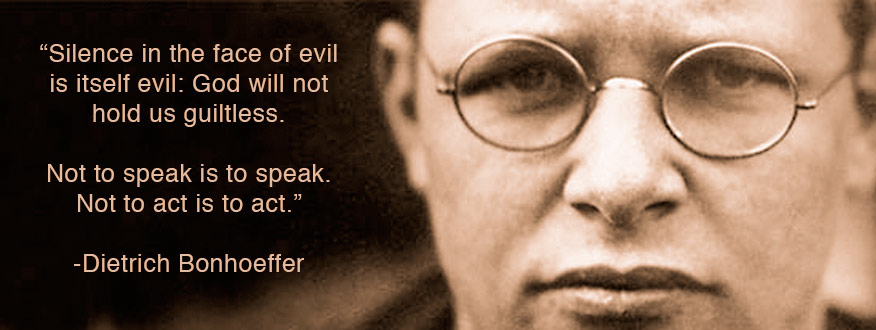
Anthony Giddens, the British social theorist (Dr. Patty Sotirin, see what you’ve done to me!!??), refers to these aspects of identity as subjectivities, the different roles we might inhabit in our lives, and how each of as croce them are significant to the understanding of self. Those identities are transformative. They influence us often in powerful and complex ways that are often unrealized. When are the moments that are most consequential, and what makes them so? For a reading group I belong to, we are currently reading a book by Andrew DeCort, which I believe I noted in my last post. It’s considers the ethics of Bonhoeffer. Bonhoeffer wrote an incredible poem after his arrest titled “Who am I?” Penned in the summer of 1944, while he was still imprisoned in Tegel, before he would be transferred to Buchenwald and eventually Flossenbürg, the poem is profoundly revealing of both the public persona he had created (though I am implying it was untrue) as well as the personal struggles he would endure when alone in his cell.
Certainly that question has been raised for me numerous times over the last 24 months. Retirement, while not nearly as existential as Bonhoeffer’s imprisonment and eventual execution, did, nonetheless, create more of a dilemma for me than I anticipated. Not being in the classroom, while understood, took away much of what I did, no longer having an office which was self-designed to reflect all the aspects of my life, was a safe haven for me, much more than merely the place people could find me during prescribed times. So the campus that took much more time than the eighteen required hours (an amount that a provost once claimed was all faculty were required to work), was no longer accessible. Even being on the campus was different because the loss of direct instruction and interaction with students made me feel like an afterthought with others. Bonhoeffer in his pondering of his incarcerated self wrote, “Am I one person today and another tomorrow? Am I both at once? . . . Who am I? These lonely questions mock me. . . .” Indeed, while in my older age I’ve become more introverted, more selfish in protecting my solitude, so much of who I understood myself to be is wrapped up in the public realm, and most of my life, even more the academy, was such. A person I know that still knows me better than most once told me that I might be the most educated server they knew, but there are more parallels in serving and professing than meets the eye. From my first day in the parish as a called pastor to today as a I prepare for new possibilities, the public and private realities of being called, while having requiring incredible grace and clarity, always push our limited understanding of God’s love, which is foundational to our humanity.
Perhaps it is there we truly find our identity. Perhaps it is when we are most vulnerable to the call of caring for the other we begin to undertake what allows us to comprehend who we are. Perhaps it is in the moments when we are confronted with what we are not or have not done, and we fill in more pieces to our person jigsaw puzzle we become most capable of answering Bonhoeffer’s question. For instance, never helping create another human being has been a thread in my life that has left me wondering what I might have done as a parent. I’ve noted that from time to time here in my posts. From being a step-parent for a short period of time to being an exchange parent, from having students live with me on numerous occasions to being a surrogate parent and confidant to students (now all former) even today, I’ve been able to imagine what I would have done. And, in fact, believe I might have done it pretty well, there are no individuals who will ever carry on my family name into the generations; there is no one’s family tree that will ever say this is my father, grandfather, or beyond. Does that make me merely an ellipsis or footnote on a page? Fortunately, I am more well-adjusted than that. Mercifully, and possibly fortuitously, my public persona provided some comfort for my private self, because the nature of most positions had such a strong vocational nature (in Luther’s understanding of vocation) to them. As I have started to embrace the who I’ve become nature of my present life, I’ve been pushed, compelled, to realize the giftedness of the life I’ve had.
As a person whose becomes singular now professionally, and has been personally for quite some time, I’ve begun to understand some things about identity that often escapes me in the past. Who we are is often shaped by external factors, influences, and circumstances. We allow others to shape us more than is perhaps helpful or healthy. As Bonhoeffer probably realized his life would be ended as a prisoner, he found the strength and peace to conclude his poem with the following words. “Who am I? These lonely questions mock me. Whoever I am, You know me, I am yours, O God.” Even in the existential angst of Tegel Prison, through a Gestapo interrogation, in the reality of his circumstance, Bonhoeffer found his identity in his love of God and his faith of God’s love for him, which he would continue to share even to the gallows.
I used this clip at the beginning of my dissertation defense. It comes from Bonhoeffer’s work written to his fellow conspirators in December of 1942, a few months before he was arrested.
Thank you as always for reading,
Michael

