Can I be the Other?

Hello from the office in Bakeless,

It is the beginning of my 15th year here in the PASSHE. What is in an acronym? This state system . . . these institutions of higher education. Fortunately, a former colleague, Joan Navarre, one of UW-Stout colleagues, offered me an article about being a student in the university system as I was leaving Wisconsin. That article changed my understanding of what it meant to attend a college or university – what it meant to be a person who desired to get a degree beyond high school. I had never thought of myself as a scholar. I was an intelligent (at least that is what I know now) high school student, but I was not a committed, dedicated high school student. In fact, I have spent most of my life questioning my intelligence, my ability, and yes, at times felt that incredibly powerful imposter syndrome, even after 30 years of being in a college classroom. Certainly, I have been told many times (and bless those individuals) that I am capable and yet . . . those doubts persist. The reality of what I do on a daily basis is setting in as I make the plans for life beyond it. As I come to my office daily, I am confronted with the reality of what students face and the fears they must contend with in our world, which somewhat misguidedly seems to demand a college education. Perhaps that sounds a bit oxymoronic coming from the professor, but what makes the cost reasonable? It certainly is not merely the numbers, the commas, and the dollar signs. What is the cost of an education? It goes so far beyond what a student, the government, the relative, the company, or even the university pays. It goes far beyond the dollars given by donors or others. There is the time commitment of staff, of administration, of family, of faculty, and yes, of students. It is complex and it is getting more so.

As I have noted at other points, I never really expected to go to college let alone become a college professor. What an incredible surprise, a phenomenal gift, to be allowed to be in academe. Every single day I meet amazing people; I am allowed the possibility to make a difference; and yet often it happens in the daily tasks, the interactions, and the moments where I am placed in a situation that is often unexpected. It most often occurs through the listening to and resonating with the stories I hear from my students. While I lament at time what seems to be a struggle to think critically or analyze carefully, the great majority of these young adults are good people. They are afraid as they begin this journey. They worry just as I did that first fall at Dana College if they are capable of doing this thing called college. Just today I listened to students voice their concerns, their trepidation about whether or not they can do this. As we are at the point where they are on the receiving of their first exam grades, the reality of being unprepared, the veracity of their efforts to this point, are facing them, and it is often frightening. It can be paralyzing. And yet, there are things, possibilities, and people to assist them, but they have never had to ask for help, and to do so is humbling. This was the very word used my one of my students today. They said, they have been humbled regularly in the last month.

I have students who cannot afford their books, but are afraid to make that reality known. I have students who are not sure how to manage writing more than the proverbial 5-paragraph essay. And yet, they are neither unintelligent or incapable . . . so what can we do? How do we help students believe they are capable? How do we assure them they are smart enough, intelligent beyond their own beliefs? What are the differences between the lives they lived a few short months ago and now as they live in a dormitory, eat Common’s food, and share a space for the first time in their lives? It is easy for me to say to them, as I am wont to do, “It is not rocket science.” No matter what I say, it feels that way to them. When I was that first generation student, I could not turn to my parents and ask them how to manage this new world. It is no different for many today. Figures for the immediate past academic year show that 1/3 of PASSHE students are First-Gen (State System FAQs). Almost 1/3 are adult learners, which can mean they are working a full-time job, they have other family responsibilities, or they are trying to be a student on top of other demanding requirements. That means possibly up to 60% of my students come with the possibility of profoundly atypical external complications while sitting in my class. This makes everyone’s experience different than what we might generally expect.

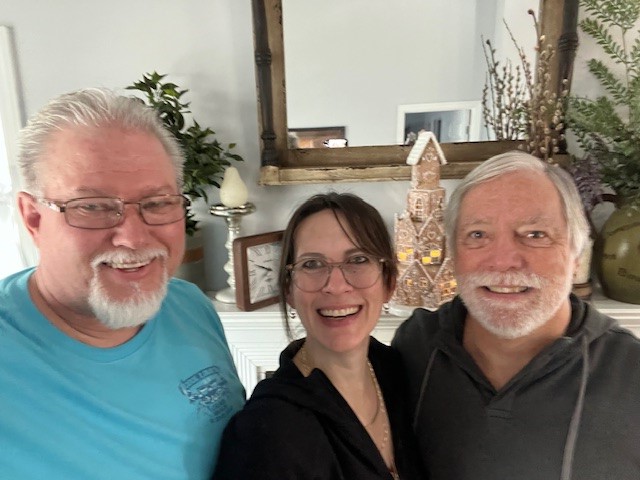
What created that difference for me? I had flunked out the first time I attempted as a student attending Iowa State University. By the time I returned to Dana, I had been questioned by a faculty person about how committed I was. I was both offended, but simultaneously frightened. Had I been outed? Was I that imposter? As I started my time at Dana, it was not others who had to convince me; that was something I had to do on my own. I had to put the work in. I needed to find the discipline to move me beyond anything I had ever done in the classroom, in the dorm room. It required a commitment that was continuous. And it was not an easy thing because I had already failed . . . I had seldom if ever pushed myself beyond what I imagined, and yet, I had done it once before . . . it was accomplished as a 17 year old, underweight, undersized, and clueless Iowa boy who had found himself on the yellow footprints of MCRD in San Diego. The first two nights of boot camp I put my head under my pillow and cried. My father was correct on two accounts: first, I had no idea what I was getting myself into; and second, and perhaps more importantly, it was not like Boy Scouts, there was no quitting and going home. I had little choice other than to buck up and do it. And amazingly to me, sometimes even now, I did it. Even now, and I was in my last week of boot camp 50 years ago right now, it is still miraculous to me. The picture above is even some of the extremes I have had. This is my COVID hair the Spring of 2022. It would be cut about a month later. Significantly more hair than I had 50 years ago. I actually got FB messages from some friends in town telling me I needed to cut my hair. The imposter thing again.

I think I will always have some feeling of being the other . . . it is not completely unconnected to the other that too many feel in our country today. What makes us overcome that feeling of being less than enough? What offers us an opportunity to be honestly proud of what we accomplish? When are we satisfied that we can live that reality of the Lutheran liturgy that states “Well done, good and faithful servant?” I have been blessed beyond measure in so many ways. This past week I had the opportunity to speak with another of my high school classmates. I remember her as a thoughtful, kind, and gentle person. It was interesting to me to hear her remembrances of me. I learned as a high school student to fit in, to get along. I was so small, I often felt inadequate, but wanted to be appreciated. The trait I hear most often is that I was shy. I do not think I realized that. Shy was how I covered what I felt . . . a feeling of being overmatched at most of what I did. Perhaps that is why I am as dedicated as I am to helping others succeed. I do not think I met those people, those who gently pushed me in my life until I got to Dana College. It was there I found the support system, both from classmates and professors, allowing me for the first time in my life to believe I was capable of anything. In spite of that first encounter with one faculty, who was definitely an outlier, there were so many who who supported me to become the professor I am today. I tell those who knew me early in my tenure-track career, I wish you could be in a class today. I am so much better than I once was. To those like the late Dr. Daniel Riordan or Dr. Patty Sotirin, who never stopped believing in me, thank you. As I finish up this last year, I hope the other I have become is something you can be proud you mentored. To my students, this video is what I hope for you . . . imagine the best you can become.

To everyone . . . thanks for reading.

Dr. Martin

Lee and Judy

Hello from the back deck of La Malbec,

I am the only one here at the moment, and it is a bit warm, but the fans are blowing, the music is playing quietly, and I have a moment to reflect on the first week of classes. It was an incredibly busy, but for the first time it feels like we are, to some extent, back to a normal excitement of a typical fall semester. Of course, managing 6 sections of writing will keep me hopping, but the students seem to be more engaged, and the COVID hangover that typified last year is nice to see. We’ll see where we are in Week Four.

During my August travels through Iowa, I stopped in Newton, IA, the city that created the Maytag Man from those childhood commercials. My initial experience with Newton occurred in early June of 1978. I was a member of a regional Lutheran Youth Encounter (LYE) Team named Daybreak. The five of us would travel almost 48,000 miles in the year we represented LYE, focusing our travel in the Midwest, but we spent two weeks in churches in Iowa before we moved on to Carol Joy Holling Bible Camp in the Omaha area. However, our first church in Newton provided my introduction to the most incredible host family I would experience that entire year. A couple, who were in their late thirties with two young children, became the most gracious hosts for my team leader, John, and me. Lee, a former high school math teacher, had moved into the business world, working for an engineering company, and Judy, a woman who would put Julia Childs to shame, made every meal or snack a creation. The interior ambiance of their home was like walking into a magazine, and the barn-board lower level we occupied with our own restroom and incredible down pillows and comforter were stunning. It was like being in a 4 Star accommodation. However, that was just the beginning. Their son and daughter, who are now am architect in Paris and a professor in North Carolina, were adorable, respectful, and as gracious as their parents. Each day we spent in Newton, we were treated as special guests in this little Iowa town by everyone we met, and it was evident should we ever return we would be welcomed with open arms. At the end of the week, because our transportation for the year was being used by another group, our host families met our next destination (which was slightly more than 100 miles) hosts to accommodate and simplify our travel needs.

What I did not know at the time was a conversation at breakfast one morning with Lee and Judy would refocus my life. We sat at the table, and Judy, as she can do so thoughtfully, so directly, and yet so kindly, asked, “Michael, what do you want to do after this year?” I answered quite assuredly, “I want to go to cosmetology school and learn to be a hair dresser.” I am sure most of you are just shaking your heads, but that is what I thought at the time. She looked at me wisely and compassionately across the table, and said something along the lines of, “That is not a bad thing to do, but you should think a bit more because I think you could do something more significant.” This is a paraphrase of her words, but the spirit is accurate. At the time, I merely took it as she wanted the best for me, but did not think much more about it. Now decades of life later, I know that this specific moment, along with a conversation with my sister-in-law, which probably prompted me to apply for the LYE team to begin with, are two moments, seemingly innocuous, which changed the trajectory of my life.

Before the Lutheran Youth Encounter year would end, Daybreak would be back in Newton two more times, and I would be there with the Swensons another time on my own when they loaned me a car to drive to Minneapolis, where I was presenting at a conference. At one point, I needed winter boots and as I was living on a dollar a day, they purchased boots for me. Lee and Judy became like hybrid parents/older siblings to me. They came to my graduation from college. Whenever, to this day, I find myself traveling across Interstate 80, up until this last time, I stopped at my home-away-from-home at 721 W 11th Street S. They cared for me after one of my surgeries, and I have spent a 4th of July and even other holidays each time graced by their unparalleled and never-ending generosity. Throughout the years, there are two constants: they welcome me at any moment, and as we have aged our conversations have turned to bigger things than my hope of becoming a tonsorialist. Judy continued to own her own business and manage it for decades, but her ability to host, cater, and create unmatched living experiences in the confines of their beautiful home was as constant as the proverbial Timex watch.

Over the years, I watched as they added on, remodeled, and updated their home. They never ceased to amaze me with the ability to envision and establish yet a new level of inviting character. Every detail from floorplan to wall covering, from furniture to the minutest of accoutrements were considered, but never in an ostentatious manner. You were simply welcomed. And then there were Lee’s vehicles or the other things he loved to manage. To this day he has a convertible, and over the years there have been a string of classic vehicles hid away, brought out for special occasions. He seemed to always find the just perfect auto that offered a glimpse into this somewhat understated personality that hides behind his twinkling eyes and ever-present smile. He is as gracious as Judy is, but they compliment so well. Over the years, regardless my situation, where I was living, if they were home, their open door policy was a welcome respite from whatever was happening in my life. I knew I would get insightful conversation, incredible food, amazing hospitality, and an attitude adjustment that put me in a better place than when I arrived at the Swenson residence. They are both the products of Iowa farms and that work ethic that underpins all they do is there, but it never seems to be obligatory. It is just done without fuss, and with perfection.

What I realized over the years is they became a trusted, admired, and adopted-by-me, but perhaps to their chagrin, older siblings. There is so much I admire about them, from their parenting, their business acumen, their philosophical perspectives, and yet, that is the only beginning. As I have watched their children grow into adults, the parenting that occurred only cemented my belief in how wonderful they were both professionally and personally. Their children have gone off on their own, choosing and managing very different paths, though both with an international flair. I remember visiting once while attending a 4th of July celebration in town. Their daughter, who was a beginning teen ager at the time, asked me how old I was and when I told her thirty, she exclaimed loud enough to drown up the music, “30!!!” Oh my goodness, I remember being a bit mortified. I remember Lee and Judy coming to visit me here in Pennsylvania, and we made a snowy trip to Jim Thorpe. While I did not completely white-knuckle that trip, it was a memorable journey over the 93 mountain. While that is not all that long ago, there is the reality of time. If I am almost three times as old as when I met them, they too have aged, though generally quite gracefully. As I visited them in Newton during my summer travels, they have moved from the home I have considered a haven for all these decades. However, not surprisingly, even their new space, with many of the same accoutrements I knew at 721, one is welcomed into their new space with the same wonderful charm I have always known. And yet, there are differences . . . age will do that, and even though I was 23 when I first arrived in Newton, there is a sort of immortality (there is that word again) to my elder adopted-siblings. They have been there to guide me more than they will ever realize. Their exemplar as two incredible humans has offered a steady and thoughtful beacon that has shown throughout life since my first visit. One of the things more apparent to me as I have grown older is how we continually encounter people or situations, ones which have significant consequence on our life. Lee and Judy have been two such people, and to say they have blessed my life, enriched my life, and helped me become a better person is a profound understatement. I hope I might bless someone someday they way they have blessed me.

Thanks for reading.

Dr. Martin

Immortality Isn’t

Hello on the traditional end of summer,

Queue up your favorite Eagles tune or claim to be a “parrothead” even if all you know is “cheeseburger in paradise” or “Margaritaville,” but the last couple months have rocked (pun intended) my musical world. While other members of the Eagles had already passed, the weekend news, informing us that Jimmy Buffet had succumbed to a type of skin cancer was quite a shock. The number of Facebook posts from every corner of the country (and not-surprisingly into the Caribbean) continue to multiply. What seems to be most common are two things: in spite of being worth a billion dollars, he seemed to be genuinely kind and generous, and much like the immortality of parents or grandparents for their children or grandchildren, James William Buffet seemed to establish a sort of immortalized cult following for anyone who enjoyed his music, his well-known brands (be it Margaritaville – restaurants or lodging, and Landshark beer – and reviving the Corona brand also), or his themes of “fins up” or the Coral Reefer, which I read he wanted to establish as a particular strain of weed. Quite the empire for a Mississippi boy, who after being rejected by multiple recording labels founded his own. And yet, while the recognition, the economic empire, and even the seemingly unparalleled generosity have created quite a legacy, and tributes either on Facebook or other bands covering his music will continue, mortality has happened. Mortality is something we admit readily, but avoid even more quickly.

And yet, those jolting moments come. Sometimes too soon; sometimes when we are snapped into reality by a changing circumstance; sometimes, like this weekend, when reminded that even those who seem larger-than-life aren’t. For me, there’s been both the human-family reality of those loved who have passed before I was ready. On the other hand, as a parish pastor, I remember occasions when whether expected or not, helping others face the inevitable morality of a loved one was never easy, even when death was compassionate, ending the suffering that preceded that passing. Even now, there is one death I know occurred, but I was not there to either witness it, nor did I have any interaction beyond an Emergency Room visit. It occurred the summer I completed my Clinical Pastoral Education (CPE) at St. Luke’s Medical Center in my hometown. I was assigned to Pediatrics, Pediatrics Oncology, and Pediatrics ICU. Yet, this did not occur in any of those spaces, but rather in a room in the Emergency area of the center.

This was in the day of beepers, and I was beeped to call my supervisor, who informed me I needed to go to the ER section of the complex to speak with a 23 year old mother whose 2 year-old had received a quite dire medical diagnosis and even more tragic prognosis. I was to go meet her and her son, and offer pastoral care as one of the summer hospital chaplains. At the time I had finished one year of seminary, believed I had a solid faith foundation, and yet, I needed to explain how God might work when a toddler had little chance of living and a mother was facing the imminent death of her first child. I was just a student, but I could say none of that. The shirt I wore telegraphed that somehow I understood God, that I could interpret scripture as well as the why senseless things occurred. To put it accurately, I could not do any of that, and the shirt did little more than corner me into an untenable situation. Perhaps it was that I was in my late 20s; perhaps it was I was more of a realist than I knew; perhaps it was the loss of a brother and my grandmother, and hero, in my early 20s, providing some foundation that supported me beyond scripture. And just maybe it was the prayer of desperation prayed as I walked toward that room that guided me through that 15 minute visit.

The mother greeted me upon my arrival, shaking my hand firmly, and offering the following greeting, “I don’t believe God causes bad things to happen . . .” What an incredible gift from her lips. She did not blame the God she trusted, and it took all the well-meaning, misguided, bullshit platitudes of God choosing to take her child. She made my life exponentially easier before she even knew. And yet the second half of her statement was as much of a Psalmist lament and cry as anything I had studied thus far in my classes. She continued, “But tell me what good comes from this?” I am not sure I thought this at the time, but as I write this now, the word that comes to mind is DAMN!! What to do with that? I looked at her son, who was asleep. He seemed peaceful, and yes, angelic.

I remember swallowing hard, but hopefully not detectably, and I began slowly, “ I not sure what might be positive because it is unfair; it is unreasonable; and it is tragic.” And then I continued, “Two possible things that might be positives are first, we take time for granted and you will not. You will treasure each moment with your son. Second, as a mother, who loves unconditionally, you might find strength you never knew you were capable of. Beyond that, I cannot think of anything. Again, I think it is unfair and unfathomable.” I paused, looking to see her response. Her eyes welled up and tears began to stream down her tanned, but saddened face. I continued a bit further, mostly because of her initial statement. I offered, “I believe in a compassionate and caring God. I believe God hurts as we hurt, and cries as we cry.” I paused, adding, “At least, I sure hope so.” I remember praying for strength, a sense of calmness, and for a promise of as much time as medically possible. I shook her hand, holding it in my own, and I left the room. I had survived that gauntlet, but I felt saddened and inadequate. And yet, I lifted my eyes and whispered thank you. Facing mortality with a two year-old is a tall order for anyone, regardless their piety. That summer was a crash course in living and yes, dying. Weekly, I crossed paths with patients and family members who face their mortality, at times with some advanced inkling, but at other times with a brutality and unexpectedness that would (and did) bring people to their knees. There are no classes; there are no recipe cards; and there are no preparatory vitamins that offer some kind of inoculation from the moment life ends and we face our mortality or that of a loved one.

While the loss of well-known people receive incredible press, and there is the sort of obligatory medical explanation, as well as some additionally information about their particular malady, there are losses as of loved ones daily that go mostly unnoticed, but are as profoundly affecting as when the loss of someone famous occurs. Twenty-six years ago, the world stopped at the tragic loss of the Princess of Wales, Diana Spencer. Her passing caused another musical duo (Elton John and Bernie Taupin) to revise his classic piece “Candle in the Wind.” And yet a quarter century later, our lives continue, and people both enter and exit our lives. While I have noted the occurrence of my 50th high school reunion, I am not sure I noted almost 150 people have passed. Each of them had a family, people who loved them, others they affected. Life is an incredible gift given, and yet fragile and fleeting. I realize clearly my days are numbered, and the promise of tomorrow is no promise at all. .

While I too am saddened that my bucket list line that was “see a Jimmy Buffet Concert” will go infilled, I am forever grateful that my Dana classmate, Michael Keenan, introduced me to the incredibly original and unapologetic Jimmy Buffet. While the beer I will raise is not a Landshark, I will raise a Moosehead, the other thing Mr. Keenan introduced me to. To that Raiders floor on Four North Holling Hall the fall of 1979. The changes in attitudes and latitudes have been many since then, but on this Labor Day, fins up and to another day in this mortal world.

Thank you for reading.

Dr. Martin

A Lifetime or 50 Years and Counting

Hello from the Acorn Cabin,

As I complete another visit to Decorah, I have been blessed by the gentleness, the depth of caring, and the genuine love that characterizes the amazing Pilgrim ladies and the incredible families which have been created from their parent’s beginnings at 313 Ohio Street. The humility and goodness that characterized Don and Virginia is evident from every angle in their girls. There is a simplicity and elegance melded together in a manner that leaves you in a sense of awe from the experience of being in their actual presence. And yet, in their sense of merely being who they are, such praise would seem unwarranted, and perhaps even embarrassing. They go about their lives living out the very goodness they received. I am sure their eldest sister lives through each of them as she was both the kindest, and perhaps the toughest of all of them. I remember Suzanne’s voice as a sort of true-to-life angel, and as I was always in awe of my barely younger cousin. She was stunning in every way.

This trip I was fortunate to experience a simple family bonfire and s’more-making event. On a warm summer evening, extended members of three of the original six’s gathered at the now eldest’s farm. The number of children, grand- and now great-grand children are more than two people’s fingers and toes. And that is only three of the six girls. In spite of such a number, I did not witness a single moment of discontent or an acrimonious emotion from anyone. That is stunning, but speaks to something more profound. The love and care that epitomizes the cousins and their spouses continues through, and to, their generational prodigies. Last evening I had the opportunity to speak more with two spouses, and while I am sure their are moments, as with any couple married for decades, the goodness on the opposite side of their unions is also evident. Furthermore, I have experienced the same loving kindness with the third of the remaining sisters and her spouse, both who treat me with such love and care. The only reason I cannot affirm the expected similarities with the another is because I have not been fortunate enough to be in their physical presence, but I have spoken with them on a number of occasions. What I see in each of the daughters of Don and Virginia is a sort of blending of their parental personas. Each of the girls brings an beauty to everything around them, which was their mother, and yet they have the attention to little things that I suspect came from their mathematician father. Certainly there is some conjecture in that assessment, but I will go with it.

Coming back to Iowa, I notice a beauty I did not always realize as a child, or even into my 20s. The geometric rows of soybeans or corn, the hues and different greens that color the hills and valleys, particularly here in Northeastern Iowa (and yet across the state) are quite a sight. As I drove over on Sunday, the practice of strip farming was particularly apparent in one farm as there was a patchwork of beans and corn terracing the hillsides, which is simply thoughtful farming, both to manage erosion, but also to provide different nutrients for the rich Iowa farmland. I am returning for a 50th high school reunion, as noted in other places, but during those high school years, I worked on my best friend’s farm, where we walked beans, chopping weeds in the morning dew. I did not really appreciate what was happening as it was a summer job to put some spending money in my somewhat bare pockets. Looking at those same fields now (or at least the same type of crops), it is amazing how differently I view what the hard working people of these fly-over states do for the entire world. There is still nothing like Iowa sweet corn to me, and I have learned that soybeans have so many more uses than what I believed as a teenager. As the last couple days pass before I see people I have not seen for half-a-century, I am trying to imagine what will happen. I did have the opportunity to speak with one of my classmates by phone this week, and I will meet with him on Friday afternoon. I am glad to be doing that because as I look at the people coming, there are not all that many I remember. Additionally, there is the reality that I have not really spent much time in my hometown since I graduated as the first class of Sioux City West High School. In fact, the two schools are having a joint reunion because the larger of the two eventual West/North student bodies had come from the enormous school in our town of 100,000, Central High School. In fact, that is the school from where my mother graduated. I have reached out to one classmate who was from my smaller school, which was the second combined body to create West, but I have not heard back. She dated a friend in high school, and I appreciated both of them a great deal. Of the people I most associated with in high school, some have actually passed, some seem to be unaccounted for, and some seem to not be able to attend. So, there is some nervous anticipation on my part. And yet, I am glad I have taken the time to make this trek. Sioux City was a wonderful place to grow up in. It had everything we needed to be content, but it was not so large that you felt swallowed up by its enormity. I see it now as the ideal. And considering I am coming back for my 50th, I realize all these years later that I had profoundly strong, capable teachers. From Ms. Barker for English to Mr. Flom for history; from Mr. Erickson for economics to Mr. Littlejohn for science, there was no where I was not tutored and taught by incredibly talented and committed instructors.

There was no inkling that as I might return to this event a half of century later, I would return as a professor in both a liberal arts college and a medical school. I was a capable and smart student I now realize, but I was an uninspired student. I was an undisciplined student. As such, when I chose to do well, that was certainly within my grasp, but I was inconsistent at best, graduating with a 2.8 or so. Nothing that would turn other’s heads to notice, particularly when it came to going to college. I was a confused 16/17 year old high school senior with no sense of what I wanted to do or where I might do it. I had a group of friends, mostly in band or in my church youth group, and they were important to me. They helped me manage the struggles of my daily life that were more profound than I ever let on. And being in a new school my senior year allowed me to disappear even a bit more, which was probably both good and problematic. Physically, I was smaller than most; I think I was more immature than most; and I was certainly more unsure than most. I often say it took me until the age of 25 to grow into my ears. And now as I return, I look little like I did as that seventeen year old. My growth spurt occurred after high school in Marine Corps boot camp, and now I am probably in as good of shape as I have been most of my life. I doubt most will either recognize or remember this little squirt from Riverside. It will be an interesting weekend.

And yet, there are other reasons to return to my roots as a Northwest Iowa boy. All of my relatives are laid to rest there, and I want to see those resting places. While there were certainly those who had preceded my life, so many of them have passed in these past 50 years. So it is a lifetime ago for some of them. As I was surrounded by family from the Olsen side of the family this week, last night’s conversation returned to the 10 children that my mother, the youngest, was part of. I cannot imagine having 9 sibling, but yet, in my own biological extended family, I do. It is just I have never really been around them. When I go to Graceland Park Cemetery, both my biological and adopted family (which are distantly related to a point) are there, and within yards of each other. When I gaze out at the various markers, the stone edifices that commemorate their lives, they seem to say so little because there is so much more to what they did. I am reminded of the line from Phantom of the Opera, when Christine Daáe is walking through the cemetery singing to her father. “You were once my warm companion . . . wishing I could hear your voice again . . . passing veils and sculpted angels, cold and monumental; seem for you the wrong companions, you were warm and gentle . . .” Certainly there are those laying there who fit these words perfectly. My father and my grandmother are the two individuals for whom I still believe I have the most affinity if I might understand the person I am. When I go home this time, I will work to find two new graves that are in yet a third cemetery. Jim and Joanne Wiggs are also cousins, but more like parents to me. They were beyond kind and gracious to me, and they were my home in Sioux City when I returned during the 2000s. They both passed in the last 5-6 years, and I have not visited their burial place. Joanne was an elegant, beautiful, and living June Cleaver. Jim did more to support me when I was struggling with a second marriage than anyone, providing both perspective and a moral comfort that allowed me to continue on, eventually receiving my PhD. Furthermore, I know the the town I refer to as home has changed profoundly since I grew up here.

It is now Saturday evening and I am back in my motel room, after attending events over the last two days. How amazing to connect with some people I have not seen face-to-face for 50 years. Two of the women in my class in attendance have been delightful to speak with and listen to. The one I knew better than the other, but the quieter one of the pair was always quiet; however, she seemed incredibly intelligent and extraordinarily kind. Sharing with her the last two days has been a wonderful treat of reconnection. The second was the daughter of my piano teacher. She was a bit more outspoken then, and I am grateful to her for the way she shared so much about her memories, working as a catalyst for some of the rest of us. Four other classmates who spent time last evening were all significant in my formative years, but each for different reasons. One continues to be in a band that was an important element of the Riverside band scene. Their eventual lead singer was my best friend. One was in choir with me and an important part of my group of friends in that space. He was outgoing and remains to be so. The third is sort of the glue who holds us all together, and continues to be such a wonderful connection; he married another classmate and she was (and I believe remains) to be one of the most gentle souls I knew. The fourth, being one half of childhood sweethearts who are a significant part of my high school experience. He continues to be as kind and amazing as I remember. Each of them brought a different piece to the tapestry that is the foundation of who I am. Most simply put, it would have been wonderful to have some more Cavaliers there, but I am blessed beyond measure for the last 36 hours or so. I will see a couple more before I leave my town once again. There is a comfort to driving the roads where I learned to drive. There is a comfort to sharing names of people that we all remember. Tonight at the more formal event, there was a slide show in memoriam, and the number of people who have passed number almost 100. That is a sobering reality of a 50th reunion. Names that were surprising, names of some of the more seemingly-significant members of that class of 1973. And yet, a stern and forceful reminder that death is an incredible equalizer. I was also blessed to have some people set at our table tonight who would have been Central students had there not been a new set of schools, but they were gracious and kind, which was more important to us Riverside people than they might have realized. I believe Leeds students probably felt the same. Riverside and Leeds were the small high schools in our town, and I am not sure if Leeds has the same dedication to their former school as I believe is evident in those who walked the quadrangle of Riverside Jr/Sr High School. There is a strong school spirit in the Cavaliers of RHS, of that I am certain.

Tomorrow and Monday, I will meet up again with some classmates, and some life-long friends. All of these things remind me that the people I have spent time with the last two days have been friends or in my life since kindergarten. That is over 60 years. That is, for all practical purpose, my life time. So indeed, the title of the blog is apropos. Riverview as a building does not exist anymore and the school where I spent most of my childhood living across the street from is no longer a school in the same way. So much has changed, but returning for the reunion is a poignant reminder that some things persist. Last night, listening to the stories about classmates was both enlightening and surprising. As one of our classmates noted at the banquet this evening, take time to reach out to those who matter. I have spent the evening looking up the passing notifications of those whose names and pictures were shared in memoriam. A number of them passed in their 50s, but some even earlier. Life continues and when we are not in their immediate circle, their passing goes unnoticed, but shocking when it comes to those still walking a journey. In 1973, we were wide-eyed, as most are at 18. We had little idea what the world would hold, but now I find myself realizing I grew up in an opportune time and in an amazing city. I had little idea how fortunate I was. I am pretty sure I do not want to wait 5 or 10 years to reach out to some of the people who were not in attendance this weekend. There are a number of people I realize had more consequence for me than I comprehended. Indeed, it has been a lifetime, but I am still counting. Praise God for that opportunity. The video is a 50th anniversary video of a song that came out when I was that high school student in the senior year of 1972-73. Indeed, we were Northwest Iowa kids, but American kids who loved American Bands!!

Thank you as always for reading!!!

Michael (Dr. Martin)

Wondering the “Why”

Hello on a steamy July afternoon,

As the global sizzles from the Southwest to the European continent and beyond, it is increasingly apparent that we are facing temperatures and heat that is beyond what we are used to, climate events that have cactuses in Arizona dying from the heat. That is stunning to me. Since when does it get too hot for a cactus? And yet, there are daily examples of how serious our climate crisis is, and I do not believe the term crisis is hyperbolic. I struggle with such a reality because I believe my generation is guilty of squandering/overusing resources in ways we never imagined. Certainly, it was living that American dream, but there is so much of our innate national identity of profound individualism that fosters this consumerism, this over-usage; it seems the proverbial chickens have come home to roost and the coop is over populated.

Earlier today I was speaking with my Dominican amigo, my brother-of-sorts, and our conversations are always thought provoking. In spite of his being in the states for over 25 years, he is still a Dominican, and one trying to understand why Americans do what they do. His questions vary from why do we seem content to simply continuing to use resources as we do, to why do we have politicians who seem too old to govern (and that is on both sides of the aisle), to what do I believe will happen in our next elections. Of course, I have no definitive answers, and more accurately, I have the same questions. What I think about more frequently, and with more fear, is what have we done to our children, grandchildren, and future generations. When I read we are currently as hot as we have been in 120,000 years (how this is determined I am unsure) that is beyond startling to me. What are the chances we might stave off such dire predictions, prove consequences? To say it might take drastic measures seems a bit beyond the obvious, and yet I am still driving my little beetle around. I am seriously trying to figure out how to move to an EV for my next transportation, but the realization that our country does little to promote or support such an option is readily apparent. From infrastructure to connectivity, be it the actual charging or supporting it across models and makes, there are significant issues to navigate.

One of my FB friends, a person I’ve known since what is now called middle school, is lamenting living in the American Southwest. The record temperatures both in terms of temperature as well as number of days is unbearable, and yet moving everyone out of the desert we’ve attempted to make into an oasis is not going to happen. I remember reading a book by Marc Reisner titled Cadillac Desert in the late 90s. It is a history of our development of a desert and how there would never be enough water to support such a population. In 1960 Las Vegas had a population of less than 100,000 people, and by 1994, it grew tenfold and continued a 6% population growth yearly for the entire decade of the ‘90s. All in a place that averages about 4 inches of rain a year. Stunning! The average individual consumes 130,000 gallons of water a year, and 90% of the water in Las Vegas is sourced from the Colorado River, the same river that now dries up before it reaches the ocean. And yet, how much do I conserve when it comes to my own usage? The reality of what has happened in the American Southwest is a problem for all of us. I am forever aware that 20% of the fresh water on the earth is contained in the 5 Great Lakes, and my time on the shores of Lake Superior have provided first-hand experience of that astounding reality. The value of water has long been discussed, but the majority of us pay little to no attention to that looming catastrophe. Some of my academic colleagues from Africa or other places are certainly cognizant of the scarcity and political potential of something I take for granted.

At the moment, another month has begun, and I am back in my home state of Iowa, presently residing in the Acorn Cabin, on my cousin’s farm in Decorah (if you go to the summer of 2021 in my former posts, you can learn more about this special place). As I make my way across the Hawkeye state once again, this time I am attending a 50th high school reunion at the end of the week. I have repeated noted this summer thinking those venerable reunion attendees were “older-than-dirt.” I had little idea that someday I would be doing the same thing. There is a connection to this and the “why?” In the title of this post. And the connection is both profound and of imminent significance. While we imagine the future, we seldom consider it carefully, intentionally. We simply wonder where we might be or what we might be doing. I have noted from time to time I had little idea or intention about my life. Am I the only one to be able to say that? While I might be different to some extent, I do not believe my path or thoughts to be so outside the norm. And then there is the reality that I am in my late 60s, and I wonder what difference I might make. Moving toward a more sustainable life and practice is certainly something to aspire to, something that might make a drop or two difference in the ocean of humanity, but to what collective benefit? I do realize the proverbial finger-in-the-dike possibility, but then I ponder if it is only a sort of works righteousness reality or practice. I want to believe in n something more efficacious, but I am struggling to do so. It returns me to the question that titles this blog. Is it possible for anything we do to be altruistic? Are the actions or thoughts that precede the question ever done for the simple goodness of something? My more pessimistic self would say certainly not, in the Pauline perspective of μη γενοιτο. And yet that should not stop individual decisions to be more prudent in our practices. There is so much that I realize I have been selfish about. Is it because I have never really experienced the reality of scarcity? It is because I am someone who falls into the individualism that is such a foundational thread of our American psyche? Is it because I am overwhelmed if I take the time to consider what we have done, and I consequently throw my hands up in despair? It is because I am really thoughtful on one level, while simultaneously to some degree (pun intended) lazy when it comes to actually making the changes necessary? Is it because I am about ready to retire and feel I can focus on something I perhaps should focused upon much earlier? When I speak with my students or read about their concerns, climate is at the top of their lists. Perhaps that provides some glimmer of hope.

As I sit here in the middle of the corn fields of Iowa, the reality of nature is all around me, and yet I have been exposed to much of that my entire life. Even in my travels, I have been on islands, which are certainly affected by climate change. I lived on the peninsula that juts up into the largest of the Great Lakes. It is awe inspiring to stand on the breaker walls of Lake Superior out by Calumet. I am aware that 1/5 of the world’s fresh water comes from those 5 lakes. When I was in Norway earlier this summer, it was impressive to see the number of electric vehicles on the road. I also realize they have a different size country, a different perspective on how the government interacts with their people. And yet there is a collective appreciation for the world that I do not experience in America. Our individualistic propensity for entitlement because of our understanding of freedom, of manifest destiny, has been consequential, but in many ways we perhaps failed to anticipate. The notes about Las Vegas are an example of that very idea. Water will soon become more and more about politics and power. That is unavoidable.

I wish I had made changes earlier in my life. While I have been environmentally conscious, I am easily lulled into apathy or passivity. Why? I think there is too much of that lack of immediate consequence for me. So why now? I do not have a clear answer to that question, but I guess I believe it is how I want to move forward. Do I think it will assuage my struggles with guilt and shame? Probably not, but it might make some small change in how I believe my own footprint might affect others. I know as I traverse across this home state, I will see more of those enormous three winged windmills than anywhere else I have ever traveled. I do not find them ugly; and in fact, quite the opposite. Sort of like huge birds of white on a sea of green. So, I am committed to making some changes over the next year and beyond. What will that mean for me next summer. I have some ideas, and those ideas have to do with EVs and other options. It is the bucolic feeling that being on the farm brings. Not entirely, but it most certainly contributes to it. There are so many things to consider. And yet we have considered for decades and done little, or so it seems. The song below, a version of Joni Mitchell’s 50+ year old admonishment seems appropriate. I am not sure how I will manage it all, but I will let you know how the process goes over the next year.

Thank you as always for reading,

Dr. Martin

One Clear Voice

Hello from the kitchen counter,

It is nice to experience new things, visit new places, imagine different possibilities, and then again, it is nice to be back in my own place, in the quiet of my home. As I return to Bloomsburg, my little town of 12,000 residents, it seems so removed from the world I have just traveled. It is like any place, people go about their lives, managing their daily tasks, but how often do they (or even do I) ponder the larger world around them. The demands of daily living consume our immediate attention, pushing aside the issues that should, perhaps, demand a much greater level of concern. During the past week some of those areas might include a continuing frequency of catastrophic weather events, the debating of individuals and powers at the NATO meetings in Vilnius, or daily shootings throughout the United States, regardless size or city, location within the city, or seeming irrational reason to shoot-first-ask-questions-later mentality that has become the country norm.

And yet, in spite of my raising these concerns, I too feel helpless in believing I can make much difference. And yet, I contemplate these things because of relationships, because of actual experiences in those places, and because I do have more of a gestalt understanding (thanks Thomas) of our world than I perhaps realize. For me there is both a clarity and a complexity that dialectically pulls me, like stretching my arms in two opposite directions, all the time trying to figure out which side will win. Or more likely will my body simply ache from the duress? While I was in Scandinavia, it was impossible to not feel the sort of contentment that permeates daily life. Denmark was just again voted as the happiest place on the planet. The commitment of the Norwegians to EV was stunning; I observed that many of the same brands of vehicles on the American roads are in Norway as EVs. I do realize that you are not comparing apples to apples when you are speaking about 375 million people to 6 million, but I learned about how the Norwegian government created the Government Pension Fund in 1990. Take the time to look it up on Wikipedia and see what it has done. Think if we might do such a thing here. Again, I am speaking conceptually, but might it turn our debt around, giving our children a stronger footing for their futures? The point of this is to consider the long-term viability of our world, of our country, and yes, of our individual existence.

There is an irony that the investment in or use of a petroleum asset could be something to help us out of the very thing that petroleum has created: climate change, and I can appreciate some much get disagree, but if you speak to many of my students they raise two significant concerns more readily than other. Climate change is one and our polarization as a country being a second. As someone who studies argumentation, I believe in diverse opinions; I welcome spirited debate; and I yearn for consensus. There is common ground, always, but finding it requires listening as well as speaking. Consensus is never about one side winning; it is about both sides making some progress, thereby believing and feeling some sense of accomplishment. Polarization, acrimony, and stubbornness, simply because one can has little to do with progress or working for the people. Somewhere in the midst of our current disharmonious atmosphere, it is possible we could find one clear voice, a John, the Baptist, crying in the wilderness of our broken country? What might that voice sound like or how might it effectively call out so people of all persuasions might listen? These are things I ruminate on, lay awake at night considering. I do not believe this is some simple idealism, but rather it is a matter of necessity, particularly if we are to create a more sustainable world for those who follow us.,

I do believe in progress, in the human spirit of ingenuity, but if all progress or creativity is first about the money, we have little change of sustaining an inhabitable planet. And before you think I am simply naive or foolish, let me offer an example. When I was in graduate school, I took an incredibly insightful class titled “Business and the Environment” from a brilliant professor named Dr. Christa Walck. I researched the recycling processes and costs incurred by that recycling in the Keweenaw Peninsula of Michigan. I traced collection, the transfer, and the monetary remuneration of various recyclables. What I learned was at the point of monies received, some recycling actually lost money. To be sure, that was not the case across the board, but much like various stocks on one’s portfolio, not everything ends up in the black. What I was forced to consider from my research was simple: is money the only factor to consider when deciding what to do? Too often this is what we focus upon, the free enterprise philosophy that looks to be profitable at every turn. If profit is always the first consideration, or more likely the only consideration, it seems the clear voice that shines through, in spite of our disregard, in spite of our avoidance, is greed. How much can we make versus what are the consequences of our actions. As I have pondered this post over the past week, the war in Ukraine continues to rage, and Russia has pulled out of the UN negotiated grain deal. Politics is about power; war is about power; and certainly, economics is about power; as noted in the lyrics of the Linkin Park song, “Hands Held High,” – “when the rich wage war, it’s the poor who die.” This has always been the case. Even now, in spite of our National (and for the most part global) position, many of those dying on either side of this Eastern European conflict are ordinary people. The platitudes of patriotism, and assertion of those who talk about sacrifice for the cause, or the idea of giving all – each has their rationale and their apropos place, but behind that there is a wife, a husband, a parent, a sister, a brother who mourns that loss of life. There are the questions of did it have to happen? Did that death make a difference to the cause? There is no clear singular voice able to answer those wails or cries asking for an answer. Patriotism has its place, but seldom is the pain of loss easily replaced by some belief that the end of life, the absence of one loved is validated by a sense of a meaningful death. And I say all of this as a veteran.

In the clutter of our current world it is difficult to find a quiet space where we can listen to that singular voice, the clear and simple declaration of direction. As I consider my life, there are many times I wished for that time when somehow clarity would ring forth, telling me what path to choose. Seldom, if ever, has that happened, and yet I must ask why? It is because I could not hear it or is it because I did not take the time to listen? I am not sure I have an answer, and it seems too simple to believe it is some of both. As social media permeates every nook and cranny of our lives, and as the daily concerns of AI push us to question if anything is real, where might we turn for that voice? I believe we all have that inner voice; it is the voice of self-preservation. I remember my cousin, Jim, looking at me earnestly and lovingly, admonishing me, “Take care of Michael.” He would say this to me daily. I was separated at the time, eventually to divorce, but I struggled at every turn because I still loved my wife. In spite of my failures, my missteps, I wanted to make things work. I did not blame her in spite of anything she did or said. Regardless her responses, I tried to make excuses he said. At that point, he was the voice I needed to hear. Most of my life the voice I heard were words that easily blamed myself. Indeed, I deserved some blame, but I was willing to shoulder more than was mine to carry. It seems that it often takes me a quarter of a century to figure some things out. It takes a persistence from both my world and beyond to realize how most of my life is connected by a couple of significant events. Those events have created a person who is resilient, primarily optimistic, and yet tempered by a degree of melancholy. Sometimes those voices combat each other, but it is that battle that has created the person I am. Perhaps I simply need to slow down and listen as the voices work through their ideas, their concerns, or their hopes. Can I find that one clear voice? It seems that somehow I generally do. Perhaps Peter Cetera has it figured out better than I imagined.

Thanks for reading,

Michael

Larger Voices Calling

Hello from about an hour from Oslo,

I am in Norway, a country significant to my family heritage and childhood memories, but for the first time. It is a place I have read about, a country I have spoken about with both academics, classmates, or relatives – a country, which has intrigued me. That intrigue occurred for multiple reasons as long as I can remember. So being here as I write this is both a check off that proverbial bucket list, but also something that offers me an opportunity to put so many dreams and thoughts into the space my former classmate and friend refers to as gestalt. While I certainly have only a beginning perception of what Norway is both physically and experientially, the sum of what is happening each day has been beyond everything I could possibly imagine.

Mr. Kjos-Kendall seemed somewhat larger-than-life to me when I arrived for my Dana residency the fall of 1979. He was formidable (but not pejoratively) physically because of his height; he was captivating because of his personality and ability to influence the campus ministry elements, and most anyone with whom he interacted. He was more conservative than I was theologically, but as clarified over the last 10 days or so, the influence of his home congregation, which had a significant presence at Dana, and particularly in my own specific class, had a different albeit Lutheran practice. Our conversations reminded me of how our piety is shaped by external forces and seldom by our own inidividual thoughts. How ironic!! Specifically, the thing that became abundantly clear to me while visiting Tom and Ellen, as well as meeting two of their three children, was the profound effect our advisor, Dr. John W. Nielsen, had on both of us, but that influence was (and it) nothing that has disapeared. It has been life-altering. His sagacious care for his students changed who we were, but has intensely affected who we are. At some point in each day, whether it over a cup of morning coffee, or a toast with a raised ounce of Akavit, “The Pope” has been an integral part of our conversations and our recollections. I think I can say with complete confidence that we both believe it is how he pushed us to question, to ponder, and to imagine that has been most efficacious as we have continued with our journeys beyond those Nebraska bluffs on the Missouri River. From the Introduction to Religion class to the class on Christian Thought, from our Humanities sequence to both of us traveling on an interim (we went different years), this incredible Minnesota native, steeped in his Danish heritage and an Oxford education, exhibited a profound dialectic between the conservative and liberal which changed lives. His probing way of working with students pushed them to explore their limits both intellectually and experientially, continually offering support in their educational as well as their maturing processes.

And yet as Tom and I reflected on our mentor, his exceptional intelligence was perhaps second to his incredible humility. The effort and care he put into his classes, into the humanities program, which was one of the top ranking programs in the country, and groundbreaking in its unique approach, was about his students. He wanted to prepare us for the world we would enter by providing an unparalleled and integrated understanding of the world that created the foundation we stood upon. That is a tall order, but he understood both the reason for doing so as well as how to accomplish it. There is seldom a week that goes by in my own teaching that I do not think about both what he taught me and the method he used. To say that he lived what he taught cannot be overstated. His quips either in front of class or during individual conversations still stay with me. While visiting Sande, Tom recounted the process of building the clock that he and Jim Borden did for a senior project. If you know this clock, you cannot help but be astounded by the workmanship and the size of this wooden masterpiece. Our conversations about the Panassus edifice reminded me of the day it was unvieled. I remember being as speechless as Dr. Nielsen himself was. They designed, created, and toiled in secret on their masterpiece as a labor of love for what the Humanities and Dana had given them. What an incredible repayment for something that cannot be repaid, but if anyone ever did, I think the two of them probably top the list.

My traveling over the last month has been my own sort of interim travel, but during the summer rather than during a January term. Visiting Anton in Humlebæk to see him graduate was wonderful, but considering the possibility of hosting a student returns me to Dana. It was there I learned the value of culture and visiting places in the world. To be in Osterport 42 1/2 years later when spending the day in København with Anne Marie and Hans Christian could not help, but recall memories on that night with Dr. Nielsen’s nephew. Visiting the Viking Museum, Kronberg, or the Domkirke in Roskilde reminded me of how we followed Dr Nielsen around to the Danish sites he believed important for Dana students to experience. Likewise, going to Norway was significant because of my own family heritage, but also because of my cousin who taught at Luther College, leading the math department for many years. It was ironic as I was in the airport in Copehagen I saw a young boy with a Luther College t-shirt on. His mother told me she had graduated from Luther and they now lived in Montana. Connecting those Lutheran roots on various levels are significant to me. Once again conversations about Luther, Bonhoeffer, and other things significant to my faith journey with my Dana classmate was important to me as I still try to understand my own evolving piety. As I write now, it is a couple of days later, and I am back in Northcentral Pennsylvania, trying to create some semblance of order, both to the last month of experiences, but to a summer than is already half gone. There is so much to ponder, and presently I feel like I am in about three different worlds.

When I think about my time at Dana, it is a mixed bag of things, and 40 years can blur some things, but one of the things I do remember is spending a lot of time with my guitar. I loved working on and learning new things, and music has always been an important part of my understanding who I am. Duing my senior year, Crosby Stills and Nash released a new album, and still one of my favorites, titled Daylight Again. I remember being quite excited when I learned to play “Southern Cross.” The chorus of the song included the phrase that is the title of this blog. There is a power and strength in time. It can heal the wounds of our life; it can help us redirect ourselves towards something more helpful. Perhaps I love the song for the implicit message that there are always “larger voices calling” if we will only listen. It is often after the trauma of something we need to retreat and sit quietly, believing that the Spirit can still use us to accomplish something positive. As I drove earlier today, I found myself pondering what the next year might offer both as a sense of closure on a significant portion of my life, but also what it might do to prepare me for what could happen on the other side of my teaching. Further, I considered what imagining a possibility of being a vagabond of sorts might say about me. I can already hear or perceive what some of you are thinking, but I think what I realize is quite simple. There is a continuous thread from my childhood to what I imagine now, and it is not a fragile or fraying sort of thread, it is an incredibly strong perhaps central piece. That thread that when you pull it allows an entire garmet to unravel, but this is not an unraveling it you will, it is that larger voice, that Spirit. And yet it is, at times, a lonely space, a melancholy tone. It is something that I believe most of us have, but often push aside. Somehow, I choose to embrace it. It is the thing that connects my entire life, and perhaps creates a foundation that makes sense to me. It is the thing that was thrust upon me from the outset, and yet nothing I asked for. It is an experience that I dealt with differently than my sister. It is something that, believing I am incapable of escaping, I have chosen to make the best of.

The summer travels connect the pieces of the fabric, like many of the fashions worn throughout my life; the places visited, the people experienced again, or for the first time, reminding me of the Hegelian dialectic that seems more and more apropos as I age. There is always something new to learn, to experience, and to weave into my daily life. From visiting with Pattie, David, Barb, and Nancy, spending precious time with them back in Omaha, from seeing Amy and Charles, Tom and Elaine, Becky, and her wonderful children, from a quick dinner with Jennifer and John and surprising Brandon, from visiting my sandbox buddy, her husband and sister for a quick breakfast, those threads of my life were strengthened. The beautiful handweaved rug that graces my kitchen is a reminder of an incredible person who first taught me more about relationships than I could ever fathom. I am blessed by that to this day. Indeed, “I think about how many times I have fallen. Spirits are using me, larger voices calling. What heaven brought you and me cannot be forgotten (I’ve been around the world).” Little did I know this small Iowa boy would travel the world. Little did I know that I would learn from one of the most incredible travelers by spending a January interim class with him. Little did I imagine perhaps the road is my home. So much yet to learn.

Thanks as always for reading. Additionally, I am pondering the creating a book of excerpts of my blogs. If you remember a particular blog you appreciated, would you get in touch with me? Thanks for that too.

Dr. Martin

Remembering

Family

Hello from my guest room in Humlebæk,

It seems this summer is both one to remember as well as on of remembering. It is about 4:00 a.m., and the birds have begun to sing, and the first rays of light have illuminated my comfortable room here on the Danish coast, a bit Northwest of København. A first trip back to the country initially visited in January 1981 has been quite phenomenal thus far, and my appreciation of the incredible ingenuity of Danish people, particularly in the area of health, grows exponentially. The primary reason to come back to Denmark has been to attend the translokation ceremony for Anton, my exchange student, which I promised to do. The Danish customs for graduation from Gymnasium are beyond any celebratory practices in the States for sure. And this year, his family also hosted a Sankt Hans celebration later that evening, so I experienced two profoundly significant Danish cultural traditions in my first 36 hours of returning to Denmark.

Certainly having a specific place to visit and be welcomed makes coming back to Denmark easier, particularly when the number of years since the last visit has created an appreciably older individual. And yet, I can see the thread connecting the first trip during the Interim class of 1981. Those initial seeds, the developing of an appreciation for and a desire to experience a world of cultural beauty that Dana College and the Humanities program instilled in me changed my life. Those lectures from amazing professors and mentors as well as the option to experience a world only witnessed through pictures in books changed my life. Dana’s intentional connection to its cultural roots and that experience was directly connected to my choosing a Danish exchange student. My travel with the Pope, and my recollections of Denmark that January, made the roulette-spin resulting in Anton coming to Bloomsburg real. There continues to be an ever-developing skein connecting thoughts, emotions, and experiences during this return trip, all while developing a deepening appreciation for both the present and the past. Certainly reconnecting in person with Anton, his remarkable sister, and their unparalleled parents is a gift beyond words; but also being able to share their space as they shared in mine last year, and adding commonly relatable moments provides an unbreakable and strongly-woven unique clothing that only we understand. However, even now, I feel deeply connected to that undergraduate experience on the bluffs of the Missouri River. During this trip, I have been blessed to meet grandparents, aunts, uncles, cousins, and friends, and their is a common thread, I have been welcomed in ways beyond compare. At the party celebrating the Midsummer Night, every person, without exception, took the time to speak with me at length, and because my Danish is virtually non-existent (unfortunately), they all graciously spoke in profoundly effective English. Never once did I feel left out of their celebration.

It is the beginning of the week, and I have been invited to speak at a breakfast this morning to a group of engineers and others who have an appreciation for my medical experiences. Who would have thought such a thing possible? And yet as I reflect, I believe even these issues perhaps began to really begin to come to the fore in that trip back during my sophomore year at Dana. My experience of loneliness would be compounded when I developed pneumonia, and I would spend time with another exchange student I had met even earlier in my life, an ironic parallel even now. Yesterday, a trip and days walking around Copenhagen brought back memories while simultaneously creating new ones. Forty years has changed the harbor area significantly, and the unseasonably warm day (and it has been beautiful) had people out in force. Street food, coffee, and experiencing the changing of the guard at the palace as well as the gardens at the National Library or the innumerable boats on the canals made for a lovely day. Riding the Metro and the trains reminded me of Dr. Nielsen trying to keep us all together as we ventured through Western Europe considering Hemingway and Mann all those years ago. Today, I will return to Kronborg, where I stood 42 years ago on a cold, rainy, and foggy January afternoon. I remember thinking at the time, no wonder Hamlet was so sad. I think we will still make it to Roskilde and perhaps the Dom, but time will tell.

It is a day since I began writing, but yesterday was a profound experience for me. I was provided an opportunity to speak with engineers and other individuals working at a company called Coloplast. This happened because of a chance conversation at the Friday night party, when I spoken with one of Hans Christian’s friends. That developed into being asked to tell my story about being an ostomate at a breakfast meeting of engineers who develop products used by those like me. After the first presentation, I was asked to do a second one, and in between I met with a chemical engineer who works in a user lab. It was beyond optimal for me, I seems to be so for them. I learned some incredibly insightful things about the miraculous things that go into the products I use for my daily life. The questions and the interchanges that occurred were quite amazing to me. Life has a way of meeting us where we need to be met, even when we do not know it. As noted, what appears to be a connecting thread between my two trips to Denmark (issues of health) are perhaps appropriately connected in this presentation. As I write this I am taking an hour train ride to Roskilde, visiting the Viking Museum, another return to January 1981. I have, additionally, tried to connect with one of the Danish students from that time at Dana, which had been successful and heart wrenching. They are critically ill, a reminder of the consequences of aging and fragility. This student was a wonderful addition to the Dana community, and a person for whom I had great appreciation. It was quite wonderful to reconnect not all that long ago. So the return to Denmark seems to parallel what it often a dual perception of time.

Does it seems to be forty-plus years since I rode these trains, walked the cobblestones, or gazed out at Sweden from Kronborg? Indeed, that and more, and yet, simultaneously, impossible. But the difference in my perception from 25 to 67 is exponential. And yet, some things are constant. The meticulousness, the industriousness, and the care for others and the world by this country of a mere 5.8 million people is inspirational. I also experienced these characteristics in Anton when he arrived in Bloomsburg on that late August evening 2019. Likewise, while it is already over three years since he left, he has changed quite significantly: his physical stature continue to increase in height. I believe he is 6’3” at least. The face has matured some, but the basics and infectious smile remain. He is personable and ready to engage, but he has continued to develop into an amazing young adult. His view of the world and what matters is still insightful, thoughtful, and balanced. He is headed on another adventure shortly, spending a year as a windsurfing instructor in the Canary Islands. Darn, for him and me. It offers an option for yet another trip. Time will reveal the possibilities.

I was amazed by the efficiency of the rail system that interim with Dr. Nielsen, and my appreciation remains. The Danish system is efficient and clean. It is also timely. As I ride, the amount of time spent reading and pondering events to the East has been staggering, both in amounts as well as in an attempt to understand. Conversation with my former student, who admits concern and fear, are guarded but helpful. Simply knowing they are okay is sufficient at the moment. I need to reach out to parents also. It is hard to believe tomorrow is my last full-day in Humlebæk, but a new adventure beckons me. My paternal roots hearkens back to Norway. I remember my Great Aunt Martha reciting her prayers in Norwegian. Indeed, Lutefisk was something we ate at Christmas. Lefse is something I appreciate to this day. What I remember most about the difference in Danish and Norwegian people is the profound pride (and this is not to say that Danes do not have this, but rather they are perhaps more thoughtful or subdued in their expressions of it) in their heritage. I have noted my high school history teacher, Mr. Larry Flom, who would stand up in the middle of class and puff out his chest, making himself as large as possible, and speaking out loudly, but not exactly hollering, and exclaiming, “Norway!” and then he would sit back down as if nothing happened. It was one of the many endearing things he would do. The smallness of our immense world was demonstrated again during the evening, when a Dana classmate reached out to tell me that one of her children and her husband are attending the music festival in Roskilde today, which is where we spend the entire day yesterday.

Indeed it is my last full-day in Denmark, and yesterday was a bit of a reprise of a Dana day all those years ago. There have been significant additions to the Viking Museum in Roskilde, and they had a flood there in the building in December of 2013. I do not remember being in the Domkirke where all the Danish royalty are buried, but it was awe inspiring to see such incredible history in one place. Additionally, I got a lot of steps in on our journeys. Last night, we went to the Louisiana Museum here in Humlebæk, and I viewed one of the most interesting and creative exhibitions I believe I have ever experienced. All I could think of was my former colleague who is an art professor and to hear what she might think of it. It is an exhibition of an Icelandic artist named Ragnar Kjartansson, who is a painter, a musician, and politically active individual. The exhibition is titled “Epic Waste of Love and Understanding.” He is worth looking up. We also had dinner there, and it is a place where Anton has worked since returning to Denmark post-YFU year. Today, Anton and I will spend some time together running errands and just hanging out. He has another graduation party tonight, so I will be in bed long before he is home. The trip to Denmark has exceeded expectations on a number of fronts, from meeting extended family to experiencing and engaging in situations unanticipated, from reacquainting to revisiting places from 2/3s of my life ago, it has been an incredible week. I am excited to fly to Norway tomorrow to explore a new country, and yet what my family would call the old country. I am thrilled to reacquaint with a person who preceded me at Dana, but was an important part of my first year there on the bluffs of the Missouri. Indeed, there will be a combination of remembering and creating. It is what we do as we meander throughout our lives. Somehow it seems appropriate to post a video of a hymn that is an important part of my memories from Dana, but also an significant part of our Lutheran and Scandinavian heritage, and a song I hope will be sung at my last service.

Thank you as always for reading.

The Perpetual Dana Student and now Professor,

Michael and Dr. Martin.

Recollections and Revisions

Honoring

Hello from Kona, Hawaii,

Later this morning I will onboard winging my way back to the mainland. The last 5 days have been spent on the Big Island, a place I last visited almost 50 years ago, although I am not sure visited is completely accurate as I was stationed on Oahu. Twice a year we would relocate to the Pōhakuloa Training Area in the middle of the island to practice our firing skills in both 105 and 155 Howitzer Batteries. My stationing in Hawaii was unexpected as I had only been in Cherry Point for a few months before being offered a billet at Kaneohe, and, of course, as a NW Iowa boy, the chance of locating to the Aloha State was beyond anything imaginable. So in April of 1974 I was aboard a C-140 on a MAC flight from Offutt AFB to San Bernardino and then to Hickam AFB in Honolulu. As I scroll through the Rolodex of my memories, I remember feeling a bit overwhelmed by being so far away from my Iowa roots, honestly a bit frightened by being in a new unit, and realizing there were about to be some significant changes in my life. I also remember the heat and humidity, which in starched utilities seems incredibly oppressive.

Within a month of my arrival, my unit, Alpha Battery, 1st Battalion, 12th Marines (and I suspect other Batteries too, though I don’t remember for sure) would relocate to the Big Island for a month, as noted above. The largest of the islands in our 50th state is a very different place than the idyllic scenes of the surfing waves of North Shore or the sunsets over Diamond Head. Indeed, Kona has such things, but the majority of the volcanic large island is exactly that: lava and wilderness. It too has its beauty, but it also has eruptions (like one actually occurring this week) and snow. Yes, it snows. I did not believe it until I saw it. Last evening we drove to Mauna Kea’s access center to watch the sunset, and it was windy and cold (probably 30+ degrees cooler than an hour away in Kona, and certainly not humid). Driving through the clouds, both ascending and descending, looking down at clouds from our vantage point, or seeing a sunset occur through the clouds is mind-blowing to some extent; that is for sure, but it is not something I need to experience more than once. While my travel mate has teased me a bit concerning my amazement upon seeing the PTA gate, I was such a naive young person at that time. I had little idea of the differences in the islands, the climate, or even the culture. Now I am actually stunned. Additionally, while I found being in Hawaii somewhat astounding, even a half century later, I am not nearly as enamored. In fact, I would struggle to find a reason to return. I know msny might find such a response alarming, but I am not that 18-year-old, wide-eyed Iowa boy, turned Marine. The other thing that did amaze me (and provide some appreciation) is the stunning cross-section of culture encountered daily, from mainlander-transplants to others who have come from throughout the Pacific Islands, the cultural tapestry is unlike anything I have experienced in such a confined space.

My recollections of Kona and Hilo were walking the streets of the main tourist areas, which is what a number of 18-23 year old single-Marines would do. I remember being out dancing until early hours of the morning and often getting back to our hotel rooms as the sun rose. I was often a tag-along in the group as I was much too shy, inexperienced, and a follower-type in those days. It is ironic what things we remember when we focus on a specific time. A succinct memory of those Hawaiian mornings included experiencing a new McDonald’s option: breakfast and an Egg McMuffin. I remember being overjoyed to find something so readily available and simple for breakfast. A weekend back in civilization after 10-12 days in the field were always a welcome respite. And being free to travel around the islands seemed quite special for a Midwest boy, who had never traveled much of anywhere. Fifty years later and a significant amount of travel provides a substantially different optic of what Hawaii has for a soon-to-retire, upper-60s, professor. As many know, I am pondering quite intentionally what my next step, move, or adventure might be. And the more I ponder the less certain it seems I am. Having options are generally positive, yet those choices can also be perplexing. Even as I have traveled, my online class has been part of my week’s work, and there will be more tomorrow, but I seldom find it burdensome. Often I find it stimulating and of importance. There has been more than once I have given thanks to end up doing what I do. It is often I note I love coming to work each day; I love when the lights go on and something is not longer difficult for someone. Seldom do I regret where I am, and perhaps that is, in part, why I am so unsure of what next.

Revision, that global consideration of what one might do with something written, is seeming more and more parallel to the change between being gainfully employed and moving into retirement. It seems to require some of the same extensive rethinking of identity and purpose (not all that different from rethinking audience and purpose). Perhaps there are more consistencies in the two than initially considered. It is difficult to revise something we have spent so much time developing, so much time pouring ourself into. My former department chair has writing a book titled Retiring Minds, which I have just started to read. The anonymous anecdotes about some former colleagues were tremendously telling as well as amusing, but facing retirement is, at least for me, a bit daunting. Is it because I so need a plan? Is it because I am so used to having a sense of control over the primary areas of my life? I have thought somewhat incessantly about this, and I do not, at least currently, have an answer. However, control is certainly an element. As I continue to age, I find I am more shy about what I will do, and I find I am less comfortable in social spaces. And yet, ironically, I have no difficulty in being in front of a classroom. I had little difficulty preforming on my guitar, hosting a wild game dinner, or even preaching after those first few sermons. It is because in those letter spaces I had some sense of control. It is not merely being in front of people, rather it is having a specific plan or purpose I believe. It is understanding the basics of the audience. Perhaps I understand the changes that retiring might bring, but I do not always have a sense of where that will take me or what the consequences of this new journey might be or hold for me.

And yet, might the ability to control what I do, when I do it, or where offer even more a sense of predictability? Will the knowing what I do not have to do be something that provides a stability I do not have as a faculty or department member of a constantly evolving new integrated university? Fortunately, I have a year yet to figure it out. What I realize, much like my students, and even more to my disdain, it seems I am asking for a rubric. Just tell me what to do. I find my own words ringing in my ears – “i want you to think.” And that makes sense to me. Think about the possibilities and make a plan. The other day as I drove across the states is my youth, I spoke with a seminary classmate. He is such an insightful person, one who asks such thoughtful and probing questions. He picked my brain getting me to ponder the next phase and consider it with a gentle, but serious examination, allowing me to ask the appropriate what if? questions. After our conversation, I found myself gazing out the window (but keeping an eye on the road) and marveling at the verdant fields of growing corn or just emerging soybeans. The beauty of geometric rows and managing of hills struck me with a new appreciation. The sounds of the birds, the smell of the soil, and the profound beauty of the heartland gave me both pause and joy. And then the next day, I heard the incredible promise of Matthew 6 during the interment of both Fred and Ruth Peters. “Look at the birds of the air; they do not sow or reap, or store away in barns, and yet, your Heavenly Father feeds them. Are you not much more valuable than they?” So much of our value is placed on what we do, how much we make, or what we have. And yet, as I was reminded over the past week, it is the people in our lives that give it the most value. The recollecting with David and Barb, the spending precious time with Patti and Nancy; the meeting for coffee with my former student and meeting her two fabulous children; the sharing lunch with my profoundly talented Stout colleague and the unparalleled wisdom of her spouse or connecting with both neighbors and others in Menomonie reminded me of how fortunate I am. Spending an evening with my beautiful cousin and her wonderful husband or sharing breakfast with my lovely sandbox buddy, her husband and sister connected me to my entire spans of life in less than 5 days. From age 5 to present, there was someone from every decade of my life. The recollections are too many to process at moments, and yet they have all been witnesses to the constant revision that seems to characterize my life. It is each and everyone of those people and how they have been woven, much like the uniquely wonderful rug that currently graces my kitchen floor, into a tapestry. Each offering something that makes the person who ponders his next steps hopeful in the midst of uncertainty. Comforted in believing all these individuals and our shared experiences will provide a foundation that offers stability in spite of change. Indeed, through recollecting we understand more completely, and yet dimly, as the scripture reminds us. It allows for revising of our path because revision offers the possibility of improvement, of more fully appreciating what our ever evolving future might bring. To all who found time in their schedules this past week, thank you. Thank you for blessing my life and my travels.

Thank you as always for reading.

Dr. Martin

The Ever-Changing World of Medicine

Hello from the mini-Acre on West Sterner Avenue,

I have to admit today that I am missing my house, and the fire pit area. And yet, I am very pleased with the new (now perhaps not new as it is almost two years ago that I left there) place and what has been accomplished. I need to thank so many people for where I am and how things are going. And yet, as some are aware, the last two months have been a bit of a rollercoaster. Yesterday, I was reminded in ways not anticipated how fragile life is. I am still reeling from the story I listened to, but more significantly to the emotions that came through on so many levels from this amazing woman is quite unlike anything I have experienced since perhaps my clergy times. It seems I’ve found more occasions than usual where I have been confronted with our temporal fragility. From lists of classmates no longer in our physical space to a belated watching of a memorial service of a former colleague (a generation younger), from phone notifications of others involved in accidents to unexpected stories of serious or terminal illnesses, it would be easy to develop a rather macabre perspective on daily existence, and yet, simultaneously and instantaneously, I am reminded of the miraculous ability of our medical ingenuity.

As noted previously, I’ve spent some significant time with my various medical team members attempting to figure out my miraculously altered, and still functioning anatomy. From the first day of physical presence to this morning, my body has managed to provide what is needed for daily existence, certainly not always in a typical or expected manner, but my very writing of this post in a cogent manner is proof of the miraculous ability of our bodies. If I seriously consider my premature arrival and the first approximate 18 months of life, both the singular birthing and subsequent likelihood of less-than-stellar care or nutrition are likely to show a direct cause/effect nature of how our gestation and earliest development have life-long repercussions. This was not clearly evident until the head of neurology at our local medical center spoke to me following a somewhat significant event shortly after my return to Pennsylvania to teach at Bloomsburg. After looking at my MRI as well as previous film from a decade earlier, he said, “The very fact you are functioning as a capable human is a miracle; you could have easily had CP, been grossly [mentally disabled] (he actually used a different term), or other maladies is astounding. And instead your present as an incredibly intelligent person with a PhD. I think what caused his assessment to sort of be overlooked was he found a spot of concern on my face under my eye. That would be biopsied and I would have a MOHS procedure done in the next hour or so. I looked liked I got into a fight and forgot to punch.

As I take on yet another battle in my continuing health journey, it is impossible to not be aware of how our changing abilities to respond offers opportunities to manage things before unmanageable, and yet at what cost? While some of the recording of what my body does is mind boggling, and the pharmaceutical options are astounding in their ability to bring my body into balance (and there is a literal sense to all of this). And yet the drugs, on one hand do have consequences know while the other drug is so new there are no long term studies though it seems to be a somewhat wonder drug. There is the actual cost without insurance, which I do not pay, but the cost per month is more than I could imagine trying to pay. While I am well aware of the stories of how people are forced into life- changing decisions regarding medication, it seems I too could, more likely than not, be such a person. In fact, I was encouraged to begin a couple of the drugs because trying to begin them on Medicare is much more arduous. The reality of such a statement is ludicrous, but that is the cost of maintaining one’s health in America. This is not a new understanding, but it is a new personal realization, and that is in spite of being significantly acquainted with the reality of hospitals, doctors, and a plethora of health care people for half of my life. It does not go unnoticed that with one rather memorable exception, I have been profoundly fortunate that the 100s of 1000s of dollars have been covered. My consideration of coverage and what happens with my life has most often been simply pay my deductibles. Again, I know that is not the experience of many.

This time, in spite of no hospitalizations, has been more eye-opening than probably 98% of my medical interactions. Perhaps my first major surgery in December of 1986 is more extreme in terms of a shock to my daily reality. There is also a reality for me in that surgery was the beginning of much of current difficulty. It was the first of numerous intestinal surgeries that would revise my GI track in some substantial manner. At the time, barely into my 30s, I realized the seriousness of such a substantive revision, but I am quite sure I had no inkling of what could follow. And now, more surgeries than I have fingers; more procedures than I have fingers and toes; and numerous complications of the complications (seriously), the teamwork and attention of so many doctors, specialists, or nurses as well as the care of friends and family has been tremendous, and they deserve so much credit and appreciation for the fact I am sitting on a plane writing this today. . . . So I am four days into a return visit to places I first experienced as an 18-19 year old. At that point I was amazed at the beauty and cultural differences of the 50th state. My exploration of the big island was always with my fellow Marines, and it was a different time in our world. This visit I am still stunned by the incredible beauty of the water, but I did not remember the black beaches. And while I visited both Kona and Hilo, but I do not remember anything as I have returned. Again, of course, it is a half century, and I am quite sure I was walking different parts of both cities as a young military person. What I know now is some medical things experienced even then were precursors of what would happen in the decades to come. As far as my return to Hawaii, it is nice to return, but I do not need to do it again anytime soon. Again, the beauty and experience has been quite eye-opening. I think I am content to be a mainlander.

Even today, I was working with local pharmacies to manage today’s medical requirements. I am fortunate we have the connections and capabilities today. I was able to get what I need to manage my daily monitoring. Even more helpful was my ability to get only one instead of all three. It will suffice in getting me home. I will need to plan more effectively going forward, but that is on me and not the fault of the medical establishment. Even as I have tried to work with various pharmacies, I was reminded of how fortunate I am to have the latest available options. Not every pharmacy had that available or in stock. Likewise to have the money for a single part of the larger typical 3-pack was fortunate because it is not inexpensive. The four prescriptions that are now required are beyond expensive, but at least currently I am still employed and have insurance. The reality of what is to come, however, is not unnoticed, and something that must be considered.

We are amazing and incredible resilient instruments. I have lived that resiliency and continue to do so. When I get home, I have more appointments to schedule, but the complexity of scheduling has become infinitely more difficult. Because of some requirements, I have to schedule other things, which will take significant time into 12 hour windows that only occur every 10 days. Because of some pills, I have to schedule food and such around all of that. More over, most importantly, this is not something to take lightly. What I am profoundly aware of is this: in spite of the unparalleled manner by body has adapted over the last three decades, it now needs additional help. And yet medical advances made the possible management once again within reach. Yet again, it seems that adage is still needing to grade papers is still true. For whatever reason, I have been given the continuing option of living life with a great degree of normalcy. Once again, I have been provided the profound gift of continuing a life of purpose and promise. To all of my medical attendants, pharmacists, physicians, and caregivers, both personal and professional: thank you seems tremendously inadequate. And yet, it is what a offer. With gratitude and humility, I say thank you and bless each of you for giving me so many chances to stay alive and productive, to live a life of promise and hope. It is a wonderful world.

Thank you for reading.

Dr.Martin