Good morning,
As I drove to Burger King this morning, I heard it was 5-7-0 Day here in North Central PA, which is the area code of the majority of phone numbers here. According to the radio, it was initially noted when we were locked down for COVID, and was meant to remind people of their connection regionally even while isolated. It has grown into a more profound celebration of the area, which is probably a good thing as we seem more divided across the board. I am actually stunned at moments when I consider the discontent that seems so significantly prevalent in our daily lives today. I am sure there are other times in our national history that we were much the same (the Civil -quite the oxymoronic term – War; the Great Depression; even the struggle to create a nation). Is there a difference now? Indeed, as is always the case, there are similarities and differences. Perhaps the similarity is there has always been a xenophobic nature to this nation of immigrants (ask your grandparents or great-grand parents if they are still around). There has always been a certain us versus them mentality to our melting pot. There is no small irony to either of these statements. Perhaps the difference that I find most apparent (and again perhaps sardonic) is in spite of our technological connectedness, we are more isolated than ever. We have more access to information, but seem more willfully ignorant than anytime in our history. I always say not knowing can be a difficulty, but not wanting to know is far beyond . . . for me it is unconscionable. I know those are rather mordant statements, but I believe the consequence of our self-imposed “head-in-the-sand” has been shown to be profound. I should note I made it through another weekend (and it was a busy one with Mother’s Day yesterday). The next week will also be a bit crazy with a graduation weekend at the University.
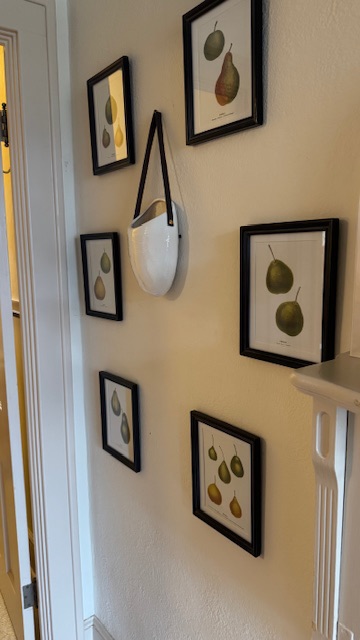
While I do not consider myself any sort of artist in the realms of drawing, painting, or those more sorts of tactile forms of artistry, I am always amazed my colors, hues, tints, and it is a bit surprising that though I grew up with no sense of decorating, I have a pretty good idea or eye for aesthetics. Perhaps so much so that I have been asked to help others decorate their spaces. I remember elementary art classes with a certain sense of angst because I was not particularly creative at that point of my life. I found it interesting, but seldom did my hands and fingers seem to have the talent to create something that would wow anyone. I think the difficulties were two-fold: first, I am not sure my mind worked in a particularly creative manner; and second, I was not the most coordinated little guy. Thinking back I wonder how much my sight difficulties might have created some of that? I think there were other reasons that connected to my own difficulties in my upbringing, but all of these thoughts are my sort of thinking out loud. And yet, as noted colors actually fascinate me. The ability of the color of something (like a room, the color of the house, the accountramenss of a space can completely change someone’s perception and their emotions about a space and themselves. I remember when I first painted the Acre house and people were stunned by the difference. I have found that a moss green (muted and more dusty in hue) is one of my favorite colors. I also like a lavender. Both colors are secondary colors, they require the blending of two primary colors (green, of course, being yellow and blue and purple being red and blue). Perhaps it is not surprising that my favor color is blue, the simple primary color. What I realize is that it is in the blending of things we come away with something more comforting, more accepting of possibility, more open to the vast array of change or chance.
Perhaps those colors and the reality that complexity can bring opportunity is a good realization as we seem to be more inclined to only do what we can understand or participate in the things we find comfortable. I remember when I chose to enlist in the Marine Corps at 17, looking like I was 13 and only weighing enough to pass the physical after a Gunnery Sergeant gave both the money and the directions to go across the street to a bakery and eat all $5.00 worth the bakery goods. While my father thought I had lost whatever small amount of common sense I had, I was determined to prove I could survive the notorious bootcamp. That was far outside my comfort zone. I remember enrolling in college at Dana College after I had flunked out of Iowa State a couple years before, again wondering if I was smart enough to be there. It was both frightening and exciting. Some of the most significant things in my life would have never occurred if I had opened to remain static, to fail to move outside what I knew. Even now, whether it is the bus build, the taking a chance to return to Bloomsburg with somewhat of a plan (in spite of what happened), or even now being in something I understand, but it still being new, change and chance creates opportunity, not only for me, but for others. Recently I did a training for servers . . . the most noteworthy takeaway for them (at least I hoped) would be for them to understand the importance of teamwork and seeing themselves first and foremost as a sales person. They are more than order takers or food runners and check collectors. They are psychologists, creators, and movie directors. The complexity of what happens at a table is controlled by them. What the table might experience is determined by how well they present and orchestra that encounter. They need to be able to walk up to a table and scan faces and expressions and determine on the fly what is possible. The faire available at the restaurant is outside the basic meat and potatoes I grew up on for Sunday dinner. The very first restaurant I waited tables in was called Aunt Maude’s and is still located in Ames, Iowa. At that time it had flaming desserts and flaming entrées. We used a Flambérechaud and that was not anything I had ever experienced. It was where I found that food and dining could become an experience. I am always amazed when complexity becomes a hinderance versus seeing it as an opportunity for growth. It can be discomforting initially, that is what change does to most of us. We are certainly creatures of habit. We like consistency. And yet, too much of that placates us, lulls us into complacency. Those who know me know I love to learn, to ponder, to explore. My foray into the culinary world in that first serving position was where I learned to love food, to experience food, to ponder what one might do with it. It is where I first learned about wine, alcohol, and how even that is a craft. Craft bartending is something now I never expected. I love what one can do. And why does it matter? An important and relevant question.
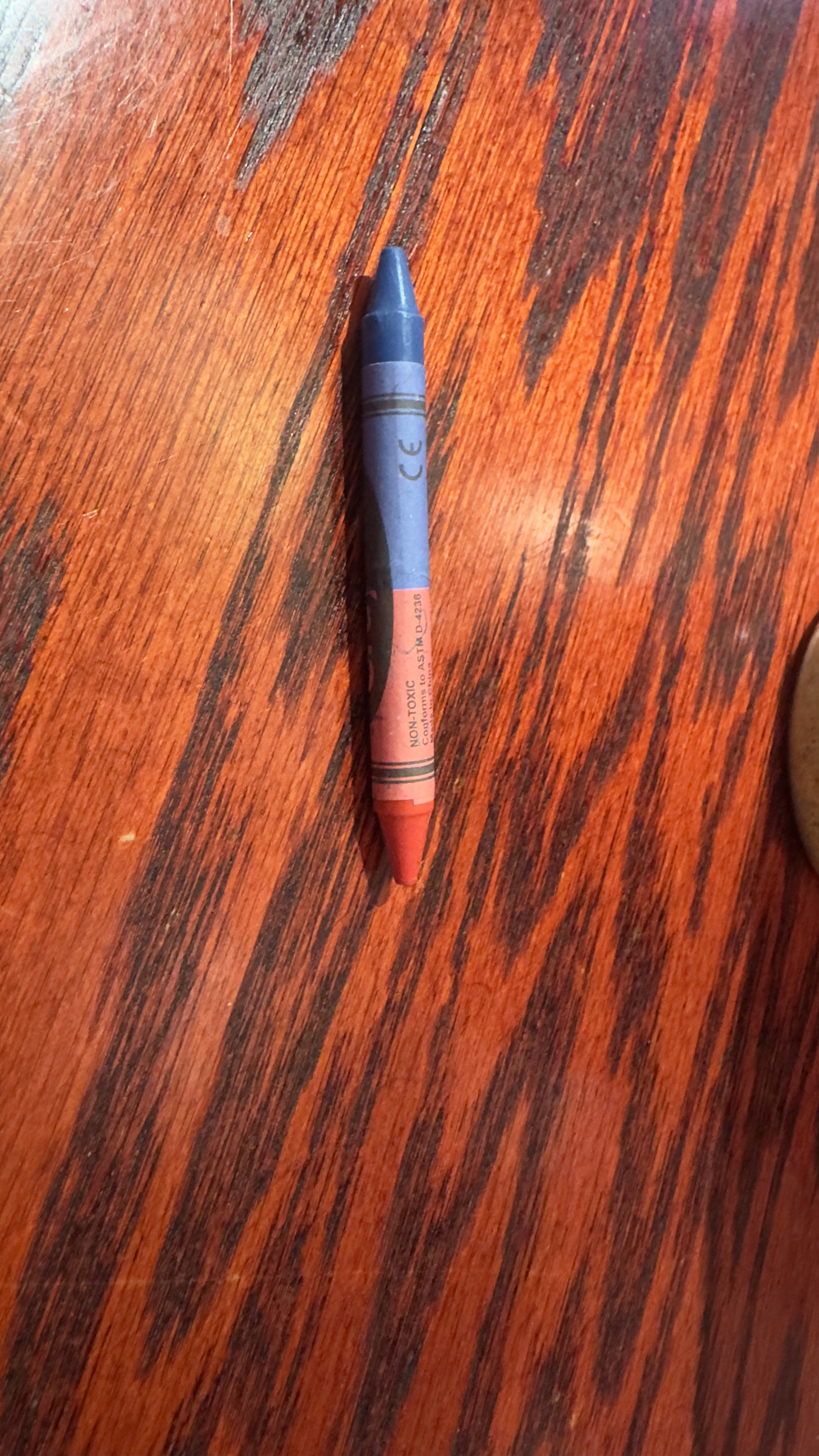
Time at a table with those we love brings us joy, it deepen relationships, and it changes how we experience nutrition. Too often we merely shove things in our mouths, and then we wonder why there are so many health issues. Everything is connected; it all matters. The crayon above is something given to smaller people (or maybe even some older ones) when they come into a restaurant in the area. The second one is yellow and green. There is something interesting in the combination crayon. It moves us beyond the simple. Even here there is a complexity. I am sure that Crayola, the preeminent maker of crayons, did this for simplicity, but I like the idea that there is a combining of possibilities. When I got up this morning, I was immediately thinking about the weekend and what is coming at the restaurant. What can I do to put pieces into place now that will make things run smoother? What can I do that will allow for both the front of the house and bar, the various stations in the kitchen and the line work for effectively as a team? What can we do to prepare ahead of time so that when we are slammed on every front to make it go as smoothly as possible. I am always thinking. As I have noted, I am a planner, a process person. Again, there can be complexity in the task, but when it is structured and orderly, the complexity is minimized.
I am a believer in perpetual learning. I am a practitioner of always moving forward. I am a adherent of treating the other with respect and care. For me that is elementary like the colors I learned as a small child. While it can be complex at times, and the colors take on different hues, tints, and possibilities, when managed it is elementary. I wish I could remember the name of that first art teacher in Elementary School. I have a former student in Minnesota who is an art teacher, and I know she is fabulous. I have a former colleague at the University of Wisconsin-Stout and she is the more incredible artist I have ever met. Thank you to you both for reminding me that art is life.
Thanks as always for reading.
Michael