
Hello from the Eastern Shore,
The next month or two seems likely to be a bit hectic, but I am working diligently to get the ducks-in-a-row. I am still trying to catch some of them, but that will happen. Last evening I had dinner with a friend and we had the most wonderful chat about the realities of life, particularly about how much we can expect to control as well as what we actually can control. Hearing someone else, a person I believe is both intelligent and capable, say much the same was refreshing. Too much of my life I wasted energy on things, on other’s attitudes or beliefs, or worrying about circumstances over which I had little or no influence. I’m quite sure I am not unique in this practice, and yet why are we so wired to engage in something with so little ROI? It is simply our need for power or control or is there something more deeply engrained in us as fragile humans?
Too often there seems to be a pattern where we occupy ourselves with something that does little to improve our circumstance and not nearly enough time either thinking or acting on issues that have a more significant consequence in life. Is it we are overwhelmed by the present or fail to realize the longer view of something. Since returning to Bloomsburg late last September, I think for the first 8 months felt like I had no footings, no bearings, and I was much like a flag on a pole constantly at the mercy of the wind and weather. Feeling that way is one issue; understanding why I felt like that is another. While I believe there is always a connection, it is impossible at times to clearly establish that exact relationship, but it’s also difficult to draw a clear line of demarcation. It is often how life works. There seems to be more truth or actuality to Hegelian dialectic: thesis, antithesis, and the resulting synthesis. In terms of identity and position, retirement and a sort of re-identification, it’s been a process. Likewise, in spite of some anticipated bumps, what I’ve come to know even more profoundly was the depth that the following statement I often spoke was true. Being a professor was not what I did, it is who I was (written now as past tense), and yet not even that is completely accurate. People still refer to me as Dr. Martin; people still introduce me as a retired faculty person from Bloomsburg (Commonwealth). I am still asked for my expertise when it comes to writing, if it is possible for me to be a reference, and even if I might be involved with a class that is currently being developed for veterans..
The point is simply this: we make choices and while we are influenced by the choices of others, the only thing we have any power over is what we ourselves do or how we respond. As I found myself seeming to be battered by the changing winds of retirement, and it was a serious storm, I struggled to find a place to hold onto. I felt like the proverbial boat was in the middle of the waves and I had no oars, and there was no engine or motor to use. That along with my continued health issues, which are always there made both things more overwhelming. Managing the changing rules of Medicare, insurance, and geography were unanticipated and simultaneously unavoidable. In spite of some thoughtful planning, learning the ins and outs of being on the other side of a paycheck was also more complicated than I expected. Again, there was little in my daily routine that seemed to be where I believed it would be. And yet, regardless the seeming contradiction of anything planned, I find myself in a place of relative contentment. Was the movement to this place a choice or merely part of a continuum? I think that is still up for discussion, for interpretation. However, there have been some choices made. A few more significant choices were in response to health, which I will assert are both necessary and common sense. Health is not about convenience; it’s about necessity. The reality of health insurance and geography are both consequential and, to some degree non-negotiable. However, most of them have been managed. That is a choice. There are times we might wish to avoid those decisions, but seldom is that wise. Health is almost never about convenience; it is about living optimally. Additionally, those choices affected other decisions like where will I live or how will I live. Fortunately, I had options, and I also had the graciousness of others.
From the time I returned late last September to now, the consistency has been location, and that has developed into the conscious decision to learn about my life as a retiree from the nomadic existence that I had planned to the living in a more systematic and sustainable manner that, while less mobile is more intentionally simple. Simplicity has its place, and at least it seems its benefits. The stepping back from some things, the no longer being required to participate. or even being included, offers that possibility of streamlining, of a reimagining of life. Perhaps what I have realized is my decision to pack my life to too much was a choice I made. It was more times than not ill-advised, but I believed it was necessary, required, expected. None of that was true; instead it was my response to what I heard or believed about myself. While I believe my father’s admonishment to be better than average was quite safe, I took that remonstrance to a level that was unrealistic, often unhealthy. Again, the reasons for such a response from me are both understood and simultaneously complex. My entire life has been spent trying to prove myself worthy enough, capable enough, smart enough, and while I can see how and why, there would never be enough. If I was told either specifically or by implication I was not going to achieve something that was a license to prove them wrong. Certainly some good came from that motivation, but moderating the effort was not an option. And yet, regardless the impetus, how I responded was still a choice. Life is a series of choices, even when we are placed in a situation where we seem to be little more than a victim. There are times we are placed in untenable circumstances. The power, the agency, we still have is how we respond. That is our choice in that less than ideal juncture.
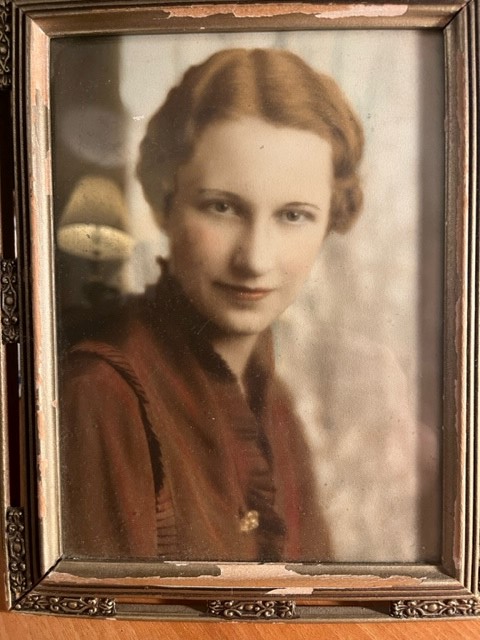
The last almost two years since I officially retired has been a cavalcade of both planned (although not as well as thought) and unplanned (learning experiences) that taught me a lot, both experientially as well as emotionally. As I am back in the space I’ve lived the longest since high school, two phrases seem to be my focus: to be gracious toward others first, and to be grateful for each day I have and the possibilities that are offered. To live that way is also a choice. Recently, I wrote about my grandmother. Those words describe her. Perhaps emulating her is the most precious thing I can do.
Thanks as always for reading,
Michael


It was so nice meeting and speaking with you at The Red School House on Thursday. I made some notes just yesterday for my own blog post about the subject of our health after retirement. I was startled to read your blog and see that you are experiencing the very subject I will be writing about in the near future. Events don’t always go as we plan them, which is often disappointing when we’re looking forward to them. I hope you continue to find ways to enjoy your retirement and I hope you vist me at MyPathWithAmy as well!
Happy Reading,
Amy