
Good morning from the coffee klatch,
While driving to get blood work done this morning, I was listening to NPR, and the story airing was about Luigi Mangioni, the young man charged with the killing of Brian Young, the late CEO of United Healthcare. What an interesting story about the national response to this young man who is finally headed to trail for his alleged killing of a 50 year old. The reason I often listen to NPR, contrary to the morning group I was headed to meet, is not because of my more liberal leaning, but rather because they seem to find stories that go beyond merely the headlines and they also are more inquisitive in their approach. The morning group, a group where I am one of the younger members, is such an important part of my last almost decade here in Bloomsburg. The great majority of them were born here, more than half of them are veterans, and the great majority of them have political leanings that are different than me. And yet, it has taught me so much; I did write a blog about them a couple years ago and I am very blessed to be part of their community of men, gentlemen who know this area.
And yet that is somewhat a departure from where I was heading. Some might find the pairing of the socialist revolutionary from Argentina and the well-educated, upper class, man of Italian descent, who is on trail for the killing of Young together in the title as a stretch, but it is exactly what the NPR story did. And the reporting made the connection of the two both reasonable and thoughtful. What I find fascinating is how much the current atmosphere of healthcare in this country and the struggle against poverty in Latin America in post WWII can be seen as having profound parallels. I believe it is also connected to the theological roots in Liberation Theology. Hear me out.
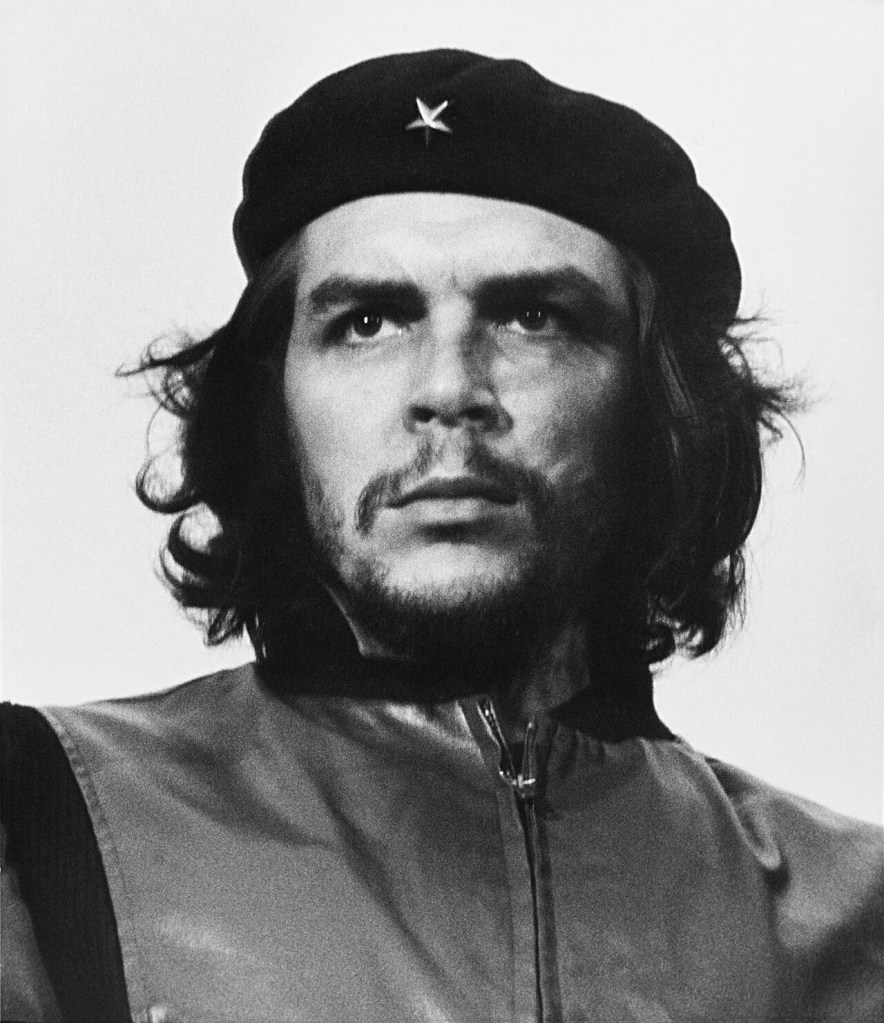
Che Guevara was a brilliant person in his own right, and a medical student who was astounded by the abject poverty he experienced. Between his disdain for that poverty and his belief that American imperialism in Central America as well as CIA involvement resulted in much of the disengagement of indigenous peoples, likewise a meeting with both Fidel and Raúl Castro would inevitably lead to his integral role in the overthrow of Batista and his eventual elevation as the leader of guerrilla warfare movement in many third world nations. Between his writing and his actions, his position as the leader of anti colonialism and the quintessential voice against what he believe to be an imperialist capitalism that exploited the poor, he became a hero, and almost cultic. His image became synonymous with those who felt the inequity is capitalism needed to be challenged. There is, of course, those who argue his methods were also problematic, and after his capture by the CIA in Bolivia and his being summarily executed, his cult-like supporters added martyrdom to his accolades.
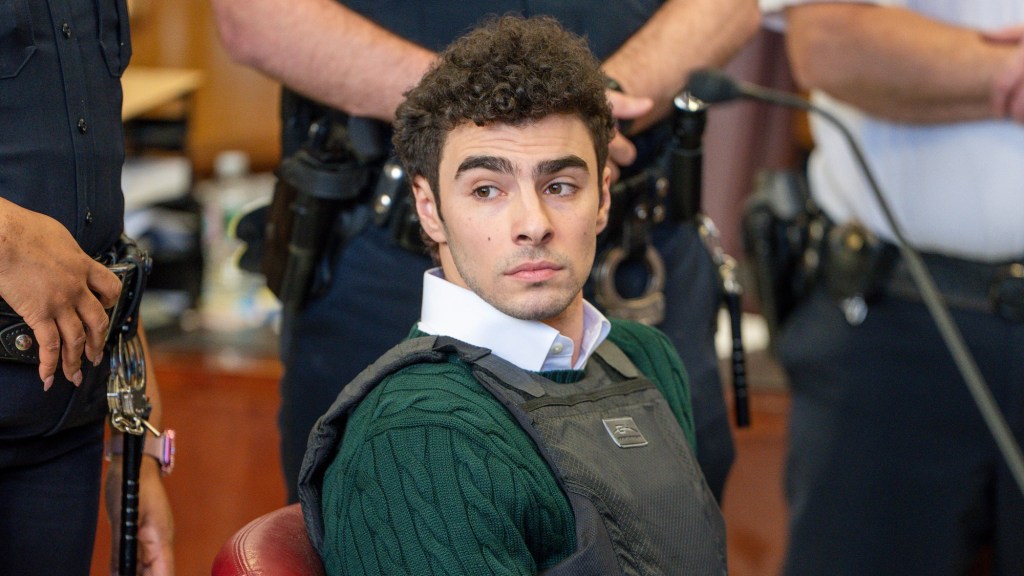
Luigi Mangioni, on the other hand, grew up in a privileged household and family, attending private schools, as well as doing well (as did Guevara student-wise) in both high school and college. He holds dual citizenship with his Italian heritage and did travel as a solo backpacker in Asia. He has a history of health issues, and he also had back surgery. His own posting reveals some significant concerns about the healthcare system in the country (most of my information comes from my own online research and has been verified.). While a number of theories or rationales for his actions have been posited, the inconsistencies from his statements against violence to the three words found on the shell casings are perhaps bereft of any possible explanation. What is perhaps more incredible is the response to the actions of Mangioni by not only Americans, but globally. Simply put, his alleged actions are tantamount to premeditated murder. The alleged killer walked up to Mr. Wilson, and shot him at almost point blank range. The words on the casings are the same words used in the health insurance field to supposedly work to avoid paying claims. That connection points to two very significant factors. First, the killer had to know who Brian Young was and what his position was. Second, the inscribing of the words on the casings points to premeditation.
While there is probably not a single person who reads this whose never been frustrated with their health insurance, and generally for good reason, the decision to shoot the CEO of your company is not something you would plan to do. Second, the growing frustration with our healthcare system, from scheduling appointments to paying copays, from coverage whether in system or out of system to getting prescriptions, as well as rising premiums or copays, from what a Medicare covers or doesn’t for those over 65, our system is a problem. And while he hear other countries also have issues, my own personal experiences overseas have been more than positive, and the cost’s unbelievably low. All of these issues (and let’s face it, when you genuinely need healthcare, there is a consequence to either not being able to afford it or not being able to obtain it. It is for those reasons in particular, or so it seems, that many (and I am saying 10s of thousands) see Mangioni as a hero, some comparing him to Robin Hood, versus a calculating cold-blooded murderer. Currently, there is a website that provides information about his legal defense, and literally thousands have donated. The site contains a message of thanks from Mr. Mangione himself. Street art, graffiti have appeared across the country and support the young man. There is a mural in Seattle. From hashtags to merchandise, the ways to support this vigilante killing demonstrate clearly the frustration that many Americans feel about healthcare.
The parallels between the 1960s socialist guerrilla hero and the 2020s wealthy, but probably disillusioned, computer programming, book reading Italian American seem quite distant, but the responses of the public are where the interesting parallels exist. Ché Guevara was handsome and brash and his 1960s photo became iconic. I remember seeing it on book covers, on wall posters, and T-shirts as I grow up. Likewise, Mr. Mangione is also quite handsome, and his face has also appeared much more easily in our social media saturated world. The Robin Hood-esque nature of the two points to something deeper in our human psyche, or so it seems. Often, regardless of how hard we work, and this is perhaps the case now more than ever, we feel the system is stacked against us – daily we hear how the rich get richer, the middle class get squeezed, and the poor are left to their lot. When push comes to shove, I doubt many people will condone the reality of Brian Young’s death. A 50-year-old person, married, with children, was gunned down walking down the street to a meeting. His family’s lives have been irrevocably changed. Likewise, the lives of the relatives of Luigi. Mangione are also irrevocably changed. The legal wranglings will continue and eventually he will stand trial. And that is what should happen. The brokenness of our health system, the seeming brutality with which decisions are made, and the cost, both financially and personally, is abhorrent. It is unconscionable, and yet fortunately, regardless the reasons, given or perceived, so is murder. Can something good come from this? I would like to believe so, but I’m not sure what.
Perhaps somewhere in the 60s we had some things figured out. Thanks for reading.
Michael


This takes on a difficult (even treacherous) topic and, in my view, handles it well by not condoning Mangione’s actions while not minimizing the problems with our healthcare system or overstating the parallels between capitalism in Guevara’s time and place and capitalism in our country at present. I was, however, perplexed by this sentence, “The alleged killer walked up to Mr. Wilson, and shot him at almost point blank range.” Who is Mr. Wilson?