Finding Friendship

Hello from the corner of the Little Bakery,

This I just created a TikTok for Nataliia’s little piece of heaven. If you are acquainted with my blog over the years, you are aware that my grandmother, who was my mother when I was small as well as my hero yet today, owned a bakery. The smells of baking pastries, of cakes, or of fresh bread were (and are) aromas that gave me a sense of love and security. Walking into the Little Bakery, shortly after it opened in the Fall three years ago, transported me back to that place and time. It was the first place to do so. The consequence was I fell in love with the bakery instantly. There is an incredible book that looks at the consequence of daily, seemingly mundane, items or experiences in our lives, everything from weather to food, from buildings to cars. I do not have it in front of me at the moment, and I can even see the cover, but I cannot remember the title. Understanding the things that make us who we are is a good exercise; and while an admirable goal, not always an easy one to accomplish.

When I was a child, I worried incessantly over whether or not someone liked me. I was in constant fear that someone might dislike me. Some of that was due to my diminutive size; some of it because I was told on a regular basis that I was unworthy of being given a home or loved by one of my adopting parents. Because of those two issues I worked diligently to become friends (or what I believed was friendship) with anyone who was regularly in my daily orbit of people. I wanted (too often and ill-advisedly) people to like me. That malady followed me well into my adult life, and it took a lot of work and reality checks to understand the problem with it. When I was first a student at Dana, there was a senior student, one both intelligent and talented, but not likable sort. He and I did not appreciate the other, to put it diplomatically, and after one particularly unpleasant encounter, he told me that I needed everyone as a friend and he found me hypocritical. At the time, I informed him that I had friends and acquaintances, and he rated neither category. I rejected his assertion completely. Some 40+ years later, I would have to admit he was, to some degree, correct.

Learning to accept that not everyone would like me was a difficult thing to come to terms with emotionally, but that was because I was so emotionally fragile myself. In spite of my intelligence, my experiences and my expectations did not allow me to accept something that makes sense. We will not please everybody; we will not be liked by everyone. As I am now in a different place both in terms of age and, more importantly, emotionally, looking back across the decades, I realize friendship is an essential element to our identity, but it seldom happens, or perhaps, more than likely, distance and life events make the maintaining of it difficult. Or is it we misunderstand the reality of friendships. Perhaps friendship is more profound and illusive than we imagine. I have been often told I work harder or more diligently to stay in touch than most. As I consider that, and I do believe it to be true, it is how I have maintained relationships with people from around the world. It is perhaps how I have come to understand the differences between the people we include in our lives. Perhaps there is a third category of people in my life. Acquaintances are those who I have met more than once and have made some difference, but unless we are in the actual proximity of the other, there is little influence in either direction. And yet when proximity is re-established, their significance changes. It again grows. There are those who have importance beyond that. They are persons who move in and out of our lives in spite of proximity or space. Generally, their importance at some point was more than passing; it affected our daily life in a manner that changed some course of action or our understanding of who we were (or are). And that importance (while our lives have continued to evolve) is easily recalled and have significance. This is not always a category that I have readily acknowledged or, perhaps, understood. Nonetheless, I believe there are a number of people who fall into this category for me.

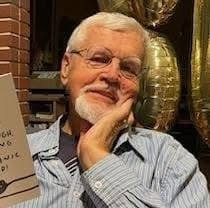
So what is friendship or who has been (or is) a friend? I think that is an excellent thing to ponder as I look back across the decades. There are so many people who hold a place of importance, but who is that friend? Are friends only those who have covered the majority of our lives here on earth? Not necessarily. Often it is said, the person one marries is their best friend, and this certainly makes sense. And it prompts the question about friendship and intimacy (and I would assert intimacy is not merely physical). What creates, establishes, or maintains a friendship? Each of these verbs are integral and somewhat process driven. When I think about the person who was my best friend from childhood and I consider the person(s) I would refer to as close friends now, I am not sure the processes are the same. When I think about the persons in my life I would categorize as friends, the number is very few. From my growing up in Sioux City, I think there are two people I would consider as friends (and the one, who was my best friend from childhood, has passed away). The picture above is of the three brothers, and Peter is on the left. The other, my sandbox buddy as we call each other, was a little older than me, and our friendship did not blossom until after high school. However, in each case, the friendship has been established and maintained, but more importantly, it was nurtured. Nurturing requires that intimacy referred to above. It means that there is an honesty and consistency. The friendship is not negatively affected by either distance or time. There is no need to reacquaint because you know the other. The friendship is supported by both mutual history and a mutual desire to maintain and enhance that relationship. I think it is impossible to place a value on such a person and their importance.

When I think about the friendships I have created or been blessed by as an adult, there are some very different things that occurred for that reality of that friendship’s existence to occur. There has to be a time where you have significant interaction. There needs to be mutual interest, and there needs to be a clear sense of having some similar values. I think it is much easier to walk away at this point in life. For me it is related to drama. I do not like drama, and I will do most everything I can to avoid it. There are a number of reasons for that, but certainly, past experience has taught me drama is strength sapping and seldom goes well. When I consider my adult friends, again there are numerous acquaintances, and some significant ones, but few friends. I am reminded of the line from the song “Caledonia,” a song I recently listened to again, and one I appreciate deeply. There is a line in the song which notes “Lost the friends that I needed losing, found others on the way.” I ponder the significance of that statement, and I find myself asking, “Were they friends? What makes losing them reasonable if they were friends?” Does time and evolution of who we are make “a friend” dispensable? Are there times that taking a break from a friendship is necessary, and does the break eliminate the friendship? Does it render all the significant time or joint experiences moot? Is it that we are different in our tolerances Whenever there is a change, there is a sense of loss, and loss is painful, but is it necessary? What happens when there is an impasse? What is reasonable and what is healthy? Are they the same? And then at the same time, there are moments when what we think might be gone comes back. I have experienced that also. Much like the parable of the prodigal, there has been rejoicing. The memories of a half of century have reminded me of so much of my life. The blessing of them, of their family, there are no words adequate to express how significant they were or are. Life’s twists and turns are both predictable and unpredictable. Experiences, sometimes forgotten, still affect us when we least expect it. We are such capable and fragile beings. Friendship is both a gift and a responsibility. Sometimes it is difficult to manage it all.

Thanks as always for reading, and let that friend know they matter.

Michael

A Sacred Form of Strength

Hello from a rather sparse space,

Sometimes we find ourselves in situations unexpected, and the reasons are general more than some simple cause/effect sort of dialectic. And as importantly, or maybe more so, it is the consequence of a basic character trait, and even a perceived strength, but something that has been demonstrated or practiced for much of someone’s life. Recently, I noted some of my areas of struggle, the traits that make me uniquely who I am. And the being generous is certainly an admirable quality, but it is something that has brought both a sense of joy or happiness as well as some pain and disillusionment. At the moment the duality of that characteristic practice, which a Great-aunt once told me was apparent before I was two years old has my brain working in circles. Even today, as I take a sort of inventory of my life situation, I can see how choice not merely in the past months have been more concomitant than expected, but over even the past four or five years. Things decided, paths taken, circumstances experienced can collectively change the trajectory of something or someone. Much like how something even minimally out of square might, over a greater distance create a significant building problem.

Since retirement, which I am still comfortable – maybe, perhaps, maybe not, with, I have grappled, scrapped, or felt broadsided by, what I thought I had prepared for and what has happened has not been perhaps even close to what I imagined. I am not sure if it is because I uprooted most of what I had, be it location, space, belongings, or a combination of, I was not nearly as ready as I thought I would be. I do not think it is merely the change in schedule or responsibilities, I think it is, in a large part, due to a change in identity. As I sit in the Gathering Place on this early Monday afternoon, I am in a space I have (cumulatively) spent days. It is a place where a former dean (and not of my college), remembered me as the professor-who-had-office-hours there. As I sit here. today, two years removed from the classroom, I know almost no one, recognize only a few, and feel somewhat like the old man in the corner, in spite of being told I do not look or act my age, which I take as a compliment. What is different is the role I currently have as I sit here in a familiar place, but with more and more unfamiliar people. I am no longer the professor with an office on the third floor of Bakeless. I am no longer the advisor to Professional Writing students, nor the director of that program. And while my current life does not eliminate those roles once occupied, their completion and a life moved on creates a new primary identity for me. The current question is rather simple. What is that identity? What makes me of importance? Do I need to be of importance? And if so to whom and for what?

Identity is such an incredible concept, as well as a powerful element of our humanity. As noted by Anthony Giddens’s, the British social theorist, we all have subjectivities. In his structuration theory, he noted “[we] are not passive but [we] actively shape society through [our] actions, while simultaneously being shaped by the social structures [we] inhabit. He called that reflexivity. In the roles we are given (are fousted upon us), those subjectivities, each one creates part of our identity. The influence, be it less or more, of each role changes depending on our given circumstance. As I was telling someone the other day, for the majority of my adult life the places I occupied, the jobs or professions I had allowed me significant control of my space, from server/bartender to pastor, from Greek Instructor to professor, when I met someone, stood up in front of the congregation to in front of the class or met a student, I had some significant influence on that situation. At this point, I seldom have any control, except of myself. To return to Giddens, what does this allow or require? The changes are both a requirement and an opportunity to construct an identity in a more fluid and self-reflexive way, drawing from a wider range of cultural influences. This has been the context of the past year as I am far from my comfort zone. Even just this morning I am working to arrange, to logistically manage things still in TN. There are so many pieces to my literal moving puzzle at the moment, and this is where I realize the importance of what might at time be considered mundane to the general comfort of our daily life, of our existence. It connects more often than not to asking what makes us feel successful or accomplished? What provides us a sense of worth or value? A year ago I was selling, giving away, dumpstering the great majority of the things I had accumulated. The question I asked was not “Do I want it?” or “Do I need it?” The question was “Will I use it?”

What provides a sense of well-being for someone? It is merely stuff? Is it the balance in your bank account? Certainly, more often than not, I have bought into that idea, the cultural expectation that success is determined by one’s dwelling place, on the commas on the balance sheet. That success equals strength. And yet, as I sit this morning on a bench (not the Group W bench) listening to waves, watching the sun over the water, I struggle with the juxtaposition of being here was expensive, though I am honored to be asked, and merely stepping away for a moment to ponder the reality of daily life. I can tell that I am sort of swirling because I am writing daily. I am feeling unsettled in some areas and hopeful in others. I am feeling incapable in some significant ways and accomplished and valued (respected) in others. I know that daily life has those challenges, but for some reason they seem more conspicuous, more profound, at the moment. While always be a ponderer, an analyzer, it seems that those traits are taking up the majority of any moments that are not intentionally scheduled with something else. From merely noticing more about my surroundings to wondering what everyone does, what are their professions? Or what do they do to feel successful? It seems that I have an increased sense of vulnerability. Is that an inner fear or fortitude? Is it a resilience, a sense of courage or perseverance? Much of my life has been spent wondering the how and why, not only about life but the beyond as well. How does daily life and our navigation of it connect to the sacred, to the numinous? Is vulnerability to that numinous equate to a sacred strength? Perhaps so. Presently, I surely hope so. There is a truth and honesty in vulnerability. There is both taking a chance and believing in the comforting promise of baptism and the Holy Spirit. The dialectic of Luther seems alive and working for me.

Thanks as always for reading,

Michael

Understanding a Vow

Hello from the corner of La Malbec,

Time continues to march on, and often seemingly more quickly than expected. Over the past few years, and even more recently, attempting to fathom what it means to be a faithful person has become increasingly difficult. Why? While there are a multitude of reasons, the shift in public piety and the language used by some about faithfulness has taken a significant turn from what I learned growing up. Then my educational journey in seminary or my work on Bonhoeffer seems so out of line with current practice. Perhaps it is more on my mind today because 37 years ago, I was ordained into public ministry in the Evangelical Lutheran Church in America.

Ordination was a profound day in my life. As I have noted in previous posts, it overwhelmed me. The reality of what is required of a pastor, expected of a pastor, understood about a pastor is not something any seminary class can teach you. In spite of the profoundly capable professors, most who were ordained and lived that reality, there was so much I needed to learn, and some of it, again, much of it was not something I managed nearly as well as I might have, comprehended as thoroughly as I could have. And most of it was not a theological issue, but more of an identity issue. I was speaking with a seminary classmate earlier today, someone for whom I have incredible appreciation and admiration, something who has, at times, taken me to task when I wandered, and someone at whose ordination I was asked to preach. I remember being petrified that I would be standing in front of a bishop and other leaders of the church in the burbs of Chicago.

While I did what I believe can be characterized as extremely well in all areas of my seminary education, including receiving lecture status at graduation to teach Greek or earning a scholarship to the Goethe Institute in Germany, having an incredibly robust CPE experience with Dr. Steve Pohlman, it was not until I was actually in the parish that I understood the significance of the connection between of the 3rd Article of the Apostles Creed and Holy Baptism. It was not until I had spent some months or years in the parish and even after I was back in graduate school working on a PhD that I realized how much I appreciated systematics, earlier believing that I had more affinity toward Biblical Studies or Church History. It is systematics that explains and grounds our daily faith and piety to our hermeneutical understanding of both scripture and sacraments. Looking back and pondering even today, as I write this I am still evolving in my understanding of what occurred when I had hands laid upon me, as I listened to the words of Father Fred, who began his words in my ordination sermon with “Mikey, you’ve come a long way.” He was correct, and while I am sure he knew, he was kind and didn’t follow with, “and you have so far yet to go.” That would have overwhelmed me more than I already was.

The Ordination service uses verbs like inspire (through word and sacrament) teach, serve, and reflect (theologically). Additionally, to serve and be empowered (by the Holy Spirit) so that I might be an active witness to the mystery of God’s love to all people. Maintaining an adherence to the reality of preaching the Word of God and implementing sacraments with integrity was not something I seemingly found difficult, but being a truthful witness to the love of God was not always something I found as easy to do. My human frailties got in the way as I found myself struggling to feel the constant presence of God’s love in my own life, to fathom the complexity of what Luther referred to as the first and second use of the law. To accept the infinite grace of God, something I could intellectually, was not something I could readily accept emotionally, personally. I remember my undergraduate advisor’s statement to me when I was first diagnosed with Crohn’s. I had returned to Dana, having lost substantial weight. He admonished me, both lovingly and sternly. After telling me I looked ill, he said slowly for emphasis, “Michael, your theology of grace works well for everyone, but yourself.” And he was correct. The incredible grace of God is freely given, but all too often we are incapable of accepting it. The difficulty is we believe it to be conditional, based on our worthiness. However, as noted so aptly by my brilliant confessions professor, the late Dr. Gerhard Fôrde, “Confessionally speaking, the answer to the question ‘what must I do to be saved?’ is nothing.” Nothing in my life prepared me for such a gift, and my intellectual understanding was not sufficient enough for me to emotionally manage it. So the vow of being able to witness to the mystery of God’s love could not adequately be fulfilled. More importantly, when I was in my 30s, the time I served as a parish pastor, I had little, or no, knowledge or realization of that lack. How could I inspire others to accept what I could not accept myself? What was it that created such incapacity in me?

Some almost four decades later, I believe there were two reasons. The first was my own overwhelming feeling of being not good enough, but as importantly, perhaps more so was the prison I had created for myself because of a lack of forgiveness. Not forgiveness received but rather given. And in my life those two things were intrinsically connected. It was about my mother. It was my feeling undesirable, invaluable, and the hurt and anger towards her for having those feelings. Again, how could I preach about or live a life bathed in the grace of God when my hurt and anger separated me from that grace. It would be some 2 1/2 decades later before I would write a blog that forgave my mother. The burden lifted from me is immeasurable. The weight of that hurt, of that separation from a more complete measure of God’s grace probably affected my ministry more than I will ever know. As I consider that day of ordination, as a much older man, I am still humbled by the call bestowed on me of a loving and compassionate God. I think much like Luther’s first celebration of Holy Communion, where stories say he was filled with fear and trembling, I can appreciate even more so now, almost 4 decades later, how God knows us better than we know ourselves. As I find myself traveling to participate in things I have done before, as I spoke with a couple of my clergy colleagues recently, I appreciate the depth and gravity of my ordination today more than ever; I understand it now more than ever too.

Thank you as always for reading.

Michael

Vertical or Horizontal? Perhaps a look at numbers might reveal something

Hello from the Campus Starbucks,

Familiarity can be a double-edged sword, most certainly, but sitting back in Starbucks at the Andruss Library is a good thing. The rearrangement of the traffic flow as well as the tables makes getting some work done much more arduous, but thank goodness for a charged phone. The memories of meeting students here or in the Gathering Place over the years definitely is present as I ponder schedules, continue managing appointments, and examine my ever-growing to-do list. Presently, my MacBook is charging in the corner because the remodeled space has no way to sit at a table and plug in my computer (I believe that was more intentional than they admit), so I have decided to blog something that has been percolating for some time, though regularly the past few days.

A year ago, the middle of October saw a shift in the momentum that first characterized the Harris campaign, and, to be honest, I was feeling more and more resigned to a repeat of Grover Cleveland in American Presidential history. Certainly, that is what occurred, and much of what has occurred in the country is what was promised by Mr. Trump, so when people seem surprised by some of the falls out, and I am generally referring to the moderate, or even some on the more extreme, right, I want to respond with a sort of Homer Simpson “Doh?!” However, because of my commitment to decorum in general, I do not. I think about one person in particular who notes they will probably lose their Medicaid, but they unabashedly support the MAGA agenda. They lamented this loss to one day, while, ironically wearing the tell-tale red baseball cap. Hmmmmmm!! The second group of people, many for whom I still have appreciation and care, are those conservative believers. Those who claim the importance of a creator, but seem too often to stop with the first article of the Apostle’s or Nicene Creed, seeing second and third article as subservient at best, which I will assert is non-Trinitarian. However, my recent pondering and reading has caused me to reconsider, simultaneously being both kinder and more worried.

The conservative direction of Christianity (not where it is going, which is an issue), which I (and others) assert is vertical, has important implications and consequences. More will be said about that. Conversely, I will assert, Christian denominations who practice a more horizontal theology (focusing on the consequences of the second article and the subsequent involvement of the third article) think more about their fellow humans. I know that is a bit of a broad-stroke move, but hear me out. The vertical nature or morality of Christian conservatism, which is pushed even further in “Christian Nationalism,” is about power; it is about the authority of God over all. Hence, first article dominance (pun intended). It is about a system that is incredibly top-down. It is about the acceptance of the rules and a rejection of actions or behaviors that violate the rules. For those who find such a system comforting, the all-powerful God is easy to follow; as a ruled-based theology it becomes a recipe card no matter what. If you put in the correct ingredients, the final product is just fine. Of course, what happens if you are out of that teaspoon of baking powder? Is it possible to change? Can one question the recipe, question the all-powerful? Is there even a possibility? What happens when you employ the same verticality into our politics? Germany of the 1930s is a great case study. Present day North Korea or Iran are also instructive.

So what does a horizontal theology look like? Is there room for such a possibility? And some might question if such a theology is Biblical. Returning to my initial contention, certainly one can argue such a direction is Biblical if you look at the actions of Jesus, from his disciples to his questioning of both political and religious authority in his world. The significance of Jesus’s daily ministry (and non-inclusive of his salvific role) was his personal ministry to those outside the Jewish religious hierarchy. Again and again, from his initial miracle to his teachings and actions, much of what he did calls into question a rules-centric philosophy. His focus on a people-centered gospel, a relational gospel which flew in the face of the first use of the law, which was typical Midrash. Jesus called into question the optic heavy theology of the Pharisees, pushing a need for compassion, empathy, and love for the other. Jesus believed the consequences of God’s love, which is certainly vertical in nature, was understood best when it was horizontally given to those in need. The admonishment of Jesus in Matthew 25 is not merely a horizontal theology, but it is a both/and. The commandment to do to the other is a given, something given by God to creation, so the verticality cannot be ignored, but neither can what the command requires, which is decidedly horizontal. Loving and caring for the other is how one experiences the love of God.

So what are the struggles in our present world? When theology and politics overlap, and even more so, when the idea of vertical morality and power are intertwined, the reality of good versus evil, of us versus them, or of the nation versus the world, the consequence and reality of Christian Nationalism and an Old Testament theonomy becomes inherent in the practiced theology and politics, making the separation of church and state impossible. However, the theology of the Old Testament is not the gospel, the Good News, that is proclaimed in the New Testament. The legalism of Paul, the legalism of the Torah is much more difficult than most conservative Christians are aware, but such a hermeneutical struggle, to be fair, is not surprising. Between a cherry-picking of scripture that suits narratives of power and a seeming unwillingness to consider any kind of compassion, the vertical theology of Christian Nationalism removes any sort of responsibility for the immoral treatment of the other under the guise of obedience to God’s commandments, or the prescribed understanding of God’s commandments.

And yet, perhaps some consideration of those commandments might be appropriate. Certainly the first three commandments are vertical in nature, focusing on the relationship of the human, the creature, to the creator. But that is precisely 30% of the Decalogue, There is still another 70% to consider, or more than 2/3rds . . . And those commandments are about the humans relationship with the world and with one another. From the giving of the Commandments in Exodus, which followed the Hebrews leaving bondage in Egypt until today, there has been an unquestioned reality that the chosenness as people means we have both a duty to God as well as to our community. However, such a theological position is much more complex, and it requires the choosing of paths which are seemingly incongruent with the rule-based beliefs of a nomo-focused faith practice. And it certainly does not protect those who need power or authority. Furthermore, the reality is it blinds one to injustice, creating a practice of personal salvation over a social concern for our fellow humans. Vertical morality is cluttered with examples of the damage such morality has created; from slavery to the Sunday morning Christian wearing a white hood the night before, from bishops in Germany pledging allegiance to Adolph Hitler to the Shoah, from the demonization of immigrants to the persecution of political enemies, the lack of accountability allowed from this top-down threatens the very gospel preached by Jesus, and it negates the call of the Holy Spirit to lead us to faith.

Certainly, the current world is struggling with what it means to believe in the amazing grace of our Triune God, or so it seems. There is an irony that many conservative Christians use the epistle of James to speak about their faith (and a works-based theology), but vertical morality eliminates that option. With no horizontal aspect to one’s faith, it truly is pro-forma; and contrary to the vertical idea of depth, the practice of faith as simply following a list of requirements. Such practice is profoundly shallow. It eliminates the love and grace of God. I will argue rather than strengthening our personal relationship with a loving God, it removes us from the hope snd love of that same God.

Thank you as always for reading.

Michael

_Something’s Gotta Give_

Hello on a Sunday Afternoon,

It’s been a sort of meandering, albeit significant past two weeks. Since meeting with doctors on a variety of appointments, there have been some important things managed, other important things to ponder, and, as is normal with our health system, issues to figure out. I remember when I turned 60, there were significant issues, and I wondered if it were merely entering that new decade. I am contemplating the same as I make it to yet another title. As I have noted in some of my social media, I am beyond grateful for the thoughtful, thorough, and personal care I have received from my various doctors and specialists. I do not take any of that for granted, let me assure you, and there is not a single moment I am not appreciative.

Unless you’ve been under a rock since late last week, I am sure you are aware of the passing Diane Keaton, the incredible actress, producer, thespian, and force of nature both in Hollywood and beyond. While I do not often put famous people on a pedestal, nor am I akin to so kind of hero worship, she is one of the couple people to whom I might be inclined to make an exception. The first movie I remember seeing her in was Baby Boom. I was in seminary and many of my feminist-leaning seminary class mates were encouraging their male class mates to see it. I found it both endearing and groundbreaking and Keaton’s portrayal of the protagonist that saves the movie. Certainly, it is a series of expected RomCom events, but the humor and her acting make the movie more than an “oh-yes, I-saw-it” experience. And I am certainly no movie aficionado, nor am I capable critic, but I believe she could carry any movie she appeared in. My favorite movie of her is the title of this post. Both she and Jack Nicholson are exceptional, and her beauty and elegance in that movie as well as her humanity made her one of my favorite actresses. I watched the movie again out of reverence for the profound body of work she has provided us. I laughed and cried as I watched, both because the movie evoked such emotion, but also out of sadness of a life ended and graciousness that her talent was shared with the world.

As I pondered the reality of the movie (we all wanted to be loved, and we are also so fragile when it comes to accepting it), the title seemed to be indicative of how my life has unfolded. From birth to retirement, it seems like figuring out how to proceed was merely making a decision, realizing “something’s gotta give” if the next step, the next piece, the next chapter was to occur. None of this is meant to be hyperbolic, but there have been situations from the outset until even as recently as a week ago that have me somewhat pinned into a corner, and there is the reality that you have to do something and move forward. The choices might be stark; perhaps they are difficult, but nonetheless, there are choices to make. In truth, something’s gotta give. There is a certain substantiality to daily life; there is no escape, and while doing nothing might seem like an option, it is a choice, and it is doing something. As I pondered life, there are three areas I have always struggled to make choices, perhaps because of fear. Those areas are (and not necessarily in order of importance or concern) relationships, finances, and health. While it is easy to assert health is most significant, and something that has been central to my daily life, at least since I was in my 20s and diagnosed with Crohn’s Disease, it is perhaps the easiest of the three to face head on for me. Of course, I do not remember my birth, but the profundity of my prematurity caused immediate response for those charged with my very existence. Certainly, ending up in a Pediatric’s Ward in first grade, still struggling with under-development, and having all three childhood diseases back-to-back was a difficult time for doctors and my parents. Some decades later from once being told without surgery I had about 72 hours to live, when receiving another diagnosis and told once in 6 months certain options would be off the table or when various people came to visit when I received news that I had months or weeks, each time decisions were made, not always because I knew the best decision, but sometimes because I had to make a decision. Plain and straightforward – something’s gotta give. Generally, I must say things have worked out. Twelve abdominal surgeries, drug therapies, homeopathy, and a number of amazing medical people, I have managed well. Perhaps, the reason it is the easiest of the three to manage is because it is just me. It’s what happens to me.

On the other hand, relationships . . . oh my. Again while I have examined this often, and intently, have done extensive long-term counseling, and, yes, failed in two marriages, I am still a hopeless (hopeful) romantic. Then again, I am unsure how to get beyond the idea of hopelessly in love, which actually is fleeting. I understand the idea of loving someone, liking and not liking them, or realizing the tremendous effort necessary to sustain a profound and intimate relationship, but it seems I do not know how to do it. That is both tough and a bit embarrassing to admit. This is something I have attempted to understand for years. It is because I did not grow up with a model? Is it because the words of disapproval still ring in my ears too loudly? It is the incredible wounding that occurred when a person who promised to love through all called me wimp when she left because of my Crohn’s? As I reach an age where I am both independent, but simultaneously lonely at moments, I have little sense of what I really want and need. Indecision can create paralysis or it can establish the need to examine and ponder the possibilities. Momentary paralysis can serve as a breathing space, but again, soon after, something’s gotta give.

Looking thoughtfully at my upbringing, both the area I have just considered and the third area previously mentioned were nothing ever discussed in my childhood. Relationships, something I have addressed throughout my posts, are learned mostly through observation. My father worked away from home through most of my elementary and junior high years. He and my mother were not often home together. There was never any sort of hostility, but there was not really any affection either. Shortly after my divorce from my first wife, he plainly stated, “I am not surprised you are divorced.” That statement stunned me and then he explained. My initial response to his summation was rejection. However, further examination proved him spot on. In the area of finances, I knew nothing, and I had little idea of how poor or solvent we were, nor did it ever feel appropriate to ask. My life was a rollercoaster early on, even through a marriage. If I have a malady in that area at this point, I was too generous. This is not an exaggeration. If everyone paid back what they owed me, it would be into 6 figures. And that is not the only area of generosity, footing the bill or giving things to others has always been who I am. It has pushed me into the corner more than once. Somehow, I managed, figuring it out, working harder or more.

Life is choices and consequences. It is both a cliché statement and a truism. It is something I face at the moment in all three areas, not all to the same degree, but certainly simultaneously. Something’s gotta give, and at the moment, perhaps because of age, it seems more imperative. Yet, what sort of power, what amount of agency do I have? I am not sure, but I hope I might figure it out with the sort of class and elegance, the amazing goodness, that it seems Diane Keaton exuded in everything she did. And ironically, my father’s name was Harry.

Thank you for reaching,

Michael

escuchando español

Hola desde el hotel y Main Street Bloomsburg,

It’s Friday night and the end of the week where I have felt like I was on a rollercoaster. The role health has played in my life has been significant, and while that can be argued for any human, from day-one, a premature delivery and a birth weight of 17 ounces has affected my very being in multiple ways. What is still amazing is whether that miraculous start, and survival is still creating consequences. I am not sure if things I face now as a septuagenarian are related to my beginning or if I am merely just getting older. Monday started with multiple doctors’ appointments to manage various issues affecting almost every aspect of who I am. While that is due in part to my travel and needing to manage things in person (most doctors are not licensed to do telemedicine across state lines), so getting everything managed at one time is optimal. The other thing realized in keeping my address and administrative life here is a simple, but important fact: my doctors know me and my unique circumstances, my modified body. That reality was readily apparent this past week as my PCP questioned some things. She is incredibly thorough, and while her concern led to a stressful few days as I waited for the additional testing, the very thought she was so attentive was comforting.

As with earlier this year, returning to Bloomsburg was and is sort of mixed bag. The familiarity can be helpful, but the simple reality that I technically no longer live here is readily apparent on a variety of levels. I have found myself wondering if I should still be working, and imagining what I would have done in the year and a bit longer if I was still in the classroom. Some of my retired colleagues say they never looked back, but I guess I am different. I wonder how much of it was my mantra that being a professor was not what I did, but it was who I was, and still am to some degree. The reality of identity seems to be a bit complicated, or am I merely making it such? I am unsure. More people still refer to me as Dr. Martin than Michael, and even that at times confuses me. Which moniker, which name is more comfortable and why? Another reality is schedules, and certainly people have lives that have continued just fine without me; there’s nothing surprising about that. No one is indispensable, and that is something I have told others for a long time. Higher education is no different; it is a business. The starkness of that truism was profoundly evident in the post-COVID, which on the Bloomsburg campus was exponentially more pronounced by the integration of three campuses (previously other universities in the PASSHE). Even today, running into some former colleagues, I often hear from them “I am jealous.” However, of what? Of no schedule per se, of no daily responsibilities to a classroom, department, students? I realize things I miss more than things I did not enjoy. I understand the profound opportunity and privilege I had to be in a classroom with amazing people.

More appointments today, but also some good news, although tempered. My balance is squared away again, for the time being. The crystals in my right inner ear will always be problematic; and reoccurring vertigo is the pragmatic issue. Getting things back (literally) in balance this time was especially problematic, necessitating at a follow up visit. This is the first full week in almost a year that I have not feel shaky or out of balance. I am hoping to get some work done that has not been possible over the next weeks. The only thing left to manage for the moment is the cataracts that have gotten much worse in the last year. And having Lasik in the past does create some complication, but my ophthalmologist is well aware and already taken that into account. As typical, I have been reading about the procedure and how it might affect me. It seems pretty routine and improving my eyesight will be a good long-term strategy. When I had Lasik done almost 20 years ago, it made a profound difference for me.

I am continually astounded by the xenophobic attitudes of the American public from the person on the street to those who have elected to our national offices. Since it was announced that Bad Bunny, who is Puerto Rican, which is an American Territory, would be performing at the Super Bowl, the ridiculous response to his SNL spot or MTG’s wanting to pass a law before he performs border on the line of absurdity. Even though I can trace some of my family linage back to shortly after the Revolutionary War, there are many in the family who immigrated and spoke another language (e.g. Norwegian, Irish, Spanish). Certainly, their desire to speak English was probably significant, but if you consider the reality of Puerto Rico as a territory, their Hispanic culture is their reality, their identity. Expecting Bad Bunny to only speak English, particularly when his music is indigenous is ludicrous. However, MTG falls into that category regularly. Throughout the decade-plus I have been writing, I have noted on numerous occasions that visiting other cultures, listening to other languages, and experiencing new places and peoples has been one of the most significant things I have done to understand both myself as well as the other. It was while first hopping through the snow in Garmisch, sitting on a train from the Spanish border to Paris, listening to Danish that early morning at the main train station in København, or experiencing a demonstration in Rome listening to the Italian chants, I realized what education really entailed. It was taking in a lecture on Luther as the first socialist at Karl Marx Universitat, being examined at Checkpoint Charley by East German guards, or sharing the reality that I could write to an East German seminary to student, but he could not write back that taught me the differences governments created for its citizens, and the blessings the diversity of America offered. When I worked on a doctoral degree, it was teaching a writing class of all foreign engineering students that to this day was one of the most profound teaching experiences I would have (and I visited one of those students just this past July); traveling with a colleague to offer students the opportunity to experience Eastern or Central Europe, studying Polish in my 60s, hosting exchange students or immersing myself in Moscow after being blessed to have a Russian student share her life for a year and hosting her parents in my home are some of the most transformative things in my life.

Fearing the other, closing ourselves off to the rest of the world out of anger or arrogance is not what made America a great nation. The change we are experiencing over the 40+ years I have found myself traveling to other countries is sad; it is frightening. Even this past summer, my experiences in travel to Denmark, to Poland, and to Spain enriched my life yet again. The globalization of our world has consequence, and those consequences are complex, but our similarities far outweigh our differences. Fearing the differences are not who we have been; it is not who we should be. ¡Que viva el otro! Démosle la bienvenida al otro. Seremos mucho mejores.

Thanks for reading (and listening).

The Other (Dr. Martin/Michael)

ABD and Buslife

Hello from the soggy Cumberland Plateau,

The last 36 hours or so have been a struggle to get anything done as it has rained off and on since Sunday and now pretty much non-stop for the last day and a half. I had hoped to be on my way back north by yesterday. Now I hoping to get at least to the TN/NC border by nightfall. We’ll see how it goes. Over the last month, I have learned firsthand how little I can have to manage. There are some specifics, and a membership to Planet Fitness is a significant piece of that. Help from a dear friend in Bloomsburg is also a vital component in managing some of the daily health issues. As I am actually existing for the most part in a far-from-completed bus, there have been numerous moments I have questioned the wisdom of what I am attempting. There is such a steep learning curve, but the difference is I never took the elementary courses in electrical, carpentry, or plumbing, so the foundational comfort is missing. It’s like riding a bike, but skipping the training wheels. And coordination has never been my strongest suite.

Yesterday, I experienced the first personal-injury mishap of the build. The storage door created for the back area is substantial, both in weight and its sheer density (e.g. 14 gauge steel); it comes up to a 90 degree angle from the bus, and is about 5 and a half feet up (about forehead height). I know this height because walking around the corner of the bus, I walked into it full-stop (literally and figuratively) and knocked myself out. A trip to the ER resulted in a CT Scan, a tetanus shot, and 5 stitches to close the gash on my forehead. I knew the possibility was there, and I have tried to be cautious, but forgetting even a moment had consequence. I believe there will be others, but hopefully not something quite so extreme. In spite of the setback, because of the hard work and insight of my two bus building colleagues, the bed platform was installed. It’s incredibly sturdy and functional. There are still a couple of minor details that I work out when I get back to Tennessee. Which means, by the way, I’ve made a 700 mile track back to Pennsylvania. It was not my intention to drive so far one straight shot, but a dentist appointment early this morning necessitated such a drive. Driving the bus that far is much more consequential and exhausting than driving the bug. There are a number of things to manage back in Pennsylvania, but I’ve started on the to do list. I’ll be back here for about 10 days. And this back to Wanderlust Waypoints.

If I were to answer the question, what are the important things I’ve learned both conceptionally and otherwise in the last month, the list is long. And it’s been humbling. As I try to figure out the logistics of the build, too often I find myself questioning anything I believe because I do not understand what is required in the intricacies of framing, of wiring, of plumbing, and that is even the basics versus how managing it in a bus might complicate that process. For instance, doing the framing in a fiber glass shell creates issues of stability, and when you only have 7’7” of width, using a normal 2×4 is too big. So I am looking at 1x3s. And yet, it has to attach to the walls of the bus, which are merely a piece of 1/16 to perhaps to 1/8 fiberglass that sheets 3/4 in plywood and second piece of fiberglass. And before that, there is an issue of the weathering (26 years) of the shell and how recent heavy rains have revealed more leaks. All of that has to be remedied before I do any real inside building. There are also some logistic issues in terms of time and place here in Bloomsburg. I hope to manage some of that tomorrow (which is now Friday). Oh yes, there’s the DC and AC wiring, then the the 120 amp and 12 volt wiring and such I use all shallow gang boxes, and can I get them?

The manufactured doors, which are quite incredible (and heavy) are creating their own set of issues. I have broken the spring in the door latch mechanism twice in 4 months. The first time before it even left the shop. Today I was at Home Depot looking at heavy duty assemblies, which of course are not regularly in stock and must be ordered. That will be done in the morning. I should wash clothes tomorrow. I need to decide how to manage the leaks and there are some issue with the reinstalled windows (which will necessitate a trip to the window installer tomorrow also. All of this means arriving three days later her in Bloom might necessitate being here longer, which affects the Beetle retrieval in Iowa. I think you get the picture. I do have a consultation on Saturday with a master construction person and plan to ask lots of questions. I did reach out to set up an appointment with the Bus Guru as I refer to him, but somehow have not heard back. The points and parallels I imply in my title are both instructive and meant to remind me of a couple of important points.

When I had reached the dissertation stage of my doctoral work, there were a number of times I felt overwhelmed. And that is not uncommon, as writing dissertation takes time and focus. In fact, often someone might receive a finishing fellowship to get things completed. You are not teaching or doing anything else, you are writing. It is your total focus. People are strongly discouraged from going out ABD (All But Dissertation) because you will literally have two full-time jobs. However, I did precisely that because of my need for better health insurance than what our graduate health insurance provided. I knew this first hand because an emergency surgery the Fall of 1997 was not covered because of what they could argue was a pre-existing condition (so those who want to argue the efficacy of the ACA do want want or get me started on that). The reality of life took priority over the conventional wisdom of finishing my diss before taking a tenure track position. For the first two years I was at Stout (and I had a finish by date from my dean at Stout) I tried to manage a 4/4 teaching load, new preps, and spending every weekend focusing on my dissertation. Most of it was written in a coffee shop (thank goodness for both Caribou and Starbucks). It was only in the last year I head from one of my committee members that my dissertation, while passable was a bit disappointing. And thought it was published, I knew they were right. Having the appropriate time and focus is paramount. And so it is with the bus build.

Fortunately in the last 24 hours, people who have not seen it since I left here about 10 1/2 months ago are stunned at what has been completed. Since I see it daily, it is easy to focus on what is left to do versus what have I completed. As I lie here at the end of my first full day back in Bloom, that has been the predominant response, from friends to colleagues, who understand as well as anyone how far I am outside my area of expertise. That is gratifying, but each day it seems there is some particular instance that happens and requires a slight change in focus and priority. Fortunately the sun is out, so I think I can get something accomplished the next couple days. Some additional waterproofing, possibly the sanding on the trim areas. There are a ton of items to manage. Meeting earlier today with a master carpenter and builder was helpful. So many moments I feel overwhelmed, underprepared, and generally inadequate over the past month, but the words of encouragement from people I have known for some time provides a sense of hope. And also provides some clarity.

The 27th of September is a significant date and a poignant reminder in my life of things accomplished and things unexpected. Fifty-two years ago, I graduated from boot camp on the parade deck at MCRD – San Diego. There was more than once I was unsure I was capable of achieving that. I remember tears under a pillow the first couple days of my time there. I remember fear more than once when I was confronted with my diminutive size. Graduation was an achievement for me unlike anything I had done up to that point. I was on top of the world. Four years later, I experienced on the the most difficult days, when I received a phone call from my Great-aunt Helen informing me that my grandmother, my hero, had passed. I was crushed because of the guilt I felt for failing to visit her the last time I was back in my hometown. While I had cried only months before when my brother passed, I sobbed unconsolably at her committal service. My entire body shook as I wept at her graveside. Life has a way of reminding us what matters, of things important and things imagined important. As I work through this building process, much like I worked through the writing of my dissertation, there will be moments of inertia and other instances of extreme process. I remember an 11 day period in an early August when I accomplished a great deal (of course, I slept a total of 24 hours in 11 days). I remember when we were finishing the painting of the bus, and all the hours of prep work came together. And yet, while both significant, they pale when compared to people and life. For every season there is a time. I will not get this accomplished quickly or without frustration, but I will succeed. I will not quit, but I will be slow, not because I desire that, but because it is that complex.

Thank you as always for reading.

Michael

Floyd and Kirk – Division Runs Deep

Hello from central Tennessee,

I have been here about a month and plan to depart for a bit in the next couple days. I will be back before another month passes, but there will still be much to do. This is the first time I have spent more time than to drive through Tennessee (though I did spend two or three days in the Smokies about 20+ years ago). And while I am sure there was a possible similar experience to what I’ve noted these past weeks, I spent part of that former visit in an ER with an intestinal blockage, so it was not a great visit. What has caught my attention this visit is the profound graciousness and politeness of the people here, almost without exception. I have been called sir, asked about my day, been offered deference to go first, and been thanked more in the last four weeks than in the last four years, and with an accent that happily makes three syllable words out of one syllable words that establishes Southern charm in a manner never before experienced. It brings back memories of my cube-mate at Kaneohe MCAS, a young man from Paducah Kentucky. Even yesterday, when somehow parts (e.g. brakes, rotors, calipers supposedly ordered 10 days ago were not available when I arrived for service at the local Ford dealer. The service person was kind, gracious, and apologetic beyond measure. I did also work hard to be as kind and understanding as possible. So that is why I will be here until Monday rather than on the road on Sunday. I have a little loaner truck for the weekend, but the problem is I cannot do anything on the bus in the mean while.

Certainly partisanship is inherent in a two-party system, and I am quite sure the angry public rhetoric that seems indicative of our current world has occurred at other times in our 250 year history. The Federalists vs Republicans (the Democratic Republicans) of the 1790s, and remember duels were considered gentlemanly. How did that work out for Alexander Hamilton? By the 1850s the argument about slave vs free states which led to the succession of 11 states and the Civil War. Reconstruction was not as smooth as we might want to believe as the Compromise of 1877 led to many of the repressive actions of the Southern Democrats, actions that can be directly connected to the Jim Crow laws and the Civil Rights of the 1960s. And yet not everything divisive was directly connected to the issue of individual freedom. The New Deal, which was President Franklin Roosevelt’s answer to the depression, was stymied by the conservative Supreme Court of the time and they would not embrace the constitutionality of much of it for a significant amount of time. The embracing of America as somewhat homogeneous did not really occur until after WWII, and that still left substantive people outside the American Dream. In my opinion, the significant partisanship that characterizes our current national psyche began in earnest when Speaker Newt Gingrich and his Contract with America, which was both a move back toward States’ Rights, but additionally, the Speaker was adamant that working with the Democrats was not going to happen (perhaps it should be noted the Democrats had controlled the House for 40 years), and the increased use of the filibuster, and the rhetoric that referred to Democrats as immoral or traitorous. The rise of the conservative “moral majority” would probably lead to the impeachment of President Clinton based on moral grounds (though the specific charges were perjury and obstruction of justice). Many see the impeachment as profoundly partisan, and that is also the case with both impeachments of President Trump.

The point is simple, partisanship is inherent, but when does it become hyper partisan or ideological polarization? I am sure each of you have some feeling about it, but what do you think? Have we entered a period where the two parties (be it in Congress or on the streets of our hamlets, towns, and cities) cannot see something positive in the person across the aisle? The 1970s saw the Doles and the Dingells, the 1980s saw the Packwoods and the Rostenkowskis, the Moynihans or the O’Neills, and the 1990s had the Hatfields, the Nunns, and even from the beginning Susan Collins has been considered a bipartisan champion. On the other hand, I believe one can safely assert that the 21st Century has been a bipartisan wilderness, and yet, even since 2000, there are legislative accomplishments that show some degree of crossing the ideological lines for the good of the American public (e.g. Homeland Security Act 2002 – post 911; COVID-19 Relief Packages – including the CARES Act 2020; Infrastructure Investment and Jobs Act 2021; Bipartisan Safer Communities Act 2022). While the ideological polarization has certainly increased, perhaps more disillusioning is the affective polarization. The emotional distrust and open animosity of the other side makes it almost impossible to move beyond a regular state of stasis that characterizes much of what the public sees and hears, which, of course, brings up another point. Partisan news sources and social media algorithms make the ability to hyper-politicize everything commonplace.

So where does it leave us? I think looking at the death of two individuals and our national response might be worth consideration. I should note that I did not realize they had the same birthday 20 years apart until I did some image searching, what a bizarre irony.The murder of George Floyd, an unarmed, but resistant black man, at the hands of the Minneapolis police sparked world-wide demonstrations and pushed for a social reckoning about the inequality in treatment, particularly of black males, by law enforcement. Certainly it raised the profile of the BLM movement and provided an impetus for reform within the law enforcement community. Certainly, the consequences of the protests were mixed when a number of demonstrators moved toward violence, destroyed property, and created a narrative that moved beyond what many consider acceptable protest. What is significant is the protests in response to Floyd’s death were global. Again, what spurred such profound outrage, beyond the idea of racial justice, is open for debate and is still being pondered over five years later. The systemic reality of inequality boiled over unlike anything since the summer of 1968. While the data compiled by the Pew Research Center shows there is still an elevated concern about racial equality, though less than 5 years ago, the majority of Americans still believe equality is a fleeting dream. Additionally, there are still numerous questions regarding what was accomplished through all that occurred. Certainly, the current backlash against any idea of wokeness and the current administration’s rejection of anything seeming to invoke DEI might argue a negative net sum. And yet, I believe it can be forcibly argued that the the Post-Floyd world is much more ready to respond to and question inappropriate actions at any level.

Undoubtedly, the role of social networking, and its impact on how things are disseminated has been instrumental in the global reaction to the death of Mr. Floyd and the world since. Personally, I find it troubling that attempts to be honest about our racism has been hit with such a rejection. This brings me to the recent murder of Charlie Kirk, the CEO of Turning Point USA and MAGA influencer. While the stories of his killer show someone and something incredibly complex, the past three weeks have been a series of events which are akin to someone bungee jumping. The sort of boomerang bobbing at the end of a jump seems to be what is occurring daily. Again, there is little doubt that Mr. Kirk, while polarizing, was nonetheless, profound figure among his supporters. Additionally, he was simultaneously problematic for a numerous people, groups, or ethnic groups he disparaged. Even when people have noted some of his more controversial statements, be it about 2nd Amendment and some people might die, what he has said about the Civil Rights Act, or, when he noted that he noted that Democrats want America to be less white. Certainly he has used gender, race, and religion to sow discord. To be transparent, as many know I am a retired professor, and a registered voting Democrat. Mr. Kirk responded more vehemently to others on my campus, but I too found myself on his watch list of professors he accused of spreading Communist propaganda. You can canvas scores of my students, and I believe you would find that the great majority would argue that I worked carefully not to impose any of my personal stances on anyone, from my Bible as Literature course to any course I taught. And even with all that, he did not deserve to be shot. That is a full-stop statement. Additionally he does not need to be deified. As I write this, his service was happening, with more than 60,000 people in attendance. I did not watch it, nor do I plan to do so.

What does our national response to his death say when compared to the death of George Floyd? First, it is not really possible to equate them for a variety of reasons, and I do not have space here to elaborate, but Mr. Floyd was in a long line of black males who have died at the hands of the police (and even there, the circumstances are not all the same – certainly some police acted in self-defense), but let me share a story that happened on a Bloomsburg Street one Sunday morning. It was light out and a beautiful day. I was walking down a side street, and I heard someone behind me. Nothing about it, but I realized there was a person behind me. I reached in my pocket to grab my phone, and I was aware of the individual jumping out into the street. I turned, somewhat shocked, and he apologized. It was a young black man, and he said that he reacted because he saw me reach into my pocket. I was stunned. I then apologized to him. Long story short, we began a conversation, and he talked about his growing up in Philadelphia and how they are always aware of their surroundings, and the need to be cautious. Again, much could be said, but for me, I realized how differently he had to manage his life than I as the elderly white man. That conversation and encounter helped me realize many things. Mr. Kirk was a young white man, who used his platform to create a national phenomena. There is nothing wrong with his using that ability to create a better life, and one must say he certainly did it well. About 6,000 people attended the memorial service for George Floyd, but he was not a political figure, and Mr. Kirk certainly helped create and rode the coat-tails of President Trump.

What I want to note is quite simple. The world (and America) has be transformed dramatically from the onset of COVID to where we are now. The response to George Floyd and Charles Kirk have similarities, but profound differences. The outrage of someone losing their life to violence should always be revulsion. Neither of them were saints, and they should not be remembered as such. Their deaths are tragic, but our responses need to be also considered. The profound difference in response across the board demonstrates just how divided we are, and we should all be concerned. When I was a parish pastor, I was very careful and intentional about never declaring a judgment on how God would respond to the deceased. And here I do the same. We are all dependent on the saving grace of a Creator.

I wish both our world and the wife and children of Charlie Kirk as well as the family of George Floyd, some five years later, God’s comfort.

Thanks for reading.

Michael

Successes, Failures, and In-Betweens = Life

Hello from the bus-build,

The morning was not really stellar. I had thought last fall as I pre-ordered things I was making good choices, the morning proved that to be less than accurate. Diesel heaters, what I thought I ordered for my hot water heater (e.g. electric – what I intended – rather than gas). What I have been pushed to realize is I am so outside my element I feel like a pre-schooler. There is so much I respect from others now. I wish I had a mentor to walk me through it all. Some things are progressing, but to say it is more complicated and more slowly than anticipated would be the epitome of understatement.

And while all of that is tangentially related to the title, it is more where I am at the moment as I consider the age I have achieved. While the age is a number as the cliché goes, it is, nonetheless, significant. For the first time in my life, I can imagine not reaching the next decade. That is not said to be morbid, just honest. Few is my relatives were octogenarians, and as I ponder life and a new decade, what I realize is how blessed I am to merely be here to write this post. As I’ve noted in the decade+, since initiating this blog, my very life is a miracle, the incredibly premature child of a 15 year old. I was born at 26 weeks and weighed 17 ounces. I fit in the palm of your hand. The Chair of Neurology at Geisinger, after looking at MRIs and other neurological testing, said candidly, “That you were not born with CP or that I did not have serious mental deficiency was a miracle (his words about mental disability was much more politically incorrect).” When I spoke with a nutritionist/pharmacist to get my Type II Diabetes more under control a little over two years, ago, she noted, “When I read your medical chart and all you have endured, I do not expect to see someone looking so healthy in my office.” Both medical responses remind me of how resilient the human body is and demonstrates how fortunate I have been to have the medical care I’ve received over the decades.

Health is a combination of genetics and self care, and learning to advocate for yourself in our medical system is not always easy. However, in my life, finding the voice to do so was fundamental to my survival. Much has been written about nature and nurture, and, again, as I have often noted, there were ways and periods I lacked both, and yet as I face this new decade, I am neither bitter nor feeling somehow deprived. I have made things work; I have found a way in which I believe moving forward no matter the obstacles, is always a possibility. More importantly, it is the way you can succeed, even when the outlook is less than optimal. It is easy to feel sorry for one’s self. It it is easy to ask the why, but in both cases, there is really no adequate answer.

While I did not really excel in elementary or high school, I was a capable student and when I put my mind to it, I did quite well. It was not until I enrolled as a 24-year-old freshman at Dana College did I seriously apply myself to becoming educated. It is the success of which I am incredibly proud, but not everything in that endeavor was successful either. There were instances where, in spite of hard work, I would have less than great consequence. What I know now, as I review my various places I worked and professed, my position at UW-Stout was one of those periods. While I did some good work there, and I made a significant difference for both students and colleagues, I had so much yet to learn about being an academician. Those difficult lessons prepared me well for the time I would spend in Pennsylvania. Even my first teaching position at Suomi College was a very mixed bag, and my learning on the job would have serious growing-pains. Perhaps the most profound thing necessary is to be consistently working in a diligent and humble manner to improve, to never believe you have made it, but rather to realize there is so much you can do to develop and refine what you do. Perhaps what I realize and find most gratifying is I am both a teacher and a storyteller. I wrote and preached teaching sermons. When I waited tables or managed a restaurant, I taught both servers and guests things they could do to enhance, to boost their interaction with the person who walked in the door. I taught the guest how to do more than merely eat. I helped them enjoy their meal. My mantra was, and is (even in the last year), dining must be an experience. What I know about myself is that my best work occurred when I am interacting with another in a manner that creates a memory and makes a difference.

And yet, as implied by my title, there have been failures also. Again, perhaps most apparent, and certainly painful, are two marriages. Managing that role as a husband is something that required more than I seemed capable of supplying. Looking back, the reason(s) for each marriage’s dissolution are different, but I am the common denominator. I have noted over time some of what effectuated those events, but I believe it was because I was more selfish than I realized, and too often that selfishness, the actions based on what was ultimately self-interest eroded the trust necessary to maintain a healthy spousal interdependency, certainly a big word, but a necessary one. And yet, much like my eventual successes in the classroom, I believe today I would be a much better partner than I was earlier in life. While I still care deeply about my own goals and needs, I see how they can still be met, without there having to be at the expense of the other. Perhaps it is my own maturity emotionally that provides such a viewpoint.

And perhaps most often, my life falls somewhere in the realm of in between. I will never be the perfectly successful individual at anything. And it is hoped I ever experience such a profound failure that one might see it as the quintessential loss. No, most of my life falls somewhere in the middle. This is not to imply I am merely average because I do believe my life has been eventful, and most often quite fulfilling. In spite of my divorced, there are times I hope both of us were happy and hopeful. It was the maintaining of that where the failure occurred. While I believe I was overwhelmingly beneficial to others as a professor, there were individual days that did not happen. And early in my career, there were entire specific classes where I failed my students. Fortunately, the individual class period ends or the semester is completed. I worked to become a reflective practitioner. And I learned to listen to critique without being destroyed by it.

Living the majority of my life in the in between provided an impetus to improve, to never rest on what was accomplished. Much like the current task at hand, there is so much I need to do, but much of it is believing that this project will happen, that it is okay to feel overwhelmed and inadequate. It is okay to see and experience how under/prepared I was and am. The path forward is a bit frightening, and the logistics are more challenging than I anticipated. And yet, the two working with me are patient and kind. They even said they admire me for doing this at this age. This age . . . once upon a time I could not have imagined being this age. Once upon a time I remember my great/niece telling 55 was ancient. I remember the daughter of my first host family exclaiming loudly, “Thirty!” when I answered her question about my age. And yet, it is here and life with all its successes, failures, and in betweens continue. It’s a gift for sure. Welcome 70.

Thank you as always for reading.

Michael

Understanding the Consequences

Hello from the bus,

It’s early morning, and I am sleeping on an air mattress in a sleeping bag (well, not actually sleeping because I’ve started this blog). It is September 11th, a consequential day in American history. It is also a day, where as a gun-owning culture, we are confronted with the shooting of a 31 year-old , who was married with two children, as well as another school shooting in Colorado. Both incidences, while horrific, have become common place in our nation. This is not a political statement, but rather a statement of fact, which is beyond unfortunate.

In the past few months, this all-too- common occurrence has occurred in blue states (Minnesota with the killing of state legislators and at a school), now in a red state (with the killing of Charlie Kirk in Utah, also a predominantly LDS state), and in what many now consider a purple state (Colorado with a second school shooting and one might assert that Columbine pushed this kind of violence into the mainstream.). The point being, there seems no place immune from the violence and division that too often ends in the loss of life. A quick check of statistics compiled by the Morgan Law Group, which considers a number of factors when determining the safety of a state, has a listing of the safest and most dangerous states. The two safest are Vermont and New Hampshire and the two most dangerous are Louisiana and Mississippi (https://policyadvocate.com/blog/top-10-most-dangerous-states-in-the-us-2025/). You are welcome to check out the URL. It noted Utah to be the 5th safest state, though some are not feeling that today.

One of my mantras over this past decade, when we seem more and more polarized, has been the following: fear creates anger; anger creates rejection. It seems we have become an angry country, perhaps in an angry world. As I lie here in the early morning hours, 24 years to the day of the American apocalypse, something we call 911, I believe it can be argued that those who attacked America did so out of anger and hate. There was certainly fear of American power and rejection of a world order controlled by American influence. And today, as the finger pointing, from both sides of the political aisle as noted even in Washington DC in the house of Congress yesterday, fear and anger are on display at every level of our society. Sen. Mike Lee (R Utah) rightly condemned the shooting of Charlie Kirk, but when Melissa Hortman, the Democrat from Minnesota (and her husband) (were) was shot in their home in the middle of the night, his response was profoundly different (again worth reading). Violence begets violence. That is a truism. And when the violence seems particularly partisan, the response contributes to and exacerbates an already divisive rhetoric that again is all-to-commonplace. As someone who spent much of his life studying and attempting to understand the power of language, the persuasiveness of language, I see an interesting parallel between what is happening in our society and what happens when two married people decide they can no longer be married. Please hear me out.

When I was parish pastor, people came to me when their marriages were struggling; as I look back, certain characteristics were often apparent, and I would have to note the same in my own failed marriage. Often the terms used about the estranged partner were less than kind (you can fill in the blank). I would often ask, if that person was really that derogatory term, why would you marry them? In honesty, we all have the ability to act in the ways that would earn such a moniker, but if that is our primary personality, the choice to marry was less than wise. After explaining that, and most often getting some sense of understanding and agreement, I would note, such behavior is in response to something happening (or not happening) in their relationship. A second regular occurrence, it seemed, was each person would, at times, work diligently, at least in their own mind, toward trying to repair this important relationship. However, when the changes hoped for did not occur in either the manner or within the timeframe they desired, they would get angry and soon give up trying, all the while blaming the other for failing to respond or making what they believed were the necessary changes. Again, fear and anger ruled the day. Generally, there were two issues in that moment. Seldom were the two working at the same time or in the same direction, and second, there was little communication between them on what they were actually doing. The consequence was generally even further disintegration of the relationship, a greater degree of mistrust, and additional hurt or fear, continued anger, and often rejection (dissolution of the marriage). To this day, I believe being married is the most difficult undertaking one can ever enter into. And I do not see that as a negative or reason to not be married, but rather to do more than exist, it requires incredible, thoughtful, and consistent effort.

Currently, the extremes of either party in this country have become what seems to be more and more commonplace. If you consider each of them to be in a marital relationship of sorts (they have been together for 250 years), certainly that marriage is currently on the rocks. As with any long-term relationship, there are cycles; there is an ebb and flow to how well the union (pun perhaps intended) seems to be going. The marriage license (contract) here is the Constitution, and the way it is framed, it is doubtful another partner will ever be found. This is a serious two-party (person) situation. And this union is complicated by 533 brothers and sisters who do not get along, and 340 million kids, the majority who seem to be in their terrible-twos. Certainly, the ability to communicate with the other is a foundational necessity. Much like the married couple, I do believe there are individuals in both parties who care deeply about America. I do believe that there are individuals who want to serve the country and hold firm to the belief in a representative democracy. Again, pushing the parallel, currently, the struggle seems to be two-fold. There seems to be a fundamental breakdown in the willingness to communicate in a civil manner with the person who thinks differently. We see the consequence of that lack of civility daily. Second, what seems to be s willful vilification of the other as permeated our society from the Oval Office to the basic person on the street to such a degree that one must question if our democracy can survive. I believe this is a very dark time in our country’s history.

And all of that is in light of 24 years ago today people reached across the aisles, across the streets, or the alleyways to embrace the other as we stood unified in our horror of the events in New York City, Washington DC, or Shanksville, Pennsylvania. There was a unity and a love like nothing I’ve ever seen in my lifetime. The incredible good will we received from the global community was squandered it seems. And yesterday in a larger picture, Russian drones were shot down over Polish territory. This has invoked the calling of Article 4 of the NATO Treaty (and emergency meeting of members). Had the drones killed someone in Poland, the reality of Article 5 and it’s invocation would be facing all of us today. Actions have consequences; that is a reality we are taught early on. It seems either we have forgotten this, or in our selfishness, we just don’t care. That is even more consequential. It is a dangerous world, but this is the world we have created. I hope we can retreat from our precipice of destruction on all levels.

Thank you for reading, and reach out and tell someone they matter today.

Michael