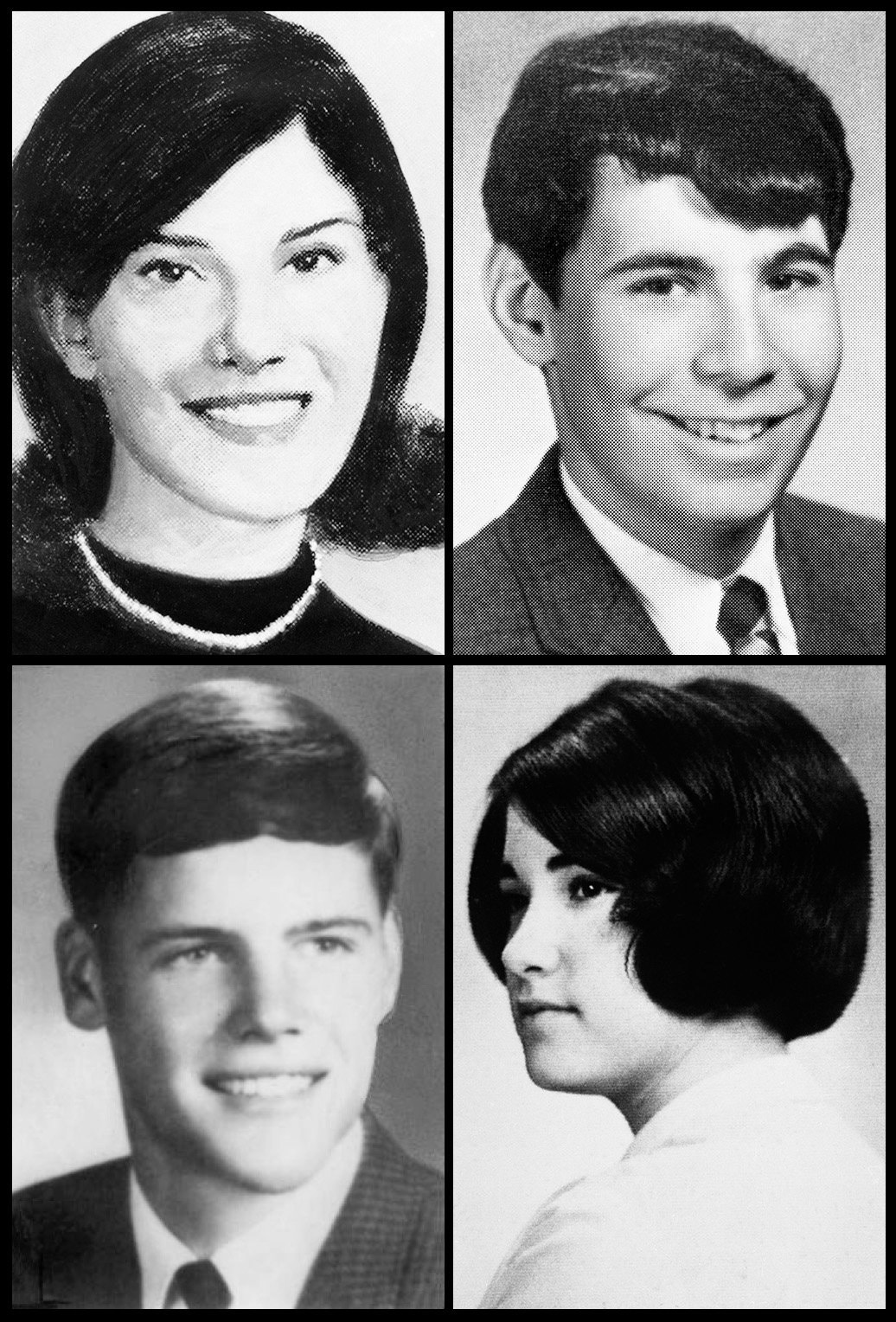
From Days to Hours to Alone

Hello from a quiet Halfshell,

I am sitting in the dining room and I have worked at the table or walked back and forth to the kitchen since getting up after about a 3 1/2 hours of sleep. I left the house last night with Anton for the Baltimore airport. It was raining and a steady wind of 35-40 mph made the initial trip both uncomfortable and a bit hazardous. After a drive of about 8 1/2 hours round trip, with a stop for gas, he is currently over the Atlantic toward Frankfurt as  I write this. The previous 36 hours were a bit of a jumble trying to get him home to Humlebaek. However, we were finally able to get him on a flight from Baltimore to Chicago to Frankfurt and finally home to Copenhagen. It is quiet, and that is okay because I have also been able to nap and throw myself into work. A couple of phone calls and a reach out to help a colleague or two with a variety of things and it is all as well as can be. 

Last night as we got into the car and began to drive toward Baltimore, Anton noted that he could remember the first ride with me from Philadelphia to Bloomsburg in great detail. He remembered me standing at the bottom of the stairwell as he came into the baggage area with my sign with crossed American and Danish flags and a small, but succinct statement, Anton Velkommen til Amerika (in fact, he left that sign on the kitchen table before he left Bloomsburg for me). He noted that I seemed like a nice person and he was happy because he did not want to have to live with an asshole all year. We laughed. We spoke about his worrying about his language and he noted that he had to think about everything he wanted to say so much more carefully. We agreed we could not have been matched better had they specifically tried to do it. Later this morning after walking up, I spoke with our YFU person and I told her there was nothing I would change from the year; it was about as perfect as I could want. As I got back to Strawberry, it was good I was so tired, I merely went to sleep for a few hours. The rest of the day, I have thrown myself into my work, and some cooking. It has been productive and I have considered staying up, but I think a good night’s sleep with serve me well . . . and back: I did sleep pretty well last night and slept in a bit this morning. Anton is finally home. I got a picture from his mother. He had one last snafu, and was rebooked 7 hours later from Frankfurt to Copenhagen, but he is now home. He will probably sleep for a day. While I am here in Cape Charles, there is not a lot to do: work, cook, walk, sleep, and repeat. That is not a bad thing. I am spending extra time on each assignment to give my students as much feedback as I can. 

It is sunshiny here on the shore today, and I think a long walk is definitely in store for before the sun goes down. Maybe some pictures of the sunset. As I listen to all of the reports, I try to limit and focus. Contrary to what many of you may think, I have been impressed with the briefings the last couple of days. Further, while I fall into those who struggle with many things currently happening, it does seem we are finally all getting on the same page (save 5 states , three of which are close to my heart because it is where I grew up. They still have no social distancing guidelines from their governors). I particularly appreciated how both Dr. Birx and Dr. Fauci provided as clear of an understanding of why and how we approached things the way we did as I have heard to date. I believe they were thoughtful, measured, and honest in the what-ifs and the where we are. Also, to my sister-in-law (who really is like a sister), this will shock you, but I am even impressed with how the President has conducted himself over the last few days. This is what I believe we need as a country. One can be optimistic and truthful at the same time. I think perhaps he has gotten there. I do believe we are in for a rough haul. This is not an issue of fault or specific actions, but it is the reality of a virus that is virulent, pervasive, and deadly. I have never been a conspiracy theorist. I generally refuse to go down such paths. Maybe it is my core idealism; maybe it is I do not want to live my life overshadowed by fear, suspicion, and a general isolation that would occur from such a position. In part, my rejection of that is because it is how I grew up. My life had a price tag on everything. There was the saying of my father, which I do believe is true: there are no free lunches. That side I could, and can abide. The otherside, however, held a readily apparent price tag, and, unfortunately, the cost was beyond anything you could repay. It was a sort of psychological/emotional indentured servitude, exacerbated by a meanness that made my servitude incredibly painful, hurtful, and demoralizing. Regularly during this past almost month, the specter of a pandemic has really been at the forefront of my thoughts. The way I have thought about it, however, has focused on the human cost, not only in a loss of life, but in how it has changed how we see each other. This returned me to the idea of decency, compassion, and justice. The upper estimates of mortality, in just this country, are staggering. If we hit that mark, that is slightly over 7 percent of our population. I doubt there would be a single family in our entire country who is not affected by such a scenario. Then there is the economic cost on all sorts of levels. First, something I have considered, perhaps from being a pastor, if the majority of those who pass have life insurance, what will that do to the insurance industry, and those companies insure more than our lives. Second, there is the employment (now becoming unemployment) figures, which are also staggering. Third, there will be bankruptcies, foreclosures, health costs. And all of this is the tip of the iceberg. 

Over the last days, the New England Patriots sent a private jet to China to get a million masks, the Russians have sent us an entire cargo plane of medical supplies, and God only knows who else has offered to help us. It is reminiscent of some of the goodwill I believe we received post 911. The 2.2 trillion dollar package of subsidies from the Federal government is socialism; this is the economic reality of what has happened, and it is necessary, but let’s be honest about what we are doing. We are working both on democratic and socialist principles. Socialism in its purest form provided housing, a safety net of some job and the necessities of life. I realize there is more complexity to all of this, but . . . That is precisely what we are trying to do right now. Many who are arguing against such processes or any socialist tendencies are at the front of the line demanding the government save them. My point is not to say this should or should not happen, but philosophically, let’s be honest. Again, in a sense of transparency, I am fortunate beyond words. I can do my job from my table. I can keep my health insurance. I can pay my bills and I am incredibly fortunate. I have access to others by phone, social messaging, and even video. I have taken the time to reach out to many and yet, I believe I should do more. I plan to use my cooking enjoyment to help others. I think it is something I can deliver, maintain, distancing and make a difference. Thinking about how to manage that as I am shuttered up here in Cape Charles. 

While this previous paragraph might sound less than optimistic, I am feeling positive. I think this compels us to think about the other in ways we often should, but frequently do not because it requires intentionality. I also spoke with a former colleague who has incredibile intuition. She is one of the most talented and brilliant women I have ever been blessed to have in my life. She is spiritual and insightful in ways that sometimes cause me pause, but her ability to use what she does for good has always been apparent.  She shared some important thoughts about our earth and the consequences of our actions. I can say everything she noted makes profound sense. We have abused our environment. Perhaps this is both our earth and creation’s way of forcing us to rethink our selfishness, our arrogance, or our practice of doing what we want with no consequence. For so long, I have been somewhat schizophrenic (not intentionally) or less than disciplined about caring for this world. Maybe all of this is our own personal wake-up calls. 

What I think I can say with some surety at this point is simple: our world is changed by this. Whether it is an example of an “in-your-face,” slap along the side of our collective heads or something more profound, I believe the idea that we will go back to business as usual is a bit misguided. We cannot be unprepared in the future, but if we do not take better care of ourselves, each other, and our planet, I believe we could find ourselves on the receiving end of a serious ass kicking. I have noted that each generation since I was small experienced an event that has transformed our understanding of our world. For me as an eight year old, it was sitting in front of my television watching the aftermath of an assassination. In 1986, it was a generation of teachers and students watching the Challenger explode after a chilly morning take-off. For those who are now are approaching their 40th, it was the attack on us in New York City, Washington, D.C., and in a field in Pennsylvania. The previous three were more a national phenomenon, though felt beyond the country. This is something beyond the proportion we have known since WWII. The belief that we are in a war might be accurate, but this is a different enemy. It is an enemy that attacks all of us; it is an enemy that has no feelings, no morals, no discrimination. It is an enemy that cares nothing for or about us. 

As I write this, I am still optimistic. I continue to learn. During this past 7 months, I was taught so much by the presence of an incredible young man. Anton was the ideal son, house guest, and person. He is brilliant. He has an incredible heart. He is thoughtful and has a goodness to him that is unmatched by many. He brought me so much joy. While I am happy beyond words he is safely home in Humlebaek, the acre will be quiet when I get home. Yet, the person I am because of him continues to be a better person. Du kom ind i mit liv med en vis frygt, men du rejser med en amerikansk forælder. Jeg er ærefrygt for dig, Anton, og jeg elsker dig dybt. Tak, charmer!! It seems our world is calling out and it is time to listen. 

Thank you for reading; now back to work.

Dr. Martin

Just What Do We Have?

Hello from Strawberry Street,

We made the decision to get closer to Baltimore for a Wednesday departure and yet, try to enjoy Anton’s last couple of days. It was almost like being in the twilight zone as we drove through metropolitan areas and saw no cars across 8 lanes of traffic for miles at a time. With more than enough food and snacks in the car, except for one gas stop, we made it to Mayberry on the Eastern Shore. We will distance easily here because it is off season and most everything is closed. Some of the regular haunts allow you to phone and they will bring it to the door or deliver. Yet, those who know me, know I am more than content to cook at home and play in the kitchen. After I get him to the airport, I will return to this little quiet place for a bit. 

As we battle the reality of something we supposedly had a good handle on, it is evident that we are not as prepared as we hoped. This is not about who did or did not do something, it is the reality of covid-19. To hear from one of our more credible national voices this morning as he predicts the possibility of 200,000 (his current high estimate) deaths from this is beyond frightening (Reuters, 29 Mar 2020). The death toll doubled in two days, now more than 2,300. So what do we have? Where do we stand? Certainly, it appears the bureaucracy snafu of accessing national stockpiles is a problem. Certainly, it appears that our National Government is actually bidding against the very states they argue should take the lead on treatment for equipment. Certainly, it appears there are difficulties in coordinating a national strategy, so spokespeople at every level are increasingly struggling to answer questions about treatment and safety. Finally, the reality of numbers is simple. We have the most reported cases in the world and predictions of being in the millions with deaths in the 100s of thousands will more than match any pandemic movie out there. However, this is no movie. 

Some, from high school friends to relatives, have questioned the appropriateness of my posting, questioning, and arguing some of what is occurring on a daily basis. I respect their feelings, and even when their logic seems a bit difficult for me to wrap my own head around, I will still listen, but as has been my way from childhood, I will question the why. What do we have at this unpredictable time? We have our incredibly, significant Constitutional ability to speak and question. That is the role of both the Fourth Estate and the citizenry, and I think it is most apropos when what happens affects the very human existence of those same citizens (and unfortunately, that is not hyperbole at the moment). Many of my friends, as well as acquaintances and family, ask why I always question and why I find the need to find logic in everything. Even during the past couple weeks, people have asked if I really get upset at things. I do get upset; I get passionate; and I am much more sensitive than many would imagine. I know very well why I am throwing myself into both my classes and into the national corona debate. It helps me manage the other changes in my life currently. 

The struggle between States Rights (Anti-Federalists) and the Federalists shaped the Constitutional Convention, and even though there was ultimately a vote, the question has really never been settled. We continually try to implement what we understood and how changing contexts and situations require reconsideration. This pandemic and our response or debate is nothing new. We can look at the Spanish Flu epidemic, but President Wilson had a very hand-off practice, and in fact, he did not speak to the country once (Analysis, NYT 28 Mar 2020). Of course, he was also managing the end of WWI, so there was a difference. I also think we were a very different citizenry at that point. I am not sure there was, at least to the degree, a typical schizophrenic public that wants everything from their government, but does not want to pay for it. I know that statement is a tough one, and one that will raise some red flags, but that is how I see our general national personality today. Suffice it to say, I could put together quite a montage to support this assertion. One the other hand, when we have a global crisis (and that is what I believe corona is), the appropriate level of response is our Federal Government. As I noted in a recent blog, at least in terms of focusing a national conversation, a decade ago, the National Institutes of Health made this very argument. This is why effective communication and a clear strategy is of such importance. National communication, especially now, is about comfort; it is about allaying public fear; it is to shore up the concerns of a diverse public over an expansive space, providing a sense of security in insecure times. Creating a sense of singularity of purpose needs to come from the Chief Executive(s). It is not by accident that I included the S parenthetically. I can be convinced that some governors are not making the President’s position enviable. Conversely, I am pretty sure that stream flows both ways to use the President’s inference, whether that is conjecture or not. The virus is not attacking states based on their political color; it’s attacking states. From Louisiana to California, from Pennsylvania to Kansas, there is no rhyme nor reason for the indiscriminate corona reaper’s process. We know how it spreads and as such can try to minimize it. I think there is a difference between what the Government does and how the President sees “their versus his” role in all of this. Perhaps that is where the rub is. Perhaps the second rub is how he has at times threatened Federal intervention (e.g. Chicago violence, homelessness in California, individual military justice cases), which certainly oversteps the sort of Anti-Federalist approach he has taken in a much more profoundly federal situation. However, until we come up with a uniform process, I am not sure we will win this fight, but rather by the time we get to a place of comfort the national cost in terms of life, dollars, and national identity will suffer irreparable damage.

So for me, outside of my debating on social media, sometime to the consternation of those around me, what can I do as an individual? I am working to manage my own work the best I can. In fact, getting all of this off my chest at the moment will help me focus the remainder of the day. Second, because I have everything I need (at least for a week or so), I can stay home, and if I go out of the house, I can walk around and social distance as much as possible. I can make sure I do things to reach out to people who matter and let them know their importance, even when I cannot see them. In the last two days I have heard from some incredibly influential people in my life. Those things are so profound to me. It reminds me in a way that touches my own soul about the blessings so many have been to me. Denny (Denise) Blake, a dear friend from my first summer and first year in seminary, called yesterday. What a gift. I saw a picture yesterday, the daughter of one of my most influential students when I was at University of Wisconsin-Stout. The resemblance to her mother was so undeniable you would think Tayler is the reincarnation of her mother. Rachana, my Nepali student,and one of my most joyful continued student connections from Wisconsin and I have spent time during the last few days on FB messenger. One of my childhood friends, now a resident of South Dakota, a person admired beyond words throughout our school years, has been in touch over the last months and it has been so wonderful. Today, the first person I honestly feel in love with reached out and showed concern, as did another childhood friend. That is what we have. We have community and if we are willing to hang on to it, we can overcome anything. I believe this. It is not idealism; it making the most of the life I have in the circumstances I am. I know I am blessed. How I take the time to reach out, either back or beyond is what I can do to make this time more meaningful. 

What I am finding is that I am actually enjoying the process of managing my classes, helping Anton deal with his reality, working with my students, and, of course, playing in my kitchen. I believe in many ways I am taking better care of myself more intentionally and carefully than usual. Of course, that might be a welcome and necessary side consequence of all of this. Well, I think it is time to get back to other tasks. I do hope you as students are safe and managing this craziness that is the second-half of your semester. To my friends from throughout my life-time, thank you for your calls, your texts, your messages. They have buoyed my emotions more than I can adequately express. To Ana, to Nadia, Julia, and Vasyl, to Anna, Katarzyna, Adriana, Annamaria, Dominika, Beata, Mikołaj, Sylwia, Andrzej, Justyna, and Maja, to Elena, to Ciarán, I hope you are all well and safe. I think of and value each of you for the goodness, brilliance, and joy you have brought to my life. 

I wish you all peace and comfort; bless each of you. 

Dr. Martin

Learning from a 17 Year Old

Hello from my kitchen,

We are back to school, so to speak, though most of my work will occur at my kitchen counter, in my study, or somewhere in my house. I did go to my office one last time today to set up a watering system for my plants (both the ones in my office as well as the 3rd floor foyer). I was sort of proud of myself for thinking about some way to offer them water without my being there. Amazing what I can do with 4 5 gallon Home Depot Buckets and some cotton rope. Each day seems to bring a new possibility, a new challenge, and another way to feel like we have taken one step forward and perhaps a step and a half back. As my colleague, Dr. Kahn, might note, that puts you on the left side of the number line from absolute zero. Not a good thing. As I listen to people I know from the various parts of our country, the breadth of opinion and the divergence of belief concerning our current national (global) circumstance does not come as a complete surprise, but the number of ways people end up in a position of stasis does cause me more than a simple pause. My research in the last 5 minutes revealed we have had approximately 12,500 new cases in the last 48 hours. While that statistic is extreme, what is more extreme (in a negative sense) is the level to which we can currently test (or more accurately, cannot). With testing kits at unbelievably low availability, the number of people who need to be tested and aren’t is probably a number we cannot readily fathom. The daily updates do not seem to be anything that does even an iota to assuage the fear among the public, and, unfortunately, rightly so. As a rhetorical scholar, I listen carefully to words and the argument being made. That is something I learned as a child, interestingly. I had no idea that one day it would be how I made my living. The rhetorical strategy of the administration is not just unapparent, it is non-existent. That is what worries me beyond measure.

I am reminded of a former student who argued she did not understand or want to understand the word exigence, but that word has never been more needed than in our present situation. Exigence refers to a critical need, to something essential. In the terms of rhetoric, it means to have command of the rhetorical situation – again to understand the need to urgency of what is happening. What worries me is the only exigence the administration seems to understand is from an economic view. Before you believe I have not appreciation for that issue, let me assure you I do. Over the weekend, I saw a person who works on campus and she was the employee of the month at the university. She works generally seven days a week at two jobs, is married and has a 13 year old daughter. She has lost both of her jobs. I do not know how they will make it. The diner in town is something a family has put their entire life into. This morning, I ordered takeout to try to help even a little. They have no idea if they will make it. This causes me more pain than you know. And yet as I have watched our Congressional leaders fight, the Democrats are arguing for things like supporting hospitals and the two examples of people I just noted. The Republicans are willing to pass a bill that offers almost a half a trillion (yes, with a T) dollars to be distributed at the decision of the Treasury Secretary and the President, so so it seems. What happened in both 2008 and with the tax cut recently passed is any indication of what we can expect (and why would we expect different?), I believe concern is warranted. I understand the tanking of the stock market and wanting to try to manage that. I am afraid to even look at my retirement things at the moment. At my age, there is little time to recover what I have lost in about a month. While the economy, both here and abroad are important, I have trouble being convinced that people being infected by the 1000s and the continued number of deaths is somehow not more significant.

As we have come back to school, albeit in a new form, I know that my students are worried and concerned about how it will all work. On the other hand, so are some of my colleagues and they have been thrown into uncharted territory for them too. However, our University President, Dr. Bashar Hanna, noted that the only way to do this effectively is to work together and support each other. He is correct. There will be some bumps, some hiccups, but if we listen to each other and work to support and care to our best ability, we will manage the basic reason we are doing what we do, which is to educate, to prepare them for the world they will soon enter. Over the last days I have received phone calls from current students and former students. I have received text messages and emails. I have spoken with colleagues and former colleagues about the best way to move forward, trying to manage two things. It is still important that students are able to receive the material this semester set out to provide. Those objectives are important because they provide a framework of what a person who has completed the class should know. On the other hand (and I am fortunate in this realm), teaching all things distance is a totally different process. More importantly, what makes a class a distance class is not simply throwing it into a course management system (CMS). In addition, the digital divide (those who have access to high speed internet and those who do not is now front and center. A number of my students do not) have the technology available they need to be as capable of managing the class in this format. This crisis will probably do more to reveal the discrepancies we have between urban and rural than many realize. It is not merely a fiscal issue, it is an actual access issue. The days and weeks ahead will determine a lot about the university, but as I told my colleague yesterday, “I am glad to be here in Pennsylvania.” The administration, the technical staff, and my colleagues have worked together cooperatively and intentionally to make all  of this work. It has been a really positive experience thus far. . . .

A  couple of days have passed and I have been focused in school work and trying to help students manage the issues at hand. While it has meant more time at the computer than expected (and it might be I have spent more hours this past week -12 or more a day – than when I am on campus), it has been enjoyable and productive. I have also helped some people out on BOLT issues and learning how to manage things. While I have not changed a lot in many of my classes (and that is because two sections were already distance), I have worked to change dates, eliminated an assignment that can be managed in other modes, or continued to alter some course content to manage the daily reality of our worlds. Meanwhile, the virus issue in the country continues to explode exponentially. The amount of time I have spend alone is significant, but I am realizing it works and I am fine.

Anton has some trepidation about flying home, and understandably so. He also knows he will be quarantined for at least two weeks, but he said, both thoughtfully and intuitively, I need to do this because I do not want to put my grandparents or anyone else at risk. It seems my 17 year old exchange student has a bit more intelligence and simple goodness in him that say the Lt. Governor of Texas, where I am embarrassed to say I was born (and saying someone from Texas is embarrassing can get you in big trouble. Ask the Dixie Chicks!). Anton is both capable and willing to see something bigger than himself, and to articulate the importance of human life. Certainly, these are his grandparents, but that is the point. For anyone to assert (particularly an elected person) that someone should desire to give up their lives for the good of our economy. If we consider this on its merit (or lack thereof) alone, one cannot help but question how Lt. Governor Patrick came to the calculated answer he did. Is each person in this country with so much (an actual amount) of our GDP? I guess individuals have calculated how much each individual is in debt because of the national debt we currently have. If he is correct, have we merely turned to another decision maker to create the United States into a real-live versus of Shirley Jackson’s haunting tale, “The Lottery?” I do believe our current health situation creates more of a survival-of-the-fittest than I might wish to admit (perhaps that is because I am an immunocompromised person). I do believe we set up a stockpiling and supply chain management process in this country that was not prepared for what we are facing. I understand that we have 340,000,000 people versus 5,000,000 in Denmark, but we are all humans. We are part of a family, both immediate, extended, nationally, and globally. If Dr. Fauci, who seems to be honest and thoughtful, continues to offer insight into the reality of this virus, and he continues to speak out urging caution, I find him both trustworthy and reasonable. His statement about the virus will control the situation and not vice versa seems not only probable, but an opinion based on his expertise and a sense of veracity he seems to have as a core principle.

It is a difficult day as it is the last day, at least it seems to be the case, Anton will be in Bloomsburg on his study abroad year. He has been a phenomenal person to host as an exchange son. He is intelligent, good natured, thoughtful, industrious, and astoundingly funny. I will miss his wit and his honest insight. I will miss his care and sensitivity. I will miss his accent and the way he loved aspects of American culture (Taco Bell, perhaps at the top of the list). He has impacted so much and so many in his 7 months here. He has given me a sense of hope, as have his friends, Ellena, Marcus, and Lennon. Those are the ones I know, but there are names like Sydney (sp.), Bianca, Marta, Grace, that I have heard from time to time and many who would stop to give him a ride. Hmmmm, just noticing again, they are all females. I rest my case that he is a charmer beyond charmers. It will be a bittersweet few days, but my desire is simple. I want to get Anton home to Humlebæk and to his family. I want for him to be healthy and safe. I know his parents will be happy to have him back. Even more so, they will be surprised at how much he as grown, both physically and in maturation. Well, off to get his breakfast (takeout from the diner one last time). Thinking of my best friend, who has been gone for almost 5 years, and still missing him.

Thanks for reading.

Michael


At What Point?

Good early morning,

At this point, that greeting might be the only consistent thing I am able to write in this latest blog. I am often up early, and I have been awake for the better part of an hour (it is 4:50 a.m.). Presently, I wonder what to read or how many sources to read if I am to ascertain the truth of our daily world’s situation; I listen to both the talking heads and people I trust to make sense of our current reality; and, perhaps most importantly, I work diligently to think and analyze what seems prudent in terms of what to do or not to do, especially given my own health situation. All of this is the way I attempt to manage most aspects of my life. It is logical for/to me and generally, it works. However, in the moment (as my Dominican friends are wont to say), there seems to be less we can depend on as logical and more and more , which might, could, or should be deemed the “Theater of the Absurd.”

From the entrepreneurial jerk who stockpiled 70K worth the Purell hand-sanitizer, to a stolen truck found in North Carolina in the last two days with 18,000 pounds of bathroom tissue in spite of our unprecedented global health crisis (I think they both deserve the moniker of selfish-ass), it appears we need to step back and breathe and think. Contrary to the naysayers, and some are people you would think should know better, this health situation, which I imagine would bring back memories of things like polio, smallpox, or typhus to our ancestors, is serious. It is the most troubling and deadly, at least in my life time, and certainly since our global inter-dependence has been so prominent. The important part of this understanding is we are dependent, and whether or not we want to admit it, that has never been more important to admit than now as we attempt to respond to this global crisis. I believe it is a catastrophic emergency of epic proportion. Why? Because the way we respond together now sets the standard for what we will do in the future. We can create borders; we can attempt to build walls; we can start trade wars; we can blame others for our problems; we can belittle anyone who disagrees with us; we can call others names, but we cannot manage this virus on our own. The longer we travel down that path, whether it is in our own neighborhood, community, state, or nation, the more we play into the misguided belief that somehow our own humanity is different or more valuable than the humanity of another, the more likely we are to suffer devastating consequences across all sectors or elements of our human community. This is not socialism to those who want to argue such a ludicrous notion; it is common decency. It is biblical for those who want to argue from some misguided Christian perspective. If you are unsure check out Matthew 25. 

While I am self-quarantining quite well over the least three or four days, I have made the necessary trips to the grocery store and pharmacy. I am working from home on my students’ concerns and managing my classes, but simultaneously helping Anton as he prepares to return to Denmark, albeit almost 2 1/2 months early. This has been difficult for both of us, and I will admit tears on both sides of that relational equation. He is such an insightful person. The other day we went for a walk and I asked him about the differences between 17 year olds in Denmark and here in North Central PA. He said that it seemed they are allowed to grow up sooner in many ways in Denmark. Yet on the other hand, the friendships he has developed here are very different, more thoughtful, intentional, and significant (those are my words, but what I believe he implied). He said the difference was because of the involvement in extracurricular things, which they do not seem to do as much in Denmark. He noted that some of the friendships here are beyond anything he had  back in home. It is really gratifying to see how many people want to be around him (in spite of the current situation) before he leaves. I have heard people’s names from time to time, but it seems he has influenced a number of people. I know that he has influenced and helped me in a number of ways. I have learned so much through, and because of, him. 

What is important in this preceding recounting of Anton goes way beyond the two of us. It is a cross-cultural education that has changed my life for the better. What can we do to make each other more comfortable with whom we are, while teaching us to simultaneously move beyond ourselves? While I was frightened when he first came, the first weekend went well. I was worried I would not be understanding or accepting enough, I have learned that I could have been a good parent; at least it seems so. I have learned that I do not need to holler or make noise, I merely need to be consistent and caring. I need to be trustworthy and supportive. I need to listen and allow him to speak and ask questions (which he is really good at doing). I once said to him that I treat him much like I do my students, even though he is still in high school. Yet he has never once failed to show he can be trusted. The lessons I have learned with him are what we need to do on a larger scale. Yesterday the question was asked “What do you say to Americans who are watching you right now who are scared?” Instead of being the “Comforter in Chief,” which is often what the President is called upon to do, he responded. “I say that you are a terrible reporter; that’s what I say . . .” Are  you kidding me?? Enough! Stop! No more disrespect from anyone or toward anyone. Peter Alexander, an NBC reporter for 14 years who has international awards for journalism,  asked a rather benign and easy question to help the President if anything. The response is uncalled for; it is juvenile; it is beneath of the Office of the President, and rhetorically it has no reasonable strategy whatsoever. When people are scared they need to hear words of assurance, words of hope, words of reason. I have listened a number of days to the briefings from our nation’s Capitol. The rhetorical bullying, incredibly poor speaking style, and restating the same point four or five times with just a different adjective or adverb is appalling to me. I do not believe this man is stupid. He would not be where he is. He would not be the business person he is; he would not have managed to get elected, regardless the popular vote; he would not have managed to escape all of the things he seems to escape if there were not some intelligence in there. I am not saying I like his methods, his values, or his morals, but he is certainly capable of landing on his feet in spite the odds. 

What I find problematic is his attitude. It is the basic way he treats other people. I remember when I was first coming to be a pastor 30 years ago. I was asked about my understanding of prelation and liturgics. That was a strange question on a couple of levels. I was not sure I understand the idea of prelation, but I figured it out from the context. The bishop wanted to know how I understood worship and how my ideas as a Midwestern boy would fit with the higher-church practices of Eastern United  States Lutheranism. I remember after understanding the question and the context, saying something to the effect of “If I have not appreciation for their tradition, they will not appreciate me.” That was an important understanding; even more than I realized. While I am not downplaying the potential economic cliff this situation is creating (because that takes a profound toll on people’s lives also), but this is first, and foremost, a health issue. We need to understand the health needs of the public and as a country (and states should try to cooperate), the Federal Government has a duty to its people. In 2010, the National Institutes of Health did a workshop series on the role of the Federal Government in times of crisis titled “Crisis Standards of Care.” To be sure, finding the balance between the role of the Fed and the ability of states and local municipalities is contentious, but there seemed to be strong agreement on one point. “On the practical end, there was a widespread call for the federal government to perform a role as “chief information coordinator” on the topic of crisis standards of care. Federal or national involvement would also provide a level of legal, societal, and practical protection that cannot be achieved at the lower levels of leadership. Many people at the workshops noted that there may be some issues for which federal or national involvement is the only practical choice. ‘There are people all across the country and states, at county and other facility levels, who really are kind of reinventing the wheel,’ said Tia Powell, a bioethicist and Director of the Montefiore-Einstein Center for Bioethics and of the Einstein Cardozo Master of Science in Bioethics Program. She added, “They are ‘starting all over again, trying to do the literature search and figure out what’s going on. It’s an enormous investment of time and manpower across the country when in fact there are scholars who at least have some of that information as ready knowledge'” (US National Library of Medicine). I believe for too long we have believed the Atlantic and Pacific serve as a protective moat around us. We can merely pull up our drawbridges and protect ourselves. That sort of head-in-the-sand mentality has really never worked, and it certainly will not work now. I am an immunocompromised person because of my Crohn’s diagnosis. The long-term consequences that have manifested themselves (e.g. diabetes, dehydration, kidney failure to name a few) have made me a prime candidate for this virus. I have students whose parents are also struggling. And yet, I am so blessed to be able to sit at my kitchen counter and do my job. 

At what point do we realize we are in this together as a human species. This is not about borders, race, gender, age, faith, or any other humanly identifying standard. It is about being human. Plain! Simple! It is about working together. If that requires a directive from Washington, so be it. I understand growing up with the idea of the individual. I understand the idea of not liking be told what we should or shouldn’t do, but I think it is time to think beyond ourselves. This is not political it is about humanity. I am blessed that it seems Anton might be here a bit longer, but all in all, I am ready to work with or together in whatever way I can. I have had a wonderful life. I merely want others to have the same chances I have (or even more). I wish each of you safety and health. This past weekend, one of the more amazing vocalists (narrative crooners) of my life passed. I live you with this. Somehow I do not believe it is time to gamble, but perhaps the advice is well taken. 

Thank you as always for reading. 

Dr. Martin


Has Thinking Been Replaced?

Hello from my kitchen,

The weekend has been rather non-stop, and as I sit at my kitchen table eating a salad, I find myself pondering the state of all kinds of things, from food to fantasy (and I mean more like contrary to reality), from education to economics (see Lydia, you still have power), and from vernal to viejo (yes, I changed the language to manage the alliteration). This past Friday, the first third of yet another semester is complete. There are moments I am still struggling to remember my schedule, but the weeks are not slowing down. The Father’s prophecy seems true yet again. He noted that the days to years, and now I am thinking decades, are not seeming to slow down. In not much over 3 years it will be 50 years ago I graduated from high school. It makes that Spanish noun used in this paragraph seem more apropos by the day.

And yet, I wonder how or when it will be reasonable to slow down? I am not a person to sit still for very long, but there are moments I find myself more worn out than I used to be. I find days or periods of the day where focus is much less possible than I remember. And as I write this about 36 hours later, I somehow managed to end up with an ambulance ride to Geisinger/Bloomsburg Hospital yesterday after having some serious symptoms. While it seems all the tests indicate nothing abnormal, the things that happened seem to contradict that. So off to some more specialists I will go next Tuesday. There are a couple of things I have pondered as of late, considering a change and how it might help me; seems I might need to do more than ponder. As I am sitting and typing away, I am always astounded by all the things we take for granted as we mosey along each day. I sometimes wonder how the things that happened to me in those first two years of my life have affected me long-term. There is the beginning of being barely over a pound and then only 26 weeks, but there are the things which I really have no idea that they happened. I know, unfortunately, in general terms that my biological parent’s child-caring skills were a bit remiss. I am pretty sure that nutrition was a problem. How does this fit in terms of my thinking question? Well, it seems to me that if you are going to be a parent, even if you did not plan it all out, you would rethink how what you do affects the lives of the little humans you are entrusted to care for. Perhaps that is mere idealism on my part, but are there no parenting instincts from carrying or watching the development of a child? I think of how carefully one of my former students is now as she is about to deliver her second child, and how in our conversations everything she says, does, imagines is affected by the fact that she will be delivering another human. She and her husband work so incredibly hard to raise their daughter and the imminent arrival of their son will be a wonder and joy to behold. I have noted her before and their little family causes me to think, but also gives me hope. There are still those moments when I wonder what it would have been like to be a parent from birth until today. Anton has given me an understanding of parenting like nothing I have every experienced, but he has taught me so much. I believe I am more patient and willing to listen because of him. It has affected how I work with others, how I listen to my students, and what I believe I can do to make other’s lives better. That has always been at the core of who I am. What can I do or how can I understand and think about what matters in the larger picture. 

As I listen to my students, read their papers, and think with them, they always inspire me. Sometimes, as anyone who is in a classroom can attest, there are trying moments, but seldom is the student a bad person. Sometimes it is helping them learn how to think more critically. One of my colleagues noted today that our  “government [is]  based on anti-intellectualism . . .” and then goes on to say right now. I will agree with him, and I will agree with the right now aspect, but I think he is more optimistic than I am. I believe we have a government and an economic system that has worked on this premise for probably the last two or three generations (and perhaps before), but I am not educated enough in my own understanding before that time. However, it seems that the Alphabet Agencies and many of the policies put in place during FDR were much more about society than the rich. Certainly, the one percent does not want our system to change. If everyone would think carefully about how things are stacked up, one would hope they might ponder how it is more and more people are working one, two, or three jobs, but not getting beyond that infamous station in life, and perhaps too many are going in reverse. While certainly more and more are working, the wages they are bringing home do not manage the necessities as those wages once did. We can consider the market,  but figure show that too many people in the country are not in the market or do not have retirement plans, so the market does not really assist them in a substantive way. As a check on this: the global markets have lost 6 trillion dollars in 6 days (Fitzgerald, 28Feb20). More specifically, 4 trillion of that is in the United States. I can write that number, but I have no concept of that figure. I can think my to the point my brain might explode, but all those commas and zeros will not become clear to me. While I am very fortunate, I am still a little NW Iowa boy. As someone in his mid-60s, however, I am afraid to look at my retirement in light of the past week. (Adding: we have now had the first confirmed death of COVID19 in the states and the weekend has been more about who is doing what than just doing it. Again, step back and think everyone). 

Thinking is fundamental to who we are as humans, however. I think that once again, I am pushed back to my Dana education. The most important thing I learned to do there was make connections. That is what those humanities courses did. There was no silo-ing of concepts; there was no possibility of being able to ignore how it all fit together. I remember one unit question in particular. It is indicative of the thinking we were required to do if we hoped to achieve something close to a 30 on that essay. The statement was something like [e]xplain how the architecture of the Renaissance and the cathedrals of Europe reflected the politics and religion of the time. In this question was the ultimate synthesis of what was happening in Europe. Even now, I can see the connections and how the need to reach out to God in a sort of Tower of Babel manner was evident in the incredible structures that reached to the heavens. The need of people to think and connect has perhaps never been more important. I can also imagine that such an argument has been made in every generation, but what is different now? First, while my students write more than any previous generation, they also read less. This is what studies show, but at whose peril? Their own I would argue and for the generations beyond. Yet, it is not all their fault. They are the products of what we have done.Our own consumerism and the belief that we can continually kick difficult things down the road is a basic lesson in accountability. Heaven knows I do not like accountability anymore than the next person, but it is time we re-think that. Our belief that bigger is better, that more is a good thing, that we deserve all we have regardless the consequence for the other has be observed by our children and grandchildren. The adage my parents often preached, “Do as I say and not as I do.” while  true to some extent, is not what we as humans are prone to do. We parrot the behavior we observe more times than not. I saw this in church when I was a pastor. Ask yourself this: why do you do some of the things you do in church or other places? The most common answer is because we have always done it that way. Another thing I realize I learned at Dana was simple. Learn from the past to inform the future, not to control the future or relive the past. I learned to question things. I think I had some of that in me before Dana, but my time on the hill certainly sharpened that skill. More importantly, it made it a central part of who I am and how I live my life. One of the things I think my students are better at than we were, and it is somewhat reminiscent of the late 1960s, it to speak out when something is illogical or simply garbage. They might not demonstrate and be as vociferous as their 1960s counterparts, but they are as wise and willing to question the status quo. The book title picture that I use was part of my comprehensive exam reading. What is truth is a common question. What is a lie should also be asked.

If you are to question the status quo, it is necessary to think. While I am not sure they articulate their concerns as well as we might wish, they are thinking. I do believe in part that is what I am called to do as a professor. It is not my job to tell them what to think, and I work hard to make sure I am not doing that. It is, however, imperative that they do think. It is vital that they question why the world is as it is. It is what professors with names of Nielsen, Jorgensen, Bansen, Hernes, or Stone expected of us and helped us do. I remember Dr. Brandes astounding me more than once with conversations that were far from his musical talents. I loved his probing looks and insightful questions that expected more than a cursory answer. One of the students I appreciate the most has a very different political stand than I do, but I know why she believes as she does, and I respect her position. She knows why I believe as I do and she also respects mine. This little interaction is how it should be. It requires thinking and pondering and understanding more than merely what is said. It is the rhetorical foundation that I use in all of my classes. Students say regularly, I was never taught to think about audience and purpose so succinctly, so purposefully. Yet, when we do that, we speak differently; we listen differently; we interact differently. In spite of some of the things that saturate our news outlets, our Twitter feeds, or our Instagram posts, I do believe there is a lot of thinking going on. As much as I want or wish? Perhaps not, but I am not sure we can ever cooperatively think too much. Just my thinking on all of it. 

Thanks for reading as always,

Dr. Martin

When Silence is Complicity Rather Than Golden

Hello from Wilkes University on a Saturday,

Earlier today I found a quote from the German Lutheran pastor, who was the subject of my dissertation. Dietrich Bonhoeffer, the martyred German theologian, who had the courage to stand up against the evils of worshiping the idol that Adolf Hitler had become to much of the German nation noted this when considering what was happening to the Jewish people, particularly after Kristallnacht. He wrote, “Only those who cry out for the Jews may sing Gregorian chant.” He would note this date in his Bible and then wrote in the margin, but the church was silent. It was Bonhoeffer’s own work in helping Jewish people escape that would lead to his arrest in 1943. Part of the group he helped leave were relatives. His twin sister was married to a Jewish person. Bonhoeffer was from a prominent family, but he did not grow up with an active faith, but rather his understanding of God (and the church) was more intellectual. As such, it is not surprising that he was more interested in the systematics and to some extent the nature of God versus personal piety. Influenced by Adolf von Harnack, Bonhoeffer would understand the importance of the church and the sort of practicality of the church (a social gospel of sorts). The second profound influence on Bonhoeffer was the Swiss theologian, Karl Barth. Out of the liberal theology of von Harnack and Friedrich Schleiermacher, Barth was called the most influential theologian since Aquinas by Pope Pius XII. This was Bonhoeffer’s pedigree and would lead him to  a position of leadership in the Confessing Church, the group of theologians and pastors that would warn about and argue against the elevation of a political power or figure, and in this particular case, the Fuhrer. Barth was a primary author of the Barmen Declaration that would tell those the church’s only allegiance was to the Lord and not earthly power. Both Barth and Bonhoeffer would refuse an oath of loyalty or allegiance and consequently were stripped of their positions and not allowed to speak or preach in public. Barth would return to Switzerland and Bonhoeffer would leave the university and lead an outlawed seminary in Finkenwalde.

It is easy to want to see Bonhoeffer and the Confessing Church as a sort of paragon of moral standing for confronting the ideology that the Reich’s Church would adopt, swearing allegiance to National Socialism, and particularly to Hitler, but it was a much more complicated issue. The position of Barth, Niemoeller, and others would separate them from the mainstream position of National Socialism, but the imprisonment of some would cause the church to once again shrink back from an all out denunciation of the racist, anti-Semitic, and counter-evangelical actions of the late 1930s. As I noted for my rhetoric students this week, one of the most influential and successful rhetoricians of all time was Adolf Hitler. That does not minimize in anyway the horrendous, tragic, or cacodemonic reality of the pogrom. The fight of the church was for the soul of the German nation, but interestingly, many were unprepared for the fight. As early as 1932, before Hitler became chancellor, Bonhoeffer asked whether or not the church was needed? However, he went on to assert that very question was misguided. He would note that both the church and God exist, so the more appropriate question was “Are we willing to be in service of the church?” That would be a precept for what would come when in February 1933 when in his radio address he would refer to the leader who would become the misleader. Bonhoeffer’s attack on the chancellor did not go unnoticed and, in fact, his broadcast address was cut short. Bonhoeffer would soon lay put the role of the church when the actions of the state or the government abrogates basic human rights, including miscarriage of justice, discrimination, or abuse of power, the very things they are supposed to protect. Bonhoeffer asserted that the church is obligated to question if “the actions are legitimate and in accordance with its character as state” (Wind 69); in addition, second, “[the church] can aid victims of state action,” noting that the church actually had an “unconditional obligation” when a reordering of society caused harm, even if the victims were not Christian; and “furthermore, the church was not there merely to bandage the victims, but “to put a spoke in the wheel itself” (Wind 69). Another prominent theologian, Paul Tillich, who was a religious socialist, and already persecuted for being such, had also argued being open to National Socialism and rejecting the socialist was a betrayal of God’s call of the church in the world. For those who are wondering, you might consider the idea of liberation theology, which seems to rise from some of this. Bonhoeffer would call on the church to open its mouth for those who are silenced. As Bonhoeffer continued to speak out about the role of the church in the world, he argued one could not practice their faith on Sunday and not be fully immersed in the difficult civic life that was enveloping the German nation. For Bonhoeffer it was the Christocentric faith that argued all other gods of the world must be renounced, and this included the Reich. His argument against the armament of Germany was believed to be pacifist in nature and that position would be another reason Bonhoeffer was dismissed from any possibility of teaching. As he stood his ground, the more he became reviled  and ostracized. It was then he wrote one of his most influential works, The Cost of Discipleship. It was here that he argued that grace without cost, grace without price was cheap grace, the most deadly enemy of the church. If grace is sold in the market and the forgiveness of sins is thrown in at a rock bottom price such actions were at fatal misunderstanding of Luther’s doctrine of grace through faith.

I believe this is often where we find ourselves. If we merely speak out when the discrimination is too vile; if we simply protest when our brothers and sisters from other countries and faiths are demonized; if we send only our prayers and thoughts when yet another group of people are murdered in senseless gun violence; we too have cheapened the grace of God. We have failed to even bandage the wounds of the other. We have made no genuine effort to become the “spoke in the wheel.” Perhaps it is here we can find some appreciation for some of what Bonhoeffer began to argue, a religionless Christianity. Bonhoeffer demanded that his student encounter scripture daily and in a reflective and meditative manner. Many have argued this sort of retreat is counterintuitive to his call to be in society, but wait and hear this out. What might seem to be a call to silence was anything but. In fact, Bonhoeffer would ask how obedience to the gospel might happen in a world where much of the church was taking an oath of loyalty to their leader? His answer was simple, but difficult. “Live out the Sermon on the Mount, without compromise” (Wind 116). The “cost of discipleship” was a complete calling one that encompassed both faith and society; a call that believed the role of the church was to be in opposition to a world, a government, or a leader who claimed to be all powerful, an idol of sorts. This was occurring at the same time Jews were being rounded up and gathered into ghettos and camps. This argument was occurring as the Nazi party began to claim that anyone who could not swear an oath of loyalty to the Fuhrer  would be considered treasonous. It was the same time that the Reverend Martin Niemoeller would be arrested.

Bonhoeffer would leave Germany once again, only to return weeks later. While he could understand the serious attempt of some to avoid persecution from the Reich, he could not do so himself. He would assert, “If I am not there is the battle for my country, I cannot be there to pick up the pieces.” It was then Bonhoeffer believed intimately, he would have to become the “spoke in the wheel.” It was then Bonhoeffer would move from complicity to action. The premise of discipleship, the belief in ultimate social justice in a nation of incomprehensible allegiance to a person who believed himself above all, including the church and law, was more than Bonhoeffer could tolerate. His believe in justice for the least of his brothers and sisters compelled him to move toward something he might have one considered unthinkable. After returning to Germany, he would become an integral part of the plot to assassinate Adolf Hitler.

What I still find fascinating about Dietrich Bonhoeffer is the astute way he was able to connect his faith and his understanding of the gospel to the evil and difficulty of the world in which he lived. He was able to be not only a faithful person in word and thought, but in action. Even in the most desperate of times. After his arrest and initial imprisonment in Tegel, he found himself reassessing what it meant to be faithful, what it meant to be truthful, what it meant to go beyond the bounds of the faith he had practiced to this point. There is so much we might consider about our current national situation as we ponder anew the life of this martyr, the life of a theologian and pastor who was strong enough to claim the totality of discipleship that was of and in the world. Bonhoeffer wrote, “As we embark on discipleship we surrender ourselves to Christ in union with his death — we give over our lives to death. Thus it begins; the cross is not the terrible end to an otherwise god-fearing and happy life, but it meets us at the beginning of our communion with Christ. When Christ calls a [person]. he bids [them] come and die.” These are incredible, profound, and frightening words. They are words that command us to speak out against the injustice of the world around us. They are words that should compel us to question any in the church, a modern day Reich’s Kirche, that supports the discrimination, racism, or xenophobic nationalism that seems to mirror more of the Germany of the 1930s than many want to admit. As we hear the questioning of anyone, within the government or as a citizen,  who argues, labeling them as unpatriotic, losers, scum, lowlife, stupid, what happens to the tenor of our discourse? Bonhoeffer would eventually note this as he was asked about the reality of standing up against another egomaniac. When his co-conspirators asked for an absolution for their participation in the plot, he responded, “We have been silent witnesses of evil deeds: we have been drenched by many storms; we have learnt the arts of equivocation and pretense; experience has made us suspicious of others and kept us from being truthful and open; intolerable conflicts have worn us down and even made us cynical. Are we still of any use?” This is what elections are for. We still have democracy. We still have a voice. As I hear the words of a President, I fear for the country and the people we have become. I know this is a difficult post, but I feel compelled to question our decency. Here are the words of Bonhoeffer above as a form of visual rhetoric. It is the same clip I used at the beginning of my dissertation defense.

May I be a faithful disciple.

Michael


Wishing for and Believing in Better

Hello from my office,

It has been an incredibly busy Monday (it is about 2:15 p.m.) and I have another 7 hours to go. I got to my office before 8:00, but there is still more to do than it seems possible in terms of managing it all. I will do it, but I know before the day is out, I will be a bit tired. I smile at those (too often state legislators) who argue we only work 17 hours a week, which is our 12 hours of teaching and our 5 hours of office hours) and that we are paid way too much for what we do. I would love for them to follow me around for a week or so. . . . I did not get far on this yesterday, and the morning has also gotten away from me, but I continue on. It has been a busy morning and the positive is students are coming in for help. Sometimes I think things are clear and logical and then I find out not so much. I assume they realize and make sense of so much more than they do. It gets me in trouble. This struggle can be about something as simple as an assignment; it can be as important as paying attention to how they pay attention to directions that are constant from semester to semester, but affect their graduation. Yet, the lack of careful attention to detail sometimes exasperates me, but then I feel curmudgeonly. The more difficult thing is we can tell students what is necessary; we can meet with them, but then when they wander down their own particular path, we are called upon to fix it. And I do not necessarily mind that, but when I get in trouble for things about, or over, which I have no control then I get more than curmudgeonly. I have often said, (and it is quite easy to prove) that I can get in enough trouble on my own, I do not need help.

As I wrote these words the other day, the day would improve. Amazing what a walk and some classical music can do to lower the blood pressure. Later that evening as I glanced at the calendar and the time, I realized it was 43 years ago almost to the minute since my older brother had passed away after a five week struggle from a TBI and lying in a coma.That evening is one I can run through my head as a sort of slow-motion movie. It was also the first time I ever witnessed my father crying. It was the first time I really understood the finality of death. It was the first time I believed I had prayed unselfish prayers or shed unselfish tears, but to no avail. I had experienced death once not long before that, but the death of a person I did not know as a family member did not affect me in such a comprehensive, overwhelming manner.

Back then I had only started my meandering academic hike, with little preparation, and even less sense of where or why? Much like a person who decides to wander up a trail with no idea of where it goes or what the path holds in terms of difficulty or danger, I had enrolled as a forestry major at Iowa State University. I was not a stellar high school student. I had little discipline and even less focus. Those ingredients were a recipe that could only end in failure, and that is what happened. Yet, at that time (1977) the cost attending a state university as an instate student was so minimal that I actually made money as a college student. How foolish I was to squander that opportunity. Perhaps what I learned, and learned appropriately, I might add, is how not to be a student if I wanted to succeed. When I came some to Sioux City from Ames that February night, I would be forever changed by the death of my older brother. I would return to Ames only to leave college and secure my first job in the food and beverage industry. I would work harder and perhaps more professionally, and more disciplined, than anytime I had ever done in the civilian world. While the Marine Corps had certainly taught me discipline, I could not really see where that brand of intentionality fit in the world where the primary color was olive drab. Of course, I was wrong, but I was also arrogant and foolish. Again, quite significant how 40 years of life changes one’s perspective.

It is that 40+ years that allows me to both worry, and simultaneously, find a sense of optimism in the daily truth-is-stranger-than-fiction reality of our current national conversation. As I listen to my students when they actually put the energy into thinking and analyzing, I find incredible hope that we might survive the narcissism that seems to characterize our President’s daily twitter feed. I have mentioned in other blogs, I do not believe he is stupid nor do I believe he is evil, but I do believe his foundational, egotistical, belief that his intellect and power provide the opportunity for him to do anything and everything he desires without consequence causes me grave concern. The fact that he has the political right following after him like the legion in the New Testament running off the cliff is more astounding. The actions of the Senate, and within the last 24-36 hours of the Justice Department regarding the Stone case should be another canary-in-the-mine moment, but I am unsure that can help under the spell of the Party of Trump. While there might be an element of awe in what he had pulled off in a little over 4 years, I am more concerned with the long-term consequence of the transformation I see from this period. Retired Marine 4-star General, and former Chief of Staff, John Kelly has been pretty vocal about the firing of Lt. Col. Vindman. What is most difficult for me as a Marine veteran is the way the President thinks he can use his office as Commander in Chief. He continually demonstrates how little he knows about decorum, esprit de corps, honor, country and yes, all those things that Jack Nicholson said so passionately in For a Few Good Men. Before you think I agree with all aspects of the military, I do not, but I can tell you that my time in the USMC made me a better person. It instilled in me an incredible sense of patriotism, but not a blind sense of follow at any cost. It provided me with a discipline, that sometimes I fail to employ, but nonetheless taught me to manage things  I would have never be able to without that Marine training.

As I listen, read, and ponder the daily news (and I will note that I listen to things I find repugnant, but I need to know what is being said), I cannot help by struggle about the depths to which it seems we have fallen as a populace. While just this afternoon, the Attorney General has noted the President is making both  his job and the job of the DOJ more difficult, he has supported way too many of the President’s outrageous positions about our judiciary. You cannot have it both ways, particularly with our current President. The acquittal of the President by the Senate has given him a green light, and he seems to have gone from 0-60 in about 3 seconds flat. Incredible! and yet why should this be surprising? When you have a narcissistic ego-maniac who has spent his entire life bullying people now located in the Oval Office, which gives him only more power (as well as a Republican party that has sold out to Trumpism), how could you imagine anything different? As I have worked with the students in the rhetoric class, I have asked them to hold their own impeachment trial. I can state unequivocally they have been  been more professional and thoughtful than anyone I listened to whose address is currently in the 20003 neighborhood. Last week, two of the three who spoke were incredibly measured, thoughtful, and structured in their arguments for where they stood. I will hear more from the third tomorrow, but I know that person to be capable and thoughtful if they do their work.

Perhaps the more important point to consider is what is necessary to get better as I argue I am wishing for? What constitutes better? I think better for me is more polite, more accepting, more reflective, more beholden, more benevolent. Each of these terms speaks about how we treat or consider the other. There is that term again: “the other.” Everyone is the other if you think about it. There is no one quite like me, and that is probably a good thing for many and various reasons. More polite would go a long ways in changing the tenor of our conversation and how we respond. Accepting would give the other an opportunity to demonstrate the gifts they have to share. Wisdom is the fruit of reflection: this saying is on the back of one of the buildings here on campus. Nothing could state it better and we are certainly in dire need of wisdom in a world of 280 character philosophy. Thinking and reflecting a bit more before spouting off might eliminate much of the furor that seems to be flying in a tornadic manner on a daily basis. To be beholden to the other means we are our fellow person’s keeper. That does not mean we are completely unfettered in our responsibility, but we do have to consider how what we do has consequences beyond ourselves. None of us lives in a vacuum. None of us has the right to do whatever we believe possible merely because we can. This seems to be the 1600 mantra with a second article cape for protection, but that is not what the framers of the Constitution would have believed. The profound selfishness of someone we elected to such a position should tell us something about our own reflection, or lack thereof. Finally, what does it mean to be benevolent. It seems, at least for me, begins with a pure and humble heart. It is about our willingness to put the needs of the other on par with our own. It is about generosity and being altruistic, at least to whatever level we can.

There is so little of that in our society today. It seems we are all about what is in it for up. I will go as far as to say the MAGA theme has done little more than perpetuate selfishness and malevolence. I am not proposing someone allows themselves to be run over, but I do believe one can be benevolent and still use some common sense, which might seem a bit oxymoronic. Common sense certainly is that. I do believe I have much of this sort of “treating the other” as a foundational beginning of my life. Once when speaking to my great aunt, she noted that from the time before I was two, I was always kind and I was regularly happy to be around others. She said I seldom pouted or had a bad day. Perhaps that was because I knew as that two year old my grandparents, with whom I was living, loved me. They cared for me. I remember once rooming with a relatively well-off housemate. He was used to getting his own way. When he exasperated another housemate one day, the second housemate asked him if he had not been hugged enough as a child. I remember cracking up at the time, but lately that comment has come back to me again and again. Are all these angry people angry because someone did not love them enough at some developmental moment of their lives? Perhaps getting a million dollars as a loan was not what someone needed. Perhaps they needed to be disciplined and loved. Being a bully either individually, societally, or nationally is not a good plan. I somehow believe we can do better. I wish we would do so. I still miss having my brother in my life and I wonder what he would think of today’s world. He did not have much appreciation of the government control of that pivotal time of 1968-69, when he graduated from high school . . .  and yet the year 1977, was a difficult one. Between the death of Bob and also of my grandmother, two people who had a lot to do with who I am would depart this world. This song reminds me of my grandmother because she loved listening to David Gates. I took so much for granted at that time . . . it seems we are doing it again, and the consequences will be with us for generations.

Thanks to them and thank you to you for reading.

Dr. Martin

Liberal Arts: A Life of Fulfillment


half full

Hello from my office on a Sunday afternoon,

Over the past 36 hours or so, I have spent my time on two things. First, managing the initial blogs that have come in and second, moving beyond the holiday season at my house, both inside and out. The outside is pretty well completed, including a serious cleaning of my garage, and the inside will be completed today, much to Anton’s chagrin, though he has been a big help. Throw in a quick trip to the ER for fluids and I am in good shape. I must say, the initial blogs I have read in my three sections of class have been some of the most thoughtful and engaged initial blogs I have read in my 10 years here at Bloomsburg. I am beyond pleased. There is still work to do, but that is always the case with writing. There is no perfect writing piece; there has never been a time that I have not gone back and wished I had written something a bit differently than what is there for all to see. It might seem you have found a new site with the different appearance, but no, I merely played a bit with the interface. I needed a lift in the midst of a bit of a struggle.

In the spirit of transparency, I am frustrated with my colleagues, my college, and the direction I see post-secondary education heading, for a variety of very complex reasons. That being said, maybe it is my idealism that has been such an important part of my life was hit in a sort of a smack-down, both in a departmental meeting and in a college meeting this past week. On the other hand, it merely means I need to rethink a bit; it means I need to figure out a way to work both within and with the system as well as think of ways to manage that same system. During the weekend, I had an opportunity to speak with one of the best students I have ever been blessed to have in class. She is a middle-school English or Language Arts teacher and addressed the problem with the system at their level. They are not allowed to fail students. They are not allowed in many ways, if I understood her correctly, to make students accountable at most any level. She also addressed the abject disrespect that is part of her daily existence. It seems too often she is asked to do what the parents should have done, and she is at fault for what the parents did not do.

I would like to say things are different at the college level, but more and more I find little difference. That being said, I understand the importance of a college education and why it is such an important, but expensive commodity in our present society. I also believe that some students should go to a technical training program. I do not believe that college is the best path for every 18 year old. I have noted before I would favor a two-year national service requirement of all citizens (and this is not necessarily the military, although that would be an option). That requirement would provide a job and a living wage and at the end of two years, and successful completion, two years of community college or technical college would be free, as long as the student maintained a C+ average. If the student does not do that, they have one semester to recover or they lose the free option. They they would come to the university with an Associates degree and begin a four year Master’s. The first two years would be in a major and then they would go on and do graduate work in that or a related field. That is a simple overview, but I think it would change much of the difficulties we currently see at the freshman level of post-secondary education and the idea that you should go do college just because you should.

What I heard in meetings this past week was beyond disappointing in that almost everything is reduced to how many students and a continual addition of minors and majors that are as simple as possible to keep students in seats, regardless their work. I know there is more than that to it, but that is what it seems to a large degree. We were told as a department that we cost the university too much money. Simply put we are not worth the work or education we have because we do not have enough students studying English in some track. Of course, if we expect too much in our classes, we are penalized in some manner because we create an easier way for them to get a major or minor in a related program. What happened to rigor? What happened to wanted to create a scholarly populace that is also skilled and therefore competent? This is particularly frustrating for me when it seems it is being propagated by the very entities that are supposedly supporting us. While I am frustrated, I know that I have to figure out a reasonable response and keep working.

What does it mean to have a liberal arts education. As I noted in a recent blog, I was supported when I interviewed here because I had a liberal arts background. I received that unparalleled education at Dana. From my liberal arts classes to humanities, from two majors and two minors, I found that there was little I did to studied that did not have something of interest for me. Our current global climate makes it seem that the only worthwhile, or economically feasible path to take is in STEM. This is not to say that the sciences, engineering or math are not noble or valuable, but that does not take away from the value of understanding what makes us uniquely human or what is necessary in terms of philosophy, art, music, religion, or the breadth of communication. Recent pieces in the New York Times noted the long term value of the liberal arts. Learning to think critically and analyze thoroughly are fundamental to the study of literature or philosophy. The trivium was the foundation of the medieval education. Grammar, dialectic, and rhetoric were the three courses first needed. Why? Can you write in a reasonable manner and follow standard conventions? Can you think logically and realize the complexity of any situation, thereby being able to manage a logical argument? And finally, it is possible to communicate effectively understanding the audience and purpose (both to whom are you speaking and what are your trying to persuade them of)?  Eventually, they would add arithmetic, geometry, astronomy, and music. Why those? Can you calculate and manage numbers? Can you think logically or sequentially? Can you see the understanding of a universe beyond yourself and perhaps in disagreement with the church (thank you. Galileo and Copernicus)? And finally, as Luther would eventually state, “Next to the word of God, music deserves the highest praise.” Music and math are not that disconnected. When I consider the classes I took as a student at Dana, I continually realize what an incredible gift I was provided by such a dedicated faculty at such a small college. If you think about the size of the faculty and the student body, what they did for us (and this gets back to some of what I noted at the outset of this post) is beyond astounding. How many of you who attended Dana realized that what the humanities program did was give us an education that ranked in the top two or three in the country? I have done the research earlier in my life. What Dr. Nielsen and others put together provided us a liberal arts (humanistic) foundation that rivaled Ivy League schools and stood on par with places like Stanford, Notre Dame, and others. Yes, at little Blair, Nebraska. I remember having a visiting professor my senior year named Sister Mary McCulley. She had served as an academic dean at Notre Dame, and we were fortunate enough to serve as a visiting professor. Dr. Delvin Hutton had graduated from Harvard. Dr. Richard Jorgensen is a Woodrow Wilson Scholar and holds a PhD from Duke. Dr. Nielsen completed his PhD at Oxford. Those are some incredible credentials and we sat at their feet daily. Dr. Larrie Stone was one of the most brilliant and ethical scientists you will ever meet, but he chose to teach at Dana College. He would have made a lot more money somewhere else.

Perhaps that is where my idealistic nature comes from. Those of us fortunate enough to be at Dana in the 125 years it was a college were provided an outstanding education at an incredibly reasonable price for private school by an unparalleled faculty. A faculty who went without pay raises and sabbaticals for many years. Perhaps that is what I need to realize as I focus on the beginning of this post. It is reasonable, I believe to be frustrated with what we have done to education as a country. In the past three years, we have spent 2.4 trillion dollars on defense and 300 billion on all levels of education (at all levels). I live in the 5th most populace state, but we rank 48th-50th in the three main metrics regarding state spending on education. That is unconscionable. As my one, and closest colleague says, “Heavy sigh.” I wish that would take care of it, but it won’t.” Perhaps after my rant, I merely need to get back to what I have been doing pretty much all weekend. Working on my classes and trying to provide my students the best feedback I can to demonstrate that my classes have value, that the liberal arts education and the connection of that to writing in the professional work is something worthwhile. For those of you reading this as a student, please know how valuable you are to the class you are in. Please remember the mutual “response-ability” we have to make each class the best it possibly can be (this is both about individual classes as well as the semester).  Off to more work in BOLT ( our course delivery tool) and to more blogs. I think there is so much more to what we are about than numbers, and I know we all know that, but sometimes we get lost in the weeds. There are so many things true and problematic about this video about school, but I thought I would leave the blog on a sort of simplistic view of the world when I was born (as in when this would have been high school in the 1950s). The world is no longer simple, perhaps it never was, but we certainly believed it to be so. I need to see it as half-full.

Thanks as always for reading.

Dr. Martin

Books For My Bedside Table

Hello from my office at home,

It has been a good week; there is so much on my table, but I keep plugging away. One of the interesting things about the current typical college student might be shocking to some, to others perhaps maybe not so much. The traditional 18-23 year old college student actually writes more than any other generation in history. Much of it might not be academic or letter writing, but with the variety of social media options and the fact they their hand-held devices have been a sort of prosthetic appendage, they are writing in some form almost constantly. By extension, and perhaps again to the surprise of many, they are generally more rhetorically astute than we often give them credit for being. They understand issues of audience and manage it well as they move from platform to platform. They also understand the consequences of multiple media more profoundly then perhaps they realize themselves. Certainly the dynamic nature of writing and literacy is beyond what people of my generation might be able to comprehend, but that does not mean students of today cannot or will not try to use it. Yet, on the other side of the traditional literacy dualism, there is a very different story occurring. They also read less than any modern generation, or post-print generation. The juxtaposition of the two elements is ironic, but more importantly, it has far-reaching, and problematic ramifications.

Reading is something a great majority of students do not engage in regularly, and if they do, it is often through social networking and little that pushes them to undertake a critical viewpoint. To engage with any reading critically is something I struggle in getting my students to do in any regular basis. If I had a dollar for each time I have heard “I don’t like to read.” Or “I will only do it if it interests me.” Retirement would be a breeze. Carnegie Mellon’s Eberly Center, which focuses on Teaching Excellent & Educational Innovation, has specifically addressed the issue of critical reading and its importance for preparing people to be problem-solvers in their life long work (cmu.edu/strategies). The amount of time I spend on stressing critical thinking and analysis is significant. I am often told that I ask things and question in ways they have never imagined. In fact, I have had some Dana classmates say they would never want to take my class because it would be too difficult. I do not believe I am difficult. Thorough, expecting one’s best work, wanting to to reach beyond what they might realize they can do, to all of this I would say, Yes!! The cost of an undergraduate degree and the value when there are 19 millions 18-23 year olds doing it creates a serious dilemma. If you degree is going to serve you well, it is not the piece of paper or the GPA, it is what you can do as an employee that matters. How hard did you work and push yourself to learn? What sort of critical thinking and problem solving skills do you bring to the table? They want to know if you can do the job without being babysat. Can you ponder, analyze, communicate?

I remember when I was first at UW-Stout, leading a discussion on a summer reading book; something that was common in the early 2000s. I asked a new freshman student about a particular theme in the book, and he unapologetically told me he hadn’t read it. When I inquired why? Again, his candor surprised me, but he said, “I am not going to read anything someone tells me I have to,” Some 17 years later, I can say that no one has been quite so stunningly arrogant, but I know that I have had students who probably did not open their text for my class a single time. Perhaps I am still enough of an idealist to believe students will generally do their work, but I am also painfully aware of how little many students engage with their texts or regularly complete their reading assignments. I was a student who read the great majority of my assigned texts, and would underline, highlight, or write comments in the margins. I remember one summer cramming an entire class on Romans (the book from the Bible) into three weeks. It was brutal; there was little grace, ironically. We had three significant texts to manage; we had to translate the entire Book of Romans from English to Greek; we had a major paper to write; and we had both an oral translation final and a written final. Dr. Stanley Olson was the nicest man, and one of the tougher professors I ever had. Yet, somehow I have always been a reader. I think I must give the credit for that to my adopting parents. They were the ones who never limited my access (either by number of visits or quantity of time) to our little neighborhood library. I did have scrapbooks full of certificates for reaching reading goals, especially in the summer. What reading did for me was allow me to escape. It allowed me to imagine and it took me away, at least for the period of time I was engrossed in those pages.

When I got to Dana, and the humanities program something clicked in a new and more complete way as I read my assignments. I was reading the poems, the plays, the literature that formed the basis of how we understood our Western Society, but I was also asked to consider the art, the music, and the philosophy that created the foundational artistic or philosophical corpus of who we were (and still are). I have written about (and still tell of) Dr. John W. Nielsen, fondly known as “The Pope,” on a number of occasions. It was his Intro to Religion course what was my first introduction to him. The text, Religion: What is it?, by William Tremmel influences me to this day. I would eventually take 5 or 6 of his classes; I would travel to Europe with him; and he became one of my two advisors (which can be spelled with an e or an o). In his lectures or his presentations in Parnassus, be it for the Humanities 107, 205, 206 classes or for Sights and Sounds of Christmas, a yearly campus celebration of the season, which served as a gift from the Dana Community to Blair and beyond, he would note from time to time there was a book we used that should be on our bedside table. If I had all my notes, I could probably come up with quite the list. Incidentally, I do have all of my humanities study guides and notes in my office even now, and I still use them. It is clear to me how much what we learned in those humanities classes prepared me for much more than chapter exams and a final.

I have been trying to ponder all of those texts that the Pope noted we should have on our bedside stand. Some we were required to read for the humanities sequence; some we were required to read in the various individual classes we were fortunate enough to take with him; some were books we read in our LARP sections. What I remember is he would usually introduce the book or reading with some important facts about both the author and the significant points about that book. Then we would discuss what the text did to help us understand both our world and ourselves. Often those texts, books on politics, on culture, on philosophy, on religion, on the labor of humans provided a window to gaze through. It provided insight into how the world was the world we were experiencing. It provided an opportunity to learn and realize how things that might have seemed long past still had relevance. The books that made the list were to be read and pondered; they were to move us beyond the allegorical cave that we too often choose to reside in. From books like The Communist Manifesto to Mein Kampf, we were provided insight into how diverse the political theories of our world could be, but also how those authors changed the world because of those beliefs. From Augustine to Bonhoeffer, we were pushed to understand how faith and the world in which we lived might struggle to connect or move from the  head to the heart so to speak. From pieces from the Greeks to the French Philosophes of the Enlightenment, we were introduced to things that created a foundation for what America had become and even valued.

What I know from being a humanities major that many students detested the amount of work those three courses required, and I will admit the workload was nothing simple, but it was manageable. It required discipline and it required some critical thought and analysis. Two pre-requisite skills every employer hopes their employees possess. I have noted this at other times, but what I realize about education at this point in my life and having taught at the post-secondary level for 27 or 28 years is quite simple. We have lost our edge because we want to offer recipe cards rather than skills. We want simple answers and what I believe Luther would have referred to as cheap grace. While we have all sorts of gadgets to make our lives more convenient, life is not easier. The complexity of globalism has created a need to understand our world in ways more profound than perhaps anytime in human history. Nationalism will not put our global interdependence back into the proverbial bottle. The use of technology is not going to be hindered by walls, either physical or psychological. We will not return to our sort of post-WWII American dominance that was the world into which I was born. It would be interesting to me to sit down with Dr. Nielsen today and ask what books he might tell me to add to my bedside stand now?  Certainly authors like Hannah Arendt, Maya Angelou, perhaps Junot Diaz, Neil Gaiman, and Amy Tan might be on the list.

What is it reading does? Again, beyond allowing the ability to escape, it offers the opportunity for someone to engage with language and think. It can create a space by which someone is offered an opportunity to learn in a profoundly intimate manner. When we engage with the words of another, we are provided a venue in which we can reflect in a safe space and imagine the what ifs that the text offers. I have never been the same person after working in this sort of processing manner. What do I need to know? What should I take with me? These are basic questions. Even when I have re-read something (I think I have re-read Bonhoeffer’s Letters and Papers from Prison four times. Each time I learn something new. The words affect me in a different way. That is the wonder of the written word. It is time to return to my bedside table and see both what is there and what needs to be added. I am so grateful for what I learned from so many through those Humanities classes and beyond. My bedside table is more than a group of books, it is my window to both the world and my soul. It allows me to find a different relationship with both my world and my God. With that in mind, I offer this:

Thanks for reading as always.

Dr. Martin

Just an Academic Christian

Hello on a damp and chilly January evening,

Today I had the opportunity to chat with a colleague from another department in my college and one who researches a number of issues and aspects about rhetoric, religion, politics, and culture. We have talked briefly before and I have read some of his work, so the opportunity to do more than casually address the possibility of doing some research together was exciting, even motivational because it got me thinking. I found myself pondering where I stand in terms of my own faith and how my background colors my perspective on both religion in general and then more precisely how I try to find some tittle of logic in the evangelical’s support of a person that occupies the 1600 address.

Certainly we have some similar views and equal astonishment that those who claim a particular conservative dogmatic can find most anything this President does to represent any kind of Christian systematic. From his inappropriate, sexual innuendo to his outright explicit Hollywood insider tape, from his demeaning of most anyone not like him to his most recent retweet of Speaker Pelosi and Minority Leader Schumer in Muslim attire, and a White House Press Secretary who could not seem to realize the bigotry of such a post itself, the idea of turning the other cheek or disregarding the log in their own eye seems to go beyond the pale. It is simple, too simple. to argue it is merely the idea of being profoundly one issue (which is overturning Roe v. Wade). It is even more complex than a liberal versus an evangelical. In fact, my conversation with my colleague offered some really nice insight into the the complexity of the ideograph “liberal,” particularly when we allow the political and the religious understanding of that word to intermingle and then do not realize the homogenization we have performed or live. The understanding of conservative or liberal  is not what I understood it to be growing up in the 1960s and early 70s. The understanding of evangelical is also quite a bit more complex. Certainly the Protestant tenet of salvation by grace through faith was significantly changed with a sort of born again works-righteousness that seems to saturate many evangelicals. It is ironic that evangelical is related to the Greek word angellos or the word euangellion (sorry, I wrote them in Greek, but WordPress does not seem amenable to letting me use that font). The first word is the Greek word for angel and the second is the word for Good News. The real foundational understanding of evangelical is to provide the message of Good News, but it seems it has been co-opted by a particular group of believers. Certainly the term evangelical dates back to the Reformation when it was used to refer to those who were not Roman Catholic. To this day, the German Protestant Church, which is what Luther prompted, is called the Evangelische Kirche. Certainly in the English speaking world, the quadrilateral of priorities is indicative of what it means to be evangelical. Yet, for me much of this seems to be dependent on action or demonstration rather than heart. I know that is a difficult statement and will perhaps anger some who read this, but hear me out. I believe one can be passionate about their faith and simultaneously compassionate. I see too little of this. Too often my experience has been that when the chips are down and people are questioning faith or where God is, the evangelical sees is as an opportunity for conversion. If that is the case then their compassion has a price and I will argue it is not compassion, but manipulation. In terms of another part of their quadrilateral, to understand the Bible as inerrant or infallible makes the Bible a recipe card. I believe in the divinely inspired word, but I also believe it was written by humans at a particular point in time in a particular context. The writers were influenced by the lives they were living as they wrote, just as any author is. If you find the Bible so unquestioningly authoritative, it seems you might be worshiping the book and not the one who inspired it. That is idolatry. While Lutherans are often accused of being second article dominant, crucicentrism or the importance of atonement is not unique to evangelical Christians. It is central to Christianity for all. Without atonement, the crucifixion has little purpose. The issue of rebirth or born again and a conversion is perhaps the most difficult for me. As a person who sees God as the primary actor in any sacramental act, infant baptism is logical. It is God’s grace; it is not our doing that makes the baptismal act salvific. Therefore, we cannot decide to claim God, rather God claims us. What is interesting, to return to my initial thought, is giving God such ability is seen as liberal. Because I do not feel a re-baptism or conversion is necessary, believing that God’s mercy is something that comes to us through the sacraments and the Holy Spirit, I would be a liberal theologically focused person.

For me that is fine. While I am not as regular in my attendance to worship as I should be (says the former Lutheran pastor), I believe Luther completely understood our human condition. He understood the struggle most have to be faithful. That is not to say that we can just do whatever we want and repent, though technically that works if your heart is true, but rather he would say this if we are going to focus on our works and our belief in that conversion is all that is needed and good, salvation is dependent on this: be perfect. Then you are all good. Follow the recipe and you are all good. That is the problem; there is no recipe. For me, and yes, note that I said for me, the quadrilateral is a recipe book. It reminds me of a simple, but important question: do you do what you do so your  parents will love you? or do you do what you do because your parents love you? The side you fall on in your answer of that question is an important one. The same could be asked about your understanding of God. If you have to do what you do to get God to love you, there is little compassion; there is only a rule book. There is no real atonement because you still have to earn your salvation. Gerhard Forde, my confessions professor in seminary, wrote in his book, Justification: A Matter of Death and Life, “The answer to the question what must I do to be saved is nothing.” Then he went on in the next sentence to write, “Shut up and listen for once in your life.” I can still hear his voice when I read or remember those words. Forde, one of the people to whom I owe my theological basis spoke about a radical Lutheranism, in someways like Bonhoeffer questioned the role of the church as he decided to participate in the plot against Adolf Hitler. Forde would write, “We should realize first of all that what is at stake on the current scene is certainly not Lutheranism as such. Lutheranism has no particular claim or right to existence. Rather, what is at stake is the radical gospel, radical grace, the eschatological nature of the gospel of Jesus Christ crucified and risen as put in its most uncompromising and unconditional form by St. Paul. What is at stake is a mode of doing theology and a practice in church and society derived from that radical statement of the gospel.” The gospel is inclusive and as such, it calls on us to reach out to all people, regardless of race, creed, orientation, identity, faith, or social economic class. Inclusivity is synonymous with Gospel; it is what makes it Good News. When we put our human conditional expectations on the love of a creator, we diminish that creator (or at least the understanding of the creator). This is something Dr. Nielsen tried to get us to see in his Christian Thought class or when he spoke to you one on one about faith matters.

Before you wander down the road of thinking I am saying we have no response-ability. Indeed we do. In Romans 6, Paul specifically asked the question, “Should we sin all the more that grace may abound?” He goes on to say, “Certainly Not!” And it is written in the Greek as an imperative. Yes, I grew up attending church weekly. It was expected and I did it. And most of the time I enjoyed it because most of my school friends and I attended the same church. As I have noted in other blogs, it was my social group and it was a place I could feel validated, a need I noted in a recent post. We were fortunate to have some incredible group leaders, those older than me, as well as a pretty incredible pastor in the Reverend Paul Ofstedal. As I would return to Dana College and eventually through ordination after my MDiv at Luther Northwestern Theological Seminary in St. Paul, Minnesota, my understanding of Lutheranism would grow. As a parish pastor, I remember being awed by the idea and power of baptism and what God bestows upon us. I think it was there I began to understand the graciousness of God, the real grace of God. As I would move toward my doctoral work and my own personal struggle with the power structure of the ELCA, and particularly with a bishop, I began to understand how those in authority abuse that authority in the name of the church. It was then I knew that faith was about more than belonging to or attending a specific denomination, synod, or congregation. What does it mean for me to be Lutheran or claim Lutheran theology as my go-to? It means that I am to act in the same compassionate and gracious way I believe God accepts me. In spite of my flaws, my failures, and my unsuccessful attempts to do this, somehow, for some reason, God still loves me. I have often said if there is such a thing as a guardian angel, I am sure mine is feeling quite worn out at times. In fact that angel might have gone as far as to ask for a new assignment. Much of what I have written here might seem obtuse, complex, or as one once said, “They pay you to study and talk like that?” Yes, indeed, they do. But I think there is more to all of this. I often tell my students that I believe God gave them a brain to do more than hold their ears apart. It is true. I believe God wants us to look at the world in which we live and see the difficulties. I think that God wants us to question and struggle with what it means to be faithful. Does that include studying and questioning. In my piety, I believe it does. Life is not a recipe and neither is faith. The simple statement to love your neighbor as yourself is straightforward. It is a command, an imperative. The doing it is the hard part, but when we systematically exclude, refer to people in disparaging terms, or somehow believe we have the inside track on God, we are not following the command to love. It is also as simple as that.

Our current lack of civility, decorum, and most anything else that pits us against them is contrary to a gospel that calls all. We are asked to reach out in a sense of compassion first. The fifth commandment address the issue of murder, but if we take Jesus’s words to heart in the Sermon on the Mount, he notes that if you hate someone you have already broken the commandment. Luther noted that this meant we neither endanger nor harm the lives of our neighbors, but instead help and support them in all of life’s needs. Sounds a bit socialist to some, I imagine. When it comes to bearing false witness (the eighth commandment), Luther again noted, “we do not tell lies about our neighbors, betray or slander them, or destroy their reputations. Instead we are to come to their defense, speak well of them, and interpret everything they do in the best possible light.” Yikes, do not read any Twitter posts if you want to abide by that. Perhaps I am an academic Christian, but for me that means I read, I think, I ponder, I use my brain. I refuse to merely follow the crowd and I will not believe by recipe card. I know this post will raise some hackles among those who read, but I am not telling you either what to believe or how. I am merely saying what works for me, and sometimes it does not work because I fail it, not the other way around. I have not posted a video the last couple times, but this was a song sung at my ordination by my best friend, and someone we lost too soon, Peter Goede.

Thank you for all the reads and for the comments, I am humbled by all of you.

Dr. Martin