I was Fourteen . . . Tin soldiers and . . .

Hello from my kitchen on a Sunday morning,

I went to bed early last night and slept pretty well. Up once around 2:00, but this time I was able to go back to sleep somewhat quickly and slept until about 6:30. As usual, I did some reading and some praying. After some morning preparations for the day, I was off to the kitchen. The Corona (quarantine) Cafe has moved to Lightstreet today. A group of three for brunch. Again, per usual, I have been thinking the menu through in my head for a couple days. I think it will be fun. I love the creativity of thinking outside the box. An incredibly talented friend and restaurateur has this ability to take a basic idea and turn it into the extraordinary. I think I learned some things from merely being around him. If you are reading this blog from accessing it from my personal FB page, you will see some of my culinary adventures as of late.If you are insufferably curious (or even less so), but accessing it from the other pages I post on, you are welcome to add me and I will give you food to consider.

When I was 14, the Spring of my freshman year in high school, the world was in substantial turmoil. Certainly the years of 1968-69, the year my brother had graduate from college, was as traumatic to our national psyche as the previous year had been (e.g. two assassinations and the Democratic National Convention in Chicago). I remember sitting in the living room of our home and watching the lottery wondering what would happen to my older brother, who was a freshman in college. I am quite sure if he had been drafted, he would be a citizen of another country. He believed the situation in Vietnam was unjust. When speaking with a nephew and niece over the weekend, his two eldest, we noted that both their parents would be classified as hippies today. I might have to dig a picture of Carolyn out; she might never speak to me again, but she is actually quite beautiful, but that has always been the case. . . .  I am on to Monday.

Last night got a bit sidetracked when my university tablet decided to pop open (the bottom separating from the keyboard panel), which is not the first time this has happened. It seems the bottom gets too hot and the plastic warps until it pops open. Not surprising when it has been running so much. So fortunately, I have both a Macbook Pro and yesterday, someone kindly retrieved by Surface Three, which I have not used in sometime. That is what I am writing on at the moment, but I needed to do some serious updating. The calendar said August 28, 2018. Wow!! There are still some updates to manage, but that is for another day. Yesterday it got to almost 80 here. It was the first day that felt like perhaps the summer will get here. 

While communicating on/through a number of platforms or by phone with people I grew up with, as of late, I am continually amazed by or at the various paths our lives have taken in the 50 years since that fateful day in our country’s history. Perhaps it is because I am a college professor that I look at the events on the Kent State campus so introspectively on this day. Perhaps it is because we are in yet another crisis of national identity, which I believe started long before a pandemic broke out or before somehow we thought it was a good idea to elect a bully and simultaneously a victim (e.g. I am brilliant and I am more mistreated than Lincoln), a braggart and pundit (e.g, the popularity of his coronavirus briefings or when he muses about Clorox as a possibly effective treatment), or as a expert and rebel (e.g. when asked about his source for an opinion at a recent briefing he pointed to his head and when he notes he experts and staff advise him to steer clear of something he is little a toddler in a mud puddle). Perhaps I am pondering the events at Kent State because of the way Vietnam divided out country and I see too many similarities to our current national persona. The divisiveness seems more profound to me this time. Perhaps it is my age; perhaps it is because it seems more total from the top to bottom of our country’s discourse today. Perhaps it is 50 years of experience and hopefully a bit more wisdom. Recently I received a book by Celeste Michelle Condit, one of the premier rhetorical scholars in the world (I do not believe I am the only person who would say this). Her book, titled Angry Public Rhetorics: Global Relations and Emotion in the Wake of 9/11. While I have barely opened the book, it is evident she has thoughtfully and thoroughly considered the complexity of how our world has changed in the wake of that fateful September morning. 

I remember distinctly the emotional shock of 1969-70 and the worry of so many about their sons (and males were the only people to be drafted) as they watched the casualties flashed daily on the evening news at suppertime in American households. I remember the emotion that fluctuated between fear and anger in my brother, who was college freshman about whether he would keep his college deferment or not. Perhaps I am wondering because the uncertainly of the world is much the same for my college freshman (or college seniors) today. The uncertainly of what the world will hold, the fear of whether or not their lives will be cut short by something unexpected (25 of my 40 Technical Writing students this semester are nursing students). That is a fair concern. Recently, a student who graduated a year ago and is a nurse posted a gut-wrenching post about being in the hospital at the present time. These are not merely names. These are students I have spoken with, traveled to Poland with, FBed with, and sat and ate with. 

We have some of the same fears today, but it seems that fear, which most often leads to anger, and the anger that leads to a lack of thinking is not merely among the everyday people, it has broken through every barrier and every level. While I think there can be little doubt that we have both these emotions and all fall into this pattern, I think what is important is to begin to understand the consequence of such a process. There is much to say (or write) as Condit’s book is 338 pages long, and it is just one study. What I see happening, and as noted, I am guilty of this too, what I have gotten out of the first pages in my read, is both sides of this political divide want to believe in the moral appropriateness of their position. Both sides want to believe they stand where they are out of a sense of duty and honor to country. Both sides will assert they are being patriotic. The difficulty is they (and this is all) seem to forget that they emotions get in the way of their cognitive distance, which is necessary if you are going to make thoughtful, rationale, long-term decisions. Both sides want to display as sort of righteous indignation as if God is on their side. If you believe in a creator, I would like to believe the Creator cares for all of us, and probably weeps as we weep as well as weeps because of us. 

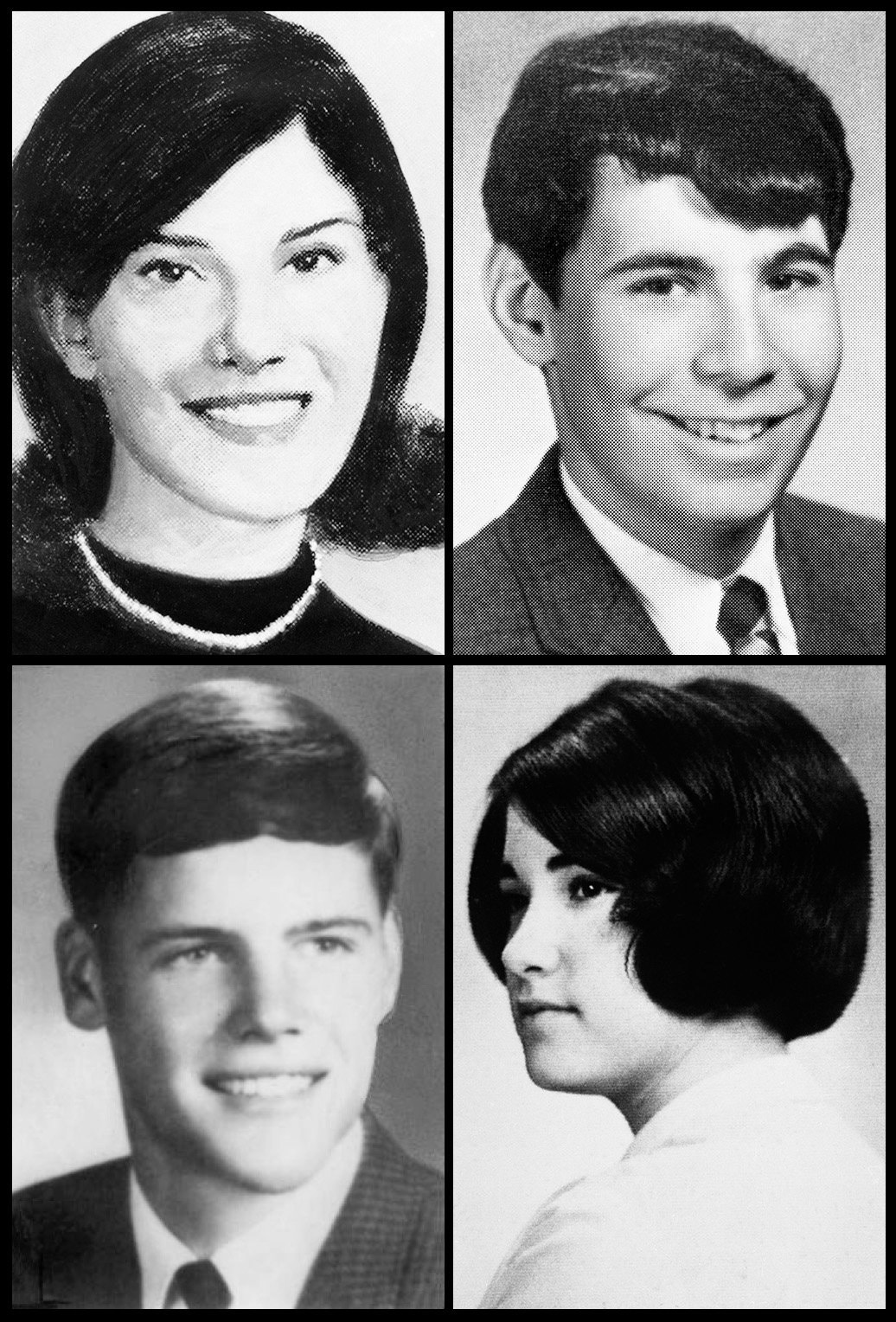
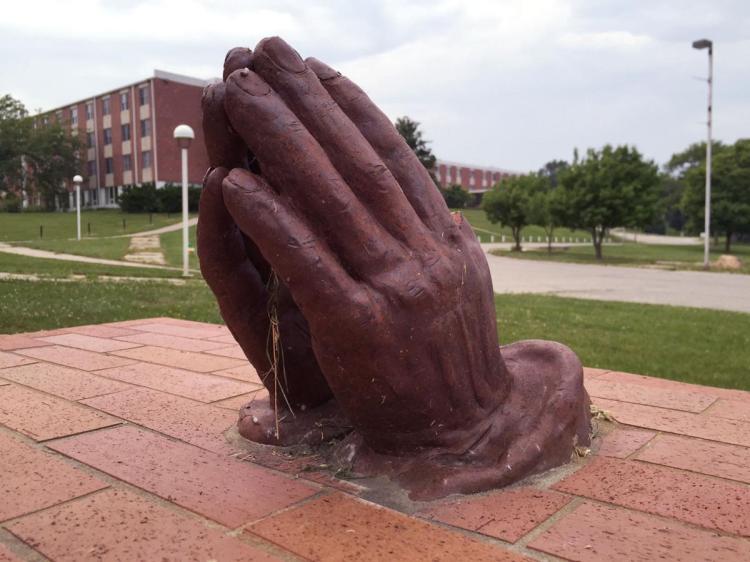
While I do have a doctoral degree and fourteen years of college – hmmmm, the same number of years as is in my title, I do not see myself either part of the educational elite, whatever that is, nor do I see myself as much other than a person who works hard, came from a blue-collar background, and tried to think about things and see the logic in them. That was a pattern I demonstrated long before I went to college. While many tell me they remember me as smart, I only had a 2.8 GPA out of high school. I flunked out of college the first time I went, and I had to learn most things the hard way. I guess the important part of that is I did learn. It was when I got to Dana College that I learned both how to learn and why to learn. Wisdom comes from reflecting on our experiences. We need more reflection and we need more wisdom, perhaps more now than ever. I have taken the time to read a significant amount about the four students who died as the National Guard opened fire on students at Kent State that day. It took 13 seconds to fire 67 shots, wounding 13 students, leaving one permanently paralyzed and four dead. The first was an ROTC student who was observing from a distance. The second was an active protester; the third had protested by putting a flower in the barrel of a guardsman’s rifle. The fourth was an honors student who was merely walking from class to class. Kent State was not a radical campus the likes of Berkeley or Madison. It was relatively conformist, though there had been unrest in the days before, including the burning of a building (the ROTC building, and that is one of the students killed, an irony beyond words). Interestingly, at the time, the Governor of Ohio, James, Rhodes, called the students communists. Not that surprising for Ohio, even today, though their present Governor Dewine has demonstrated pretty thoughtful responses to this current struggle. Yet, even then, fear and anger played an important part of this tragedy. Most guardsmen were probably not much older than the students they fired upon. As I read stories from the professors who were teaching at the time, I have not been able to find stories from the National Guard personnel. As the faculty advisor to the student veterans on campus, many of those students are in the Army National Guard or the Air Guard. They would be the students called out to active duty if this were happening. In fact, I believe some of them might have been called up in our present situation. 

Fifty years ago, I was in ninth grade. I had little understanding other than what I heard at home about Vietnam or our national struggle. While there are similarities in terms of emotion today, the situation is fundamentally different. While both times were (and are) a crisis of our moral fiber; this is a health crisis. Regardless of where or how it started, and that is an entirely different story or yet another conspiracy, it is. It continues to spread and destroy people’s lives. The crisis is how we will respond, both in terms of our medical abilities (which our health professionals deserve more gratitude and support that is even measurable) as well as how we can use or brains more than our emotions? Can we depend on those who have been trained in the sciences and put into their positions because of their expertise? Should we not trust them rather than fire them if we disagree with them? Can we as a public, first believe that every life matters (it seems that has been a conservative mantra for a while)? Does it not matter now? As Governor Cuomo said so well, “If the consequence of the virus is death, what is worse than death?” I am not debating the economic fallout; I am not debating the right to have the emotions (the entire range) that people have. What I will debate is protesters who intimidate. What I will debate is those who believe there is only one size fits all to this, and I realize this can be attributed to those on the far left of things. Fifty years ago, four students lost their lives because we could not manage our frustration and anger. This virus as killed more than all the people who died in that war, but somehow again, we cannot seem to manage our emotions. Angry rhetoric is just that; it is angry. I know there is more to it than that. I want to believe there is more to us as a country than merely anger and selfishness. This pandemic is more than tin soldiers or even a more dastardly version of Nixon. 

Thank you for reading as always.

Dr. Martin


Empathy: A Necessary Component

Hello on the second day of May,

There is little doubt that we are in a polarized environment. Daily, and I am guilty of falling into some of this behavior, though I generally try to remain respectful, the lack if willingness to listen to the other, when compassion seems to be merely a pipe dream, when there seems to be so little empathy from our head of state, is something that wears on me. I worked quite diligently to be rhetorically appropriate when listening to the steady stream of bullying or belittling, to the justifications that many, who claim Christianity as their moral compass, seem content to espouse. I think of all the people who are struggling, yet we somehow believe that a small check will fix it all. I wonder how large corporations have no struggle taking money that was meant for small businesses (and I know it is not every large business). I find it beyond comprehension that we cannot come up with a national strategy for testing when we have the most innovative and thoughtful minds and one of the largest economies in the world. I am stunned that citizens believe it is reasonable to storm a state capitol with guns demanding their freedoms at the expense others (this is a health crisis). This is not an issue of the individual, it is an issue of the community. Again, another issue for another time. 

I have pondered at times what evokes the emotion of empathy in a person. Perhaps conversely, what is it that seems to keep others from feeling or showing, empathy for another? Perhaps (oh dang, there is that word), particularly because we have societally become so dichotomous, which is not conducive to being empathic. Maybe we are more likely pathetic, but that is not quite the same. Doing some research on this idea, it seems, and not surprisingly so, the ability to be empathetic is both a cognitive and an emotional response in a particular part of our brain. It is also a building block of morality (The Psychology of Emotional and Cognitive Empathy). It seems more and more I find Bonhoeffer and his work popping up again and again. I think I need to read his little book Life Together again. To understand or engage in the cognitive aspect of empathetic response requires some skill. It is necessary to be able to perceive and process the emotions of the other. That requires a person to be able, as well as to be willing or open. Willing or open to what? Walking in their proverbial shoes or so it would seem. Being willing to help, to understand, to feel compassion, particularly when someone is a stranger or stigmatized is one of the most enduring forms of empathetic behavior. What seems to be certain is empathetic behavior requires a combination of both cognitive and emotional processes. Another thing illustrated in studies is that external factors play an incredibly important role in how one either develops a personal sense of empathy or how they might actually lose the ability to even feel empathy. A recent study done by the University of Michigan reveals that college students are 40% less empathetic than students in the 1980s or 1990s (Empathy, Exploring Your Mind). While such a statistic is frightening, if external factors affect the human’s empathetic ability in both directions, perhaps it is time to treat others with the empathy we might hope to receive. 

While I have been pointed and serious in my disdain for the attitude that promotes bullying, disrespect, self-centeredness, or any other trait that seems to not put country first, and I still hold those concerns, the idea of America first has been co-opted by an incredible misunderstanding of what makes us all great. What makes any single person or collective group of people great is their ability to be empathetic, to care deeply about the other and to look upon them without judgement. I understand as well as anyone how difficult it is to not make assumptions about someone. There is a reason we note that first impressions are lasting. Additionally, I am painfully cognizant of how past experiences can color or affect our ability to see beyond those impressions. Regardless, how often do we make snap judgements about something or someone only to find out we were less than accurate? Too often we allow the hurts and the mistreatment or mistakes of our past to hinder what we might accomplish going forward. Again, I  know this well because I lived it. As I have noted in the past two blogs, my sister, Kris, has been gone for 12 years. We were adopted, but she was my sister, my biological sister; she was my younger sister, and I have always believed her to be the much more intelligent of the two of us. Since my last post, one of her classmates noted how shy she was, how quiet she was. She was that way because she was frightened. She was that way because she struggled to understand the abuse she had endured (while we were all abused to some degree) and why someone supposedly wanted us both only then seeming to hate us. She suffered the abuse the worst of us all (there was an older brother). Many things that happened to her would put a parent in jail today, or at the very least, we would have been removed from that house. I do not say this to point fingers at my mother because I realize now she was mentally ill. What is amazing for Kristy, as she was known to her classmates in elementary school, was in spite of the abuse, she never lost her ability to care or be empathetic toward others. So while she hurt terribly inside, she was never bitter. She did turn to other things to try to manage that hurt, but regardless, she had an unlimited ability in caring for the other. As I reread her autopsy report the other day, in many ways it is amazing she lived as long as she did. I am not even sure she realized she had a previous heart attack. One of the things I think about at times is various parts of her are living in other people today, and not only the normal things that you might expect through organ donation, but even the bones from her arms and legs were given for others. It was how I believe she would have wanted it. She was always ready to care for those who struggled more than she, and that was no minor thing because she struggled mightily because of the abuse she had both suffered and tolerated. In many ways she had more patience and perseverance than I did. I could not keep my mouth shut (I know that does not surprise most of you), and I verbally fought back. It was for that reason I knew as soon as high school was completed, I needed to leave. How drastic was I in making sure I could leave? I enlisted in the Marine Corps at 17 years old, standing only 5’4″ and not even weighing enough to pass the physical when I went to the AFFEEs Building in downtown Omaha, NE. I had to gain three pounds in an hour to make it. After eating an unbelievable amount of baker items, I still went to the drinking fountain when I was 3/4 of a pound light to make weight. That gives some indication how badly I wanted to be away. 

That struggle with my mother would continue for the remainder of her (my mother’s) life. We did not really speak to each other the last three years she was alive. If you go back to a blog the summer of 2014 (July), you will see that I have forgiven her. What I know is the lack of empathy we experienced growing up affected my sister and me very differently on one hand (almost polar opposites) and on the other (almost a carbon-copy). While the things told to us about our worth caused us both harm, I worked as hard as I could to prove that description wrong (and sometimes I struggle even yet to prove it). For Kristy, it created a hurdle she never cleared. On the other hand, we both learned to be empathetic almost as a consequence of experiencing none ourselves. I sometimes wonder what she would think of our world now. I wonder how strongly she would speak out against the injustice she sees. Undoubtedly, she would have things to say, or she would work to circumvent them. And yet, there are other changes, she would embrace: the changes in acceptance of LGBTQA people would overjoy her. As we bicker, fight, protest, and argue the path forward in this present world, those arguments are very simple. They are based on selfishness. I realize I say that as a person who still has their job, a paycheck, can pay my bills, and this lockdown, this social distancing really is an inconvenience. Yes, I am privileged. I can sit here in my comfortable house and do my work. I can go and buy food and even prepare it for other people if I so choose. I can do my job perhaps even better than I imagined, though it is taking more hours and more wear and tear on my eyes. Empathy is about seeing what something does to the other; it is trying both to understand their experience as well as actually feeling what they are feeling (this goes back to my earlier research). It requires cognition and emotion. We have had examples from former Presidents of that empathy. President Reagan’s speech when the Challenger exploded is a prime example of our President being empathetic. When President Obama, who was known for being rather stoic and criticized for being aloof (or even too intelligent) cried after considering the children who died at Sandy Hook. He felt the sorrow that any parent must have felt. He understood the tragic depth of loss, which should never occur in an elementary school. He also understood the recalcitrance of some in Congress, and their eventual failure to pass a bipartisan bill by a Republican Senator from here in Pennsylvania, and an incredibly conservative Democrat from West Virginia, both members of the NRA and gun owners themselves, two members who have A grades from the NRA. While I have been hard on President Trump during this pandemic, and yes, even before, I want to focus not on him, but the 60,000 people who have lost their lives in the first 1/3 of this year. I would hope that each of them had people who cared for them, who loved them, who, unfortunately, but appropriately, are mourning their loss. This is the reality of where we are and the fact that we are not able to test adequately, how many more have died who are not included. Depending on what, where, or who you read, they argue the numbers are significantly higher. In fact, statistics show that the number of people who have passed away in the country during the past four months is almost exponentially higher than the typical late winter/early spring in our country during similar periods.  

Each and every one of these deaths is not a number; they are a human being. They are a family member. They loved and were loved. Do not doubt, I understand there are people scared about their livelihoods, I know some of these people personally, so please do not think I am merely sitting idly in my security. I will not say what I have been doing because this is not about me. It is about each and every single person who has lost their life because of this terrible virus. If we only see them as a block of 60,000 (and counting), we fail the empathy test. Even those who have not been a victim of Covid-19, as they have spent their last days, hours, or minutes, they had to do it alone. That is not how we are supposed to leave this world. We are social creatures, and that social element is Biblical for those wondering. The tragedy for those surviving is not something easily overcome. Empathy is an necessary component if we are to get through this as a country, and a country that will hopefully be better on the other side. The picture included is because I want to dedicate this blog to a doctor I did not know her, but a number of people where I live do. Many of you might have heard about her in the news this week. Dr. Lorna Breen was an Emergency Room doctor in NYC, and an outstanding one. She battled this virus at the epicenter where 10s of thousands have died. In the city that never sleeps. She lost her life in an incredibly tragic way because of what working on the front lines did to her. She not only treated thousands of patients, she contracted this terrible virus. She is certainly not a number. Dr. Breen, the daughter of a surgeon, grew up only 11 miles away from Bloomsburg. She grew up in the town where I work with students and doctors and teach in their medical school. In my somewhat idealistic hope, I want to believe the better angels will come forth. I want to believe that we will somehow come out of this better. I want to believe the love we have for others can rekindle an empathetic spirit that can transform our country, our world, and hopefully set an example for future times when our world struggles again with some situation that calls for our mutual care. That time will come; in fact, it might become the rule rather than the exception. So much for idealism. In spite of the loss of so many, if we can reach down deep and find the empathy we need, I believe the love each of them shared with those of us still here will go on. 

I wish each of you a sense of love and comfort in this time. Thanks again for reading. 

Dr. Martin

The Role of a Mentor

Hello from the Office (in the house, that is),

This morning when I woke up, it is often the case that I will close my eyes again and pray. I give thanks for the many blessings and people that are in my life that make my life such a wonderful thing. It is then the case that I realized that both one of my most important mentors, Dr. Daniel Riordan, and my sister passed from this life on the same day of the year. Not long ago I noted how there was a strange pairing of dates that seem to be characteristic in my life, much to my amazement. I saw the addition to the story of Mary Riordan on Facebook, and realized this yet one more astounding irony in my life. More importantly, it reminded me of a mentor and colleague who continues to bless me in spite of my no longer hearing his inquisitive and caring voice.

I met Dan Riordan first by phone when he called to tell me that the English and Philosophy Department at UW-Stout wished to do a phone interview with me. He was personable and inviting even on the phone. That interview went well because I would receive a second phone call inviting me to come to Menomonie, WI to interview in person for a tenure track position in their Technical Communication program, which was housed, not that surprisingly, in an English Department. The fact that Philosophy and English were in the same department was an entirely different matter. I drove to Menomonie from Houghton, MI, about a 6 hour drive, and found my hotel. I was invited to have dinner with Dan, Mary, and Dr. Bruce Maylath, the program director, that evening. When I arrived at Dan’s amazing home, I was treated to something I had never witnessed. Their house was perched on a bluff overlooking Lake Menomin, and high in a tree over the bank was a nest of bald eagles with two or three eaglets. This was an incredible site to behold, and I learned that the male bald eagle takes as much time in the nest as the female. The baby eaglets are not merely as majestic as they will grow to be, but they are certainly vocal. That evening was the beginning of a relationship that has changed who I am, how I manage my profession, and, perhaps more importantly, how I manage my life.

Dan Riordan was an exceptionally talented individual, and that went far beyond the phenomenal example he was in the classroom. He had this inquisitive nature that found interest and beauty in almost everything. He background was in American Literature, but he became one of the pre-eminent individuals to work toward making Technical Communication what it was, not only for the University of Wisconsin-Stout, but also as a field of study. Through his textbook, his involvement in the Society of Technical Communication (STC) or the Council for the Programs in Technical and Scientific Communication (CPTSC), there Dan was changing our profession and the way we were understood as a discipline. And yet his more prominent role, for me and scores of students he served as a professor and advisor, was that of mentor. Dan was never too busy to listen, to assist, to question, and to ponder with anyone who came to his door. At the end of a semester, he would often take his students in mass to either a pizza place or even The Buck to socialize and reflect on their learning during the previous semester. As the faculty advisor to the Student Chapter of STC, he would regularly help students see beyond their classes to what the world beyond Menomonie might hold. What was more significant he did with a graciousness and enthusiasm that only Dan could do.

When he moved from the classroom to work specifically with the Society of Teaching and Learning (SOTL), he now offered his kind, gentle manner, and yet with strong expectations typical of him, to get us to become better scholars and more effective professors. It was during that time that I believe many others at Stout learned how astounding Dan Riordan really was. During his time at Stout he had weathered many changes, but he never seemed to lose focus of what he believed we were able to, or should, do. When I first got to Stout, I was ABD, not something I would suggest for anyone, but it was necessary for be mostly because of health issues (for those who do not know that acronym it means all-but-dissertation). As I struggled in a new TT position, Dan had a gentle, firm, and supportive way of making sure I had my work done. There used to be a nice eating place on campus called the Heritage Room. Dan would meet me there for lunch once a week to check in and see how I was doing. Those lunches were about physical as well as psychological/emotional sustenance. He knew I had run afoul of our college dean and that was not a pleasant position. He provided both an ear as I worried and advice in how I could manage that plague that was affecting every aspect of my being. When I had emergency surgery in Eau Claire at the end of one semester, he was at my bedside seeing if I needed anything and again providing needed assurance that I had a colleague who would be there regardless the need. 

Before what would be my last year at Stout, and after a particularly difficult meeting with the same dean, Dan shepherded me through that last stressful year. That fall, Dan would lose his closest colleague, Clark, to the same cancer that would eventually claim him, but he provided incredible support when at the gathering following Clark’s service when he asked me to sit next to him as we were across from my nemesis. He helped me be involved in a conversation that I was pretty petrified of joining. Dan saw the potential in people and he zeroed in on how to assist them long before they realized what he was doing. That was his nature. While he would tower above most in any room he entered, it was not his height that drew you into his realm. While you would most certainly notice this tall, slender, and bearded man, it was his charm and personality that would bowl you over. He noticed everyone and everything, and he had a way of making you feel like the only person on earth when he spoke with you. He was passionate about teaching and teaching others about it. He was an avid reader and his interests were both varied and voluminous. Whenever I was blessed to come to the house, which was always a treat, he would be almost giddy at times as he explained his newest discovery about something. He was not selfish in what he learned or what he knew; he wanted to share and bring others along on his journey, and yet he never forced you to come along. Instead, he made the journey so inviting, to say no would be ludicrous. Even after I left Stout and moved to Pennsylvania, he never left me. He would call from time to time or I would call him. His emails were always uplifting and supportive. Whenever I went back to care for Lydia, which was often, we would find a time to share coffee, a piece of chocolate, and stories about the program I was creating at Bloomsburg. He would, as always, ask inquisitively about the progress, the decisions, and other things I was doing. I still can hear his simple way . . . “Oh,” he would exclaim with his baritone/bass voice finding a tenor range. Then he would smile and follow with, “Tell me more,” much like a grandfather interested in his grandchild’s newest interest. When a new wine bar opened in Menomonie, we would meet there. His amazing photography decorated the walls of this new establishment. At one point, he took the time to come and visit me in Bloomsburg as an outside consultant. He met with my students, attended my classes, and then offered incredible support and insight about the best way to continue to develop things where I still am. When I finally got all the pieces through the University Curriculum Committee, I think he was as happy as I was. He would both tell me through email and on the phone how happy and proud he was. He was a mentor’s mentor. He was that person you could depend on, the one who had your back. His loyalty was something to behold. 

Perhaps it was the last journey he took that was his most profound mentoring. When he was diagnosed with Prostate Cancer, he did not shy away from what would happen. In fact, he tackled it with incredible strength and an almost throw-caution-to-the-wind abandon. He blogged regularly; he photographed more attentively; he took trips; and he shared his process. If he was frightened, and he was, he never let it stop him. In fact, he shared all the thoughts, emotions, and options that confronted him. He stared right back at them and moved forward. Never once did I see him or hear in his voice or emails a sense of why me? Poor me or anything that seemed to act as if he had been dealt a shitty hand. Instead, the professor, the pedagogical genius, the mentor came to the front and he wanted to merely do what he had always done. Help others more than himself. He mastered wall climbing; he offered more opportunities for others to learn, and that same affable, “aw shucks,” demeanor stayed strong as he was determined to move toward an end in the best way possible. The last time I saw him was in January, the winter before he passed. At this point, he knew he had run the race as long and successfully as he could. He knew it was now a time to prepare in a different way, but even then he was gracious as I came to visit him in the same living room I had first met him. He was moving slower and it was more painful, but he was as gracious as ever. We spoke about what it meant to have done all the things he had done. He had no regrets and he still was interested in how I was doing. We chatted about a wide range of things as was usual, but this time, there was a difference. It was as if he was preparing all of us for the inevitable, but not in a sad, somber, or pitiful way. Instead, he wanted to celebrate a relationship we had established. He wanted to make sure I was alright. It was just like him, teaching me one last time. As I left that day, we stood, I in the driveway and he on the steps. It was icy so he did not venture onto the slippery sloped drive. Instead he stood on the steps and as I turned to say goodbye, that wry, wistful smile was there. I folded my hands as if to pray and I merely said,  “thank you, Dan, I love you. And I will miss you.” My eyes welled up in tears, as they are now. He nodded. I spoke with him by phone once more after that visit.

It is difficult to believe that it has already been three years. During this time of remote teaching, I have thought of him. As my students have struggled and I have worked with some of them through FaceTime, or even in person as possible, as I have spent hours on the phone, texting, or emailing, I am reminded that it is Dan who first got me to think about the rhetoric of technology. I can imagine him how pondering and coming up with all sorts of ways to help both our colleagues and students in this unprecedented time in the academy. Dan loved nature, everything about it. He loved art and music. When I was first a college student, I was introduced to Mannheim Steamroller through Fresh Aire III. This song is built around a cricket, hence its title, and its chirping as a metronome. Dan, thank you for being the mentor, exemplar, and life-changing man you were. What you need to know, and I hope you are smiling, is this. You still are. Thank you from the bottom of my heart. 

Thank you as always for reading.

Michael


The Role of Art. Music, and Theatre in Life

Hello from the study,

Yesterday I had the opportunity to speak with a former student, someone who cared for Lydia after I first left Wisconsin and someone I admire for so many reasons. She was shy and unsure of herself when I first met her in that freshman writing class, but she is now an incredible art teacher, has completed one Master’s is half-way through a second, an amazing wife and mother. She, like her father, is one of the most incredible artists I have ever known. She can draw like no one I have ever met. It was her birthday and she is now in her thirties. She told me she was old, and I unfortunately asked what that made me, and she noted significantly older (my words for her answer). I noted that I still have some of her art work when she was a student. If you want to see some of her incredible drawings that are a sort of diary or journal of who she is, check out _tugaboo_ (include the pre- and aft- underscores) in Instagram. She started these in college. She is insightful, creative, and thoughtful. She has always been a critical thinker and a keen observer. She misses nothing.

One of the things I remember most from her stories is here recounting her struggles when she was small to make her letters or begin to write. She noted that an art teacher took a cookie sheet and poured granular sugar in it. Then she had her trace her letters in the sugar. That feeling or sensation as well as watching the movement created a connection with her. Between the feeling, the sight, and the repetition, she learned how to write. What is important in this story was the insight and creativity of a teacher. Too often when making cuts to curriculum, one of the first things on the chopping block are the arts or music programs. Unwisely, these are thought of as extracurricular, extraneous, or simply of lesser value. This is both foolhardy and wrong. Creativity and critical thinking are closely related, and scholarship supports that (Paul & Elder, 2006; Gude, 2007); Adkin, 2010; Alter, 2011). Both art and music encourage the development of thinking through possibilities, analyzing the situation, and then making thoughtful choices. Many times when I have spoken with people who interview or work in HR, they talk about the importance of being able to think creatively or imaginatively. Synthesising multiple ‘inspirations’ (such as ideas, images, knowledge) in the development of creative work requires an imagination; it requires wondering about the possible. Both arts and music classrooms offer the space and possibility to do this. Imagination is paramount to managing our futures. Those who theorized getting to the moon in 1960 were challenged by a young President to make it there by the end of the decade, and it happened. Even many of the tools were are presently employing in our Covid-world educational classrooms had to be imagined, considered, pondered before they were developed. Much of our struggle with critical thinking now is because we are bombarded with sound bytes and tweets that offer generalities. It is not by default that digital literacy has to mean a lack of thinking or analyzing, but too often it seems that is what we get.

I was fortunate to have private music lessons when I was small and into middle school. I was fortunate to have piano lessons for a time also. In addition, I was in the Sioux City Children’s Choir, an ensemble of about 80 eight to thirteen year olds. Then I was involved in the Sioux City Community Theatre’s Children’s Theatre. All of these things gave me the confidence to see something beyond the home life that was more than a struggle for me at times. It seems somewhat counter-intuitive that while home was so difficult, I was allowed to go outside the home and be involved in things. That causes be pause as I try to imagine what was behind the seemingly Jekyll and Hyde existence my childhood perhaps was. What I believe happened was an exposure to the way others lived or thought. I remember meeting a child both in the theatre and the choir. She was a wonderfully cute and sweet girl and she lived on the Northside of town. Where I grew up, if you lived north of 18th Street and on the other side of Hamilton Blvd., you were upper middle class or rich in my eyes. She lived on about 30th and Nebraska Streets. That was quite incredible to me, but there was a difficulty. She was Roman Catholic, and I was told I could never, ever go out with a Catholic girl. As I look back that was even more ridiculous because half of my family was Catholic. Gosh!! While I was in marching and concert band throughout my high school years, and continued in community theatre, my family never really attended such things. My parents did go to my concerts and such, but I knew little or nothing about classical music or art, ballet, opera, or anything of the sort until I attended Dana College. Dana opened my eyes to a world I had only observed in books. The year before I went to Dana, while traveling on the Lutheran Youth Encounter Team, Daybreak, we went to a ballet together as team. I was so unacquainted, I whispered to my teammate, when do they start speaking? Oh my!! She looked at me rather stupefied and said, “It’s a ballet; there is no speaking.” “Oh,” I replied, still unsure of why that was. While at Dana, in college choir, in my humanities classes, and in my first trip to Europe during interim, my life was changed. I should also give a great deal of credit to someone I dated as a freshman and into my sophomore year. Her name was Sarah Hansen, and she was a music and  piano performance major. She regularly played classical music for me and would ask me to identify things long before my music history classes with Dr. Brandes. I still thank her for all she pushed me to realize and appreciate.

What I know from singing in Brahms’ Ein Deutsches Requiem (once at the University of Iowa, in German, and once at MTU in English), as well as a time singing The Messiah, I have been blessed to learn so much more about classical music. My trips to Europe since has deepened that appreciation because it causes me to ponder and thing about the intricacies of those composers and their understanding of so much about their world. Learning and understanding our world history is often first done by considering art. Many elementary schools are named after someone or something that has significance. Early grade schools might have a mural painted above a main entry way that demonstrated something important about the history of that area. The display cases had pictures and trophies from the past. I remember pictures of Washington and Lincoln, one on each side of the clock in my room in third grade. Often a consideration of that history might motivate research into historical events, and revise understandings of historical topics through the art created in a classroom. The artist pondering or seeing the past can revision and shape it in a meaningful way for the present social environment. To do something like this requires thinking and analyzing options. It requires connecting the past to the present, but imagining the future. I remember my walk into St. Peter’s Basilica or the cathedral in Copenhagen with the incredible statuary of the apostles. I still remember clearly the statue of Bartholomew. The history of the apostles and what happened to them following the death of Jesus is not something everyone knows or considers. I remember sitting in the cathedral in Lubeck, the city in Northern Germany, and listening to the music of Buxtehude. The German/Danish composer and organist had roots in Lubeck and to be in the cathedral he once occupied as a musician was like walking back in history. Music and art both have a way of transporting us beyond the boundaries of our physical reality. We remember things; we emote things once again; we make connections and weave together various strands of our lives. That takes imagination, thought, and analysis.

As we move beyond this time of lockdown, what we will experience; what we will need to do; what we need to realize and learn from this experience is beyond my paygrade. Even so, I am sure we will need to realize that we are more dependent upon each other than our nationalistic, individualistic, monolithic attitudes  might be ready to admit. Perhaps it is a good thing we have been in this three plus year experiment of hyper-national populism because it is evident to more than just the liberal wing of the Democratic party that there are some profound problems. It is stunning to see that 11 years of job growth could be wiped out in about 6 weeks. It is just as staggering to see how many people had less than 60 days cushion. It should not come as a surprise, however. The reality of many of the jobs created in the last 11 years were not, for the post part, jobs that were well paying, jobs that could support a family decently. The stories of those who are working two or three jobs to make their mortgage or keep their family supported had become more and more commonplace. However, to return to my blog theme. It is my hope that we will realize the importance of educating students in a holistic, well-rounded, and liberal arts sort of manner. I can tell you without hesitation that my history and humanities majors from Dana have served me well. My advisors, Drs. John W. Nielsen and Richard Jorgensen were, and are incredible scholars, and they pushed us to think, to analyze, and to synthesize. As I have noted more than once, synthesis is what has served me the best. How do things fit together. They connected history, politics, art, music, poetry, religion, theatre, and all of the arts in such a way it was impossible to not be amazed by all they offered. I remember both in Western Civilization class and in an American Revolution class working with the theatre department to once be Rousseau and then the father of Benjamin Franklin. Using Steve Allen’s Meeting of the Minds format instead of a final paper, we created a dialog. In the first, considering the French Revolution, Kristi Swenson (as a peasant woman), Dixie Frisk (as Marie Antoinette) and myself (as Rousseau) had a dialog about the three estates that were warring in the Revolution. We had to research, think, and create a dialog that laid out the issues. We were so pleased that Dr. Jorgensen gave us a 99% on that presentation. Many do not know that Ben Franklin and his father were on opposite side of the American Revolution. Again, Michael Henriksen and I worked with the theatre department, makeup, costumes, and all to investigate and reveal this difficult relationship between the father and one of the integral members of the founding of the country.

The picture at the beginning of the post is my younger sister, Kris. She is my biological sister, and I am fourteen months older than she. On Wednesday, it will be 12 years ago she passed away. She was an exceptional artist, a great piano player, and she loved nature. She cared deeply about the earth and she loved being creative. I dedicate this blog to her. She would agree that art, music, and theatre are the things that feed the soul, but also stimulate the brain. They help a person reflect, a person create, and a person connect parts of their life that are necessary to make sense of our existence as we move from childhood through adolescence, from young adulthood to middle age, and now for me into the time where I can look back and give thanks for my education at Dana College. It has, and will, serve me well as I continue on this journey. If you have young people in your lives or will have, encourage and support the arts in your schools, your towns, and in our states and country. Without it life misses so much. The arts are more that thinking, creating, and pondering, they are the essence of life. Become the captain of your life.

Thank you for reading as always.

Dr. Martin


Words and the Ethical Dimension of Power

Hello from my study,

Another day, more time in front of the computer. More time on the phone. More time on text messaging, and more time trying to manage the needs on both sides of this remote equation. It is sometimes comical and simultaneously touching. It is sometimes tiring and overwhelming; and sometimes it is learning to be patient, and most of all benevolent. The move to all remote learning has been a difficult transition on both sides of the equation. Fortunately, I have been doing some of it already, but that does not mean that it is an easy change, particularly in the middle of a semester. It also has me thinking about the power of the words, spoken or written, face-to-face or though announcement, email or video. Over the past month plus after classes when to totally remote, (we were preparing for a couple of weeks and actually began class a month ago today), the learning curve has been steep, and that does not matter if you are comfortable with teaching or not. One of the things I continue to learn, be reminded of, and have to learn again is that many of our students are frightened on a number of levels. They have been told their entire lives they need to go to college. They have been enculturated to believe if they do not go do college, they are not able to be successful. They are told if they do go to college and struggle there is something wrong with them. Both of these statements are expectations and as such, they are false; they are damaging as well as ludicrous. The reasons to believe college is necessary or the only way to succeed are complex, but again that belief is wrong. To put most succinctly, first, there are important, valuable and needed jobs in the world that do not require a bachelor’s degree. Most trades, which are essential to our way of life, and generally pay well, are available by going to technical colleges, and there are people who are skilled, intelligent, and more fulfilled by creating and fixing things. Second, while I am not trying to diss my Education College colleagues, there are some gaps in our current public education system which do not adequately prepare many students for the rigor of college. I see this every semester. I see it when even my upper level students believe writing is a cookie-cutter process and that all writing, regardless the discipline, the individual track, or even from class to class is the same. I have spent hours these past two weeks trying to help students understand how to implement rhetorical analysis and then write about it in their final semester papers. 

I have one particular student this semester who is intelligent and capable, but their major requires a particular style of thinking. I would also note that their field of study is rigorous and well respected. Getting their head wrapped around what it means to do a particular type of rhetorical analysis has been difficult, from both sides. After paragraphs of text messages, working with two different professors, and hours on the phone, the student made a breakthrough. The student noted on the phone, that part of time during all of this, it felt like you were both just yanking my chain and trying to make things difficult. A lot can go into interpreting that statement, but I assured them that was not the case. I noted the difference between writing and thinking styles and how both structure and basic understanding of what one was doing were necessary if the paper was going to accomplish what it should. Sometimes, we need to help the student understand that we are working with them, collaborating with them. It is not merely helping, as one of my colleagues noted this morning. This is part of what Thomas Wartenberg calls the third dimension of power, in his book The Transformation of Power. In any situation where there is a power differential, there is an ethical component because the participants are not on equal footing. When I suggest a path, is it a suggestion or a requirement? While I would like to believe it is a suggestion, the student might see it as a requirement. If that is the student’s perception, what is my responsibility in/to offering them an opportunity allowing them the possibility of exploring it as merely a suggestion? When is it truly an option for them to reject it as merely a suggestion and to go down their original path? These are difficult questions. The interrogative possibility is also more difficult to implement when there is a grade at the end of the semester. That grade has incredible power in its single letter style. Most students see as an evaluation of themselves versus their work. While many of my colleagues do not see themselves as communication scholars, and I would argue I seem to be an outlier in that area, we all are first and foremost that very thing. How well do we communicate what we expect, but more importantly, how effectively do we communicate why it is necessary or it matters? How is it applicable? Too often we believe in or submit to the argument from a position of power. What does that mean? Consider this: how many of us remember a time when we questioned something our parents told us to do? How many of you remember an answer that went something like this: Because I am the parent and I said so. End of discussion. End of argument. First, that answer does not promote discussion and that response is not an argument. Argument has a very different purpose. An argument occurs because there is a need to come to consensus. There is a difference of opinion to be sure, but when debating or considering the facts, the goal is to come to a place that people believe they have been heard and in the process of coming to a resolution, their opinion mattered. I know where this will lead some of my colleagues . . . and while I appreciate your disdain, I know that some will argue this is akin to making the student the customer. Indeed, I abhor this idea also, but there is the reality of what they are paying for an education versus what I paid in the late 70s and through the 80s. There is an entirely different idea about the necessity and requirement of college. I believe we need to be respected for the expertise, education, and continued research we bring to the class, but our students are not automotons upon whom we merely dump knowledge for them to somehow soak up. How do we find the balance? That too is a difficult and complex question. I do not think we were concerned to the same degree of whether that class we were taking was relevant or necessary. We went to college first and foremost to receive, to participate in receiving an education. Students today come to college to get a job. 

In a world of information overload, we need to be able to quantity (and horrors, justify) that what we offer has value, validity, and even a volume, if you will. A way that it fills them up or prepares them for the long haul, the remainder of their professional life. This was not always the case. When I was in college, while the cost was substantial, it was manageable and the debt incurred was not a mortgage on my life. I will say the debt incurred in seminary was significantly more burdensome. Today, the university where I teach is one of the more affordable in the state system, but the basic costs for living on campus as an instate full-time student for their four years is in the neighborhood of 100,000.00 (this includes spending money, books, and the such). That is an incredible amount for someone to take on, and if you have more than one child, there is no way the average family has that sort of disposable income. I think the average debt for an undergraduate is in the area of 40,000.00. As consequence, questioning the value of that or what we do is logical. Do I like it? Most certainly not, but it is the reality that we face in our classes daily. Are we preparing students for the world they are about to enter? Are they getting a reasonable value? I know that is a loaded and impossible question to answer simply. The point is this: I am not sure we believed there was a need to ask that question when I was a student at Dana. We simply believed the value was there . . .  and I believe we were correct. In fact, I remember while attending Luther Northwestern Seminary with the likes of Scott Grorud, Merle Brockhoff, Wilber Holz, Kip Tyler or a few others, we more than held our own in classes with students from what I referred to as the Norwegian pipeline to Lutheran ministry. Yes, those classmates who attended St. Olaf, Concordia-Moorhead, Luther, or Gustavus were proud of that Haugean piety While all of those sister ALC schools at the time were, and are, incredibly strong institutions, they were also impossibly more expensive. So the value of our Dana education was even more apparent. 

What I know with some certainty is the way higher education is managed on the other side of this pandemic will be quite different than what we have done. There are a variety of reasons for that, and I believe what this pandemic has pushed in the open is the inequity of our entire country on almost every level and aspect. That is a topic for another time, but I know that there were (and will be) significant numbers of students who are not able to work adequately from home in a remotely driven educational process. While I do not have all the facts or data, I know the continued escalation of costs for college will price many lower middle class or poverty level students out of the educational equation. As we struggle with equity in public schools, the lack of preparedness of many combined with the cost will create a strong rethinking of the value of that Bachelor’s degree. The first time I went to college (in 1977) the cost of room, board, and tuition for an instate student at Iowa State University was less than $700.00 a year (yes, you have read the amount correctly). The cost for a more open enrollment university (Bloomsburg) today is in the neighborhood of $25,000.00. That is about a 3,500% increase in 40+ years. That is not sustainable. I read an article in the Chronicle of Higher Education not long ago (within the last 2-3 months) that noted brick and mortar college education will be affordable for only the elite (and that is sooner than we might expect), and that the rest of the middle class or below will do distance learning or remote college. This little experiment (required though it is) has demonstrated that many students will not be able to participate adequately because of the digital divide that is so apparent between rural and urban America. Both Drs. Gail Hawisher and Cynthia Selfe noted this in their research about technology and writing more than 20 years ago, but little has been done to manage or erase that divide. 

This gets me back to the issue of power. There are many ways to approach that, but part of the problem is simple, and this current national (global) crisis has made it  more than evident. The role, the importance of education is something integral to the fabric of our country; certainly the move toward land-grant colleges and universities that came out of the Civil War and later in the 19th century were created to provide affordable education to the American public. The federal government was a central component of creating many of the state university systems we know so well. In fact, Michigan State and Penn State are perhaps the two of the earliest land-grant institutions, both instituted in 1863. Both were initially founded in 1855 (Land-grant University). The role of the federal and state governments in establishing and helping fund our higher education system was central to the United States having one of the most respected collegiate systems in the world, and as such, the opening of education to the middle class or minorities and impoverished students changed the balance of power, flattening that curve (to use a current phrase). Today, with the cost of education being moved to the back of students or their parents, education is not as much about preparing students for the world (yet that is our job), for universities it is about numbers, retention, and higher education becoming a business. This is not something I say with any happiness. The first thing a family must determine is not whether or not their son, daughter, or offspring should go and do college; the first thing they might determine is how they will afford it. 529 accounts, investments, and other ways to prepare for the eventual costs are something that must begin before a child is perhaps even conceived. What does that say about the ethics when we continually price the common person out of receiving an education? If they manage to get matriculated, too often they must work two or three part time jobs. Too often they are not sure how they can afford their books. Too often students are on a meal plan of 10 meals a week. None of these things make college easier, and in fact, they do exactly the opposite. I believe we are at a crossroads and this pandemic might reveal both the stark realities that we must face on the other side of this last two months (and however long yet it will be). We cannot simply forget the everyday people. We cannot continue to allow those who have the majority of the wealth of the country to blatantly ignore and greedily grab more as vast numbers of the country are being devastated by what is happening. Again there is so much more to this, but it comes down to the ethical nature of power and how those ethics play out. We can say whatever we want about power, but it is how we behave ethically that really matters. As I write and remember this day, it was on this day that I lost my best friend. He endured much in his life, more than many knew. I still miss him. 

Generally I offer a song. When I was in the Marines, there were so many times I wanted to give up, but somehow managed. This Admiral’s commencement address is one of the more inspiring things I have ever listened to. I hope it reminds us there is hope beyond all of this that we are currently enduring.

Thank you for reading. Please stay safe; stay strong; finish up to the best of your ability.

Dr. Martin

When Pointing Fingers . . . Perhaps Only at Ourselves

Hello from the kitchen,

The routine is set, at least for the most part. I get up and make my bed before I do almost anything else. I have been that way for most of my life, so that is nothing new. I walk to my bathroom, shower and get ready for my day. Sometimes I am more leisurely than other times; sometimes I imagine I will do more than spend the day at home. I fix breakfast and check out the latest mind-boggling news. This morning it is a continuation of all things Covid-19 and the incomprehensible way people are responding to directives, suggestions, or guidelines to offer some sense of the best way to manage this contagion that has upended every aspect of our lives. After breakfast, I do a visual inventory of the plants in the house and make sure all new plants are watered and have light as needed (and the number to consider seems to be growing a bit). Then it is off to my upstairs office and to work on a variety of topics, classes, and issues. Depending on the weather (and this 32 degree stuff is not appreciated), I try to get a significant walk in. Then it is back to the computer and more work. I am trying to fix dinner in both a healthy, thoughtful, and enjoyable way each day. As many of you know, playing in the kitchen is my relaxation and my creative time. Then it is back to the computer. Most nights I have tried to be in bed before it gets too late. A couple of nights I have turned to Netflix and watched something. I finally finished the ninth season of Shameless. I also finished another series I had been working on for a couple years. Needless to say, I do not spend a lot of time in front of my television. I have iTunes playing in the background as I type this (I am listening to The Carpenters). It has been a while for that too. One of my friends have noted a sort of Groundhog Day aspect to their existence. I think it is true. However, I have found this a helpful time, a time to reflect and imagine what matters. I have also thought about ways to rise above the vitriol that seems to be so much of what has happened during this past three years. I do believe, it began before the 2016 election, but the level has elevated beyond anything I remember in my lifetime. 

I have lived, and in fact, grew up in the Midwestern states where there is serious question about stay-in-place directives as well as living in the Upper and Lower Peninsulas of Michigan. I am not surprised that there is a backlash in Michigan. An April 2019 article in the Irish Times interviewed individuals at the annual meeting of the Michigan Militia Corps. As noted in the article, Michigan claims to have several thousand members of the militia (Starr). I remember many conversations about militia groups in the state when I was lived there. They are not shy and as the article notes, they see no middle ground on many issues of federalism versus states’ rights. I think what I find the hardest to wrap my head around is the seeming contradiction for many who want their freedom from federal intervention, but then are willing to use things like unemployment insurance, SNAP, Medicare, or other things that provide a federal safety net. There seems to be a contradiction. Again, this article noted, as provided by members of the militia, that membership rose significantly after President Obama was elected. I have not done enough in depth research about all of this, but there would seem to be two possible reasons for this. First, basic 2nd Amendment issues or because we had elected a black person as President, or both. The consequence of Federalism and States’ Rights is more front and center than perhaps ever in my lifetime. The second time it seems apropos to use that. I am continually stunned by how people are questioning the reality of this virus, and the degree to which they want to argue that caring for the health of all people by social distancing and other things that occur is a violation of their freedom. I am also amazed that many of these same who are protesting with the guns and their trucks are the same who will claim they are Christian people. Where is the greatest of all commandments in their actions? Please someone explain that to me. Explain how a President’s tweets that can do little more than incite civil unrest is appropriate? And this after noting he wants to provide good news again and again. How is it that people do not see the discontinuity? I am not trying to point fingers here, I am merely trying to make sense of what seems illogical to me. Where does the disregard for element of society on either side of the political aisle unify us? I believe in a right to protest, but to do it without a mob mentality, which seems more and more unlikely in our present national conversations. Where does the blame land? Where should the finger be pointed? I think we need to do some incredibly deep soul-searching as a country. If we are going to survive this catastrophic event, we must work for the benefit of all people. While I am not afraid to die at this point, I would like to be believe I still have something to offer. I do not want to jeopardize others or myself at this point. I do not want to operate in a manner that shows unparalleled selfishness. Simply, this is part of my Christian upbringing. 

As someone who is not an economist, I do not begin to understand all of the financial consequences of this shutdown, but I do know what it doing (at least partially) to people in my small down, people I care about, people who matter to me. I do not know what will happen to some of my students as they try to navigate this, but I know they are frightened and they are hurting and if I can somehow help them, I need to do so. I know people who are in law enforcement, people working in healthcare, and people who are putting their lives on the line everyday to give us some sense of normalcy. I need to support them the best way I know how. I am quite certain that life as I have known it is gone, but we need to create a world that demonstrates and practices more care than the one we have been living in. This seems so apparent to me. As my Dominican family patriarch has said for some time, too many do not want us to think. Too many are willing to merely follow the recipe. It is time to think and think critically about what kind of world we want for those who will live beyond us. I often here that my students feel entitled. I think perhaps we have that backwards. We believe because we have worked for some of this, we can squander, misuse, and overuse anything we want because we have earned it. There are undoubtedly some who will find this statement difficult, but step back and ponder for a moment if you will. Certainly we have lived during a time of profound, even unprecedented, change. We have developed, created, and provided unparalleled possibilities, but how did that happen? It happened because it was built on the backs of the generations before us. It was accomplished through the sweat and tears of our ancestors as they toiled often by hand, as they moved and immigrated for better opportunities, and as they often thought first about their families instead of themselves. What are we leaving for those graduating from college now? We are leaving them with a mountain of debt; we are leaving them with a world that is on the precipice of irreversible climate change, a new level of contagion, and a world economy that will be devastated beyond our wildest imagination. And how are we acting? We are unwilling to stay locked down for even two or three months, arguing that our freedoms are being trampled? That is who we are as a nation? 

I want to say no, and in fact, HELL NO! It is not the world I have given and not the world I want to leave for those who follow me. As noted in a recent blog, I believe this event, which is beyond what any of us has experienced, either locally or globally, could, and more importantly, should, be a time to come together as humans. I am not against individual rights, but I believe societal needs for safety and survival rise above anything other option, including President Trump. It is a time we could, and should, reach out to the other and care for them as the true depth of our humanity can do.  . . .  It is early Monday morning, the infamous 420 date. It was 11 years ago on a Monday, and the same date I interviewed for the position I am currently in here at Bloomsburg. A decade plus one of changes professionally, personally, and now societally. I wonder how the time has created a difference for me. Last Friday, the owner of an establishment where I lived in Menomonie and I had a chat. The restaurant is no longer open, and we noted how fortunate that is for them in this time. As we often did late in the evening, we chatted about the world and about what we see. While the conversation was insightful, reflective, and enjoyable (as was characteristic), the most important thing I heard was how a friendship developed during those late night conversations endured. What meant more than anything was a statement (and I am paraphrasing) that noted I was just a person who cared about others and tried to do the right thing, but often got mistreated for my kind treatment of others. As I have noted before, my philosophy in life is pretty simple: if I make other’s lives more meaningful, I make my own life more meaningful. I am certainly not a paragon of virtue or someone I would encourage others to emulate, but I do think my personal philosophy might have some value at this time. We would could only work to make the rest of the world more meaningful. Perhaps there would be little need to point fingers at anyone. Instead our hands would be used for more productive things like lifting the other up. Eleven years ago, I came to Bloomsburg hoping to begin a new chapter of my life because of some of the hurt or mistreatment that occurred in a previous position. Because of a Wisconsin colleague, who is also a Bloom colleague I was fortunate enough to land on my feet. I created some profound differences and new paths. The move to a new department was a blessing and continues to be so. The move from Menomonie was traumatic for a neighbor who was a parent to me. The move was a difficulty for another and the changes were the beginning of what is now an incredible teaching career and being a phenomenal mother. A move to Pennsylvania brought me back to some familiar territory, but also created new opportunities that have allowed me to be in Europe numerous times and experience a part of the world that is now part of who I am. That world and others have allowed me to experience first hand the importance of the other in ways I did not anticipate. It it the other we need to consider now. It is the other we need to reach out and care for as so many first responders, small business people, and my colleagues are doing daily. I wish you safety and health in these uncertain times. The video is a bit of a jump, but it is too often we go about things in a roundabout manner. Perhaps we need to be more succinct. Perhaps more than ever, it is time to care about the other. 

Thank you as always for reading. 

Dr. Martin

Things to Admire

Hello from my kitchen table,

I am fixing breakfast, organizing my day, and pondering what sort of things impress me. Throughout my life, as noted so many time, I question or wonder about most everything. Sometimes it gets me in trouble. Sometimes it causes me concern about things that should require little or no thought. However, that pondering, that introspection has served me well, providing a sense of understanding, a sense of direction, that offers a more beneficial sense of what is needed, of what I should do.

While I am not all that different from most, too often enamored with some of the trends, frills, or gadgets (and I know some who know me well are nodding affirmatively), what I now know is these things are temporary; they are fleeting. Being cooped up has not been as exasperating as I anticipated. In fact, in a line from the Dixie Chicks song “Not Ready to Make Nice,” – “I kinda like it.” Yet it has offered me the chance to step back, focus on work, focus on things around the house that need to be attended to, and focus on getting healthier both in body and spirit. These next few days are birthdays of both my oldest uncle, my father’s eldest brother-in-law. He was born in 1896 and his birthday would be the 11th. My adopted father was born in 1915 on the 14th (which is, by the way, also the birthday of an ex-spouse). Some are always amazed at my propensity for dates, and I guess it has always been that way. One of the other things I have reflected on what, who, and why do I admire things? Perhaps, as importantly, what does it mean to admire something to begin with? Too many times I think we admire things or people because of the way we think something is or how we believe or understand another person to be, but in either case, those decisions are surface level. We are not critical thinkers by nature, unfortunately; we need to be reminded to think and analyze. I know this too well when working with many of my students. The NCLB, Race to the Top, or other well intentioned plans that disintegrated into teaching to the test has too often made critical thought at best an afterthought and at worst, obsolete. I actually addressed some of that in a relatively recent blog. 

More often than not, one of my mantras of late is something like this: things I thought important 30 years ago, I have learned are not that important. On the other hand things I believed to be unimportant 30 years ago are really damn important. I could provide a list, but I think anyone with the longevity of 3 score years plus will understand what I mean. Yet, there is one thing I have learned (at least for me) seems to rise above all other things. Does a person have integrity? Can I trust them? That is the thing that means the most to me. I remember when I first taught at Stout, I had a student who was incredibly talented, perhaps the most capable and one of the smarter students I have ever had in class anywhere, anytime, but they were a first class ass. I remember, not being probably as rhetorical correct as I should have been mentioning in a meeting of students that you could be as fabulously talented and smart as anyone, but if you were not willing to play well with others in the sandbox, I would not hire you. That was not the rhetorically problematic issue. It was I looked straight at this student and the student was looking at me. There could be little doubt to whom I was really addressing that comment. The way I manage that today, some 16 years later is I will tell a student when I believe they have integrity or they are a good person and let them know how much I admire that in them. I admire people willing to look out for others and realize that giving to another usually pays you back in the end. I admire those who are willing to put the other before themselves, to act with a sense of gratitude or graciousness that demonstrates an ability to serve their colleagues, family, friends, or even the stranger. Do I admire other things? Yes, of course; I admire those work hard to advance themselves in a spirit seeing what they do as vocation, as what they do is about more than work, but it is about service. Luther spoke of this specifically on his writing about vocation. All things we do can, and should, be about serving the other, whether that person be an American or someone else. This is a human trait, again, not geographic, not an issue of gender, not related to their socio-economic class. We can still care for ourselves and the other. I believe the MAGA has been a license of selfishness. We are great when we work together. The late Senator John McCain’s last book lays that out quite well; one of the most important quotes seems to reflect some of what I am writing here. In that book, titled, The Restless Wave, McCain writes,

The moral values and integrity of our nation, and the long, difficult, fraught history of our efforts to uphold them at home and abroad, are the test of every American generation. Will we act in this world with respect for our founding conviction that all people have equal dignity in the eyes of God and should be accorded the same respect by the laws and governments of men? That is the most important question history ever asks of us.

While he is addressing it to our country’s moral fiber, I am thinking about it as more of an individual commitment. Values and integrity define a person. As I have noted in both my classes and in a published chapter. I believe ethics, which we most often classify as a noun, should be a verb. Ethics are the what we do with our values, our morals, and when we act or practice our morals and values through our actions, we are being ethical; we are doing ethics. Making ethics merely a noun moves us away from action. It attacks our integrity because we merely make the values and morals we profess lip service. This has been a difficult lesson for me to learn and to internalize, but I have learned to do it by watching others who act that way. While it is dangerous to name people, there are a couple of people I would like to mention. Tom and Elaine Lacksonen, my former neighbors in Menomonie, are such people. They were fantastic colleagues, and even kinder or more wonderful neighbors. They are astounding parents, raising three equally astounding children. Mark Decker, my colleague from both Wisconsin and here at Bloomsburg is another. He is principled and honest beyond most anyone I have ever met. All three have taught me more than they will ever know. I am blessed by them and grateful beyond words. There are certainly others, but I do not want to do an entire laundry list if you will. I have also had students who have exhibited similar integrity. Anton, who is live and well back in Denmark is also an example. I have noted before, there is not one time during his entire stay that I questioned his actions or did not trust him. He is honest beyond what I have ever witnessed in a 16/17 year old. Therefore, deep-down, and more than most anything else, I admire and need integrity from the other person. 

In spite of needing it, and I have worked hard to develop it, I am not sure I ever feel I achieve it as much as I hope. As I write this I think back to when I have failed to maintain it has much as I wish I had. One of the things I have found most important is to be honest with my failures and take accountability of my shortcomings. I hate that accountability, but when I do it, I am able to ask forgiveness and move on. I admire those who are able to remain married and true to a partner for the remainder of their lives. To do some takes an almost other-worldly love I believe. It too is based on trust, as well as unparalleled patience and devotion to something that is bigger than the sum of the two single parts. Last year in rhetoric class, a student asked me how it was, in my opinion, that people could be married for 50+, 60+ years? I said they must have been 12 when they were married. Then I admitted I was probably not the person to ask because I failed at it twice. Then I paused and said, They must be able to remember how much they love the other on the day they really do not like them or even detest them. When they are asking why in the world did they marry them? If they can remember why they love them in the midst of that, they will remain together. That is hard work; that is commitment. They have my admiration. Again, I think of two of my high school classmates, Randy and Denise Carlson. He was the most polite, kind, and good person in high school. She was sweet, open, and willing to accept anyone. They were probably even what we called junior high (now middle school) sweethearts. They are still married and adore each other. They give me hope in a world where such commitment is the exception rather than the rule. There are other couples like my first host family the year I traveled on the Lutheran Youth Encounter team. Lee and Judy Swenson are still in my life and still married. They taught me more in the few weeks I was in Newton, IA over 40 years ago than they perhaps even realize now. They have been my support and anchor more than I could ever express. What a gift it was to end up in their home that first week we were out on tour. 

While I admire many things, some because of their beauty, some because of their sentimental value, or some because of their basic awesomeness (if I can use that word), what I admire most is simple beauty, value tested by time, and those in whom I can place my trust and confidence without fear they will shatter or damage it. It is not about brilliance, popularity, or status. As Shania Twain wrote, “That don’t impress me much.” I admire a person I have known since the sandbox. She listens, ponders, and has been a constant source of inspiration for me. She is beautiful and her friendship is priceless, a value has been tested by 60 years time. Even more so, she is intelligent, thoughtful, and giving. She is someone I trust and for all those reasons someone I admire. It has been a gift to be friends for so much of my life. Again, I have been blessed by some amazing people and wonderful experiences. It is nice to have things and people to admire. I hope you are safe and sound. One of the more comforting and haunting pieces of music I have ever heard, and admire also is Samuel Barber’s Adagio for Strings. Enjoy and bless you.

Thank you for reading as always,

Dr. Martin

One More Light – How Do We Remember?

Hello from my study/office/refuge,

It is amazing the amount of time I am spending on responding to classes, to papers, to phone calls, to focusing intently on each and everything I do. I am not complaining at all, but it seems that every moment of my day, with the exception of getting a walk in and fixing something to eat, is consumed by school. BOLT, email, and response are the linchpins of my day. To get away I have taken to cleaning out every drawer, closet, or space that have been on my need-to-do list. What has happened to me, and perhaps a bit surprisingly, is that I am enjoying this time to be alone and focus. I am uncharacteristically content working on things that need to be done and just keep working away. I seem as content as I have been in a long time. I have wondered at times what it would be to adopt a monastery-type existence. In someway, this is what being self-isolated feel like. When I lived in the Upper Peninsula, it was possible to do a spiritual retreat with the Byzantine monks at Holy Transfiguration Skete. If you signed up to do such a retreat, you were required to give up your technology for that period. There was more than once I wondered if such a spiritual discipline would have been in order. While I have my technology, and I am quite dependent on it to do my job, there is an isolation that is cleansing for me. I am eating less, walking more, and managing the necessary things generally well. 

I listened to an interview with Dr. Deborah Birx, the infectious disease specialist on the Corona Task Force, earlier this evening, and she commented on the importance of remembering each single digit in the statistics is a person. This is a human catastrophe that is unfolding as a medical crisis. It is about people, families; it is about loss and tragedy. Each person has value, regardless their station in life. I am still stunned by those who want to downplay this as some overblown thing. While there seems to be less finger-pointing in terms of this being a ploy, an article across a number of news outlets today noted that evangelical Christians want to blame and punish the Chinese. Before we push that narrative, we might want to consider another previous world health issue, the H1N1 Swine Flu. By the end of that pandemic, which came from the U.S., there were 60.8 million cases. And, perhaps more significantly, this flu continues to re-emerge annually, so our flu is the gift that keeps on giving. Yet, I do not remember anyone trying to say we should be blamed. This is not a time for blame; it is a time to respond as humans, as a global community. Again, it seems that Matthew 25:34-40 might be worth considering. How do we treat the other? This has been a recurring theme of my blog from the outset. Medical necessity always seems to bring out the best and the worst of our humanity. As I have worked to focus on something positive as of late, there is evidence on a number of fronts that we should have (and must do) better. Yet, we cannot create a world like the movie Groundhog Day. On the other hand, my daily routine this past week seems to indicate I might be living that movie. If only Andie MacDowell were here. 

I think the most disconcerting part of our current situation is the level of uncertainty that we are faced with on a daily basis. I know what I need to do for myself, and I know what I have to do in terms of managing my own thing, but beyond that, there is no certainty about anything. As many know, I was scheduled to go to Poland and teach in the fall. Now that seems unlikely, so I have been working to revise my plans, those plans will affect the next three years, not merely next semester. What is in store for the fall in terms of what we do educationally. How far can we actually plan ahead? What will the fall semester look like? How much of our world will be done face-to-face and how much will still require social distancing? Might social distancing be more appropriate for immunocompromised people like me? Will I have to worry about others and will they be too concerned about me to allow any sort of normal interaction? These are all things I wonder? We can undoubtedly believe that there will be some sort of vaccine as I am sure pretty much every pharmaceutical company is hoping to be the first to have their drug approved by the FDA. I wish I had a crystal ball to know which company to invest some money into their stock. Of course, if I knew some Congressional personnel, I am sure their insider knowledge would be of assistance, not that any of them would ever do something so heinous (hello Sen. Burr, Chair of the Senate Intelligence Committee, the committee responsible to most ardently defend the President during the recent impeachment trial). I know I am supposed to be kind, but dang it!! It seems the rules are applied so differently inside the Beltway. And when Tucker Carlson calls on him to resign, that is quite a thing. 

As ordinary Americans, or citizens of other countries, we depend on those in power to protect us, not only from military threats and conflicts, but even more so in times of tragedy and uncertainty. We have believed in our government for the last 240 years, at least a great majority of the time, because we trusted the moral fiber of those in charge. It is in the most profound moments that we realize what we need, what we expect, what we depend on. As of today, there are more than 1.5 million cases with almost 90,000 fatalities (and those are those who have been tested). There is still a phenomenal shortage in testing abilities, so these figures are possibly profoundly understated. Today in some of my cleaning, I found the obituaries for both my mother and my sister. Amazing how so many years are reduced to a few paragraphs in a newspaper. The complexity of our lives seems to deserve so much more. When I think about my own relatives, it is difficult to not think about how 731 people in a single city might be remembered when we are not allowed to gather to mourn them. How do they not get lost in the statistics of this time? Memory is one of the 5 rhetorical canons, but I think it is the most significant of the canons. Memory is what makes us unique as humans, at least to the degree we connect memory to so many other things. Things like smell or sound can spark a memory. Sight and touch can do the same. Every sense we have has the possibility of invoking a memory of someone, something, or sometime. To this day two soft poached eggs, a piece of toasted bread, and a half of a grapefruit takes me back to 4547 Harrison Street and my life as a small boy living at my grandmother’s house. It is the first house I remember. It still has an address, but the home I lived in no longer exists, but there are moments, a smell in my own home reminds me of that incredibly homey place. The picture at the beginning of this post is her. It was when she was about 19 years old. 

I have noted before that there are things in my own yard, in my home, that I have subconsciously created that take me back to that home. It was a place of safety. Perhaps that is what we need to create in this time. How do we find safety in a time when everything around seems less than safe? I want to be more than a moment or a fleeting memory. I have at times felt the presence of my grandmother even though she has been gone for more than 40 years. There is nothing fleeting about her. It was through her love and care that her presence is felt. She was an incredible person, and yet one with flaws. After my grandfather died in August of 1958, she struggled with alcoholism, but she would conquer that difficulty. With the support of her elder sister and AA, she moved beyond and spent the rest of her life managing a successful bakery business and completely committed to loving her grandchildren. She also was active in Eastern Star, participating both in her chapter and at the state level. She is still my light. She is still the person I model some of my behavior after. It is my hope that all who are mourning the loss of someone during this difficult time have an opportunity to use their experiences, the ability to engage their memories, and the strength to hold on to the promise that even though they are gone they are present. It is hard to take courage at this time. It is easy to feel small. It is easy to be overwhelmed to feel lost in the midst of it all. How do we dig deep in times like this? We do it together. We allow our true spirit, our true colors to shine through. 

Believe and take heart that there are better days ahead. Together we will do this. Thanks for reading as always. Peace and Comfort to all who are mourning in this time. 

Dr. Martin

Unexpected Opportunities

Hello from my kitchen table,

I am back home and breakfast is in the oven, yet another version of a frittata. That will provide breakfast leftovers for a few days. My drive back yesterday was quiet, isolated, and uneventful – all good things. I took a somewhat circuitous route to get home driving through Virginia, into West Virginia, and up 81 to Enola and then 15/11 back to Bloomsburg. I stopped once for gas and did grab a soda. I got home at dusk, so I accomplished what I had hoped to do. Stay on less populated roads and home by dark. I unloaded the car, brushed my teeth and looked into Anton’s room. I knew that would be difficult, but I made it through after a good cry. His room was spotless, his bed made more neatly than he probably ever did, and it looked much like the day he arrived. When I got up this morning all the doors to rooms are open and it seems eerily quiet, but yet his presence is still felt. There are things in the house that will forever be reminders of my one-person Danish invasion. As I noted before, Anton’s presence brought back many remembrances of my time at Dana College, and the Danish culture I first learned to admire there. It’s given me a multitude of reasons to return to Denmark after almost four decades.

As I consider the bigger picture of what is happening, it would be simple to focus on the more malevolent aspects of this pandemic, but is there another more helpful, and maybe even reasonable way to consider our global situation? There are always other ways to imagine all of this, but can we be both optimistic and guarded? Can we be hopeful, and not be Pollyannish or disingenuous? That is the path I hope to take as I imagine the world on the other side of this global crisis. I have argued from the outset that we need to look at this as a human problem, an issue that goes beyond race, geography, socio-economics, religion, or governmental structure. It is a time when we need the most brilliant of our educators, our economists, our medical professionals, or those in logistics to work together creating a strategy and path forward. But it is able more than surviving this lethal virus, it is to prepare together for the next global issue to confront us because it is not a matter of if, but of when. Even this can sound pessimistic, but if we take the time to think, to prepare, to work side by side, which is something sorely lacking nationally in most cases, perhaps what comes out of it is a more compassionate, a more charitable, and a more accommodating country. It seems at times we are more likely to be such a nation when we are working internationally, though I believe the MAGA theme has more than tarnished a reputation of a welcoming and caring nation. Before you think I have no appreciation for taking care of things within our borders, I do, but it seems too often we fail there also. Therefore, it is often too easy to pretend, and our introspection is a failed veil of selfishness at best, and incredible greed at the worst. Again, some examples in the past week of both are plainly apparent.

What are some of the opportunities that I allude to in my title? When we are to be locked down or isolated as much as possible, we seem to not even do that systematically as a country. Last night in speaking with my sandbox friend, she noted how many things in my hometown area are continuing as usual. The lack of forethought is, for me and should be for most, stunning. This is especially the case when the resulting illness and possible mortality seems much more economically consequential than shuttering businesses for a month or so. Again, if I am that small business owner, I realize that statement is more profound. I am sure that some incredible local businesses will close here. That is, it appears, because in spite of the Sharpie signature on the 2.2 Trillion, or the promises of quick relief and support, the tortoise looks like the best rapid movement we have. The arrival of small business loans (SBL), 60 day moratoriums on various loans, and the $1,200.00 checks all got lost in the mail, or did not get mailed at all. So again, I ask the question, where are the opportunities? Speaking with a second former classmate during my drive on Saturday, she noted that there is always pain in a birthing process. She, like the person I noted in a previous blog, has this incredible and profoundly spiritual intuition about the world around her. She too believes we have unparalleled possibilities to work toward a more just, inclusive, and verdant world should we choose the path of compassion first. What if we make some choices to share first and hope that our charity might be reciprocated? What if we use our goodness and bounty for the good of others? It seems somewhat logical that what can happen on an individual basis might actually occur on a local basis, and then a state to state basis and beyond.

I believe in my own heart that is the best and more likely way we might do more than survive this crisis. I am not (seems I am not so many more things than I am) an economist; I do not have an in-depth understanding of global markets, logistics, or trade policy, but our current world, seeming a wee bit cut-throat and dishonest at best, might need to reconsider the less than stellar plan in current use. One of the things I do have some expertise in is rhetorical strategy. How can we persuade people to trust each other to work together? Well, perhaps a logical place to begin is by looking at the contagious nature of Covid-19, and the resulting mortality. As I noted in my last blog, it does not seem to be the most lethal of the recent viruses, but when you take the number of cases and consider the aggregate, 100s of thousands or millions of people dying is quite lethal. Yesterday an Op-Ed posted on ABC news written by Tom Bossert, a former Homeland Security advisor to President George W. Bush offered a sense of stability and hope. If you did not see the article, (Click Here) and it should open in a new window. I believe it is a recipe for hope. I think what is important to consider is the same political question that has plagued us since our nation’s inception. How do we work together as fifty pieces of a national problem? How do we manage the needs of 330,000,000 people when there are fifty arguments being made for whom or what is most important? This is a microcosm of the global issue. We are one country of the 157 who are fighting this currently. We need to work together with organizations like the WHO with our allies and other partners to manage this in a concerted and thoughtful way. We need to understand that allowing people to die (and I do understand allowing is a loaded term) because they are old, less economically able, or because their health care systems are not developed is a long-term recipe (and maybe not as long-term as we think) for extinction. 

We have an opportunity (and I would argue unprecedented need) to work together as never before. We need to reach across state boundaries, our Northern or Southern boundary, across our ocean boundaries and we need to focus on the health and care (in all avenues) of all the world’s people. If we will do that, it is possible that many of the other petty arguments, which often become bigger, might be erased? If we look at the other as such as important as we ourselves, what might we accomplish? I do not believe this is simple idealism at this point, it is about our global survival. It is about not allowing the world to turn into utter chaos. All of the gold in Fort Knox will not save us from this virus. We cannot buy our way out of this. I continue to read as much as I can because I believe we need to ponder, contemplate, and question how the best way to move forward is. This is what I believe we can rightfully expect of our Federal government, but as the President seems to cede authority noting that the Federal government is “reaching the limits of authority to alter the trajectory of the outbreak” (Peoples, Colvin, Miller, ABC News 6 APR 2020), states are left to their own devices. Yet those devices are to battle each other. This is not a strategy. The strategy needed is a strong balance of central authority that puts a workable plan in place and then allows the states the flexibility to manage their own localities. If the President follows his own pattern, which seems to be “delegating significant responsibility to state leaders and the business community, Trump can continue to approach his job as he often has: as a spectator pundit-in-chief, watching events unfold on television with the rest of the nation and weighing in with colorful Twitter commentary” (Ibid.). Again, the President has an opportunity to make a real difference not only nationally, but globally. I would argue by putting others on a level of equal importance and treating them we respect we actually make ourselves greater and more valuable. It is a pretty simple concept. When you do what people need and do it both with care as well as effectiveness, you make their lives better. This is a global possibility also. If we take the lead on this, amazing how much we might help both others and ourselves. It is not about altruism, but rather it is about decency. That is the real opportunity we have. Can we move beyond name calling, beyond blaming, beyond senseless self-promotion and make the world a truly more equitable and kind world? I believe that is the opportunity. I believe it is a necessity because if we do not what happens on the other side might be something most of us are nowhere ready for. I hope we forge ahead with the sense of decency, a sense of justice for all people, and a sense of believing all life has value. That raises another interesting issue, which I will not pursue too greatly, but for a party who argues all life is sacred in a Pro-life ideographic manner, perhaps it is time to make sure it is about all life, everyone’s life, regardless any other identifying marker except they are human. While there are all sorts of issues with some of the people in this video, it seems like an apropos thing to end this blog with, but this time it is about more than Africa.

Thank you as always for reading. 

Michael (one simple life)

Thinking about the Future

Hello from the Halfshell,

While I am still in Cape Charles, I will be headed back to Bloomsburg tomorrow. I did have the opportunity to speak with Anton today, though it was strange to speak to him through Whatsapp and with a Danish phone number. He had slept almost 15 hours, but he spoke about how bizarre if felt for him to feel like a bit of a stranger in his own home, his own town, and even in his own land. I assured him that his reacclimation was normal, and there would be more of those times over the next days. I am more interested in what his parents will think about their maturing, growing, and differently thinking only son. There is the couple of inches he grew, which are apparent immediately; there is the about 25 pounds he gained, which he manages to hide well, at least to everyone except his grandmother. She told him at Christmas his cheeks had gotten chubby. It is actually quite amusing for him to tell that story. It was nice to chat with him and he was so gracious about thanking me for his time. As I told him, it is something we did together. I had quite the supporting cast between Ellena, who was there his first morning of school, to Lennon and Lexie, who gave him magnets the first day, which both surprised and pleased him through their kind gift,  and to Marcus, whose friendship was most instrumental in his year also. There are numerous females, most of whom I did not meet, but whose names I would hear regularly, and some incredible faculty at CCSD as well as Mr. B., his guidance counselor. To Kevin Haile and Kathy Bates (I hope I have spelled that correctly), Anton’s involvement in both the band and the musical were life changing for him. His start into tennis was both enjoyable and exciting for him and it is unfortunate he was not able to see that happen. Even his quick foray into wrestling was a good thing for him. I have nothing but positive things to say about his experience (and mine) with the Central Columbia School District. Thank you!!

It seems most of my other conversations today had to do with the condition of our world, and I choose those words carefully and intentionally. It is our world, and we are both responsible and accountable for what we choose to do at this time. While I am not a scientist, an epidemiologist, or a climatologist, I think this situation is related to all of these things. I have done some reading, and while it does appear that the COVID -19 virus is not as lethal (but we are still in the midst of it, so that is a preliminary consideration), it is much more contagious. MERS took about 2.5 years to infect 1,000 people; SARS took about 130 days, and the current virus took 48 days. That is a significant difference. While lethality is seemingly lower, it is still lethal as is evidenced by the daily statistics (World Economic Forum in cooperation with Reuters). What happens when it is more contagious and we have no consistent plan in place to stop the spread. While social distancing is being encouraged, and just today the Corona Taskforce is recommending masks, there are still some states, defying all logic, that still have no distancing measures in place.

And yet, our future is a bit hazy it seems. I do not believe there is a single aspect of our society that will not be affected by this. That is not the hazy part; in fact, I would assert that is abundantly clear. Back on March 6th, I noted for my online students that we might be in a different world after break. A couple of my students wanted to question my sanity and believed I was fear mongering. I noted that some of them referred to me as “batshit crazy,” which might be a cruel irony if this coronavirus does actually originate in bats. I noted about two and a half weeks ago that I believed by this time we would be basically shut down as a society. I hate being prophetic, but even more so, this is one of the times I am sad to be quite accurate. I think the consequence of this pandemic will rock all of us to our core. I do not even know what that means as I write it, but as I told my colleague as we walked around Cape Charles this evening (we saw maybe 5 or 6 people out and they or we would cross the street to distance ourselves), I believe all of this will play out in a most amazing way as we move forward. I think the avalanche of job losses, the change in the housing market again, the struggle to recover from the insurance losses, and many other things will be profoundly more catastrophic to our economy and health system. I think what it will do, and is doing to education at all levels, but most undoubtedly to higher education, will force the change to how we manage and pay for college that we have been unwilling to make. What it will do to our governmental structures and how it will affect who we elect might not be as extreme as we might think, but I believe the questioning of the status quo in Washington will be scrutinized in ways it hasn’t been for a generation or three.

Some of my closest friends have noted they do not even want to read anything at this point. I find it difficult to read, but I feel compelled to do so. I am unwilling to be fed whatever those in power want me to swallow. I make myself read from both sides of the political fence and then I compare and contrast what I hear. As I tell my students, all news is biased. Someone is paying for it and there is an agenda. That does not mean it is not true, but rather it is slanted. That is not a right or left thing, it is a human thing. We are not without our preferences, and there is no pure altruism. That is how it works. I wish I could be more altruistic; I wish I could be more kind and forgiving at times. As we move beyond this (whatever that means), what will we find on the other side? I think the viruses and the contagion that will be more the rule than the exception might be upon us. What has a change in global temperature done? What can it do beside melt glaciers? What happens when we mash 54,000 people into a square mile (the population of Mumbai)? India, btw, is the 31st most densely populated country in the world, which surprised me. I thought it would be higher. One of the larger most densely populated countries is Bangladesh (with apologies to Tuhin, Shyer, Sakub, Sadman, and Ayesha), which neighbors India,  but is three times as densely populated at 1,252 people per squared KM. When you have that many people in a confined space and you have a virus, the result is simple: it will readjust population in ways perhaps never witnessed or imagined. As I noted in my last blog, we are not ready to imagine or deal with such a change. We are too busy trying to manage the immediate it seems to deal with the future. We are arguing the number of masks, the number of ventilators, whether or not 3M should do something or not do something, whether or not GM is doing all it can. As we argue and bicker the logistics and the politics of this, the virus continues to do what it does. It does not take the weekend off. It does not care who is in charge or not in charge. It merely spreads from place to place and person to person. Meanwhile, many in this country still want to argue this is inconvenient. I am reminded of Scrooge in Dickens’ famous Christmas story. When told by Bob Cratchit that many would rather die than go to institutions for the poor, he answered, “If they would rather die, let them do so and decrease the surplus population.” Or I am reminded of Markus Zusak’s narrator in his YA novel, The Book Thief. For those who have not read the book, I would recommend it, but the narrator is Death. Death after giving Liesel her book back, she reads it and sits with Death. As she speaks to Death asking if it all made sense, Death can only tell her one thing, “I am haunted by Humans.” I am sure whether or not you believe in a creator or death, but either entity should be confounded by our incredible self-centeredness.

I have been pushed beyond my comfort zone these last days trying to realize that, as least up until now, I have been inconvenienced and nothing more. I was able to get Anton where he needed to go and he is home. I have been able to manage my classes with some additional work, but nothing more. I have been able to have heat, light, warmth, electricity, food, water, and gasoline for my car. So what is really that different? At the moment, not much, but what is yet to come? I must admit there is trepidation and some fear. What will happen to our freedoms we so take for granted? What will happen to a lifestyle we have come to expect, even demand? What are the changes that might occur from movement to ownership, from working to interacting and communicating? What will happen to the idea of planning for a future and might we merely be able to manage what is in the present? All of this seems like a movie much like the ones I generally avoid. There have been other moments when I have noted I am glad I am in my sixties. I think that is perhaps the case yet again. I wish I could feel more positive, because generally I am. I think what is positive is we are being required to step back and consider the consequences of a lifestyle and consumerism of all things. I appreciate my comforts as much as the next, but perhaps it is time to ask what am I willing to give up? What am I willing to do to allow others hope? While I found the Lt. Governor of Texas comments a bit alarmist, perhaps there is more to what he said than I want to imagine. I shudder to think we might put values on an individual based on their social worth. Yet, it has happened before, and not that long ago. It seems there is more leaning toward that than one would hope. Again, I am reminded of my travels. My trips to Auschwitz put the decision over life and death in the most somber of terms. As the Jews departed the railway cars, a single person decided their fate with the movement of a finger. Are we there again, and if so, how will the world deal with this? Indeed, I am haunted by humans.

And yet, I have hope we might do the right thing. Thank you for reading.

Dr. Martin