
Hello from the first part of June, and it is warm;
We are so affected by weather. It influences not only our decisions and actions, but also our moods, our outlooks, and perhaps as importantly as anything, even how we react or respond to those around us. Most of my life I have lived where there are four seasons, although one might argue with some assuredness that what we understood typical weather for a season to be and what we are experiencing presently has probably been altered from our childhood memories. We are toward the end of Spring, but this current season has been anything but predictable or enjoyable. We had some very warm weather in early April, but the remainder was chilly, damp, and not what one would want to believe was blooming or life-giving. It seemed that trees and plants were a few weeks behind in their reappearance, and seldom was it the sort of weather where you wanted to go out and walk. I think people are still working on planting things.
Of course, winters are much different than I remember, and I grew up in NW Iowa, where I remember significant snow and cold. When I was in my first year of seminary in St. Paul, MN, I remember about a two week period when the temperature did not get above zero, and the wind chills were often -20 F or colder. When I was in graduate school in the Upper Peninsula, I learned what snow really was when I lived in the Keweenaw Peninsula, and living in Wisconsin, I saw wind chills and temperatures that were lower than anything I had ever experienced, even in Alaska. Summers seem somewhat typical, though they might be shorter than I remember, as well as a bit warmer. I sometimes wonder if they are really warmer or it is I have less tolerance, but we do regularly hear that months are the hottest on record. All of this, of course, is open to significant debate. And having lived where early summer can create 18-19 hours of light in the summer and a similar duration of darkness in the winter, I learned just how affected I am by that also.
Recently, I was asked about my understanding of friendship, and how I might define the difference between a friend and an acquaintance. It caused me to pause, and the inquiry for a moment left me a bit incapable of answering in what I believed to be a thoughtful and decisive manner. And while I do not believe I answered their question in a particularly insightful way, it did cause me to think, and as you can see, still thinking. A number of ways to answer this come to mind, from the simple: what is the difference? to a more complicated (which is what my title implies) is the opposite of a real friend an enemy? In our highly polarized world, be it in our own neighborhoods to our country, or should we see that polarization as truly globalized? One of the things I’ve started to do is attending a group of individuals who meet on Wednesday mornings at the public library. We gather each week to discuss topics of mutual interest, but also topics that seem to create a difference of opinion, a question of cultural interpretation, and often something that has somehow moved from an area of generally accepted to something that now seems problematic. Our moderator begins each week with the following admonition: “Don’t be a jerk.” The significance of our weekly conversation is profound. People from across the spectrum are meeting weekly to ponder and discuss issues that are of relevance, be it about our democracy, about the tough questions that currently too often disintegrate into partisan rancor, but that does not happen. I believe many of us will admit the current social climate is not what we experienced in the past. How did we become a society that sees a difference of opinion as something to fight about? How did we come to the place that the people on the other side are the enemy, someone to be triumphed over or someone of less worth, someone who is equivalent to being the enemy? And that word enemy has been used toward anyone – the different generation, the different faith, the different socioeconomic background, the different ethnicity, the different language, even accent, different body types, different understanding of identity. Difference is an incredibly difficult concept for us to manage. We have simultaneously celebrated and loathed diversity (at times and in some places) and embraced and feared it. And fear is powerful. I often note this chronology as part of our humanity: anger (often our response to the other) creates fear, and fear creates anger.
The point of all of this is to ponder what we claim about or whom do we believe “can qualify” to be a friend? What action or attitude places someone in the category of being an enemy? Is it merely a difference of opinion? My title implies a number of possibilities. There is a value in friendship that is hard to quantify, perhaps even more difficult to describe. Friendship is developed and tested. It endures time and distance, and it offers consistency. I believe it is that steadiness, steadfastness, and in that cohesion we find its value; in value one finds both a hopefulness as well as a usefulness, meaning there is something that provides comfort, that sense of understanding that requires no reacquaintance even after a prolonged distance or time. On the other hand, if someone is truly your enemy, or we regard them as such, within our psyche we believe they are a danger to our wellbeing. When we truly have, we perceive, or label someone(s) or something as the enemy, we establish two things: first, we either intentionally or one the other hand, inadvertently, believe ourselves to be morally superior. And second we blame the other, the person, people, group with whom we disagree or we declare a particular situation to be problematic or wrong, again claiming we know better. There is no conversation or possibility or compromise. And while we claim by extension they or it is harmful, the true harmfulness is in our own unwillingness to think, ponder, or acknowledge there can be another possibility.
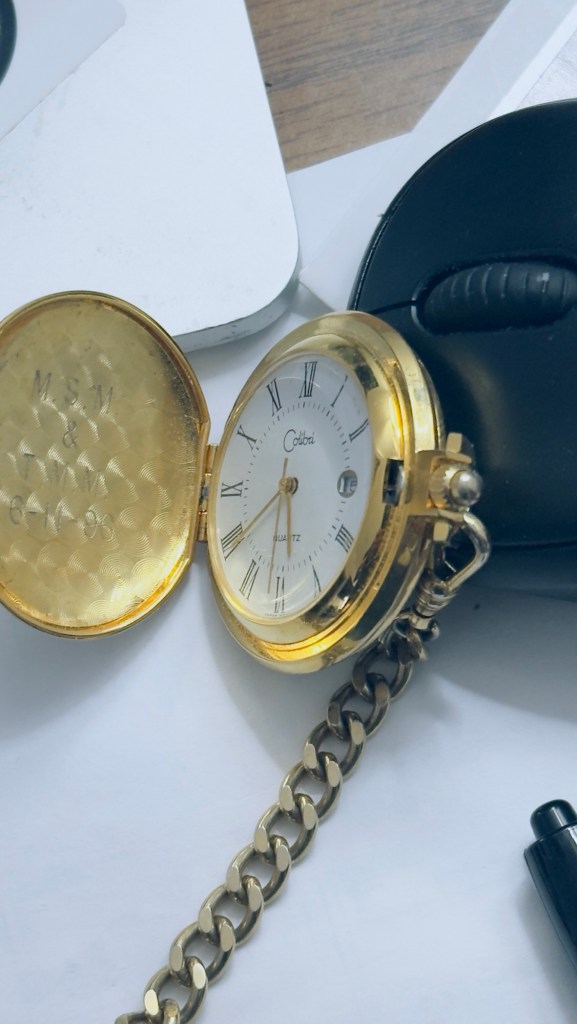
Yesterday would be a wedding anniversary were I still married. Thirty years, is a long time, and yet I did not manage that. There are so many things I could have and should have done differently. Taking accountability for my failings was not always something I could easily do. Learning to accept and be comfortable with my weaknesses is one of the more significant things I’ve learned to do. I continue to learn and accept those things. It makes my friends more precious and the reality of having enemies less likely.
Thank you as always for reading,
Michael

