Hello from yet another coffee shop, now in Marathon WI,
I was back in Iowa for the Thanksgiving holiday, though at the other side of our state. While it is a growing metropolis of sorts (pushing 400,000), it is still Iowa. Between there and Iowa City, the home of the University of Iowa, there are some small towns, but many of them are now bedroom communities. Much different than when I grew up in Northwest Iowa 50 to 60 years ago. When I grew up, Sioux City was the third largest city in the state. Even though it has lost population, perhaps more than 20,000, it is still the fourth most populous city. Sitting at the confluence of the Big Sioux, the Floyd, and the Missouri Rivers, it was a meat packing town with the third largest stockyards, in terms of area, but the largest in terms of receipts, in the country. It was once referred to as Little Chicago. It was actually the perfect size town to grow up in the 1960s.
When I first arrived in Sioux City, as someone barely two, I lived in Leeds, a small blue-collar area on the north border of the city; when I was adopted, shortly before I turned five I moved from Leeds to Riverside. It was another very blue-collar area of the city, and some in the town referred to those of us who lived there as river-rats, a pretty disparaging moniker. What I know now is that the people in my neighborhood worked hard, stood up for each other, watched out for each other, and everyone had numerous friends on their block. We had numerous parents who as watched out for us, and yes, when the proverbial street lights came on, you knew it was time to go home. Riding bikes, playing in our yard, which was a sort of neighborhood playground, were common everyday events. As I look back with a certain degree of openness, what I realize is my parents worked very intentionally to give our friends a place to be. As I grew up, again unrealized, I could walk to school until my senior year, when we got new high schools, in under 10 minutes; most everything I needed from a grocery store, a pharmacy, a clothing store, or fast food (which was a treat upon occasion), was in our neighborhood. You knew who lived next door, and even their parents’ first names, though we were not allowed to use them, as well as pretty much everyone who lived within a two block area.
If I had misbehaved somewhere, my mother generally knew about it before I got home. I remember my first address and phone number, which only had 5 digits (33205), and I can still tell you the names of all the people who lived within a few houses of us. Hattie made the most incredible chocolate chip (with chunk chocolate) cookies. The Browns, down the alley on the corner, had a children whose names worked their way through the alphabet. The Lynch family next door had a gorgeous flower garden, with a row of irises, that served as a boundary for our side-yard football field. The Wards behind us had people who were the same age, and the amount of time we spent playing was significant. Across the alley, on the other side of our house were the Lund girls. They were all older than I was, and so while we spent time playing or our parents watching out the other family’s children. The youngest, referred to now as my”Sandbox Buddy” is actually my closest remaining friend from our neighborhood playmates. What is interesting about that transformation was in high school we did not hang out because I was three years younger. She was someone I admired from afar because I was too much younger. It was not until I was in my 20s and into my 30s that our friendship blossomed into something so treasured. She is so incredibly intelligent and insightful. Our mutual interest in history was a surprise, but something I so appreciate.
What reminiscing and reflecting upon our neighborhood, which has disappeared, was how connected we were to each other. I remember as a 7th or 8th grader attempting to shoplift some candy to give to a girl I had a crush on. The salesclerk was one of the mothers on the block. I was not a successful thief (my face probably telegraphed my stupidity). She told me to put it back and no not ever do it again. I was profoundly embarrassed, but more than that, I was petrified she would tell my mother. That consequence would be extremely painful. The salesclerk was so kind when she pulled me aside, warned me to never do that again, and told me she would not tell my mother. She saved me from a serious beating. I cried as I explained why I did something so stupid, and she told me that stealing to impress a girl was not a good plan. What is significant in my little story it the clerk knew me and realized if she made me accountable on her terms I would learn a lot. I can say I never tried to shoplift again. What age has revealed to me is how many people did so much behind the scenes for all of us. Long before Hilary Clinton spoke about a village, we grew up in it; it was our life, our experience. We had more parents than we realized. No one had to feel alone or unprotected. The safety net around each of us was broad, and it was strong. While it was something seldom intentionally pondered, it was intuitively known. That crested safety in a way that could not, and now cannot, be quantified.
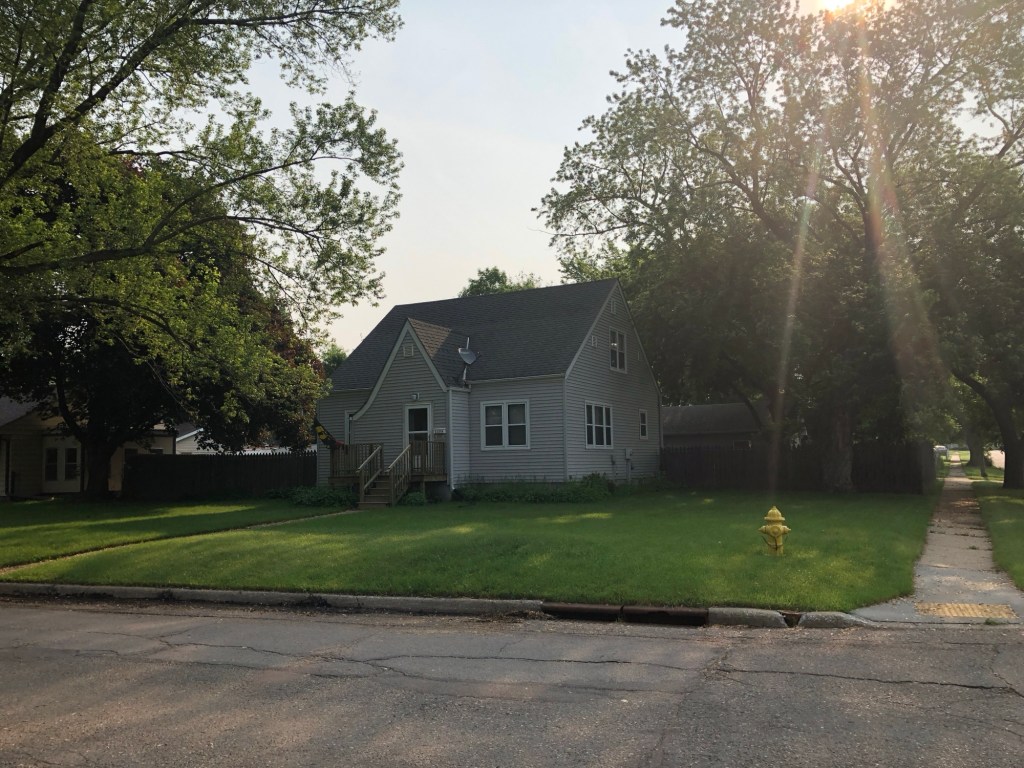
The picture of the house above is the house my family moved into in 1965. The previous three years, my father worked out of town (over 450 miles and almost 8 hours), and he worked 7 days a week and 12 hours away. I do not think it was until recently I realized he did that to save money to buy this house, one that gave each of us our own room. While the move was less than 1/2 block, it changed our lives substantially. This is what people did. They worked hard in our neighborhood; seldom did they complain or did they try to compare themselves to the people around them. They merely did what they believed necessary to make things work.
The only thing I wish is that perhaps they would have shared with us, even later in life, some of the lessons they learned. Their discipline, their foresight, their willingness to go without themselves were things I never realized until much later. I wish they might have taught me budgeting, spoken to me about the differences between wants and needs. As I look back in this season of Advent, in this season of giving, in this season of preparation and promise, I am still learning how fortunate I was to grow up on the corner of Boies and LaPlante. The first album I ever purchased was Jethro Tull Aqualung. Of course, some of the lyrics did not please my mother. Imagine that?? I remember buying it at Uncle John’s, which also did not please my parents. Oh those were the days.
To all my childhood friends who might read. I hope the memories are good ones, and as always, thanks for reading.
Michael