Why Does Dana Live On?

Hello from my study,

It is the end of New Year’s Day and for the first time in 5 years I am not in Europe or Kraków the first day of the year, and more significantly in a half a decade. Of course, as I have noted in other posts, this NW Iowa boy never really imagined he might be considered a bit of a world traveler. I know there are people who travel much more than I do, but undoubtedly, much more has happened through the past five years than I ever expected possible. From traveling around much of Central and parts of Eastern Europe to making it to Russia this past summer, I continually realize that people are people and we all hope for much the same things.

My travel started as a 17 year old boy, leaving home while believing he was an adult through an enlistment in the United States Marines. It would take less than 24 hours and my hiding my head under my pillow as tears streamed down my face to know that I had not made it to adulthood yet. That, what they now call adulting thing, undoubtedly had not yet happened. One might hope that my time in the Corps would have developed an adult, and in certain ways, it most definitely did, but there was so much yet to learn. I would come back to Sioux City hoping I had grown up, but moving back into my parents’ home probably erased most of the progress I had made. All of the responsibility I had seemed to disappear and if it were not for my pastor, his family, and the Reeses, I think my regression could have been even more problematic. As I noted in other blogs, traveling for a year on the LYE team did a great deal of good because it exposed me to living with others and realizing there was much more to life, particularly in terms of learning and culture. Yet the travel that changed my life was a trip that I have noted in other posts. As a sophomore at Dana, the trips to Europe with Dr. Nielsen were already legendary. His incredible interest in all things cultural offered some new possibility to connect our nascent world view of literature, art, architecture, and world languages to the theme and itinerary he would develop. His ability to integrate our world still astounds me.

That interim was titled Auguries of Loneliness and we read books and stories by Earnest Hemingway and Thomas Mann. That reading and the travel the last days of the year 39 years ago and into January are still etched into both my memories and my very being. The incredible group of students like Doug Lemon, Alison Nichols, Gay Gordon, Lisa Hanson, Lisa Bansen, and many others I would remember from pictures created quite of cadre trouping along after Dr. Nielsen. I never realized just how much energy he had or the length of his inseam when I tried to jump from footprint to footprint in the snow as we experienced Garmisch-Partenkirchen. I remember sitting in the cathedral in Lübeck, listening to an organist play pieces by Buxtehude in the classic Baroque style. And I was in the very place he had played some of his compositions. That is not a daily occurrence. Standing on the balcony of Hamlet’s castle in Helsingør. as the cold wind blew across the North Sea, would change the way I read Hamlet for the rest of my life. Standing before Raphael’s paintings or walking into St. Peter’s Basilica is simply a life-changing proposition. I think you get the picture, but it was not what happened while I was there, which included my leaving the group in an attempt to return to America for health reasons (that is an entirely another story). It is what the trip did to change me.

Like too many of students I see in my own classrooms yet today, I had been taught or encouraged to memorize and regurgitate what I had put into short-term memory. The humanities sequence as a freshman and sophomore at Dana required something much different. It required, thought, analysis, and most importantly, integration or synthesis. My professors at Dana, and particularly all who lectured in 107, 205, and 206, wanted us to understand the complexity of the world we would enter, and furthermore, they believed in the concept of citizenship, harkening back to the Greeks and Romans we had studied. My trip to Europe took those lessons out of the Western Civilization book and the plethora of study guides and handouts and made my life a walking classroom. I would never see a class or classroom the same again. Education became a life-work; learning became a philosophical process. I am still a process person, trying to soak up as much as I can. Even when I left Dana, I had little idea I would become a college professor. I had thought of a PhD, but was content that I had been called to be a parish pastor.

I learned at Luther (then Luther Northwestern) that my education at Dana was as robust, if not more so, than many of my classmates who were on what I referred to as the Norwegian pipeline to ordination. In fact, there is more Norwegian heritage in my family tree than Danish, but Dana had prepared me well. I had learned to integrate and analyze better than many. And realizing that my education had not cost nearly as much was a sort of frosting on the proverbial cake. I saw the same in my Dana classmates. Classmates like Merle Brockhoff, Scott Grorud, or Wilbur Holz were not only intelligent, but they understood the rhetorical nature of being a parish pastor. That is, in my estimation, part of what we had learned at Dana. We were encouraged to be scholars, but also thoughtful and benevolent individuals; those things that would serve us well as pastors and caregivers. As I would return to graduate school to eventually obtain my doctoral degree, I found myself thinking back to the words of Larrie Stone, Milt Olson, Richard, Jorgensen, and all of the Nielsens. They pushed me to never be content. They encouraged me to reach out and work to understand and interpret more carefully. It is the same thing I try to instill in my own students now. Thinking critically and analyzing thoroughly are essential to being an educated, thoughtful, and informed citizen. All of those astounding individuals we saw as our professors were exactly that. What they professed they lived. I believe we often underestimated and under-appreciated the brilliance and goodness in front of us. That is not because we didn’t care or pay attention, but it is because wisdom comes after time and through reflection.

Certainly people, who continue Dana’s legacy through the archives, the committed individuals in the immediate Blair area who give so much to creating the October events, the work through social media, and those who provide the hard physical labor to manage the care of the physical place we know as Dana, particularly after a decade of emptiness, provide important gifts of time, talent, and resources to provide a possible legacy to the community of Blair, which is etched in the memories of 1,000s of alumni. Dr. Heinrich’s magnificent new cross on the bluff above campus shines a light worthy of so many of those memories. We are blessed by that continued creative spirit.

Indeed, the “spirit lifts another throng,” another generation of individuals who will understand the motto of enduring truth and what it means to each individual who claims the Viking tradition as their own personal legacy. Perhaps it is age; perhaps it is a sense of reality; whatever it is, I know that Dana will continue to live through me and beyond me. Those four years from 1979-1983, with a semester away at the University of Iowa, were the most influential of my three score plus four years. There were professors who supported, pushed, and even frustrated me. Dr. Delvin Hutton was probably tougher for, and on, me than any individual my entire time at Dana. He told me once I was not capable of managing something. To this day I am not sure if he believed that or merely wanted to push me to work harder and go further in my level of work. Regardless his motivation, he motivated me. I was determined to succeed and prove him wrong in ways I seldom knew. As I have noted in other blogs, Dr. Larrie Stone tried his best to dissuade this history/humanities major from taking Anatomy and Physiology. He eventually allowed it, but with the caveat that I had to withdraw after 4 weeks if I was tanking the class. Instead, I was taking anesthesia exams before I was allowed to do an adrenalectomy on a rat. I was doing basal metabolic rate experiments. I was pulling all-nighters like no class ever before required. All to pull a C+ in that class, but damn, I was proud of that. Dr. Stone cared about my GPA and for me as a student, but he was still willing to offer me an opportunity to work outside my comfort zone. He called me in a couple times and asked how I was doing. Thanks to Monty Scheele, Troy Knutson, and Edie Myer as my study group, I did pretty well. Thank you to . Christine Barton and Deb Dill for helping me in lab. They all kept this liberal arts student afloat. That was the camaraderie typical of those at Dana when I was a student.

Dana lives on because of each of them. They made me a more complete person. Their care and example still inspires me today. This past week I took a December graduate from my university to the Upper Peninsula of Michigan. He and Anton, my Danish exchange student experienced three of the five Great Lakes. They saw more snow on the ground than they have ever seen. Micheal (spelled correctly) will be an outstanding graduate student. He told me when we returned at traveling 2,100 miles in less than 96 hours that I have done something for him no one ever had. My interest in helping to the next step is nothing more than what so many at Dana did for me. While most of my students do not know the name Dana College, they experience it through me. My Bible as Literature midterm is formatted exactly like a Humanities unit exam. My final is not quite as long, and I allow them to write the major final essay ahead of time, so they have to use sources and cite appropriately, there are still sections of matching. 107, 205, and 206 live on. Shortly after graduating from Dana, I was diagnosed with Crohn’s Disease. My first bout with it was brutal. I had lost almost 20 pounds in less than 30 days. As I came back to Blair to visit, Dr. Nielsen looked at me and told me he was concerned for me. He said, at the time, “Let me say something you might understand more fully. Your theology of grace works fine for everyone but yourself.” He was spot on. It has taken many years and more tough lessons than one might ever care to attempt, but that grace is never ceasing. What I know now is the amazing grace we were blessed by as students at Dana College. It continues to boggle me to my very core each time I stop and reflect on those four simple and wonderful years. Yes, daily we were graced by some outstanding people at every turn. Many from little Iowa or Nebraska towns. Some from other lands, and I remember with incredible fondness Lena Pedersen, one particular Danish exchange student. There will never be enough mange taks for all I leaned. What I know now is I am merely thankful to claim my status from an incredibly strong little college. Here is a version of Amazing Grace that reminds me of choir and singing in the mask for Paul Neve so many afternoons in AMA. The version here includes bagpipes and is the newest rendition of the Irish ensemble, Celtic Woman. I have been fortunate enough to see this group (and this lineup in November. I was in Ireland four years ago and it is on my bucket list to see this wonderful group there. My apologies to Monty and Peter for using this picture from my sophomore year as we were on choir tour.

Thank you always for reading.

Michael Martin

The Blessings (perhaps) of Memory

Good very early morning.

As is often the case, I have slept for a while, but I am awake after 1,036 miles of driving over two days and falling asleep at 7:45 earlier this evening. It is now a few minutes after midnight. The drive was long, but generally uneventful, which is also a very nice thing to say. Currently, I am in Chassell, blessed by the generosity of a mentor, and tomorrow is a day to take Micheal (spelled correctly) and Anton to see things that will hopefully be significant for one as a future place to call home and as yet another part of an American year for the other. During the trip here and back, they have been subjected to meeting former classmates as well as other people I am blessed to still call friends, to eating at some of my former haunts and places I worked, and walking the streets and pathways of a place that fundamentally changed my life.

Over two short, but incredibly, profound periods, I lived in the Keweenaw Peninsula and moved from what I believed I had been called to do to a something quite unexpected, but yet another calling nonetheless. When I arrived in Hancock in 1992, I would find myself in a professional situation that I realize now was untenable. Three full-time positions that created overlap that was unmanageable were not what I realized I would do, but I jumped into it full steam ahead. As I look at it now, I am painfully aware of how many ways I failed to do it well. Of course, going through an expected divorce at the time did little to contribute to my stability or capability to manage. Perhaps the distance made me believe I could manage this change, but looking back I realize I failed miserably. While I know I did some really good things in the classroom as a pastor, and even when I came to larger church relations issues, I stumbled in all three areas at the same time. What I realize now is going through the divorce consumed me much more than I could ever imagine. I think much of that realization came through watching an incredible friend, colleague, and someone I value beyond words experience a similar struggle. As I left that position I had little idea what I would do and I remember someone telling me as I headed back to the one thing I knew how to do, which was to bartend and serve, that I was probably the most educated waiter or server they had ever had, The next months, I headed back to the food and beverage industry and that’s a difficult time. While I did not drink a single drop of alcohol the whole time I was at Suomi, I still exhibited many of the behaviors that people who drink too much regularly do. I can see that so much more clearly now. However, once I began to drink again, it seems I made up for lost time.

Over the next year, there were way too many times the consequences of my drinking caused me problems; I would say that being involved with the person who would become my second wife would help keep me on track. As I waited tables again,   working at The Library, I had the fortune of waiting on a table of two couples. One of the women at the table that evening was a professor by the name of Dr. Carol Berkenkotter. The upshot of that meeting would be my interview in and being interviewed by various people in the Department of Humanities at Michigan Technological University. Accepted into a second Master’s program would lead me down a very different path, an eventual PhD and becoming a college professor. While my professional life was beginning to take shape my personal life was still struggling. It was during that time that I found myself in a relationship, which to this day still confounds me. While I had known this person when I was a campus pastor, I did not really get to know her until after I had left that position. She is smart, capable,  attractive, and profoundly complex. She is probably the person I loved as deeply as anyone I have ever loved. I have said many times in my life and even today if she showed up on my doorstep I would be a basket-case. I know that I would manage because I am much more thinking than perhaps I was. I remember a friend warning me to not get married (which happened before both times I was to become a husband). So many things happened in the four years we were married. I ended up in jail after pleading no contest to a domestic violence charge. The story is complex and my counselor, who told me he had work-shopped my case throughout the office, told me how ironic it was that I would be the one to end up in such a circumstance. Simply put, he noted I had been in an abusive relationship for some time. While I will not get into all of the particulars, it was probably a low point of my life. To call it The Tale of Two Cities is so far beyond an understatement there is little to try to explain. Even my counselor of 6 years continually asked what I was thinking. It is not easy to admit he said I was the smartest man he ever met that could be so clueless about women and relationships. What I must say, however, is I failed miserably and completely in my attempt to be a husband. I am not asking for pity or anything, but rather attempting to take accountability for my failure. We would leave Houghton and move to Oakland County and attempt to salvage and repair the damage done. I have spoken of my failings more specifically in other blogs, but the truth is I still could not manage the things like I should have. There are problems and some struggles both ways, but I am only responsible for my part.

I have learned much about myself since then. In fact, there is so much I manage much differently today. However, this would begin my third part of the Houghton puzzle. The move to Oakland County would not be as life altering as either hoped. When I went back to Houghton in 2000, a divorce was almost completed. The way I have often described that time is everything I owned fit in a pick-up truck and I did not own the truck. I would head back to Houghton on my own to finish my education. I continued to do counseling for the next three years. It is hard to believe it is almost 20 years ago all this happened. I had spoke with my ex-wife a couple of times, but the last time I had heard from her, in spite of the fact she had initiated the contact, she told me she never wanted to speak to me again. I spoke again with my counselor at the time and he asked if I was surprised. He had a way of making me looking at the complexity of most everything that occurred. I think I am still alive because of him. In fact, I know that is the case. Perhaps the most important thing I’ve learned in that two decades is that I am comfortable at being on my own. Certainly during the past two years, things have occurred to make me wonder if I could be involved in a long-term relationship ever again. I think I’ve learned that I can be rather selfless, and I am able to care much more about the other person than myself.  and yet that is not always a healthy thing to do either. I am also much more thoughtful and committed to what I say I will do now. I have not always been as successful at that as I am now. What I know now about myself is simply I am content, at least the great majority of the time. I am much more matter-of-fact about my life; I am much more dependent on logic and thought than emotion and worrying about what if. Perhaps that’s what age has done. More likely it is that I have no immediate family or that I have had to manage more health things, which will continue to be part of my life.. All of the surgeries and all of the changes to my gastrointestinal track have created consequences, but I just learn to manage and keep going. I am simply blessed to be here, have a job I love, and live in a lovely house and do mostly what I want. Certainly, my position as an associate professor and as a program director keeps me more busy than I sometimes wish, but I actually love my work. The move this past year that has been in the process of being appointed as an Associate Adjunct Professor of Gastroenterology at the Geisinger Commonwealth School of Medicine is a new thing that will push me to connect my health and my academics. As I tell my students often, being a professor is not what I do, it is who I am. It reminds me again of a time when I tried to explain the difference between a PhD and other degrees. Again I failed miserably in my attempt and my rhetorical strategy was a complete flop. To this day I’m not sure I’ve been forgiven for that.

As we finish yet another year and this time, another decade,  it seems that I wonder about where things will go and how long I will be part of this a bit more carefully than I did once upon a time. 20 years ago was the beginning the Millennium and I would have to work New Year’s Day because of Y2K, Cell phones were a new thing and technology was just really beginning to take off. There was no idea, at least generally of apps and all the things that permeate our lives. Little did we know where it would all go. Even now little do we know where it will go. The world seems so much more precarious today than it did at the beginning of the century. One decade ago I had just moved here to Bloomsburg and I was busy running back-and-forth from here to Wisconsin to take care of Lydia.

As I write this it was 22 years ago today that my father passed away. I can remember that morning as if it was yesterday. It was early and I would have to preach three church services yet that morning after receiving my phone call. Being in charge of my father’s estate would reveal a number of things and many of them difficult. Ironically I think it was also the beginning of the end for the marriage, which I believe we both desperately wanted to hold onto. It is always interesting to me how we can look back and understand to a more complete manner how foolish we were and how shortsighted. for the first time in about six years I’m not in Europe for a New Year’s Eve. Anton is out with friends and the driving 2100 miles in less than 96 hours has taken its toll on this aging body.  definitely the return to the UP has conjured up a number of memories. The memories are always simultaneously a blessing and a curse, but that is the nature of our frail, fractured, and imperfect existence. As I complete a decade, I’m not sure that I live through another one. What I do know is that I have learned from my mistakes, I have been blessed in so many ways and by so many different people. Even when things didn’t work out because of my failures. I can only hope to do better and learn. I wish all of you will read this peace and health as you move into a new year. I am grateful to so many people for the blessings they have given to this extraordinary life. Over the past days I have been reminded of all of the people we have lost from where I went to high school, including my own sibling. This song by Dan Fogelberg is an incredible song about our memories and this version was posted the day following his passing.


Thank you as always for reading. 

Dr. Martin

Imagining And Pondering Christmas

Hello from my living room,

It is late afternoon or early evening and I am sitting quietly; the tree is lit and the snow people and Santas are inhabiting the space to remind me of what is to come. I hear the traffic whizzing by the house and John Ritter’s carols are playing on my Google home device. It is a somewhat sleepy day, but that is fine as I am readying myself for the morning trip to Geisinger for a routine procedure. I love the season of Advent and the idea of preparing for Christmas. Christmas, Hanukkah, or Kwanza are all celebrations of different faiths and backgrounds, but they have very different meanings. That is for another time. Christmas is as much about our various cultures as it is about the Christian celebration of Jesus’s birth. Certainly the Christian celebration is engrained in my background, from growing up attending Sunday School Christmas programs standing as a shepherd in my bathrobe or reading Luke’s Christmas gospel. It is a time that I remember the incredibly long day as one of the pastors at Trinity Lutheran in Lehighton and spilling communion wine on the fair linen at a Christmas Eve service. I was sure the industrious and reverent altar guild women were going to kill me. Another year, not long after the first Mannheim Steamroller Christmas Album, I used their music for a Christmas monologue sermon. I think to this day it might have been one of the top two or three sermons I ever preached. What made it a memorable service was how it seemed to touch the heart of the people who attended that service we called “The Animals’ Christmas.” As I write this I think of all my clergy friends who put so much energy into that evening and the organists and choirs. There is something magical about the carols, the candles, and the seemingly one time of the year when people think more about giving than receiving.

I think that spirit of giving is what gives Christmas such a prominent place on my radar. It is rather amusing, and at time a little embarrassing, how many times little children have called me Santa, and not just at Christmas time. When I was out at the tree farm picking out a tree, some small children smiled and pointed in my direction as we rode the wagon out to the fields of trees. I merely smiled and asked if they had been good. Last summer I was in Kraków, Poland and sitting in a Costa on Ulica Florianska and small children smiled and pointed. Their parents noted they thought I was Santa down for a visit I guess. Earlier I spoke with my former church organist; while I have been gone from Trinity for many years, she is still there. She is an incredible woman. She paid me a very profound compliment. It was a compliment to both my colleague and senior pastor, the Rev. Guy Grube, and me. He was an talented administrator and pastor/preacher/teacher. She noted that worship and preaching had a quality and skill not matched since we left, and that was 25 years ago. While I think we did a number of things well, I believe the work the three of us did on worship was extraordinary, and Christmas Eve services were perhaps the pinnacle of what we achieved and the spirit that occurred. Even though it has been so many years ago, that was a really significant thing for me to hear.

There are times I wonder and imagine what I might do were I still ordained? I struggle with worship even today because much of the preaching I hear is substandard. I do not mean to sound judgmental or arrogant, but Luther stated emphatically, “The word of God is powerful; and both law and gospel have moral force.” For me, that is the power of the Christmas story. It is the breaking through or the breaking into our dilemma-ed existence with a sense of giving that undoubtedly passes our understanding. Yet, we are back to the sense of giving, but this is no easy pick-it-off-the-shelf or hitting Walmart on Thanksgiving night or a cyber-Monday-sitting-at-the-computer. The giving of one’s self for the other without expecting something in return is something few are capable of. I know this pain too keenly when I have offered help, be it emotionally or financially and the emotion or care is not reciprocated or the money is never paid back. Too often I have found myself feeling hurt, and that hurt is followed by anger and the anger by a sense of betrayal which leads to bitterness. Regardless the expectation, the giving was not really giving with a spirit of selflessness. I am sure some will argue with me on aspects of that assertion, and you are welcome to do so. What I am realizing, sometimes too late, and many times too often, is that truly giving means that I cannot expect something in return. If it is financial, and this one has been particularly difficult, if I can not afford to lose that resource, it is probably best not to give it in the first place. Even then, I struggle if I am only giving what I can afford to lose, how deeply am I giving? This is something I am still trying to wrap my head around.

The spirit of Christmas for me is when I am willing to go without so that others may have. There is something about the humility of the Gospel story in Luke that speaks to me in ways I did not realize when I was a parish pastor. Perhaps I caught a glimpse of it when I focused on the animals for that Children’s service. Perhaps it is those we call the dumb beasts that we can learn the most about sharing. If Jesus was born in a cattle stall, I am quite sure the animals were not consulted about sharing their sleeping chambers. I am sure if all the commotion that occurred as we read it did indeed happen, the animals got little or no sleep, but I wonder if they held a grudge because their peaceful night existence was interrupted? I wonder if they will willing to give up their feeding trough to provide a bed for a young mother’s newborn child?

Too often we ask those with little to nothing to somehow give more and yet, we selfishly hold on to our abundance. Over the past two weeks through the hard work of four or five people we were able to make sure a student was able to travel on the Central/Eastern European Study Abroad trip. It was interesting to me how thoughtfully and willingly we all communicated to make something happen that will change that student’s life. It was much like what a couple did for me all those years ago. I believe with all my heart that their gift and that study abroad experience is fundamental to my becoming a professor. To walk in, but not nearly fill, the footprints of the Nielsen family, and there were many of them at Dana, is humbling and beautiful.

Dr. John W. sent out a Christmas greeting (a poem, a verse, something memorable) that he usually composed himself and his keen insight into our complex world was at times hopeful, at times reflective, at times much like another John’s voice crying in the wilderness, but whatever it was it was always profound. It was instructive and illuminating. As I reach an age that I thought once to be the age of old people, I find how much I still am learning about that education I received on the Nebraska bluffs along the Missouri River. Little did I know I would be at the feet of giants as I sat in Pioneer Memorial, Old Main, or the Old AMA. Little did I realize the spirit of giving they provided or instilled in so many of us.

I know now how blessed and fortunate I was to be on the receiving end of such a giving faculty. They had gone without raises, without sabbaticals, and incredible professors with PhDs from Oxford, or Duke, or Harvard were on that hill in Blair. And there were people like Phil Pagel, Verlan Hansen, and so many workers who day in and day out worked to support us. Talented, brilliant, classmates, who were also good people and created a cohort of people who still matter in my life. I think of 5 people, my fellow Dyaks, all successful and giving to this day. I think of talented and good people like Monty and Troy, who helped a history and humanities major survive Anatomy and Physiology. I think of those who were seniors or upper class men when I was an older freshman: Barb, Nettie, Tim, Peter, Mary, Lynn, Merle, Jim, Tom, who welcomed and accepted me. They gavel so much more than they realized. Dana had a spirit of giving that permeated every aspect of that little college on the hill.

I believe with all my being that Dana built on the foundation my grandmother had created for me when I was small. She was the most selfless and loving person I could have ever met. She loved unconditionally. I understand that so much more clearly now. Dana taught be how to take that sense of giving and make it a lifestyle, a life philosophy if you will. How often is it we fail to realize the blessings we are provided daily because they are all around us? How often is it we forget to thank those who give to us so selflessly? Too often we take the giftedness of our daily lives for granted or we fail to reflect on the profound things we believe to be mundane, taking them for granted. As I imagine Christmas this year, having a Danish exchange student has transported my thoughts back to choir rehearsals and preparing for Sights and Sounds. As I have the Danish hearts on my Christmas tree and Anton’s parents have sent Danish treats, my thoughts are wondering up to the cross and down to the barn below campus. As I prepared a Danish Christmas dinner with roasted duck, stuffed with dates, apples, and lemon and Anton and I made Risalamande for dessert, the spirit of Veritas Vincit is not far removed.

Christmas is the time to imagine and ponder. It is a time to remember and give thanks. I am so thankful that I found my way to that small college on the hill. I can only hope to give in the same fashion it gave to me. I wish each of you who read this a sense of hope, peace and joy as we celebrate this season of real giving.

Blessings to you all and thank you for reading.

Dr. Michael Martin ’83

I Wonder as I Wander

Hello on the first night that seems like Winter,
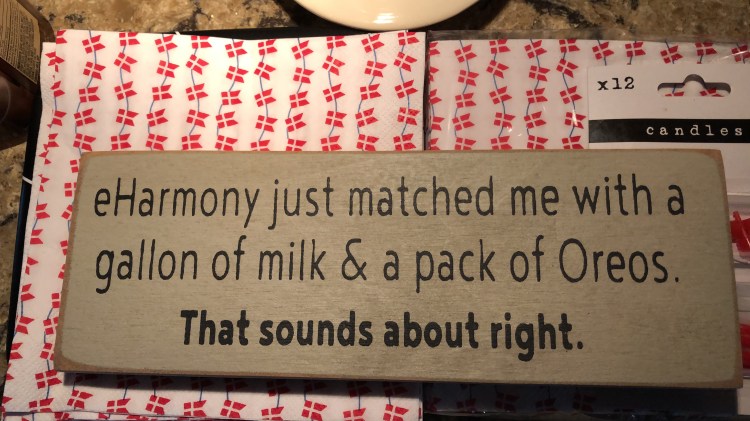
When I was small, I wondered about what seemed to be important things. I wondered about what might happen at school day in and day out. I wondered about what I might get for a birthday or a Christmas present from my grandmother because she always gave amazing (and unexpected) presents. I wondered if I would ever be big or large enough (as I was generally the smallest boy in my class) to play any kind of sports (it was also not helpful that coordination was not one of my stronger attributes). I wondered what I might do or become someday, but I never really seemed to settle on anything toward which I believed possible. On the other hand, I wandered around the neighborhood, riding my bike up and down our T-ed alley and circumnavigated our block again and again on my 20 inch red Schwinn bicycle at every chance. Riding because I felt free and safe. I wandered the aisles and peered intently through my brown framed rather-thick glasses at the shelves in the public library, checking out as many book as my little arms could carry. Often as I read those books, my thoughts wondered about and wandered among the places I read of; could something like that happen to me?

Wonder often provides us a sense of hope; it creates the possibility and allows our imagination to see beyond our present circumstance. It offers us the ability to believe in what the book of Hebrews call things hoped for and the conviction of that which is unseen. Of course, the writer of Hebrews was speaking about faith, but wonder and faith are not unrelated, at least for me. Wandering, on the other hand, offers exposure to things that might have been unseen or only imagined. It provides new experiences or data to support things about which we may have wondered.

The Christmas carol that provides the impetus for this blog post, has an interesting story behind it. That is not unusual. This particular carol, written by John Jacob Niles, was a fragment of a poem and one line of a song he heard at a sort of tent revival in North Carolina at the height of the depression. I imagine much like the Jewish people had done, and would do again, the depression caused many God-fearing people to wonder where God had gone. What had they done to invoke such an economic wrath upon the country and particularly the poor? This song has a lament quality to it, both in terms of word and tune. As a former student once said to me, ” You have a [propensity] to be somewhat melancholy.” I imagine it is that predilection which creates a somewhat inclination toward hymns in minor keys in music; and yet I also love the resolution that can occur when we move from the minor tonic to a Picardy third. I remember the first time I mentioned such a musical thing to a friend studying music and he marveled that I knew such a thing. I continually realize what my humanities major did for me.

This weekend is that time before Christmas that brings back both joyful and, on the other hand, so difficult memories. In my first years here in Bloom my wandering took me back to Wisconsin on regular sojourns to care for and support Lydia. The move made from her incredible home to COH was a challenging, unfortunate, and necessary one. The decision made to allow her to pass 5 years ago today was troublesome, arduous, and again necessary. I cried both times. It began a watch and time that I struggled, I wondered how to understand what it meant to care by simultaneously holding on and letting go. So much of our lives are about that. We wander in and out of others’ lives and sometimes we feel this need to hold on. How much of that holding on is from fear or selfishness? I know there are cases where I am trying to figure out the difference between loyalty and fear or selfishness and fear. Am I the ornery person that is spoken of in the carol? One thing, of which I am most sure, was one of the least selfish acts I have done was to let Lydia go. I went back to the Circle that night and I prayed and I cried. The hours spent in her room that period were so significant as I tried to carry out the promises I had made to her some years before. I wonder at times how it is we wandered into each other’s life. She still permeates more of my existence than I am readily cognizant. There are things I do in my own home that remind me of her (and of my own grandmother, but I have noted some of their similarities). There are things I want and ways I go about them that remind me of her. There are times I wish my grandmother would have lived longer; she was such a loving and giving woman and I think I would have enjoyed hearing the stories of her South Dakota farm-girl upbringing.

My wandering had taken me to almost every state in the union and also to most of Europe and even Southeast Asia. I have been fortunate to explore some small parts of the Caribbean, but there is still so much to learn. I wonder if I can ever be satisfied that I have gotten to experience all I can absorb or if I can somehow believe I have had enough opportunities to learn. I somehow doubt it. There are moments I wonder what created this desire to wonder or wander. I grew up in a family that did not seem that adventurous, but I think that was because of financial constraints rather than a lack of wanting to try something or do something. I have pondered this and I do not think it came from being in the Marine Corps as much as it was the consequence of being allowed to travel with Dr. John W. Nielsen during that interim class. Through the generosity of Dorothy and Harold Wright, I was provided an opportunity to wander around Europe for almost a month. The wonder that trip created has never been extinguished. In fact, subsequent trips have only provided the embers of that first European travel to grow into an astounding, passionate, fire. The difference is that I not only want it for myself, I want it for others.

For the first time after 5 years, I will not be in Kraków this New Years Eve. Perhaps that is appropriate, for the travel/study abroad trip will be in Warsaw instead. It will be very different to not be there, however. Yet that initial trip to Poland, and the possibilities garnered because of it, have changed my life, both personally and professionally. To go to Poland the next times are not so much about learning, but learning and teaching, absorbing and professing. I know as the little Northwestern Iowa boy, I could have never imagined my wonder and joy of learning would take my wandering to teach at a Polish University, where I would teach in the streets and rooms that might have housed Copernicus and St. Jon Paul II; that I might spend time teaching in a university that was founded in 1364. It is a long journey from Riverview Elementary School. Lately, I have found myself reconnected with some of those Riverview classmates. What a tremendous gift to have them reach out and to be able to share thoughts. I posted a new profile picture today that is from early summer, so not ridiculously old, but one particular classmate noted she would probably not recognize me. It is true, I do not look anything close to the last time I saw her 46 years ago. She was someone I admired in so many ways. She was smart, personable, kind, and I thought she was so beautiful. One of the persons I always wondered what had happened to her. Low and behold, in the last year paths crossed again. That is the reason I appreciate social networking.

As I wonder and wander now, I think my tasks have taken on a different kind of urgency. There is a great deal I still feel called to do, but I realize the time in which to do it all has dwindled. Such a reality can be disconcerting, but it can also create focus. The past few days were more difficult than I revealed. The sense of loss on certain levels was painful beyond words, but the ability to maintain is also a gift I value. It caused me to wonder once again about myself and not only who I have become, but as much how I have become that person. Introspection, reflection, and analysis are something that seem to be foundational to me. Perhaps what my wonder has created most importantly is to learn to be accountable for my choices. The sequelae of my actions and life are mine to ponder on and wonder about. I guess that is sort of meta-wondering if you will. I am not sure if it is the holidays that bring forth this sort of proclivity to be pensive or if it is merely my innate nature. Perhaps it is some of both.

As I look toward the week of Christmas I am reminded of a wandering couple soon to become parents. I know from the stories chronicled in the gospels that they certainly wondered about their unexpected circumstances. I know as I worked with my Bible as Literature class this fall, they too wondered about the story of Mary and Joseph and what they must have been trying to wrap their own heads around their call (her call) to be a parent. Being a parent is an entirely different wonder to me as Anton and I prepare for Christmas. Soon half his time in Bloomsburg will be up. He was in a band concert last night, and it brought back memories of my own high school band concerts. He has begun wresting and I think his aching muscles have him also wondering what he is doing. There is so much to do as I am working through the first week of a winter term class. Some of my students are wondering and wandering. I wish all of you who take time to read my musing a blessed holiday season, whatever your faith or piety calls you to. I leave you with the carol which inspired this post.

Thank you for reading.

Dr. Martin

Being Thankful

Hello from my kitchen in the morning,

Hard to believe it is already Wednesday of our break. Harder to believe it is almost the end of November; and perhaps hardest of all to come to terms with we are finishing the second decade of a new millennium. I was speaking with Al, the person in charge of technology for my department (and building) and reminiscing over our experiences of Y2K. This morning I am realizing that the great majority of my freshmen did not live in the 20th century. Yikes!

As I sit in my kitchen, breakfast pretty well prepared, I am waiting for a 17 year old to manage to get up. In spite of the fact, we agreed on a 9:30 breakfast, he does not like to get out of bed, so I am being productive and working on this blog. Thanksgiving, being the latest day of the calendar it can occur, seems to usher in both Advent and the holiday season this year. It also brings back all those memories of holidays gone by, and causes me to ponder how differently I might understand the holidays and their significance at this point in my life. As a child, it marked a school vacation and Black Friday shopping. My parents put money away every paycheck to help have money for the Christmas tradition of buying presents. They never owned a shopping credit card. My father had one gas credit card, and that was it. Thanksgiving was an incredible meal, especially if we make the trek “over the river” (there were no woods) and went to my grandmother’s, sister’s house. I have noted on many occasions how those two were the most fabulous cooks.

While I have often lamented some elements of my being raised as an adopted child, perhaps the occasion of this Thanksgiving is a time to consider the fortune of being raised in the Martin household. As I realize now (and that is not a first time realization), I think there were different hopes from the two people who had a adopted a first child and then a pair (being my sister and me). In the late 1950s, having children and being a family was part of being successful and living the American dream. As I look at my parents, I am not sure parenting was appreciated equally or was the desire to be a parent on the same plane. Regardless, knowing all the things I know, I believe I was overall fortunate. I was speaking with my sister-in-law recently and she noted that my older brother and she considering adopting us (as a second adoption) to get us away from some of the struggles we had endured. Though I am sure if that attempt had been made it would have been an undoubtedly tense and ugly situation.

In spite the myriad of issues, we still had some relative stability. I had the essential things I needed to be healthy and cared for on the basic levels of food, shelter, and opportunity. I had extra things provided like private music lessons, the chance to participate in a variety of events, and both a good school and church family. I understand and perceive things so differently now. Perhaps most important, I knew that even when I was lacking emotional support at home, I had surrogate parents who gave me a lot. I had a church youth group where I found acceptance. I know now there are things I lacked and it is interesting that I find myself trying to provide that for Anton, even though he is only in my care for a year. Tomorrow that year is already 1/4 complete. Amazing that three months have come and gone. What I know is I have been so blessed by people in my life. Growing up in Riverside, I think of the Sopoci family and their basement recreation room, where I spent many an hour. I think of Sheldon and Janet Reese, who always demonstrated care for me, listened to me and showed me I mattered. Of course, Marge and Jake Goede were like a second family to me. I realize now how much my church youth group did to keep me healthy emotionally. In addition, as I got older and worked at my grandmother’s bakery, I was fortunate to be around a person who loved me deeply and unconditionally. That was the most incredible blessing perhaps ever bestowed. She taught me how to give and to treat others with kindness. She was always willing to go above and beyond in her giving to others. I would like to believe I emulate her to some degree.

As I moved beyond high school, I had so much to learn about the world. To my parents’ credit, and perhaps at times to my detriment, I was not very prepared for the Marine Corps – though you might ask, is that possible – or even life beyond. I would come back trying to figure out who I was, and being blessed by yet another family outside my own. A new pastor had come to Riverside Lutheran. Little did I know how impactful they would be. The eldest was not around, but the next three would be central to my trying to acclimate back to being a civilian. I know now that is much harder than one realizes. Fred, the pastor, became a surrogate father and did more to help me mature than perhaps anyone could have. Ruth, had more of a hate/love relationship with me (and my ’71 Chevelle) than one would hope. She petrified me, and simultaneously caused me to think about who I wanted to or should be. David is still a friend I treasure and Barb found her way deep into my heart beyond anything I had known. She was that first love, and I had no idea how to manage that. Trial and error would be an understatement, but I am thankful to this day. Nancy, the youngest was smart, kind, and did not know what to do with her brother and me together. I will forever be indebted to the Peters family. Even to this day, I realize the integrity of Fred and how blessed I am by him.

I would eventually go from Ames back home and that was a difficult time due to the death of both my brother and my grandmother. Somehow, on a lark, I was blessed again; this time to be offered a chance to travel and work for an organization called Lutheran Youth Encounter. This was also the time I was spending significant time with a 2nd cousin. She was a very good influence on me and again I was blessed by her love and care. The year of travel caused me to do a lot of self-examination, as well as a time to grow, and I enrolled in college. This was a second time, but this time would be different. I wanted (needed) to prove to myself I could be successful. It was the begging of a process that has led me through seminary, to the parish, back to the academy, eventually a PhD, and from Wisconsin back to Pennsylvania.

These previous paragraphs are rather broad strokes, but what is consistent is there have been people every step of the way who cared for me, who cared about me. I did not get here on my own. It has been because of dozens of individuals. Some have moved in and out of my life and I have lost touch or one side of the relationship moved beyond. Some have remained and some have re-emerged. Our lives are an astounding number of threads woven together, sometimes tightly, sometimes with some sense of order, but loosely. Other times, the threads become tangled, snarled, or even frayed. Yet they all matter because they illustrate the complexity of who we are.

As you know by my last blog, a superb teacher, professor, and colleague has passed. I have pondered his passing from a variety of views. He was only four years older than I. To be honest, that disturbs me; it frightens me a bit. On the other hand, he left a profound example of what it means to be here for his students. I hope I can work to carry on some of that in my own teaching in a more successful manner. Last week as we honored him and students spoke about him, I tried to imagine what he might say. I think he might say, “Awe, shucks! Thank you for your words.” And he would leave it at that. Dr. Riley was (and is) another reason to give thanks, both for the time he was with us – also by what he has left us. Before we return to classes, we will have a memorial service. The weather, as can often be the case “when the gales of November come stealin'”, and move us into December, does appear to be an issue. And yet, we will gather to give thanks for a colleague who taught us to never be complacent, to never quit striving to learn and implement new things. As I finish this we are completing a Thanksgiving break. In spite of the craziness in so many places, and inside the Beltway perhaps being the craziest, I find myself wanting to focus on being thankful. There are so many people not mentioned here, but you each matter. Bless each of you for your kindness and the gifts you have shared to make this small, adopted, struggling, boy from Northwest Iowa be able to grow, flourish, and be allowed to live a blessed life.

Thank you as always for reading,

Michael (aka Dr. Martin)

Remembering an Incredible Professor

Hello on a Sunday evening,

I am fascinated by corresponding dates. My adoptive father and my second wife had the same birthday. Lydia’s birthday was the same day of the year my adoptive mother passed away. My great aunt passed on my sister’s birthday and was buried on my niece’s birthday. Yesterday was Anton’s birthday and it is the day my department lost an irreplaceable colleague. Certainly, at some point we will search for another faculty member, but that is a replacement of a department position. I had often said if and when Terry Riley retires, we would realize all the things he did behind the scenes. To the complete shock of our entire department, he passed away early Saturday morning after a brief illness.

In spite of the fact he was on sabbatical, his black Nissan Frontier pickup occupied a parking spot in the Bakeless parking lot as he arrived at 3:30 or 4:00 a.m. each morning (and that included weekends) where he occupied his sanctuary at the far end of the hall on the first floor. He worked diligently at his desk on the latest QualTrac data, the most recent scholarship on something about teaching that fascinated and inspired him, or he was intent on figuring out some new pedagogical possibility as he had delved into the world of online or distance class delivery. As I often came into the building early we would meet in the hallway and one of us would initiate, our morning greeting. As I am prone to do, I would inquire, “How are you?” His response was always the same, “Doin’ fine.” And he would mosey on in whatever direction he was going. When I had a question about the long-term history or typical practice that puzzled me, I would go to Terry. I always found him at the computer desk engrossed in whatever his present task was. I would request permission to come in and he was always gracious and invited me to sit. When he was speaking with or listening to you, there was a focus and intensity. Not one that made you uncomfortable, but rather one that assured you that he gave you his undivided attention. And as he listened, you knew he was pondering and thinking. The ambiance of his office is something to behold and it felt like you had just been granted an audience with the Holy Father.

Students adored him and he was a champion of and for them. His mind was always active and he continually looked at ways to prepare and support them both in the classroom and the life they would live beyond Bloomsburg. As a consummate teacher, he was unceasing in his desire to share his insight and wisdom with any and all who cared to listen. He was passionate, but never pushy; he was both grandfatherly, in the best way possible, but uncompromising with little patience for bullshit (and I use that word intentionally) because the few times I saw him angry, the piecing look through his rimless glasses was a look you did not wanted focused in your direction. Over the past decade I have worked with Terry as a committee member when he was the chair and also as the chair of a college committee where he came before that committee. He was always pleasant, but in a sort of perfunctory manner; he was goal oriented and again had little time for foolishness. He was completely and meticulously prepared and he anticipated most questions before one could ask them. I remember once at a university level committee meeting where another long-serving faculty person questioned the legitimacy of a proposal. That person was on the university committee and Terry was bring something forward. Dr. Riley carefully and successfully filleted at person without every easing his voice or sounding angry. He almost had a Bilbo Baggins quality that provided him the opportunity to annihilate you and you would thank him.

Terry’s indefatigable labor behind the scenes, from the union to assessment, from committee work to learning things to share with us, was something he did freely and quietly, but he supported the department and the college with every ounce of his being. As evidenced in what I have written, Terrance (his given name) was an extraordinary human being, but in my mind what made him most extraordinary was his humble and unflappable demeanor. He simply did his work. He was gracious, but tough in his own way. He was serious about what he did, but had a smile and wry sense of humor that could disarm the most cynical. He was a colleague’s colleague. The loss I feel is great, but I have colleagues that have worked with him much longer and those who have shared moments because of proximity, and their shock and loss is legions beyond mine. I am not sure he knows how much he was loved by those of us fortunate to share in his department. I once said to him, “Mark is the Assistant Chair and Tina is the Chair, but you are the Dean of the Department.” He smiled and responded in his knowing tone, ” I am glad you understand that.” When I first interviewed at Bloom he called me into his office and asked to chat. He told me that he was pleased I had a liberal arts background. He asked my colleague why they did not interview me sooner. That vote of confidence from him meant more to me than he ever knew. I am blessed that I have lived in the presence of a Renaissance person these past 10 years. I hope we will continue to shine for so many the way he did. I will miss our morning greeting, sir. In this week of Thanksgiving, I give thanks for you. I have used this video before, but in many ways Terry was a fatherly figure to all of us.

https://www.youtube.com/watch?v=5hr64MxYpgk&feature=share

Thanks for reading as always,

Dr. Martin

Why Bullies are Problematic

Hello from my office as the semester steams toward the end,

I have had a busy week, but I am counting on this finals week being both busy and productive. It has been an emotional rollercoaster, both as our department has processed the loss of a dear pillar and colleague in the department, but also as I watch so many students struggle to manage this thing called college. The first semester is a rude, kick-you-in-the- pants sort of experience where most realize they were ill-prepared for what they will experience between the excitement and fear of beginning the semester and finals week, which is now upon them.

As is often the case, the cold glass of reality splashes them and you receive visits, emails, texts, or some communique asking what they can do to improve their grade. In spite of the fact that I have released grades throughout the semester, and they know where they stand, somehow the shock of “it’s here-the end-of-the-semester” always catches them off guard. Of course, we, on the other side, also find ourselves wondering where the last 15 weeks has gone. I remember the first time I assigned a failing grade to a student. My heart honestly hurt. I actually called my undergraduate advisor and spoke with him because I was so upset. I still take no pride in a student struggling or doing poorly in my class. What is different is I do not take each thing so personally, but I still abhor assigning grades to a person’s work. I realize the value and the problem in evaluation. The problem is simple: instead of seeing it as a reflection of the products turned in during the semester, students see a grade as some reflection of their self-worth. That can be devastatingly damaging to their understanding of who they are. I actually address this in class, but there is so much power given to those 5 letters. We need to work toward something different. The only time a GPA matters is when you are applying for that first job or if you are going to graduate school. After that, no one cares. That is sad, but it is reality. It is sad because we have throughout our educational process somehow made grades the be all, end all. In the last day and a half since I last wrote, I have had no office hours and no finals, but I have had students from my First Year Seminar (FYS) class in my office by the droves. They are overwhelmed and frightened, but they are working to manage all the end of the semester brings. It frustrates me that our public school system seems to fail on so many levels in preparing students for what college will bring or demand of them. This is not to say that all teachers are bad. That is not the case. I think the issue is a systemic one, and more significantly it is tortuous; more problematically, it is almost impenetrable. I could be political here, all the way to the DOE, but choose not to go there. The connection to my title is that students and even school systems seemed stymied by what is above them, and speaking out is not encouraged. To discourage dissent is to bully someone or someone(s).

I have noted at other times in my blog that I was bullied. I am not sure I saw it as bullying at the time, but I was most undoubtedly teased and literally pushed around because I was so small. I was not a fighter; I learned to get along with people as a pre-schooler because I would lose most physical confrontations. I learned that early. Often, until about 2nd grade,  my sister was my enforcer, if you will. I also learned that I did (and do) not like pain. I think even to this day, in spite of having a relatively high pain tolerance because of my medical issues, I would never participate in pugilistic endeavors. I refuse to watch MMA things and, in fact, I find them almost nauseating. I did not weigh 100 pounds until late in my junior year of high school and as such I wrestled some and ran track. I was not going to be involved in either football or basketball. I learned that I would have to rely on my brains and not my brawn (or lack thereof) and that became more the case when I decided to enlist in the Marine Corps. I remember the infamous Pugilstick training. My drill instructor told me if I got beat in the ring I would get beat when I got back outside the ring. I learned quickly to be smart and fast. I managed that quite well, but it would teach me something else: to not allow myself to be bullied or pushed around. There was both a blessing and a curse to that realization. I tried to act tougher than I was at times. I would teach me both thoroughly and expeditiously that there was always someone tougher. I remember once stepping in when a male was abusing a female. The female was able to escape the situation, at least for the moment. I got a serious ass-beating. Certainly there were more than a lion’s share of bullies in the Marine Corps. Much of our toxic masculinity is based on the idea of bullying if you will. Many do not want to call it that, but that is what it is. No matter how big, how fast, how bad you are, there is always someone bigger, faster, “badder” and that person wins. The idea that violence is acceptable in every aspect of service life is problematic, but it is irrefutably present. While there have been things implemented to minimize this, as I speak to those still in the service and some have been there for decades, that bravado has not disappeared. I might go as far as to say raising the issue can be seen as undermining the esprit de corps of the service itself. That is some indication of how thoroughly this is engrained. I think it is one of the reasons there is such a culture shock for many when they try to acclimate back to civilian life after being in the service. In the Marines, I was taught to be invincible. I attempted to teach others to be the same. It is that incredible vision of what Jack Nicholson says to Tom Cruise during the court scene in the movie, For a Few Good Men. The entire idea of training someone, of a Code-Red, while managed as a movie issue is not something that is unrealistic. The idea of a blanket party in boot camp, as happened in Full Metal Jacket, is reality. While I am sure there are directives to not do such things, taking things into their own hands, contrary to the argument between Cruise and Nicholson is common practice and I would be hard-pressed to believe it no longer happens. The questioning of this practice can be traced to the work of Raewyn Connell, the Australian scholar, who is internationally recognized for her work in this area. The fluidity of masculinity in a society that is questioning the dichotomous gender binary certainly creates a lot of things for consideration, but most males older than 35 (and that is my arbitrary number) buy into elements of toxic masculinity more subconsciously than they might realize.

What I believe is most problematic is how the idea of the “ol’ boys club” permeates most of what we do from our neighbors and the streets of our cities to the very halls of the United States Capitol. As I write this, articles of impeachment have been laid out against the President. While there are a number of policies the President supports I disagree with, that is not a new thing for me. There were other Presidents with whom I struggled because of their policies, but I still respected them. There are Presidents for whom I voted, but was disappointed in how they managed their presidency, but again I still respected them. My struggle with President Trump is his arrogance and his propensity for calling people names, both of which are below the office to which he has been elected. His use of Twitter is abhorrent. Not that he uses it, though I have some issues about his usage that are more theoretical and rhetorical, but rather the tone and rudeness that is the overarching style of whatever he does. He is a schoolyard bully, one who has bought his way into and bankrupted his way out of so many things. He is beyond reprehensible in the way he treats those who work around him, in the manner he addresses those with whom he might have a disagreement. He has little difference from a two year old throwing a full-out tantrum. He is embarrassing in the way he kisses up to dictators and then disparages our long-important and most supportive allies. I understand this is my personal opinion, but I believe he has damaged foreign policy in a way that it will take a decade or longer to repair his failures, if that is even possible. In addition, I believe he has bullied the Republican party into buying into his pomposity. The disdain he and the Republicans have for the Democrats and vice versa has thrown the entire idea of bi-partisanship and checks and balances into such disarray I am unsure if we will recover as a country. I am sad to say, but I am rather happy to be in my 60s. I should also note that Sen. Mitch McConnell is perhaps even a bigger problem than the over-grown Cheeto, which is what my colleague’s children call President Trump. BTW, that says something else entirely and is also problematic, but emblematic of what has happened to the country. I will never respect someone who has to bully their way into getting what they want. I lose significant respect for those who believe this is a reasonable way to conduct our national affairs. Perhaps it is because it is the Christmas season when we should be a bit more understanding. I am not happy about the prospect of impeaching the President. I am also not supportive of the things he has done to undermine the very fabric of our checks and balances. Impeachment is, however, a constitutional process. What good comes out of it? I think it calls into question his arrogance and self-stated hubris that Article Two of the Constitution gives him absolute power and immunity. I am pretty sure that is not what the founders of the country had in mind. Do I believe he will be convicted? I will be beyond stunned if that happened, but I know that every single person will have to stand up and be accountable for their vote in the Senate. They will have to somehow justify that reaching out to a foreign power with an incredible degree of self-importance that seems to characterize this President is not acceptable. To ask for favors for political access (e.g. an Oval Office visit) or to hold up Congressionally authorized aid is an issue. Is it impeachable? For some, the answer is unquestionably, yes, and those were constitutional scholars. For some, they will support his statement he could go into the middle of 5th Avenue and shoot someone, and they will support him. Stunning to me; beyond frightening to me; more astounding that it is true. What has happened to us? Where is our civility? Where is our belief in the ethics of government and the support of our United States Constitution? There is so much more I could write, but I think I will stop. Here is the scene from For a Few Good Men that I mentioned earlier.

Thanks for reading and good luck with the end of the semester.

Dr. Martin

Remembering a Wall that Went in the Right Direction

Hello from Fog and Flame,

It is Sunday and I need to have a productive day, in spite of grading a few hours or more for the last 5 days, sans yesterday, I need to put in significant time again today. As the end of the semester comes closer, moving rapidly toward a close, the number of house focused on this necessary evil will continue to occupy both my time and the temporal lobe of my students’ brains. Some of their struggle is based on a less than stellar usage of their frontal lobe thus far in the semester. Yet, as humans, it seems too often we fail to adequately use our frontal lobes. The consequences are legion and the complexity of that lack exponential.

This past week I must say that I have observed really outstanding work from a number of my students in a variety of classes. The realization of the conceptual walls they often face was some of my focus this week. On Wednesday, after the release of an offensive video from a student (and everyone in that video should be held accountable in my opinion) a week ago, hundreds of students on campus held a protest in the quad about our campus lack of diversity, lack of inclusion, and a seeming increase in fearing for safety. Let me note as an older faculty, I do not experience all they do; as a person who is male and white, I also experience things quite differently. Therefore, nothing in my statements above or meant to minimize their concerns or assertions. As I have been focusing some of my own reading, I have been examining the concept (and alarming reality) of white privilege. I would not be a person who believed how pervasive this is or the degree to which this affects us until recently. Again, I must give credit to my Dominican daughter as I refer to her for her popping that bubble almost 6 years ago.

The walls that many of my students confront, most in a sort of metaphorical, or non-physical, way are nonetheless real. When a student is noticed first for the color of their skin or their language than their ability, there is a wall they must manage. When a student does well and someone is surprised because of the color of their skin or their language, there is a wall they must manage. When a student comes from a particular location, a particular socio-economic class, or they are in a particular program and decision are made based on those attributes, there is a wall they must manage. The psychological, emotional barriers placed in front of students affect inclusion and their sense of safety. The issues of being first generation and unprepared or underprepared are walls, but these walls are much more difficult to scale. The falling to unprepared or underprepared is more than an intellectual thing; it is emotionally; it is about a level of maturity; and it is about what is expected of us as professors when we are already being stretched in so many other ways. As I write this I feel we are at points being asked to be their parent as well as their professor. I can already believe the response this will illicit, but we are being told both yes, do that and no, you shouldn’t. There is much more here I could write, but my initial intent was to write about a different wall.

In 1985, as a seminary student I was fortunate enough to study abroad. On that journey, I went to what was then the Demokratische Deutschland Republik (DDR) also known as East Germany and we went through Checkpoint Charley in Berlin. The Berlin Wall was formidable as a physical barrier, but it was as much so because of the emotional impact that area had on the residents of East Berlin. As we proceeded through the wall, the scrutiny of the East German military was intense. The examination our bus was subjected to was serious. A few days later, while in a flat in Kreuzburg, I had the opportunity to look into the area that was between the two walls on East and West (referred to as no-person’s land). It was a long 50 yard wide sandbox. Periodically and strategically placed were guard towers. As I stood on an outdoor balcony of the flat I looked through my camera at the guard tower. The guard in the tower was peer back at me with binoculars and he had an AK-47. I felt a bit outmatched with my 35mm camera. During that trip I met an East German seminary student who was married with children. Hans Jürgen and Maria where their names. I remember saying to him that I would write and hoped he would write back. He informed me it was not possible to write. The shock of that realization hit me like a right hook from Rocky. I was stunned and at a loss for words. He asked that I would write from time to time and that he would appreciate my words and prayers for his family. As commemorated this past weekend, it was three decades since the wall came down. Shortly after the Berlin Wall fell I received a letter from my German friend from a free Eastern city. In his letter he wrote about the profound change in his life and how the atmosphere of being walled in was now gone. Yet, there was something more profound in his letter. He wrote, “Someone will have to teach us or help us understand freedom.” I read and reread that sentence, and while I understood the words, comprehending the depth of his desire to learn about such a concept was beyond what I could wrap my head around. Freedom was not a concept for this white American citizen, it was my reality. It just was. For the first time, in such a personal way, I had an inkling of this incredible truth that was an untruth for him. For the first time I tried to comprehend that unparalleled element, that WASP privilege that wax how I had experienced life.

In the decades since, the concept of freedom has certainly been an ebb and flow thing in our world. I believe that the role of personal freedom is intrinsic in democracy, but I also believe that John Locke was correct in his Second Treatise on Civil Government when he asserted

The state of nature has a law of nature to govern it, which obliges every one: and reason, which is that law, teaches all [humanity], who will but consult it, that being all equal and independent, no one ought to harm another in [their] life, health, liberty or possessions . . . (and) when [their] own preservation comes not in competition, ought [they], as much as [they] can, to preserve the rest of [humanity], and may not, unless it be to do justice on an offender, take away or impair the life, or what tends to the preservation of life, the liberty, health, limb, or goods of another (Locke)

He also noted in the social contract that when the government did not fulfill its duty to the people or become untrustworthy or a breach of obligation by the obfuscation of its moral duty or responsibility to its citizens, they forfeit their right as a government to rule. It seems to me more than I would have ever believed possible that we are at a place where we need to question what those who fail to hold someone accountable are doing? While I am not a supportive of the actions of Bill Clinton with Monica Lewinsky, and I am not supportive of his lying to Congress, he was impeached for both moral impropriety and lying. Certainly, in spite of the denial of our current President of the multiple accusations of sexual impropriety and what seems to be lying about payments are quite parallel to what impeached Clinton. Second, the entire Ukraine affair and what seems to be an incredible number of things (e.g. the Helsinki Statement, the accounting issues with his Foundation, the emoluments that seem to be many and often, and the list could continue) would seem to be more than enough if we use the Clinton yardstick to move him to impeachment. I have listened to about 98% of the testimony. Even in the last 24 hours he has castigated one of the aides to his Vice President because she disagreed with him.

Amazing how the Southern Wall has somewhat disappeared from view, but the walls that have been created within our government, between our political parties, and amongst the public, which not physical generally, are much more enduring and insidious. I am continually dismayed by the things I read on both sides of the political divide. I wonder where I stand at times, not because I do not know what I think, but because I believe we have lost our moral compass as a country. One of my academic mentors noted in his own Facebook post today how there seems to be a disconnect between the morals of what  conservative Christians profess and their support of this President. Let me note, I am not perfect, and I am certainly guilty of some bad choices earlier in my life, but the other day one of my students said to me that what makes me a great mentor is the things I profess I live. That was an incredible compliment. Again, I am not perfect by any means, but I do try to be consistent and what I say I do and vice versa. As I work on this, I think about some of the things that are happening and try to look at them from the academic rhetorical lens that is what I seem to put most things through. I am not as partisan as some think. I think I am more like my father than I might have thought. I believe the Democratic party stands for certain things, and socially, I probably follow in my father’s footsteps. In terms of fiscal policy, I am probably more in line with the Republican stance, but that would be the classic stance, not where I see many mainstream Republicans of today.

So where does that leave me? Probably more in the realm of disillusioned, disheartened, and concerned. We need to step back and think about the importance of truth. Truth is not a partisan issue it is a moral and fundamentally human need. We need to step back and tear down the walls of mistrust and bigotry. When we build walls because of ignorance and fear, we miss out on amazing possibilities to learn and grow. When we see anyone different as “the other,” we fail to see them as gifted, as helpful, as equals. The walls keep us from progress and from the possibilities of new learning and growth. It is time to accept people in the glory of their humanity. I realize not everyone is good, but again, if we treat the other with respect, we are most often going to receive respect in return. I think that is just a better way to live. Here is a song addressing my thoughts today. Once upon a time, America was a beacon of hope; it seems we have lost that. Styx sang about that in the 1970s.

Thank you as always for reading.

Dr. Martin

The Comforts of Tradition

Hello from Fog and Flame,

It is a Tuesday evening and a couple of days before All Hallows’ Eve (more commonly known as Halloween here in America). This Thursday I am going to take Anton to another house so he can experience the tradition of little ones out for Trick or Treating. It is a very different holiday than it was for me as a child. Being a baby boomer, the number of children decked out as the latest hero, ghoul, goblin, or witch were legion. We did not worry about our treats being booby-trapped; we did not worry about whether or not something unpackaged was a threat to our health; and we knew the names of the people who lived in the houses whose lights and decorations beckoned us. I do not think I tricked or treated much beyond 7th or 8th grade, but I do not remember. The other night my sand box buddy and I spoke about specific houses and reminiscing about the amazing treats they handed out: popcorn balls at the Hulsts, a place that always gave out hot cider or hot chocolate. We would go trouping around with our neighborhood friends. Perhaps life was simpler then.

As we move toward the end of year holidays: Thanksgiving, Christmas, or New Years, the memories of both my grandmother and her elder sister, my Great-aunt Helen come rolling over as a sort of peacefulbreeze reminding me of how they made everything welcoming and pleasant. What I remember most is how their pulling out all the stops and the food they created was incredible and is incredible to this day. I remember the pies and there were so many: having a bakery in the family was a pretty good thing when it came to the holidays. The pies were lined up like Marines in formation: cherry, apple, pumpkin, pecan, mincemeat, coconut cream . . . and then then there were the breads and the rolls. More options than you could imagine. There was the normal fare, but what was amazing about the sisters’ ability to cook is they could take the most ordinary and make it anything but. Then there was the venue itself. In many ways, and I have noted this from time to time, I have tried to fashion the acre and my house much like my grandmothers. The welcoming atmosphere of her home was beyond compare. It is still my comfort place of my entire life. The three-plus acres of hills and fields was something I enjoyed and loved every time I arrived. There was a peace and safety in her house that has really never been replicated for me. Part of it was certainly the tradition and expectation of the unlimited love she had for us; part of it was that it had been my home as a small boy and it was a time that was dear to me; perhaps most importantly, it was a place that allowed me to be myself and not be afraid and the return was always welcoming.

Much of the same could be said for my Great-Aunt Helen’s home. They had 2,500 acres of land in South Dakota, owning two farms and having a garden that was probably an acre in and of itself. That garden gets credit to this day for my love of vegetables. If you could imagine it, the garden had it. And Helen could create a savory and tasteful vegetable dish that would make the most carnivorous person contemplate becoming vegetarian. Of course, they also had hogs, cattle, and chickens, so I learned as the billboard notes, “there is room for all of God’s creatures . . .  right next to the mashed potatoes.” What I know now is there are certainly some healthier ways to manage the holidays than I did once upon a time. I so appreciate the appreciation my grandmother and her sister gave me for food and that appreciation has grown to appreciate well-prepared food in general, but also to realize how amazing their cooking was. It was certainly home cooking at its finest. Thanksgiving was the beginning of what would become the favorite time of year for me. While I love the fall and the crisp mornings and warm afternoons, I love the season of Advent. I did not know the significance of that season of the liturgical year until much later in life, but I understand (and understood) the preparation for the Christmas holiday. Throughout my life I have loved the anticipation of the Christmas holiday. Why? you might ask. I think it is because people are a little kinder; people take the time to let others know they matter. People are willing to put in extra effort to somehow care for or about the other. I am always happy when I see someone reach out to the other and let them know their presence matters; that what they offer as one human to another can change the trajectory of the other person’s day.

On the other hand, growing up and working in my grandmother’s bakery, the things that were made at the holidays were a signal that the season was upon us. From Christmas breads to different pies and pastries. From lefse to krumkake I remember being excited beyond words to be able to eat these Norwegian foods. Yes, pickled herring and even lutefisk was a mainstay for my Scandinavian relatives. This year, I have to deviate a bit as the Danes have taken over my household, but there is overlap. The most important element of the Scandinavian Christmas, however, is the food, and my relatives epitomized this focus. While there was, again, traditional fare, the underlying Viking in us all was never far away. When I was fortunate enough to travel to Germany during the Advent Season in 1985, I was astonished by the Christmas Markets and the way they allowed Advent to be celebrated as a season of preparation and the understanding that the 12 days of Christmas followed the Christmas Day celebration. I have learned more about that since I have traveled to Poland over the last 5 years. In fact, this will be the first New Years I have not been in Krakow (and Poland) for some time. What is it about tradition that attracts us? What is it about tradition that comforts us? What is it about tradition and memory that provide a foundation to our identity? Those are the things that run through my mind as I write this post.

This morning at a meeting I noted the importance of understanding someone’s history and what they value before coming in and making wholesale changes. I think certainly our history is fundamental to our lives. Throughout this semester most everything my students have done in their Foundations of College Writing class has asked them to consider who they are as well as why they are. Part of that is necessary if they are going to be successful. Part of that is necessary if they are to understand why they do what they do and make the decisions they do when confronted by any situation. What I believe is most important about tradition is its ability to inform. It helps us understand both our past as well as provide a glimpse into our futures. The difficult occurs when there is a lack of tradition or nowhere towards a point one can create some sense of bearing. I think that is often what happens for my first semester freshmen. It is also something Anton is experiencing, particularly when he gets concerned or worried about a situation. I have learned he is more dependent on structure than I would have imagined. This is not a correct or incorrect thing. It is not a strength or weakness, but it merely is. It is something that all of us use foundationally. What I have learned is the foundations we create (and they occur throughout out lives) are fundamental to how we understand both ourselves as well as those around us. What I am trying to understand how is when does tradition enhance our lives and when does it hold us back? I am sure there is no simple answer and furthermore, I believe there is no one-size-fits-all possibility. We would probably like that, but after all the time with my students, I can explain they most often to not think about some of these things. Most often tradition is followed because it is  . . . . we are used to doing it and we can predict. If we can predict, we are generally happy, but then again too easily get bored.

As I prepare for another holiday season, I am trying to do some things to set up my own traditions. Once upon a time I had begun some traditions, collecting Dickens houses and going out to get my own tree. Some of those things have started again. I love the holiday season for its promise of something larger than ourselves. It is a belief and hope that the better elements of our human nature might actually come out to make a difference in our fractured and broken nation and world. This morning I asked people to think about the members of our campus and the families of the four (yes, four) students who have passed away since the first of the year. I asked them to consider and focus on the fragility of life that has hit so close to home for the campus.

Christmas can be stressful and difficult when the previous has been tormented by pain or loss. The promise of the holiday and its lights can be lost when the pain of our own existence overshadows the promise of the season. All the more reason to hold on to our tradition and see the promise of those memories that help us see the goodness of others. Again, I am not so naive to believe there is no pain or suffering, but I am just idealistic enough to believe there is a place in our hearts that can comfort that pain. I am just desiring enough to wish for something better. I am just faithful enough to pray for goodness and believe it possible.

As we enter this season of lights, this festival of trees and a season of hope out of darkness, I wish for all a world of peace, a place and hope of happiness, and a promise of comfort in our crazy and yet incredible world.

Thanks for reading as always,

Michael

Pushing the Limits: Healthy Living is Difficult

Hello from Geisinger,

A 3:00 appointment has evolved into waiting for said appointment and then adding an MRI. So, three hours later I am still in the hospital and waiting for the MRI. That will be followed by another appointment with the orthopedic surgeon next week. I am not sure what all is on the horizon, but that has been how most of my life has gone. While I realize the amazingly miraculous life I have been able to live in spite of all of the complications, I must admit there are times I struggle to overcome whatever the latest complication tossed at me. A few weeks ago I was provided the incredible opportunity to speak to the medical students and faculty at the Geisinger Commonwealth School of Medicine (GCSOM) as a presenter for their Grand Medical Rounds. As I prepared for my lecture/presentation, I will admit I was a bit nervous. These are the people who have observed, examined, operated on, rearranged as well as poked, prodded, and probed every imaginable part of my GI track, or are training and learning to do it to others. They are the people to whom we give enormous power in spite of the fact they are called practicing physicians. They are the people who understand us, at least in terms of the biology and physiology, but somehow might seem to forget that we are more than a specimen; that as a patient, we are a human. In my case, I am an ostomate who have endured 11 abdominal surgeries, struggled with complications because of their surgeries, which were my only option to live at the time, and now I am 64 and struggle with hydration, disconcerting biopsies, diabetes (as a Crohn’s consequence), liver damage (as a Crohn’s consequence), episodes of Gout (as a Crohn’s consequence) and kidney issues (also as a Crohn’s consequence). Are you seeing a pattern?

Each day I live I am pushing the limits because I have been told that the reason they do not know what do to with me is that most people who have experienced my complications do not live this long. Each day I live, I know that I have been given yet another gift of 24 hours and I need to manage those time blocks as well as I can. Each day I live, I wonder how it is that I have somehow managed all of this? In the month or so, the demands of a 4 Prep/5 Section semester has taken its toll on me also. In spite of eating quite healthy, I have somehow managed to put about 10 pounds back on. This is beyond frustrating for me. I think there are some rather radical options (and yet healthy) things on the horizon. The other thing is simply getting back to my walking. I did see something on MSN this morning about how a younger person lost 50 pounds in about 8 months, and it was a sensible process. For me this is not about merely losing weight, but it is about helping my liver, my joints, and other things that have been affected by the Crohn’s, the surgeries, and the regiment of steroids and such. When I was at the gastroenterologist recently (during the fall), his response to my history with IBDs and all of the complication was telling. He noted that my body is like an upside-down jigsaw puzzle, and while they can see the pieces, they are not sure how they all fit together. This analogy did not surprise me. The more interesting part is when he noted that they reason they do not know exactly what to do with me was because most people with all of my GI maladies do not live as long as I have. I guess that is both a blessing and a sort of worrisome statement all in one. As I have noted above, there are times I struggle with what a premature birth and the lack of knowledge of IBDs when I was a child have left me, but again there is something about all of those struggles as a child that prepared me for what would come.

As I have lived longer than any of my siblings (and 5 of 9 have left this world at a younger age), I am well aware that there are no promises of a tomorrow. What all of that as done is help me realize the giftedness that I have in each day. As I sit in Starbucks in the library, I cannot help but watch the variety of students, staff, and faculty that walk past the corner table where I sit up an office on a regular basis two mornings a week. I wonder what they will be like at my age. What will the world be like? What sort of things will they try to manage or what will college be like? I am quite sure it will not be like anything we see today. What I worry about more is the quality of life many will live. Much like a shrinking middle class, there are not a lot of what I call average people. It seems like they pay particular attention to their health or they are totally oblivious. The number of 20-somethings I see that are significantly seeming out of shape or overweight is stunning. As I watch the mount of sugar they put into things, I hear diabetes screaming from every cup of coffee or latte that is sold. One of the first blogs I wrote on a previous blogging site was titled “Freezing, Fashionable, or Flummoxed.” It was after standing outside this same Starbucks 10 years ago. A young lady had mittens on, a hooded, fur-lined, parka, short-shorts, and UGGs. I remember being stunned by all of it. Again, there are times I find myself feeling old . . . what I find to be appropriate dress in classrooms or on campus, and what I see many students wearing continues to push my understanding of professionalism or appropriateness. I have, in fact, add some requirements regarding attire to my syllabi.

The pushing of limits seems to be the norm in our daily culture than the exception. This occurs in fashion, in our speech and communication, and in what we seem to allow either ethically or otherwise. During the past week plus, I have listened to the Impeachment Inquiry Hearings. I feel a bit badly for anyone being called before the committee at this point. Many of them have reiterated they are not there to predict or push for an outcome, but rather to answer the questions and the way they are pushed and pulled by both parties are incredible and disappointing. The limitations of our ability to understand how our government works is an important consideration. We have little idea of how the upper echelons of the various agencies and the classified nature of much of what happens goes way beyond the common citizen’s purview. I think all of this is related to my initial thought or purpose of this post in that I believe what we have become, and what is currently happening in Washington, D.C., pushes limits in a variety of ways that cause our country’s fabric to continue to be more frayed and tattered. I remember as a child believing that the President or serving in the United States Congress was something to aspire to becoming or doing. The other day in my three freshmen classes I asked how many of them believed such a profession was admirable or something they would hope to do and not a single student raised their  hand. In my opinion, I do believe that many of my students are wondering about all of events in the Capitol, but they are not sure what to do with it. As I listen to all of it, even as a sexagenarian, and yes, as a person who has a political preference, I am not sure how it all will transpire. What are the limits of our willingness to accept what I believe is a questionable phone call and the withholding of aid? I think the issue of former Mayor Giuliani and his involvement in an international political process is problematic. I think what will happen is both rather predictable and important. As I listen to the inquiry, it is stunning to me how each party can couch their questions that ignore the former mayor on one hand.

If indeed, the President held up Congressionally approved monies to a foreign country for investigating a company, the 2016 elections, and by extension Vice President Biden (as noted by Ambassador Volker today as an adjusted understanding), I do believe the President will be impeached by the Democratic-controlled House of Representatives. Furthermore, I do not believe the Republican-controlled Senate would convict President Trump, particularly when the benchmark for conviction is 2/3 majority. I do believe as legal commentary noted today, while there is extreme partisanship, there is still democracy. Our Constitution allows for inquiry, which is fact finding, the impeachment hearing, which I believe is a legal proceeding, and then the move to the United States Senate for a trial, which is under the administration of the Chief Justice of the Supreme Court. It is amazing what I learned way back in my 8th grade U.S. Government class. I must give credit to Mr. Flom, that amazing RHS and WHS history teacher who I believe I had for at least one class every year (and often both semesters).

As I move toward the end of another day, to be honest, I am tired. I find that the hours I used to be able to manage and the hours I can manage now are very different. Certainly, the limits have lessened. My endurance has lessened. At the beginning of this blog, I was being examined for possible hip surgery. Again, a consequence of my Crohn’s. This week I have attended four doctor’s appointments from podiatrists to neurologists. Again, my understanding of my limits, while frustrating is becoming more clear, at least in its cumulative effects. There is so much more even today to ponder. The neurologist came up with a couple of possible pathways forward, and decisions are made to try a certain regiment for the next couple of months. If that is not sufficient, there is a back-up plan. I guess the important thing for me is there have always been options. I do not always like some of them, but at least I have them. Throughout this blog I have considered the limits of the various elements of our lives. What is the best way to approach the limit or boundary? Those who know me would probably agree that I push them. I need to understand them; I need to engage with them. That is how I determine what to do with them. Limits and boundaries offer security, but they also allow an opportunity for growth. If we are unwilling to engage and see how they work, what sort of things might we have missed out upon? In my case, I think it would have been an incredible loss. My life would have missed so many experiences: from college to travel, from jobs to hobbies. I grew up hearing how I was not so many things. I grew up smaller, and at times bullied. I did not realize until lately how that would have (and has had) consequences. That will be a topic of a blog probably soon, for a variety of reasons. If I had not pushed the limits of this unique body, I am not sure I would have experienced much of what I have. With that in mind, it is time to get back to work and imagine the limits of some of my students’ writing. Here is my musical interlude that is about this season of thankfulness.

Thank you as always for reading.

Dr. Martin