
Hello from the study at home,
I am always amazed by the response of people, the way people interact, communicate, or even reflect on their own selves (and this is about me as much as anyone else). Sometimes I believe my propensity for reflection is the well-known, need-to-be-cautious, and proverbial double-edged sword. It offers the opportunity, the possibility to imagine things; it provides me creative stimulation in almost every area of my life. It provides me with the desire to always improve, to refuse complacency. All of these things are positive, and generally they have been the driving force behind any success I have achieved. And yet, there is that counter-balance, the thing that has established a certain level of melancholia that never seems too far away in my daily life. A questioning that makes me also imagine what if somethings had not happened? What if I had grown up in a biological family instead of an adopted one? What if somehow I was carried to term might I have avoided the affliction of Crohn’s Disease and the long-term consequences of 11 abdominal surgeries or the drug therapies that have created some of the serious repercussions that now are part of my life? It is wrong to imagine what if? It is somewhat futile to engage in such, should I say, folly? There are those times where my desire to opine might be ineffectual at best and perhaps somewhat lame at worst. There are some who might assert that such a dream is little more than fantasy and such things are more hurtful than comforting. Is it all true?
I will agree it creates some hurt or longing for something else, but I am not completely convinced such pondering is wrong or completely malevolent to myself. When I see families that seem to manage that infamous nuclear grouping, more than hurt it provides me hope. When I see how two people can love each other when there are times of economic stress, can support each other in the struggles of juggling multiple schedules, or demonstrate a commitment to family above all else, I simultaneously wish I might have experienced more of that growing up and feeling hopeful because I see, and believe, it can still happen. In the last couple days a teacher, coach, and eventual district administrator, and the husband of my one of my childhood neighbors passed away. They were married for between 56 (almost 57) years. That is incredible, and her commitment to him as he disappeared through the terrible disease of Alzheimer’s never wavered. Commitment like that is grounded in believing in the goodness of the other regardless how much they have changed, what they say, or how incongruent their actions are. And yet the pain of losing your life-long love, piece by piece or day by day, is excruciating. There is nothing that can prepare you for the disappearing act that occurs before your very eyes. It is difficult in this time to be so far away from a family that was so much a part of my growing up and as COVID makes normal possibilities of mourning no longer normal. It is difficult to believe that we might get back to a time when we can gather in the ways we have been accustomed to assembling in this significant time, with little understanding yet of what is beyond.
What is required to believe in another person or even in possibilities? This is a difficult question. When I was speaking with a good friend earlier today, a former student, and incredibly talented person, and an even more amazing mother, we chatted about the necessity of resilience. There are a number of words that are synonymous, but I appreciate resilience because of what it means literally . . . from the Latin root resilire, which means to rebound or even more accurately to leap back, and while some might consider that a sort of recoiling, I prefer to see it has leaping up and forward. I have mused at times it would be nice to have a summer job of boring; merely to find out what it would be like. It would be so much easier to have that sort of simplicity, but then again, I am pretty sure I would get bored with being bored quite quickly. Why is it there seems to be that I must always be doing something? In fact, a former student just noted in a response to another on my Facebook timeline that they wished I would slow down. There are times I wish that also, but there is more to that than I would like to admit. When I was in graduate school, both before a hiatus to work on a marriage as well as after, it was a difficult time. I think my PhD earning colleagues would agree it is one of the more stressful times in a person’s life. I have noted more than once, I was in counseling the entire time I went to Michigan Tech. I refer to it regularly as my one hour of sanity a week. When I returned to Tech the fall of 2000, my divorce was about a month from being finalized; I had lost everything I owned; and I was subletting a furnished little cabin on the portage. Fortunately, I was able to get a job, had an incredibly supportive committee, and finally, I had a focus. I also had some super graduate school colleagues from both my first stint as well as new ones to be involved with as I found my way back to Houghton. So, I was a full-time student, a full-time Graduate Teaching Instructor (GTI), and I worked pretty close to full-time in a restaurant. I also slept about 3 1/2 hours a day, though I would try to get one somewhat normal 8 hours at least once a week. This would not have been quite as taxing if I was in my twenties, but instead I was in my forties. During a particularly difficult time, when I was sent to the nurse practitioner for some support at the direction of my counselor, she asked me,
“When was the last time you slept 8 hours?” My question back to her was,
“Do you mean 8 hours straight?” And when she said, “Yes.” I responded,
“Thirty years ago.” Thinking I was joking, she said, “I am being serious.” I responded,
“So am I.” She was rather flabbergasted at that and then had more questions. Because of my own background, I knew where these questions were headed, and I was not pleased. When asked a series of questions, I knew precisely where the NP was headed, and to be honest, I was not very compliant. Regardless, she got what she needed, and wanted to put me on medication. I had been against the sort of diagnosis du jour for quite some time and I was certainly not going to change my feelings about that after a series of questions. Because of a bigger picture at the time, I did end up on some medication to help me sleep, and to be honest, it helped. However, after a few months, I continued to work with my counselor and decided that cognitive therapy was probably more conducive to my maintaining a modicum of healthy living. While I could give you a run down of all the things occurring in my life at that time, I won’t. Let’s just say, I was struggling, but somehow, thanks, primarily to my counselor at MTU, I was able to pull through. Why tell you this in this blog? Because it pushes me to finally admit why it is I seem to be able to go most times like the proverbial Energizer bunny, and yet at other times struggle to manage daily tasks or keep my calendar or daily life organized. Why was it at the age of two I was already making my bed or dressing myself and sitting at the bottom of the stair landing waiting for others to get up. It compelled me to see that Kris, my sister, and I had more in common than I want to admit. The NP diagnosed me as Bipolar II. When I was told this in graduate school, I rejected it. In fact my response to her was an exclamatory, “F you; you can kiss my ass.” Neither professional or helpful. I took Zoloft for a period and I actually slept 8 hours straight more than once. This admission for me is still difficult. Now I take no medication and work mostly through diet and trying to be healthier in my basic lifestyle, and yet, there are times I know her diagnosis was correct.
It gets back to my title for the blog. It is easy to be sidetracked, to lose perspective, to stop believing in the possibilities or the dreams we have dreamt. Possibilities and dreams provide hope, and hope is something we desperately need as we face this uncertain world. Sometimes, and presently maybe often, it is necessary to step back and look beyond ourselves. This is a fundamental – and necessary – human characteristic, but it is easily overshadowed when we have been enculturated to believe that individualism is the overarching requirement of freedom. I understand this is an opinion, but I believe that the mandate of individualism at all costs equals freedom is a misunderstanding. Freedom is about the ability to love and care for the other. It is about giving a damn about something larger than yourself. Recently when I was asked why I am willing to see the other person as equally important or how I became a person who wanted to accept the other versus reject them because of their difference I think my response caught that individual off guard. My answer was that the person’s own family taught me that lesson when I was in elementary school. One of the family members was profoundly mentally handicapped, to the point of being institutionalized. That child was brought back home on a regular basis. The disabilities were physical, mental, and verbal. The consequences were extreme and for someone 8 years old, it was overwhelming and frightening. However, as we would visit each time they came home, we learned to interpret expressions, movements, and sounds. We learned that they were an individual worthy of respect and love as much as anyone else. I learned to not be afraid. I learned to accept and I learned that our interaction was profoundly important for them also. It was an important lesson that has stuck with me. It caused me to look beyond the obvious to believe there was more to this individual than I could ever imagine. It prepared me to be able to accept others throughout my life in a way I could have never probably be capable of doing.
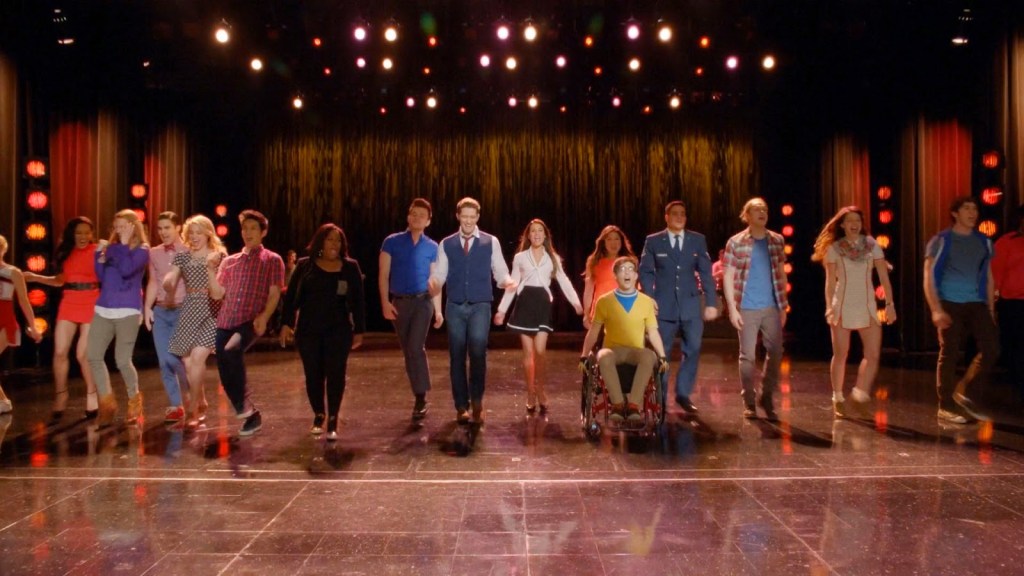
What is required to believe in something? The variety of things we choose or, perhaps, need to believe in, are myriad in number, and what is required in times of uncertainty is probably even more obtuse, more difficult to ascertain. I wish I had an easy answer, but I most certainly do not. Believing in this case, at least for me, is closely connected to hope and trust. When things do not work, when we seem to have little control, it is easy to lose hope, to have our trust shaken or even shattered. That is simultaneously precisely the moment when we must continue to believe in the possibilities. It is the cost of discipleship as Bonhoeffer said. Believing in troubled times is neither easy nor accomplished without struggle. Much like the grace of God, it is not cheap to believe when most all around us seems more dystopian than not. I refuse to give in to those who would have us believe we cannot do better. I refuse to allow myself (though there are moments) to continually accept that we are a country willing to separate families, abuse authority, and act in a manner that rejects the words on the tablet in the arms of a Statue in New York harbor. I will continue to believe we are a better people than that. We are, and should be, a people willing to care about the health of our elders, our marginalized, our vulnerable, our neighbors. Don’t stop believing there are options which can move us forward in a manner allowing and understanding the inner-connection of individual rights and national identity. Don’t stop believing in the call of freedom that belongs to us individually, but is so much more profoundly apparent when we work together. As I have been wont to do lately, what made the incredible twelve Glee individuals successful in the show was their ability to overcome their individual significant trials and work for the better angels they collectively brought (I am referring to their characters more than their personal lives). In spite of all of it, they did not stop believing.
As I move toward another semester, it will be unlike any semester I have taught. Because of my own health issues, I am required to teach remotely. Because I was not supposed to be here, but rather in Poland this fall, I have a schedule that has been finalized rather last minute. I will have three sections of Freshman Writing (75 first semester freshmen online). Anyone who has taught any first year writing class knows the importance of community in that class and the laborious nature of acclimating freshmen to the jump in expectations is significant. Doing it remotely will require even more time, but it is as it is. The fourth section this fall is Technical Writing. It is my hope that we will be able find a space and process that will provide them with the best experience possible. I believe that can happen, but it will take dedication and hard work from all (and yes, that includes me). I believe it the power of community and hard work. It has served me well for almost 65 years most of the time. Well . . . off to do some of that work. The version of “Don’t Stop Believin'” here is the version that was sung during the two-episode 100th show of Glee. Wherever you are, “don’t stop” . . . . keep going. This version and what the show accomplished for so many people keeps me believin’, and as I often do, it makes me cry, but I love the care it demonstrates.
Thank you as always for reading.
Dr. Martin
 thewritingprofessor55
Thanks Michael for sharing. I should have taken your writing class. Beautifully written. Best wishes for a very good semester. ❤️🙏🏻❤️
Thank you, Dona. I hope that you and Milton are doing well and staying safe. I worry about you both down there in Florida.
Dear Dr. Martin,
I agree that contemplating the “what-ifs” is both beneficial and detrimental at the same time. I think wondering what could have been is not bad as long as you do not let the sorrow of what you think you missed out on define you. Obviously, you have not, as you state you are always believing in how you can be better. I am a firm believer that everything happens for a reason, and I think what we often consider as the “what-ifs” of what we wish our lives would have looked like would have had just as many hardships and struggles in that version of our lives as well, but we often do not look at that. I agree that looking at nuclear families and the models of what we wish our lives look like are encouraging. I was always astonished at my friend’s families growing up and wished my family was like theirs. But I learned as we grew up that their lives had just as many issues. At the same time, they still give me hope that it is possible to have a family like that.
I think that your story about being diagnosed with Bipolar is really interesting. I think a lot of people probably do want to deny that they have a disorder as you expressed. But I feel like today we also see a lot of people who just want to get told they have a problem and get meds. to “fix” them. I think it is very inspiring that you have put in the effort to manage that without meds. and as you talked about disabilities how that does not define you. I think it is really difficult sometimes to remember that everyone is a person and experiences things in ways nobody else can imagine. We often look at people only through our lens, but it is really crazy to think about how someone else might be perceiving something. I think that is something super fascinating about people with mental and physical disabilities. We truly do not know what is going on inside their heads. We do not know what they are understanding and think about. How do they perceive us?
Lastly, the question of what makes us believe? Just last night at a bible study I was in a conversation about faith. Why am I a Christian? What makes me believe in Christianity over all the religions? If I believe the fundamentals of Christianity, which I do because I believe that the multiple accounts in the Bible are true. Then it is not hard for me to believe that the rest of what is in the Bible is true. But it does take faith and hope to believe it. It is crazy to just believe that something is true. But I think I believe because time and time again I can see how what was said to happen, happens. I think that is what gives us hope in this world and helps us believe that good can still happen here. Just when things look really awful, we can see the good of one person going out of their way to help someone else. Just when we want to stop believing once again a little hope is restored and I know that my hope is not in this world but in the life after this world. So even when it is dark, I just keep on believing because I trust that there is something much greater to come.
Cheyenne
Dear Dr. Martin,
I agree that contemplating the “what-ifs” is both beneficial and detrimental at the same time. I think wondering what could have been is not bad as long as you do not let the sorrow of what you think you missed out on define you. Obviously, you have not, as you state you are always believing in how you can be better. I am a firm believer that everything happens for a reason, and I think what we often consider as the “what-ifs” of what we wish our lives would have looked like would have had just as many hardships and struggles in that version of our lives as well, but we often do not look at that. I agree that looking at nuclear families and the models of what we wish our lives look like are encouraging. I was always astonished at my friend’s families growing up and wished my family was like theirs. But I learned as we grew up that their lives had just as many issues. At the same time, they still give me hope that it is possible to have a family like that.
I think that your story about being diagnosed with Bipolar is really interesting. I think a lot of people probably do want to deny that they have a disorder as you expressed. But I feel like today we also see a lot of people who just want to get told they have a problem and get meds. to “fix” them. I think it is very inspiring that you have put in the effort to manage that without meds. and as you talked about disabilities how that does not define you. I think it is really difficult sometimes to remember that everyone is a person and experiences things in ways nobody else can imagine. We often look at people only through our lens, but it is really crazy to think about how someone else might be perceiving something. I think that is something super fascinating about people with mental and physical disabilities. We truly do not know what is going on inside their heads. We do not know what they are understanding and think about. How do they perceive us?
Lastly, the question of what makes us believe? Just last night at a bible study I was in a conversation about faith. Why am I a Christian? What makes me believe in Christianity over all the religions? If I believe the fundamentals of Christianity, which I do because I believe that the multiple accounts in the Bible are true. Then it is not hard for me to believe that the rest of what is in the Bible is true. But it does take faith and hope to believe it. It is crazy to just believe that something is true. But I think I believe because time and time again I can see how what was said to happen, happens. I think that is what gives us hope in this world and helps us believe that good can still happen here. Just when things look really awful, we can see the good of one person going out of their way to help someone else. Just when we want to stop believing once again a little hope is restored and I know that my hope is not in this world but in the life after this world. So even when it is dark, I just keep on believing because I trust that there is something much greater to come.
Cheyenne
Dr Martin,
I strongly believe that even in the face of our own shortcomings or uncontrollable circumstances, we don’t always have to experience bad outcomes. Despite our own experiences, we can still have hope in seeing committed relationships and families, as you mentioned. I understand your desire for things to slow down and for us to appreciate the present moment despite the hardships that shape us into who we are today.
The story of your friend’s husband who battled Alzheimer’s and passed away after 57 years of marriage is heartbreaking. Losing a loved one to a disease that makes them forget not only who you are as a person but also your shared memories is a tragedy that is difficult to fathom. It takes a lot of strength to cope with such a loss. Having a support system can be helpful during tough times.
Personally, it’s hard for me to believe in something or someone fully because I have been betrayed in the past. I find it challenging to trust someone’s words and give them my complete trust. However, like you, I try to hold onto the belief that things will work out and not give up hope.
Luz Mejia
Dr. Martin,
I thought it was quite interesting how you chose the title of your post. As you have stated, in the chaotic world we live in it is hard to keep believing in the hope that negative things will be resolved in life. I also liked how you connected this concept to individualism because I believe that idea is very prevalent in today’s society. In my Interpersonal Relationships and Cultural & Linguistic Diversity classes, I’ve learned that America ranks very high in terms of individualism compared to collectivism. Growing up in America, we have come to believe in the idea that it’s “every man for himself.” Most of the time we seldom think about others because we are only thinking about how we can get ahead of everyone else. Personally, I believe this concept is instilled in us at a very young age. However, there are some individuals that look beyond their own selfish desires and are willing to help those who are struggling or are in need. Based off your post, I can tell you’re an individual who cares about others and the problems that they are facing. Not everyone is willing to put aside their differences to help uplift one another, and I think that the way you perceive the world is commendable. I also believe that we should be a community where we help each other in times of need, and while I think some of the world might disagree, I think your title is a vital to the success of this ideal. Whether or not humans still seem to be at odds with each other, it is important to keep believing in faith and hope that we can still come together as one.
Along with this ideal, I enjoyed reading your own ideas with engaging in the past possibilities as well as the “what-if?” questions. Personally, I also think about what I could have done differently in the past and what can I do in the future. However, your question, “What is required to believe in another person or even in possibilities,” really resonated with me because I had never asked myself that question before. I agree that in order to believe in others or in possibilities you need resilience, but I also think that faith plays a key role in this process. Being able to have the confidence in uncertainty is remarkable especially when you have faced multiple dilemmas within your life. In Hebrews 11:1, it says that faith is confidence in what we hope for and assurance about what we do not see. For me, in order to believe in others or the possibilities of life, I need to have faith that I can trust in the people around me. I think that this can be hard at times especially when you are around people you do not know. As I stated above, I believe that we should care about others around us, however, it is difficult since our differences seems to take precedence above everything else. Therefore, I think faith is vital to believing that there is good in others because it’s believing in something that you cannot physically see. You have to trust in others and the possibilities that can happen. When you combine this with resilience, I think that you have perfect formula on how to view life and its abundance of possibilities. Without faith, I don’t think it is possible to believe in others or in the possibilities that life has in store.
Overall, I really enjoyed reading your post. As you have stated, I think it is important to step back and think about these topics because, not only does it allow us to reflect on ourselves, but it helps us grow as individuals. This post, specifically, helped me reflect on my views on the world, and I believe it has increased my faith in the new possibilities that life can bring. Thanks!
Anna Lewis