Life Marches By . . .

Hello from a snowy town in Pennsylvania,

Earlier in the week we experienced perhaps the most accumulated snow in a single storm here in Bloomsburg since I arrived in 2009. Only one other time did we have more than 12”. We have been forecasted to get something substantial, but seldom does it happen.i must say Punxsutawney Phil had things pretty well spot on this time. I loved watching the snow pile up. It reminded me of being back in the Keweenaw.

I am always somewhat caught off guard in spite of life’s consistency. The predictability is always more likely than we believe, or perhaps are willing to admit. I think the significance of these redux events are more instructive, more helpful, than we often realize. There are two things that come to mind as I write this. First, we are never indispensable; regardless of how well we did; regardless of our seeming importance; “life goes by” with or without us. This is not meant to underestimate our value, but it is being honest with the reality of the world. Too often our self-worth, our esteem, is dependent on the other. Undoubtedly, those are patterns or attitudes we develop early in life, and the revision of patterns or attitudes is difficult. I am not sure those early things are ever completely erased. Indeed, life marches by . . .

The second thing I have come to understand is how loyalty is such a fleeting attribute. I think loyalty is too often misunderstood, undervalued, and often mistaken. Additionally, I believe it is more integrally related to the first thing I noted. Is it because we are so dispensable, disposable, that loyalty is so circumstantial? It would be somewhat logical. In the corporate world, and certainly, in the sports world, the adage of “what have you done for me lately?” Seems to be the order of the day. Again, life . . .

The complexity of loyalty is something I am struggling to understand. Or perhaps it is not complicated at all. Loyalty is unconditional, but incredibly fragile. Much like trust. Perhaps unconditional love and loyalty are more synonymous than one might imagine. Opening oneself to such a possibility with anyone takes profound courage; it requires vulnerability that goes beyond the ordinary. The consequence can cover the gamut of hope and despair. And I am know from experience that counting on the loyalty of anyone else is both foolish, and perhaps more importantly, selfish. Loyalty is given, and cannot be demanded of someone. Much like love. Another connecting aspect might be truth. Truth, understanding the essence of truth can complicate loyalty. Truth mitigates loyalty, which by extension argues the possibility of unconditionality. And as I ponder all of this and the reality of why we are so conditional, I guess it is plain and simple sinfulness. That is an easy way out of the discussion on one level, and yet, there is understanding what sinfulness is. That’s for different blog. Loyalty is often connected to patriotism and yet again, this is not about that – again, another post perhaps. Fealty is also connected to loyalty, but the difference is while loyalty is generally mutual, fealty is not. It is unidirectional; and most often it is required. There is a demand or requirement from someone with more power. If we go back to the founding of our country, I believe that we need to be honest that those incredible founders supported slavery. I also know this comment will put me in the woke category for some.

Earlier today while speaking with my former colleague, a European with Canadian citizenship, he thoughtfully asked, “How have you gotten where we are in our current world?” He often ponders things from his perspective as someone born in the Soviet Union, someone who saw democracy in its infancy. Loyalty and connections to life are something different for him. His reflections and questions on life and the world almost always cause me to rethink, to reconsider how I understand life and myself. His insight into how individual and collective actions have consequences are instructive. As I ponder life I am continually stunned at how those people I have met around Europe (and this is consistent for decades) are seemingly so much better equipped to understand and respond to their world, their surroundings. From the first exchange student I met in my home town to eventual Dana classmates, from seminary colleagues to my own journeys overseas for 2/3s of my life, to hosting my own exchange students, the general rule is European citizens, our fellow human beings, are more gracious in spite of their inherent nationalism; they are certainly more critical in their thinking and analysis of their own life situation as well and their willingness to integrate the actions, the responsibilities and the repercussions of any situation. Life marches on. They understand this and they adapt and seem to thrive.

As I noted when speaking with a young woman for whom I have incredible respect and appreciation, and who has an Eastern European parent, the first thing is to note the differences. Additionally, if I consider my European friends, acquaintances, accumulated for more than half a century, it is rather easy to see why they have developed such a multicultural mindset. Perhaps the more significant question is how is it America did not?

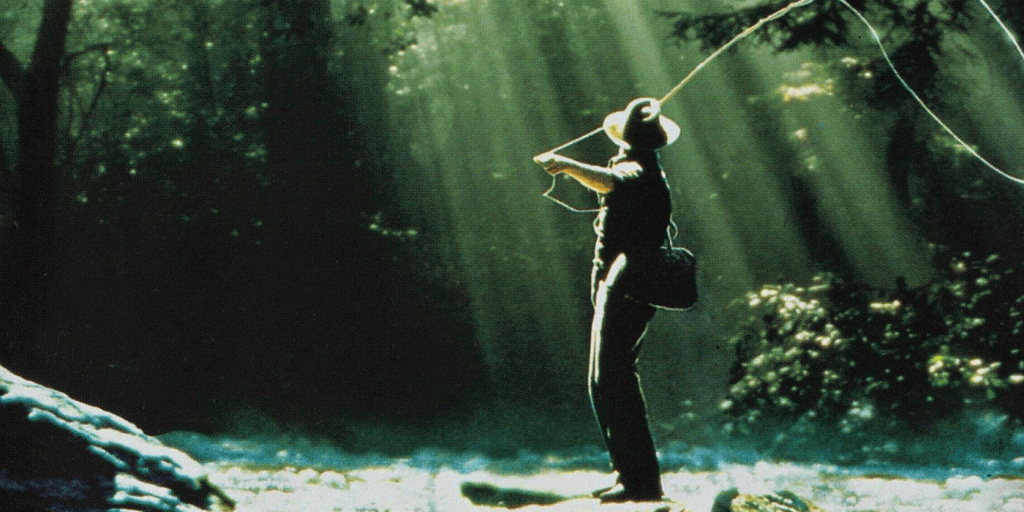
That is, again, the topic for another blog, but my immediate response places is on a number of conceptual attributes that, while on their own, have exceptional merit. However, like many things, one’s greatest strength can become one of our most profound weaknesses, difficult liabilities when taken too far. Some of this concepts are the most basic: individualism, freedom, self-determination, to name a few. From the intentions in the Bill of Rights to 2nd Amendment, the struggle with how those hopes and the employment of those desires have created some of our most contentious incidences. This is not a political response for me. It is philosophical. And yet life marches on, and yet not for all of us. From the Revolution to this week, those who died in defense of the Constitution, in their belief of what America is, or should be, have been simultaneously heroes and villains or traitors, depending on how one interprets. Life marches by . . . it is our reality, and, in fact, it is our human responsibility to care for each other; that is a premise of all major religions. To much to ponder as I march on with it. When Jane and Henry Fonda filmed this movie, it was a real-life struggle because they were estranged. It seems as Americans perhaps we are the same.

Thanks for reading,

Michael
Hooped Earrings and Monster Trucks

Hello from breakfast at Perkins,

The beginning of the year is like an episode of the show that was on television when I was small, titled The Twilight Zone. I know that comment is anachronistic, and it reminds me of the last few years I was teaching and things I had used anecdotally earlier in my classrooms would no longer work. It was an early science fiction, fantasy, and horror weekly program that ran for about five years (from 1959-1964). It had a surprise ending and some moral lesson, but what I remember more as a small child was the music. There was a surrealism to it, and I think, perhaps that is what encouraged people to watch, both enthralled and simultaneously frightened. The events globally and nationally seem to be a presently-experiencing version of the show for me. Is there a reasonable ending, and certainly it is worth asking if there is a moral lesson that we will learn? There is no doubt on the element of surprise, to be sure, and the question of ethical methodology of what seems to be daily practice must be examined.

The week got away from me, but to say what the first paragraph notes has somehow miraculously changed in the last few days is most certainly outside reality. In fact, if anything, it has continued the spiral that seems to be what some powerful people intend. If you believe that what is happening in Washington is merely managing the moment, I am fearful that we are in even bigger trouble than you imagine. As noted recently, I am generally not a conspiracy theorist, and more often than not, I fall on the side of idealism (I was once told by a previous chair I was too idealistic.). And in spite of my strong theological background, I generally want to believe there is an innate goodness in people before I ponder their sinfulness. So with those caveats, let me offer what the current actions about our federal government, be it domestically or internationally, have compelled me to wonder. History and civilization is full of stories about how incredible powers have fallen because of the greed of a few at the expense of many. From the Romans to the Incas, the Mayans to even the Biblical example of Sodom, immigration is (and was) not the primary issue when it comes (came) to civic collapse; more often than not it was a combination of greed and the corresponding economic inequality. Additionally, environmental degradation will often cause both short term consequence as well as eliminate long term survival. Combined, there is a resulting lack of collective responsibility for the other, resulting in general moral failing. Such a defect will hollow out any civilization. The Biblical command of loving the other as a basis for all might seem instructive, especially in this moment.

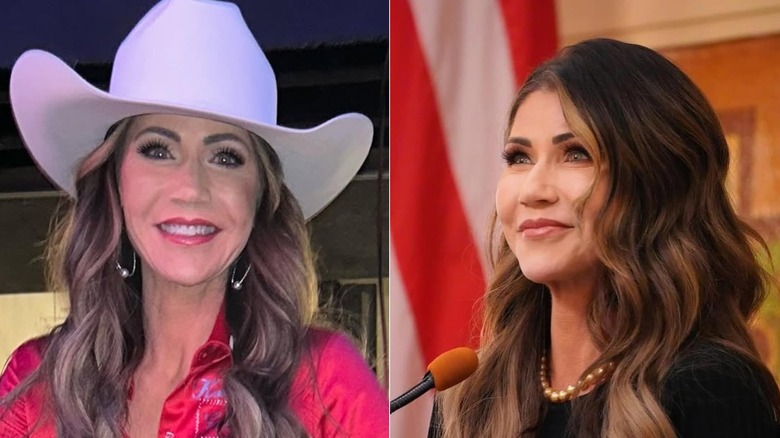
Even before Kristi Noem was approved into her position as the Secretary of DHS, she has demonstrated a propensity to be a firebrand (remember a second book where she recounted killing a puppy). As I return to my title, which I am sure got some attention, recently, I read an article about the fashion of Sec. Noem by Paola de Varona, senior writer for Slate. While I am aware that some will argue why note this, let me offer de Varona’s words; she writes, “Noem doesn’t just talk the talk of the Trump regime. With her long hair, overfilled lips, and very, very white teeth, she looks the part. The Daily Beast appropriately referred to her as “Ice Barbie.” Some of the photo opportunities or videos of the Secretary seem to put as much importance on her fashion consciousness as what her job as the secretary of this now more controversial department. de Varona acknowledges, “I recognize I’m lodging a petty complaint (this is a woman who treats a visit to a prison packed floor to ceiling with deportees as a photo op) (2025). She continues, “Kristi Noem, please retire the hoops. Leave them for us, the people” (2025). Again, some might ask why this is important? It returns me to the idea of greed and corruption, perhaps a conflict of interest. The Secretary hired “The Strategy Group, ” an Ohio-based PR Consulting firm for $220 million. The significance of this contract is two-fold: it was a no-bid contract, and the owner of the firm is the husband of Tricia McLaughlin, who serves as Noem’s chief spokesperson at DHS (Mierjeski, 2025; Hon Senator Welch, Vermont, 2025). The conflict of interest, the greed, and the need to maintain power at all costs should create numerous red flags (and not the MAGA type).

Earlier today, speaking with one of my wonderful former students who is a high school teacher; furthermore, she is an incredible thespian, mother, wife, and beautiful person, and I must admit we commiserated about our current national atmosphere. She wrote something incredible about the world and what she wishes for her months-old son. When I first read it this morning it brought tears to my eyes. It was wonderful to speak with her. One of the things we discussed is about how we got here. I do not think it is a matter of getting here, but rather, I believe it is who we have always been, though perhaps under the surface (not very much, but there). We both (almost simultaneously) noted the number of Stars and Bars flags we have observed in the state of Pennsylvania. I can say there are more here than I have ever viewed, all combined, anywhere else. Summer in Bloomsburg brings a 4×4 event to the local fairgrounds. Black and Brown students are warned (and unfortunately, it is necessary) to not go into town by themselves. Racism, inappropriate comments or actions, and a general white supremacy narrative is more the rule than the exception during that event. While I certainly understand the attraction of 4x4s, and I can appreciate their helpfulness in many situations (remember I grew up in rural America), the connection between 4x4s and Stars and Bars is quite common place. The significance of this is important. Almost a decade ago (2018), census reporting revealed the following reality: “. . . [P]opulation projections confirm the importance of racial minorities as the primary demographic engine of the nation’s future growth, countering an aging, slow-growing and soon to be declining white population. The new statistics project that the nation will become “minority white” in 2045” (Frey, The Brookings Institute).

Certainly, there is a lot here to digest, and I believe we are at a point in our history that the expected 250 years of white majority, the belief that we are somehow a Christian country, that our reputation as the welcoming light for the world are more myth than reality. To write this is frightening for me, but not so much for me as a 70-something, but rather for my students and their newly created families. To ponder this as someone who studied history and loves politics (even now), I am painfully concerned that our wonderful American experiment might be gasping for air, certainly on life-support, and needing of some intervention. Was the America I grew up believing in merely a facadę? Is it possible to get back to the hopes and dreams of what a Washington, a Jefferson, the Madisons, a Hamilton, or a Franklin had? Has the beacon of hope run out at 250 years? I am unsure. What is the next move necessary? I don’t know, but I don’t think it will be easy. I wonder what our founders pondered? What they worried about?

Thanks for reading.

Michael

Leaving While It’s Safe

Hello as I wait for a snow storm (more of UP proportions than what I normally my experience in PA),

I started this at the beginning of the week, and the week has gotten away from me. There has been some good things happen, and on the other hand, I am still waiting on a number of things be it things to arrive in the mail, appointments to be confirmed, or merely managing the things necessary to move about in daily life. It seems the more I try to plan, the more I realize how little control I have over life in general. I think at least when I worked there was a structure and system around me that provided more security that I sometimes realized. If you have been reading along as I have pondered retirement, I am sure that one of the things apparent in my blogging is the sort of introspection that the combination of retirement and aging has brought (required?).

One of the areas of introspection of late has been how I interact, how I respond, and what I am comfortable with when it comes to others. This is an interesting consideration since all of my professional life has been in the midst of people, and if you consider what school is, even while we are growing, it is never in isolation. The confluence of people is immediate and constant, and, of course, “how we socialize” is something people constantly evaluate, from parents to teachers. I remember sections on my report card in elementary school that had to do with behavior versus academics. I learned quickly as one of the smallest, youngest-appearing members of any social group to get along with others; my physical survival depended on those rhetorical skills among young boys determined to display their toughness. I remember as a first grader being lectured by my father to never start a fight, but to never walk away. Of course, he could not relate to being smaller than most everyone. When I went to a junior/senior high school, 7th graders were initiated. Somehow I managed to get initiated for three years.

Then, there is the entire process of puberty. While I cannot say I remember to many specific incidences, what I remember generally is I was often like the class mascot, the person most enjoyed having around, but no one anyone would have ever been attracted to – from my glasses, oversized ears, and butch haircut, I was most often included because I was friendly, somewhat intelligent, and probably considered quite harmless. In grade school I recall thinking most girls were beautiful, but I was petrified to do much more than smile and say hello. I remember believing they were all like walking angels, someone, something, to be admired, but from a distance, even if that distance was the desk next to me. When we got to ninth grade, students who had attended parochial school up through 8th, but were not going to attend Bishop Heelan Catholic High, matriculated into my junior/senior high school. I was convinced that every Catholic girl must have been made to be the most beautiful creature in creation. Perhaps they were more inviting to this poor shy Lutheran boy because I had somehow learned implicitly I was not allowed to have a Catholic girlfriend. With names like Debbie, Leta, Denise, or Renee, they were friendly and beautiful and I simply admired them quietly and without their knowing.

As I matured more in intelligence and emotions than my slower physical attributes, I found girls to be both more intriguing, desirable, and petrifying. The first dance I ever participated in, the girl asked me. And I believe the only reason my mother allowed me to go was because she was in my youth group at church. Church youth group retreats and trips were where I was most comfortable, and being in a group versus a dating event provided enough safety that I soon learned I could leave if my emotions of liking someone got too significant and no one really noticed. I believe that is when I first made some choice, although perhaps not premeditated, to manage the proverbial cartoonish “exist stage left.” I only had two actual dates in high school, and again, one of those was because she asked me. There was a girl when I was 14-15 I had quite a crush on, and while she was friendly to me, and incredibly sweet, she moved away. There is some irony in that decades later we have reacquainted and spoke of that time in our lives at length.

When I came home from the service, grown, and to some extend the various aspects of myself as a person about more in line, I had the first relationship that was more than childhood crush. I probably still owe more to her and her family than I could ever repay. Again fortunately, after many years, we are in touch and have spoken about that time. And yet, what I realize, with a much greater degree of clarity, is that in spite of a much greater capability of engaging with people, and yes, with women in particular, there is something deep within me, a person who both desires being close to another, but still afraid of the other. That is something that plagues me more than I sometimes know, and it appears sometimes when least expected. At this point, after a quarter century of being officially single, there are ways I feel I have come full circle. As I noted in a blog a bit more than a decade ago, I am more comfortable with those females with whom there is no chance of a relationship. It is safe to be myself, a person both perceived as open, and simultaneously always protecting myself by choosing what, when, and how to reveal myself. Undoubtedly, there have been moments, phases, in life where I desired more. There are those who I probably loved in my imperfect way, individuals who might have made me feel desirable, worthy of being a partner. Twice I attempted to be a spouse, and while I was in a very different stage in life, and the stories are complicated at best, I think perhaps the place I failed most fundamentally was in my sense of commitment to the other because of some deep fear they would decide I was not good enough. Was it, and is it still my own struggle with imposter syndrome for lack of a more concise term?

Even now, if you ask people who are around me at this point, I am quite adept while attending a gathering to sort of disappear without being seen. It is not as much sneaking out at this point, it is a feeling of sensory overload and a need for solitude. And yet in spite of my desire for seclusion at moments, almost like a purdah, though not literally, I wish for the person with whom I can establish something of meaning. I am not sure if that will happen at this point in my life; I am quite uncertain what is needed for it to be a reality. Is there more than simply leaving when it is safe? Can there be safety in a relationship that can enhance one’s existence to become more? I understand the reasons to believe that it’s real. I am wise enough to see that solitude has its own dangers. What must happen for me to see how a life-long pattern can be altered? That is something that will take some significant chance-taking. In the meantime, safety seems to be the street on which I live.

Thanks as always for reading.

Michael

The Bee Cannot Convince the Fly

Hello from my little corner of Main Street,

The holiday weekend has begun, and it’s been an eventful week, a charged one, and yes, a difficult one. Some part of the difficulty is undoubtedly self-inflicted because I spoke out passionately about my beliefs and my position about the ongoing federal crackdown in my former home, the Twin Cities. Because someone I love deeply posted alternate views from me on my feed, things got heated. And at this point, I think it is fair to say there is significant tension within the family. Additionally, college classmates wrote some pretty personal things about people who are certainly different in their viewpoints than me, but are nonetheless incredibly dear to me. I think it’s only the second ever I have deleted things posted on my feed. I actually wrote to my college friend and noted they had crossed a line, noting “they poked a bear” (or I would add here a family of bears). The reality is this: the country is as polarized as I have ever experienced in my life time, and the partisanship that has characterized most of the 21st century is possibly at a tipping point. I actually posted on my wall that I wish to calm things down, and with the painful, and noticeable, exception of one person, that has happened. Thank goodness.

What I am struggling with is profound, complex, philosophical, and, for me, a sense of ought, to use Immanuel Kant’s understanding of the categorical imperative. It is about consistency, and again, I realize my perception can be different than others, it comes from my study of Bonhoeffer and his argument that considered the action of being the “spoke in the wheel” was not only appropriate, it is necessary and the faithful thing to do. The profundity of now is actually about how to maintain peace and justice. The complexity is such that I am not sure where to begin or what would be sufficient if I had even an inkling of how to begin. The philosophical struggle boils down to two things for me: first, what allows for peaceful protest or peaceful response to any stressful situation? And second, has 250 years of being a beacon come to an end because of the administration’s response to Venezuela, Iran, Greenland, Denmark? I do not have a final answer, to be sure, but the daily news, the President’s Truth Social feed, and the reels from multiple social media sites seems to demonstrate we are, to a significant degree, in uncharted territory. Certainly imperialism is not new, and our national penchant for inserting ourselves into some other country for oil is nothing unheard of, so Venezuela is perhaps just a reshuffling of the same deck of cards. Discord on our streets, with a heavy dose of blaming the other is not new, those in power who are obsessed with keeping their power have rolled out this script since we became a country.

The illusion of our being a beacon is something we were taught from an early age as we stood up each morning to pledge our allegiance, when we had pictures of George Washington and Abraham Lincoln framed on the wall on each side of the clock we stared at suffering each minute until the final bell of the day rang. I believed with all my heart that we were the “good guys” in the serial Western movie. We cared about democracy and doing the right thing. Those words of all being equal, that liberty and justice were for all, meant that. Ironically, I think I first learned that there was more façade to that than imagined when I was in the military. I was an immature 17 year old as I stepped onto the yellow footprints of MCRD. By the time I got out of the service I saw the world much differently, and my understanding of geopolitics had been altered substantially. And yet, as I aged I still believed in the basic tenets of our grand experiment. Currently, thanks to my Danish friend, Hans Christian, the father of my exchange student, I still maintain some hope.

Is my current curmudgeonly disposition merely a consequence of age? Is it because the polarization, which I have been sucked into in a serious degree the reason? Is it my own disillusionment with both my country and myself that has created this morass? Fortunately, I have one person that will offer me feedback honestly and lovingly and they noted that sometimes my tone, intended or not, comes off somewhat pontifical. My researching background and my contextualization, and I would add the structuring when paired with my passion (as they noted) comes off as authoritative, and that can cause people to feel defensive before I begin. Let me offer this first, I agree completely with their assessment, even if that is not what I intend. I do believe that argument has structure to be effective, and Toulmin’s theory of argumentation is something I was steeped in during my doctoral work. So I guess it’s not surprising that I find myself using that process. Should I expect the same from the other side? I might wish for it, but I have no right to expect it, and therein is the rub perhaps.

That leads me back to some of my initial thoughts about expectations or where I have begun to understand my place in life at this time. Even as I write this, President Trump has decided to raise tariffs on seven European countries to force the issue on Greenland (and by extension, Denmark). His argument is China and Russia want Greenland, but if Greenland is a territory of the Kingdom of Denmark, and Denmark is in NATO, wouldn’t that invoke Article 5 of the North Atlantic Treaty should either of them attack? I ask because I am not versed in international law. Second, if I am correct than the reason to take Greenland is not safety, and recent comments by the Former Foreign Minister of Denmark lay out quite nicely the treaty that was signed in the early 2000s about the safety and sovereignty of Greenland. I offer this not as a political statement, but to note a difference between current foreign policy and how it seems we have acted as a country post-WWII. On the more personal level, it seems much that I expected (in the sort of American dream manner) and retirement is a myth. I read two statements in the last couple days from something posted on a college classmate’s feed, and they rang true with a sort of vengeance when I consider the last 18 months. Retirement is not a reward, it is a reality check. And second: Aging does not hurt your body first — it hurts your illusions. Both of these statements are painfully accurate. In my first couple years at Bloomsburg, one of my colleagues passed away in her classroom, in front of her students. That was tragic for everyone involved, and certainly not something I would wish for anyone, but she was in a class she created, and teaching what she loved. Up to the very last minute. There is something poetic and beautiful in that. I was part of that tragic event, and I remember thinking I would never want to work to that end. I also waited longer than some might have imagined (a few weeks shy of 69), but there are moments I wish I was still working in the academy on some levels. I miss students; I miss the interaction and when the light goes on. I miss some of my colleagues. Indeed the reality of retirement is where you plan, but enough or how one plans is part of that. Second, while I did some significant work over the last years I worked to prepare, I believe we might be wise to begin much earlier. How much? Maybe in your late 30s and certainly by the time you are in your 40s. I wish I might have had a mentor much earlier. As importantly, the change in how you live life daily as well as how you fit into where you were is significantly different. I am not sure if there is some sort of change that happens to us when our birthday reaches certain numbers, and I do not feel old, but somehow the age of 70 has affected me as much as any age. The other age that hit me hard was 25. As I noted more than once as of late, what I expected in life and how it has evolved is not really anything I expected, and I am not sad about the life I have lived to be sure. Health has been a major part of my life, and particularly from the time I was diagnosed with what would eventually be Crohn’s in my late 20s. The complications from living with an IBD have been numerous, but each time I have been blessed by competent care and capable medical professionals across the country. My medical life is something that takes more time than I sometimes appreciate, but it is my reality. While I had the childhood diseases and the proverbial colds typical for an Iowa winter, it was not until I was 28 that a normal trip ended with blood and changed my life.

Some might question my title, and it is something I was reminded of lately (which is sometimes how I find my titles, and often back in the day how I would come up with sermon titles). Bees and flies seem to have a couple of common traits when it comes to our human response. We are either afraid of them or annoyed by them, and getting someone to change their opinion about either insect is difficult. As it is when it comes to getting us to let go of our expectations, to the realities or the myths that seem too often to influence our planning, our living, or our beliefs. Each of these things are quite different when we ponder them, but nonetheless, they have a profound effect on what we do. I am stunned when I consider the power of expectation. Expectations be they societal or individual, we often accept them as givens, as a sort of truism. It is the way it is, it is the way it’s always been. The reality of the bees and the flies has a second level. As the saying goes, if the bee could speak with the fly and convince them honey is better than dung do you think it would change the fly? In theory, it would seem the flies would change, but what we see is that is not the case. Should we expect the difference? All we need to do is look at our own actions. Our expectations be it on how our lives should transpire or how we believe our world should work are always open for reality checks, and yet too often we do not like those checks, be it from someone we love or be it in merely how things happen. I am grateful to my niece who keeps me grounded more than she knows. She is so incredibly insightful; she is demurring, but fierce. She is brilliant, but often self-deprecating. She always brings her A game to everything she does, and she will always brighten your day. It’s been a tough week, but as always a learning experience. Learning to love first is not always easy, but it is what we are called to do. Is life merely a dream to live out? When I was in seminary, Heart was one of my favorite bands. Seeing them in concert in the 70s was memorable. I saw then after their Dreamboat Annie album in Sioux Falls (a concert I remember with such fondness); I saw them a second time after their Barracuda album in Ames, and then I saw them when I was in seminary in the Twin Cities. What makes this particular song somewhat unique is that Nancy, rather than Ann does the lead vocals. The video has a Salvador Dali vibe for me. Dreams are important, but they can be fleeting.

Thank you as always for reading.

Michael

What Might Have Been

Hello from my small, but comfortable space at the Magee.

As I ponder the avenues that are in front of me, and as some of you know, the first 18 months of retirement have been a rollercoaster, I find myself also looking at the paths I have traveled, the choices made, and the consequences of said choices. While my last few posts have been about the situations that seem to be everywhere, within eyesight, within hearing range, and because of these two things, permeating my psyche to a degree I have perhaps never felt, this post is more about me, the person I am, how I have become that person, and to some degree an attempt to come to terms with that man, that human being. As most, I had ideas about where my life would go, what I might do, and, perhaps to some degree, wonder some of those “what might have been(s).” There is certainly more than one way to ponder it all. There is the idea of expectations, the reality of what happened, the accountability of one’s self for what actually occurred, and ultimately, am I content with where it all is.

Yesterday as I sat in a coffee shop, one where I have spent significant time, I bumped into a faculty colleague, one who started at Bloomsburg the same time I did. That individual is in a different college, and yet I remember them in those orientation meetings because their spouse asked more questions about benefits individually than perhaps the entire room did collectively. I remember that because I profoundly impressed with the depth and breadth of their questioning. They asked questions that benefited everyone there. Somehow the conversation yesterday took some unexpected turns, from insurance, Medicare, and retirement (not surprising) to what we are both working on at the present time (some degree of unexpected) to how it is I am single for so long and their evaluation of me as a potential interest for someone (most unexpected), but their words were beyond kind. What it did was got me thinking about how it is I am 70 single, have been for many years, and how that happened. That pondering, of course, got me thinking about people from various points of my life and who the people are that affected me in some manner. As my blog has revealed, I was a pondering kid, but also a directionless soul. The reasons for that are legion, but when I left home at 17 (and was somewhat out by 16), enlisting in the Marine Corps was a way to get away from home, perhaps an extreme way to do it, but that is what I did. When I got home after my stint in the Marines, I returned to Sioux City, probably not much more focused than the child who left a few years before. As I returned, what provided more sense of stability and hope initially was a new pastor and his family. His son became one of my most important friends, and whether or not it was wise, his sister became my first romantic interest. He was an incredible friend, and she was beautiful, personable, had (and still has) the most infectious laugh you will ever hear. She was the first person I was probably the proverbial head-over-heels about in my life, for sure. To this day, I am grateful to and for her. A couple of years later, a second person came into my life, and she taught me so much about what I should have probably known earlier in life. The reality of me was I had little idea of how to manage a relationship. In both cases, I am indebted to them beyond measure.

As I got into my twenties and in college, be it initially at Iowa State, where I failed miserably, I met a couple of people I found attractive, but I had little idea how to engage. One of them would show up again later when I was at the University of Iowa, and to this day, I wonder about her. She was incredibly intelligent, capable, attractive and personable. I wish I had managed my time with her much more thoughtfully. At Dana, I dated two people, one I have been fortunate enough to reconnect with many years later. She was beautiful, intelligent beyond her years, and one of the most talented people I perhaps knew in my time at Dana. The second person would become my first wife. She is a basically a good person, and I certainly could have been a better boyfriend, eventual spouse. What I believe now is, in spite of my being in my late 20s, I was not prepared to be a husband, and I think the age difference (I went to college later) played a significant role in some of those difficulties. I know that I made some major mistakes in how I managed being a husband.

From the time I ended up divorced from my first wife, I realized that I had made choices, from making my job more important than her to struggling with what we had become (the roles we had created were not helpful or healthy for us), I understood that much of what I had expected in terms of the American Dream had not really happened. This is not to place blame on either of us, but perhaps together we did not manage a number of things well. While I believed I had handled that divorce situation well because of the distance, what I know now is I was pretty much a mess. One of the sadder things I have realized over the years is I found the divorce to be cathartic. That is a bit of a strange, but I believe it explains how far we had moved from being a healthy couple. While not having children was not planned, but what occurred, I know how now I understand that was a blessing in disguise. I know there are a number of ways I could have been a better husband, a more supportive husband, and I am much more aware of the reasons for my failure. Again, while it is never one sided, I wonder if I had more attuned to what I needed to do, not only to improve myself, but to better attend to what she needed if we might have worked through the issues. In the years since, some of the things I believed I was incapable of I believe were misguided, but that is what time can do. A second marriage was even more problematic, and while ironically, this is a person I believe I truly loved (and still do to some extent), we both brought issues and baggage that were like standing in quicksand. That marriage lasted little more than four years, and we were separated for half of it. That should say enough, and yet, as I generally say to this day, should she walk into the same space as me, I would be a mess for a bit. I would have to use my brain rather than my emotions. Between her issues and my inability to manage my own struggles, perhaps it was doomed from the outset.

This brings me to my post-marriage life, which is now 25 years in length. While I have noted I appreciate my solitude, I am still that hopeless (hopeful?) romantic. As my colleague inquired the other day, “Isn’t it difficult? Aren’t there times you wish you were involved with someone?” Those are a bit paraphrased, but nonetheless get at his questions. He was quite shocked that I had somehow remained single. In the time I have been in Bloomsburg, there are two people I found some connection to, but those encounters resulted in continuing a friendship with both, and with one, I would say we are very good friends. Another friend (and female) who knows me quite well asked me in the somewhat recent past if I am afraid because of my medical issues to become involved with someone. That was actually a thoughtful and fair question. If I think about the people to whom I have been attracted, there are commonalities, which is true for all of us. I, like most, notice the physical attributes of someone, but those will change over time. Like I once told a student who tried to bat their eyes at me . . . just don’t, it will not work. I did explain that some day when they were older than would not serve them well. So . . . as you spend more time with someone, what I find attractive is someone who is thoughtful and principled. Someone who questions, and is always learning. Someone who is both willing to be themselves and willing to share themselves to the betterment of a partnership and relationship that enhances both themselves and the other. This is where I believe I am much more thoughtful about the other than I was earlier in life. In some sense of transparency, I have tried the online dating thing, and I have not found it particularly helpful. First, perhaps it is my own difficulty, but paying to talk to someone, and ultimately paying for every letter of a word, or extra credits for a picture does not seem to be reasonable and like I am buying someone to talk to me or paying to speakl with them. Then there is wondering if they are real? Do they exist?

As I have noted in the past, there are one of two people, both of whom I have loved, and one case, most of my life, but the timing was never right. I am reminded of what my first LYE host-mother said to me, “Michael, I could have married a couple of people I loved, but the timing was not right.” The second I have incredible respect for, and while I honestly told them they were one of the people I could have imagined a relationship with, I officiated their wedding, which means that would not happen. And yet as I learned from my colleague the other day, who is married, perhaps we always wonder the what might have been? As I have learned for myself, perhaps the importance of those what-if people, even in the last 25 years, we always imagine being with someone. We always hope that there is someone somehow that we can make a difference in their life and they in ours. In the meanwhile, I think of all the people who have touched my heart in some manner at some point in my life, regardless of where it all ended, and I am grateful.

Thank you as always for reading.

Michael

What Constitutes Peaceful?

Hello from Main Street in the only incorporated “town” in Pennsylvania,

My head is whirling and my brain seems to be stuck in overdrive. Across the street from my little space I can hear people protesting the events of the last week. I hear cars honking their horns in support. The world seems to be in a Groundhog Day sort of repeat from about 6 years ago. The overreach that occurred in Minneapolis has, appropriately, struck a nerve. Why do I believe there is overreach? The scope of action allowed by ICE according to Federal law for Immigration and Customs Enforcement and what they have been doing are not even closely aligned (at least that is what my research on Government web pages and sites like the ACLU seem to tell me). This jeopardizes not only their legitimate actions, but anything they do. It also endangers anyone they encounter, as the past week so tragically demonstrated.

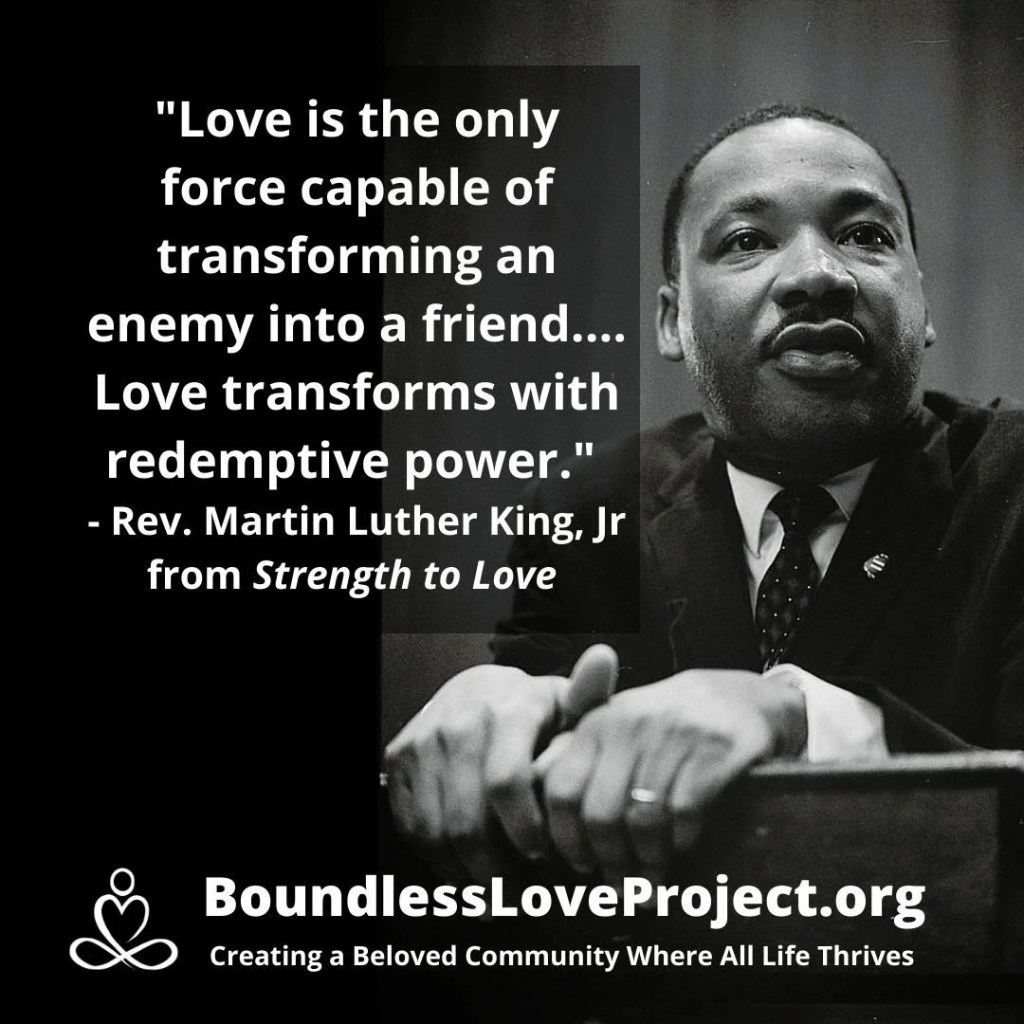
Over the last few days, in spite of my propensity to love debate, the give and take to come to consensus, and the need for that conversation (Democracy is messy as President Obama said), I cannot wrap my head around the polarized response to what happened in Minneapolis this past week. Events that have been shown from every angle seem to be interpreted in a manner that is a 180 on steroids. The attempt to legitimize the actions of ICE agents’ actions, in spite of what Government web pages or on the other side, the ACLU notes, is stunning and demonstrates how far we have slid into a sense of autocracy that boggles my head. The argument that they can wear masks, pick people up off the street and deport them without due process, or they can employ actions that demonstrate tactics similar to 1930s Germany (and my dissertation is about that time) is frightening, and if it isn’t I am more fearful. I am honestly searching both the reality of what a reasonable answer to our current situation is as well as doing some research to determine what it means to peacefully resist. At least in my opinion, the administration does not want peaceful protest, and I might go as far as to say they are deliberately trying to get people to respond in a manner they can argue for insurrection or Marshall Law. I honestly believe that is what is happening, and falling into that trap will not only lead to more difficulty, but will keep the country from accomplishing anything for the good of the people. Martin Luther King Jr. one noted, “Darkness cannot drive out darkness: only light can do that. Hate cannot drive out hate: only love can do that. The beauty of nonviolence is that in its own way and in its own time it seeks to break the chain reaction of evil” (King, Where, 62–63). Seldom to I believe that people are genuinely evil, but I believe that is what we might be facing in a President at the moment. That is a terrible statement, and one that I am not pleased to feel appropriate or necessary, but that is where I believe we are.

As many are aware, I wrote my dissertation about Dietrich Bonhoeffer, doing a rhetorical analysis of his interrogation before the Gestapo, and examining carefully the letter he wrote to his co-conspirators, reflecting on 10 years under Hitler as Chancellor and the consequences of that for Germany. I spent hours, days, week, and months studying Germany under the rise of Hitler’s politics. The events of this past week, and certainly since President Trump was re-elected are much more akin to 1930s Germany than many want to admit or are willing to consider. The past week has pushed me to the limit in what I am willing to accept, stomach, or endure without a response. I am no longer willing to turn my head. Again, I am reminded of the words of another Lutheran pastor at that time, Martin Niemöller. He was also incarcerated by the Nazis. He is credited with the following statement: First they came for the socialists, and I did not speak out—because I was not a socialist. Then they came for the trade unionists, and I did not speak out—because I was not a trade unionist. Then they came for the Jews, and I did not speak out—because I was not a Jew. Then they came for me—and there was no one left to speak for me.” If there was ever a time to revisit this in our country, it is now. My increasing level of discomfort with what is happening on a daily basis has me rejecting any statements that believe there is even a modicum of decency in the Executive Branch of the Government or the puppets of the DHS. That push has struck a nerve with some people, including some I love deeply. Any alignment with the MAGA worshippers is for me an almost non-starter. Comments of Nazi obsession or some admonishment that I should merely adopt some NVP positive thinking and it will all be okay are not who I am, and perhaps not who I ever was. I am not generally a rock the boat person, and even now with my incredible level of consternation, I still want to respond in a peaceful and legal manner. But what exactly does it mean to be peaceful in such a tenuous time? Even Thomas Jefferson in a letter to James Madison in 1787 wrote, “A little rebellion now and then is a good thing, and it is necessary in the political world as storms in the physical.” And of course, James McHenry, the Maryland delegate to the Constitutional convention heard and wrote the following about Benjamin Franklin.  “A lady asked Dr. Franklin Well Doctor what have we got a republic or a monarchy – A republic replied the Doctor if you can keep it.” The struggle has always been part of who we are, and the question between States’ Rights and Federalism has been part of that. The role of the presidency and the person occupying the office has always been something to consider, and the imperialism that seems to define the second Trump administration is not unique to him. James Polk initiated a war with Mexico by annexing Texas; Andrew Johnson was impeached for firing his Secretary of War and demanding fealty much like President Trump has; Chester Arthur used the political machine that had made him Vice President (he became President when Garfield was assassinated. Arthur would turn on those who once supported him. And last, and this is a bit of a surprise perhaps, he is more akin to Ronald Reagan that some might believe. Their innate ability to sculpt headlines on one hand as well as their willingness to delegate, and thus insulate themselves from responsibility is quite similar (Desjardins). The President that President Trump wishes to compare himself to, that being Andrew Jackson, the President he is much more likely to find parallels is Millard Fillmore. President was seriously anti-immigrant (though it was Germans and Irish Catholics); he was from New York, believed and espoused conspiracy theories, and ironically, appointed his daughter to a key White House role (Sheerin, 2018, BBC). That was in 1850, the decade that would lead to the Civil War .

So to return to my title, what is peaceful protest? What is civil disobedience and what is reasonable in terms of being arrested? What are the consequences of nonviolence when it seems the other side prefers agitation and violence? Dr. Martin Luther King, Jr. wrote in 1966, “…I am convinced that for practical as well as moral reasons, nonviolence offers the only road to freedom for my people. In violent warfare, one must be prepared to face ruthlessly the fact that there will be casualties by the thousands…” There is little doubt he was correct, not only then but now. Whistles, parked cars, drums, and chanting is not violence, though it is annoying. But it is legal (with some questions perhaps about the cars). It is true that when streets and thoroughfares are blocked there is grey area, but when the travesty of government action requires such a response, the reality of events like Selma or Birmingham are to be expected. Vilifying the other is nothing new in this country, as noted above, but the use of the Government to attempt to intimidate, to destroy any sense of civility by the use of 1,000s of masked agents, and focus on places that are not supportive of the present administration should not, and cannot, go unquestioned. Merely treated like it’s another day. The America, the Republic, the society that was fought for by veterans throughout our 250 year history is in the crosshairs of this President, who enriches himself at the expense of the country and in spite of what the 70,000,000 million who were somehow duped into believing he cared about them.

I will continue to write; I will stand at the Court House; I will speak out clearly and forcefully again the tyrannical regime that believes they can renew a sort of imperialism that threatens our allies; a reign that believes invading another country to remove a bad person (I will agree on that part) for its oil is acceptable without Congress’s involvement; an ultra-authority that works tirelessly to eliminate those with the courage to disagree with their actions; a duly elected, but immoral rule who increasingly demonstrates no regard for the Constitution, any rule of law, and seems to have even a shred of human decency. I will do it peacefully, legally, and forcefully, and let whatever happens to me happen. Why? Because as a Marine Veteran, I love this country, and I served it faithfully. As a former pastor, I believe in a God that says we should always love our neighbor (and that is all of them). I stand, not out of hate for those who seem bent on destroying this country and what it has stood for, but out of love for a world that has such potential to be better. And yet, do not question my love and kindness for weakness, for what I bring to this fight is an incredible love and passion for what is fair and decent. Peace is powerful; decency is always correct; and resisting evil is necessary! It’s time to dance and not regret the dance, wherever it takes me.

Thank you for reading and please stay safe.

Michael

Minnesota: 10,000 Lakes and More

Hello from the road,

We (my sister-in-law, her husband and I) spent the night in Sandusky, OH, after a long day of driving from the Quad Cities, and on our way back to drop me off in Bloomsburg before they arrive in New Jersey. It was a busy two weeks-plus back in Iowa for the holidays, and my primary duty was to manage the culinary requirements of people 5 to 75. All in all, it was quite enjoyable.

As we drove yesterday, we heard about the death of a 37 year old woman in a situation with an ICE agent. As in the case with George Floyd, the response to what happened has been swift and significant. Having lived in the Twin Cities for a number of years (albeit 40 years ago), Minneapolis/St. Paul is more diverse than many people expect. Additionally, the tapestry of cultures, the struggle with the continuum from the proverbial “Minnesota nice” and a national atmosphere of seemingly growing intolerance, has once again resulted in a tragedy. Before you think I have made some serious final deduction about what a reasonable response to this event in the prior 24 hours should be, I have not. As I listened to someone’s initial assessment of the events and then spent two-plus hours listening to both sides of the political spectrum last night, and more this morning, what is readily apparent – the politics of the country are front and center yet again. Furthermore, when you have the political incongruity that is between the State and Federal, there should be little surprise that we are once again facing a serious crisis. An administration that unabashedly announces they will go after blue states means there is no united in our country.

Before anyone decides to speak, be it a governor, a mayor, a Department Secretary or the President, it would behoove them all to understand the consequence of words. I am not saying there should be nothing said, but rather, choose words that will de-escalate versus fan the flames of contention that are on the verge of becoming another wildfire. Recently I wrote a blog that compared our national response following the deaths of Charlie Kirk this past year and George Floyd 5 years ago. The response to George Floyd was international. And certainly there is a national response now. I saw that protests against ICE and their tactics, used not only yesterday, but in Chicago, Portland, Los Angeles, to Washington DC, are being planned nationally from Portland to Miami and NYC to LA. Am I surprised that there is a national response to yesterday? I am not, but I hope (perhaps naively) that civility can prevail. Again, that requires thoughtful engagement at every level; there can definitely be decorum in anger though difficult. There can be restraint in the words used to allow for conversation about our national response following such a tragedy. And the tragedy is polymorphic for sure. Everyone is focused on a 37 year old woman, which is understandable. Certainly, I would hope the man who fired the shots is placed on administrative leave, and supported. I did read he had been dragged by a car in another incident, which I would believe influenced his behavior yesterday. Anyone who witnessed the event yesterday would certainly be traumatized. Another incident, regardless your political leaning should cause pause for each American citizen. The number of issues we face as a country are numerous, and their seriousness cannot be overstated, that is what I see from my little corner of the world.

Many mornings, I have breakfast or coffee with an incredible group of men, most of whom are more right leaning than I am. A good number of them are veterans, retired from working life-long jobs, and to say I am in the minority when it comes to our political ideology, and yet on many levels I appreciate and respect them while, at times, disagreeing stridently. To be bluntly candid, the number of times I heard “Fuck Biden” from that group might be more than our combined fingers and toes, but I had to choose my comments wisely and carefully. And yet, in spite of my difficulty with many of their positions, I could still respect them on other levels. I remember one asking me before the last election if I really planned to vote for Kamala, to which I said, “Most certainly.” When they inquired as to why, I asked if they would actually listen to my reasons. They did and at the end of our conversation, they were a bit quiet, but said they understood. That was a significant accomplishment, particularly when that individual can be quite adamant in their position as well as how they verbalize said position. They are extremely conservative, a veteran, and a bit serious in their position and how they disagree. What I have learned is to try to understand both their reasoning and their method.

Learning to listen is essential to bridging difficulties, be they between individuals or on a larger scale. Some of what I learned as a 17-20 year old in the Marine Corps continues to serve me well. If you want to see a space where you find a legion of differences, the military will offer that immediately. And yet your life is dependent on making those differences a strength versus a potential weakness. I remember my Drill Instructor saying the only color in our platoon was olive drab. Did we always act that way? Most certainly not, but when something needed to be accomplished, when the proverbial shit was headed to the fan, all hands were on deck quite quickly. What was it what allowed young people (often 18-25) from such divergent backgrounds to pull themselves together in such a manner? As a Marine veteran, I know there is loyalty and connection to set of principles that 80 days of Boot Camp and the title of United States Marine that is unshakeable. There is a commitment to the other that an under-sized 17 year old believed in, ingested if you will, that once present cannot be erased. Even with that there is a degree of caution. Being completely blind to excess is problematic. Patriotism is not necessarily nationalism. And Christian nationalism is not Christianity, something I recently wrote about.

Since I started this blog two days ago, two more people have died in Federal agent shootings. The implying of total immunity for what occurred in Minnesota is absurd. It flies in the face of the principle pari passu or aequalitas ante legem . Equality before and under the law has long been what we profess, in spite of the discrimination that those against any wokeness will admit. It seems the current administration has openly denied that equality at this point. If that is where we are as a nation, it appears the grand experiment has failed. The protests, the filming of what is happening in our cities and streets is one of the few chances we have. If we fail to stand against such tyranny, there is not enough water in Minnesota’s 10,000 lakes to wash away the stain, be it the blood stained snow on Portland Avenue or in the city of Portland. To wash away the chemicals and pepper spray used on protesters. The time to stand is now. The time for Congress to push back is long past, and I am fearful for the country I served.

Bless the protesters for freedom and thank you for reading.

Michael

The Transformation of Boomers

Hello from my room at my sister-in-law’s house,

I think we are back down to our last day on this trip, which has lasted a bit longer than I planned, but this is where retirement is advantageous. The Christmas holiday has been nice, and I have met members, part of extended family, whom I had not saw in person since 1992. They were children then and now in the 40s. Amazing how much can happen three decades. It was all part of our holiday visits and celebrations. When my sister-in-law, and her now husband married, they brought a total of 9 children into that union, but his children primarily lived with their mother in the Chicago area. As many know blending families and traditions, particularly when there is a geographic difference requires a lot of work. Then there is working to treat everyone equitably. As humans, and duly noted in a conversation this morning, we are too often conditional, even with our best intentions. Emotions, especially when it involves family, are often fragile. I know this from my own background. Currently, it is easier for me to step back and just observe. Perhaps that is because I am single; perhaps it is because I never had children, and that gives me an innate distance from some of the fray that seems to be part of every holiday.

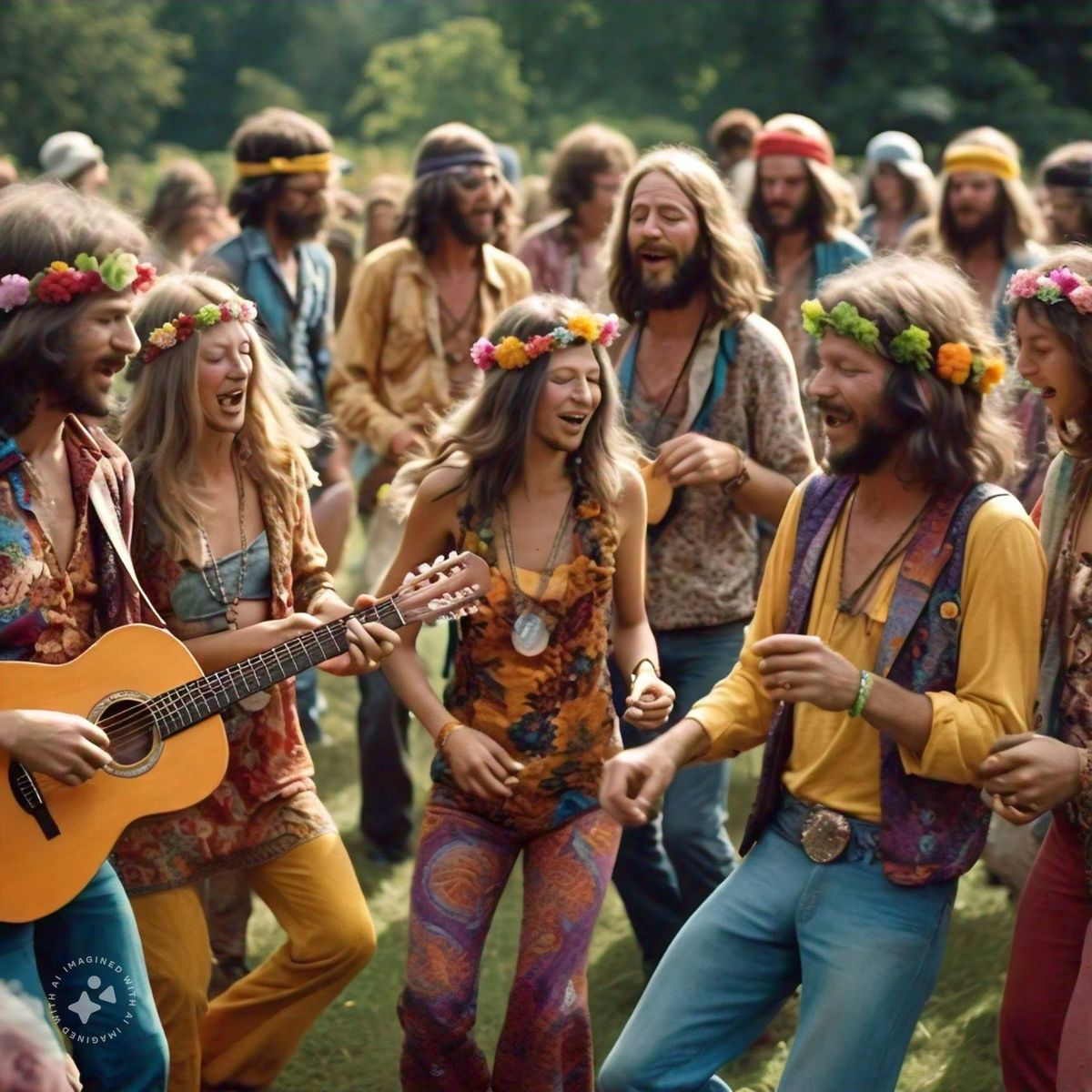
As I age, I find myself reflecting more readily on how things evolve and reset. What is required beyond experience that establishes a seismic shift in cultural norms, practices, or expectations? As someone who was born smack in the middle of the Boomer generation, as well as someone who resided in the relatively protected Midwest (the infamous fly-over states), and additionally, the son of a Depression-graduating father, a blue collar electrician, I had little inclination to protest, burn a draft card, or be posted on the front page of a newspaper. On the other hand, my brother 5 years older, who graduated in 1969, faced the lottery, was much more likely to reject the policies of either the Johnson or Nixon administrations, and would have probably been quite content to slide off to Woodstock or Haight Ashbury. His involvement in a rock-n-roll band (more in the Chicago or BST vein) and traveling on the road after leaving college was much more akin to what people today would call hippies. His college girlfriend, who would become his wife, epitomized the pictures you see of coeds of the time. She had long dark tresses, was tall, slender, elegant, and beyond incredibly intelligent and personable. She could model the bell bottom jeans and alluring top (never risqué, but gorgeous) better than anyone I ever met. She was from another world (New Jersey) and to her 16 year old younger to become brother-in-law, she was an angel. She knew how to handle most any situation and I trusted her. She went through some incredibly difficult events in her life, including becoming a widow with three pre-school aged children at 25, and yet, has accomplished some incredible things. I still give her credit for helping me get my act together at a particularly difficult time in my life.

One of the things that is considered conventional wisdom, but is perhaps more a folk-tale is whether or not the liberals of the 1960s are more connected to the conservative movements of the 21st century, or even the more MAGA extreme of present day Republicans? While there is some connection, the transformation is more nuanced and complex, which, of course, is how most things are, but also something few are willing to figure out. Studies (Pew Institute, Brookings Institute or Center for American Progress) show there is a difference between what was called the “true believers vs. hangers-on.” There were those who were deeply committed to the liberal causes, from anti-war to civil rights, from the environment to the ERA, and there were those who adopted the countercultural aesthetic, but were not quite so left. The point being they are certainly not as much of a seeming 180 as some might believe. If one can point to a strong connection between the two, it is a seeming distrust of the government (the establishment or the man). What constitutes the man has evolved, surely, from a military industrial complex to the issue of a woke bureaucracy (I have to give AI some credit for helping me write this – as I asked some questions, but I wrote what it told me in my own way). Likewise, the regional shift of what was the Southern Democrats, who were conservative and segregationists. would under President Johnson make a significant shift toward Civil Rights, and the Goldwater conservatives of the 1960s gave a foundation to what would become the silent majority, those who did not burn draft cards, protest or demonstrate. Ultimately, what might be most significant in this strong cultural realignment is that again, studies, show that liberals are much more likely to become more conservative as they age versus conservatives become more liberal. And yet, even this is more complex that simply a directional shift.

What amazes me and troubles me in the current culture’s willingness to merely accept what they hear or read, the propensity for listening to only one voice and believing there is some kind of moral insight to what should or should not happen. All news has a bias to it. I believe that has always been the case, but when 24/7 news came on the scene, there was a profound change in the landscape. The idea that news was objective, which is what I grew up with, moved toward a model of speed over verification, of infotainment and analysis or commentary versus “just the facts”. The change is understandable because the network had to fill up the time, and time was money. The 24/7 model became dependent on audience like never before, which meant a change in what occurred. Targeted reporting (ideological) and therefore a simplicity or narrowing changed what people heard and what they expected. CNN, which debuted in 1980, and the proliferation of news sites since means the entire world has experienced a sort of fatigue, and less than a half century later, currently Gen Z’s news consumption is defined by “social first.” Short-term, personality-driven content is what most 18-30 year olds use, and the consequence is significant. The fragmentation of what is accepted or listened to creates a situation where the bias, fatigue or simply avoidance has become commonplace. And consequently, it has transformed public discourse, which is at the foundation of any democratic society. There is the possibility of expanded participation, but simultaneously the ability for the public to become vulnerable to misinformation is exponentially increased. The rise of influencers is something we hear of on a daily basis.

As I finished high school in the early 1970s, I had the black felt, and psychedelic black-light colored posters in my bedroom lamenting Richard Nixon, and I was listening to the likes of Jethro Tull, Black Sabbath, and Deep Purple, which was much different than the Anne Murray and Glen Campbell music of my sister, and yet, I would enlist in the United States Marine Corps. My brother, the same one earlier mentioned, (and this is something my father and I spoke of often later) if he had drawn a number that would have resulted in his being drafted would have moved to that other country that is a bit north. It would be interesting to see where he might have turned politically later in life. Most of my immediate as well as somewhat extended family are much more supportive of the current administration than I am, and that is said even as some of them still claim to be registered Democrats. It makes for some spirited conversations or at other times, as I am significantly outnumbered, I merely stay quiet. Even then I am not sure what is best in terms of how to manage it. As someone with an advanced degree in Rhetoric, I wonder what is the best avenue, but I too experience the fatigue that I believe many in the country are feeling. It does not go unnoticed that today is January 6th, which I believe is a second day in infamy for our country. I am always amazed by who we are as people, and the complexity of our country. I am reminded of the words of Anton’s father, Hans Christian (Anton is my former Danish exchange student). In spite of our current tribulations as a country (and of course, President Trump’s current words about Greenland are probably worth considering, and I have not spoken with them in the last week or so), he believed America was still the most incredible democracy in the world. He noted that we still have the ability to vote; we still have freedom of the press; and we still have scheduled elections and two parties. It was actually good to hear his perspective. It gave me some hope in the midst of my own angst.

So where does it all leave me? I am unsure at the moment. Certainly there has been some transformational change in the America I knew as I was graduating from high school and where we are now. Most assuredly, our relationship with our elected leaders (regardless of party) has changed and what we believe about them is fundamentally different than what I experienced as I entered adulthood. Furthermore, it seems there is a greater degree of fear and uncertainty in both the country and the world than what I remember, though I was young and maybe I simply was too naïve. It does seem that the idea of peace and love that supposedly characterized the late 1960s (and I am aware of the simplicity of that statement) at least for the late teens through their 20s is quite different than what the people of the same age would say characterizes now. Did those boomers transform or change? I am not sure I have an answer even now after researching some and reading throughout the day. What I do know is perhaps I need to merely hold on to what my wise Danish friend notes. With it, I can still feel hopeful.

Thanks as always for reading.

Michael

Can the Calendar Make a Difference?

Hello on a New Year’s afternoon,

When I was a boy, the week after Christmas, as I have noted, was spent at my grandmother’s house. The acreage, located on the North side of Sioux City, was a humble, but homely dwelling rather non-descript to the viewer, but anything but for me because it was where I found safety, joy, and hope. The garage, which was a horse barn at one point, sat at one side of the property, and the big yard that sat between it and the house was often the parking lot for when my grandmother would host events, from her yearly Christmas to a summer steak-fry. I wrote about the Christmas celebration in a recent blog, noting that my sister and I would remain at her house for the remainder of our Christmas break each year. It was probably the happiest week of the year, and a great way to bring in the new year because we went to the bakery, were fed our favorite breakfast year morning, played with new toys, and generally got to be with the person who had been our mother in our pre-school years.

My grandmother was a huge college football fan, and she particularly liked the Nebraska Cornhuskers in the days of Johnny Rodgers and Bob Devaney. Each New Year’s Day, back in the day of four main bowl games, she would bet me on the outcome of each. She almost always won overall, but she was generally kind and let me off the hook monetarily. I think my appreciation for college sports (which has evolved to some extent) began with her yearly commitment to the New Year’s Day Bowl games. We would sit in the small den, where the television was, and watch games the entire day. I think what she offered, as importantly as her time to my sister and me, was her continual desire to be involved in our lives in a meaningful manner. Her love for us was as predictable as the calendar where we spent the final week of each year at her house.

The reality of the changing calendar seems to go hand in hand with the idea of some requisite need to recalibrate our lives; that at 11:59.59 the next second, which heralds in the next numerical year automatically provide some sense of tabula rasa. We magically renew ourselves into some better version of ourselves, the new improved, more capable, better disciplined, and remarkably successful human either we hope for or somehow believe God intends for us. What are some of those resolutions we believed ourselves capable of achieving? What sort of character flaws have I, with all the belief my little heart could muster, believed I would overcome? When I look back over the years, the decades, I find there is little in terms of some specific resolution I might have made that created any profound change in my life. More recently, I have not really made any sort of resolutions, though I am not sure if I can say why. As I ponder that fact, is there anything I wish I might have resolved, I might have attempted to alter? My immediate response is no. Perhaps it’s because I believe I am just who I am. Perhaps it’s because I seriously doubt there is much in my basic character that will change. I do believe there are places making some change or some modification in my own behavior or response to others is worth considering, but does that require some resolution? I guess my answer is simply no.

On the other hand, perhaps if the turn over that occurs from December 31st to January 1st results in introspection, that is probably efficacious. Of course, in a sort of can we break free from our illusions? manner (the cave is alive and well) do we ever allow the light that comes with life and experience to actually guide us? Are we capable of breaking free from the chains that bind us to our past, to our limitations? Much like the prisoner who comes back to free those in the cave, too often our belief that our resolutions are either folly or unachievable, so we discard the notion. It is merely a lack of discipline or something more foundational, more innate to our humanity? As I ponder the last year, and imagine the possibilities of a first complete year in my 70s, there are a multitude of thoughts and concerns, some about myself, some about those I love, and particularly family. Then there are friends and acquaintances, those I come into contact with on a regular basis, and then there is the country and the world. Is it possible to make some difference on all those levels?

When I think about some of my New Year’s Eves over the years, there is quite an extreme, in spite of some of the commonality. One New Year’s Eve. while bartending at a nightclub, the establishment turned into a brawl, with cops, broken tables and chairs, glasses being thrown, to the point it looked like what you might see in a movie. My best friend at the time, who is also working there pulled a gun on me. I grabbed it and twisted it, finding out it was loaded when it shot him – not a great way to spend New Year’s Eve. Fortunately, his wounds were not life-threatening, and he recovered. That was a serious wake up call. The number of times I worked that night in my 20s or most of them. The number of times that I’ve gone out and celebrated are very few. There were a few years in Poland with students that are certainly memorable. In the last five, I went out for dinner once. Otherwise, I had to set an alarm to wake up and see the new year in. I am appreciative of traditions and wanting to celebrate, but my desire to get loud or crazy was never really who I was or am. I remember the New Year’s Eve with the millennium, and I would have to go to work the next day because of Y2K. Those of you old enough to remember, we were worried that our computers would not know what to do and that everything will go haywire. Of course, it did not, and my workday at Gateway was incredibly boring. We got to go home early.

So where does all this leave me as I begin a new year? I have certainly reflected on the past 15 months as a retired person, and it’s been a bit of bumpy road. Nevertheless, I am blessed and fortunate to have experienced so many things, to have learned so many things. As I move into this next year, there are many things to attend to, and there are some significant things I hope to accomplish. Most of it is manageable, but will require discipline, thoughtfulness, and stepping outside my comfort zone. That is not an easy thing for me to do, but it is always necessary if I’m going to move beyond those things that I know. It doesn’t take a specific calendar day or the change of the final number in a year in a year. Instead, it takes consistency, reflection, and perhaps appropriately it takes a word that is etymologically related to the idea of resolution. It takes resolve. As I move into this new year, which is now a couple days old, I must resolve to be consistent, to follow through on that which I say I want to do. It must be disciplined to set boundaries and not allow myself to be caught up in things that might detract from my well-being. I must continue to learn how to be both kind and firm when expressing what I will or will not do. None of this is accomplished because the calendar changed and we’ve begun a new year. All of these things are part of who I am and who I’ve been. The real question now is who do I want to become? Even now, are there changes and is evolution to some extent something I see worth accomplishing? Time, hours, days, weeks, and months will tell. We know them by looking at the calendar. So is it therein the change exists?

Welcome to 2026 and thanks for reading.

Michael

The World Breaks Everyone

Hello as the wind howls outside my window,

The winter cold front is blowing through, and while we did not get the snow, whiteouts, or ice those north of us experienced, it is down right cold, and we’ll see what the morning brings. Those even straight West or minimally North are seeing zero visibility and road closures, we are faring much better. Those in my old Keweenaw stomping grounds are experiencing a typical storm with lake-effect snows and snow emergencies. I am reminded of the first year I was in graduate school (30 years ago right now) and the snowfall for that winter was over 340 inches. That was a shock, particularly when we could have 3 or 4 feet more accumulation than 11 miles south. I remember when arriving a few years earlier someone inquired kindly, “Do you like snow?” When I responded, “Sure.” Then again, they asked, “No; do you LIKE snow? Because we get a lot of it.” They were certainly correct.

One of America’s most notable authors, intelligent authors, and perhaps most misunderstood writers, but to me one who understood our human frailties, is Ernest Hemingway. The title of this post is the initial part of one of the well-known quotes. I think the truism of it (at least for me) is both societal and individual. While I believe there are moments we are more aware of it, I do believe there are those times we feel we are more capable of managing life’s trials than others. Certainly the reality of aging, of successes and failures, of not escaping our finitude, to use the words of William Tremmel, can be a harsh reminder of who we are, of our limitations, and as I have been open with struggling with my own personal reflection or experience of life post retirement, it appears that Hemingway knew of such things. For some, those who might assert his characters are either one dimensional or his rugged settings discount women, I would disagree. While his writing style is minimalistic, unlike Faulkner or Irving, his characters, like most, are flawed, but emotionally honest and sincere. Some might go as far as to assert they are relatable, even endearing as they struggle to understand their own frailty. The psychosis of most of them makes one examine their own life as they read about Fredric Henry or a Catherine Barkley, a Jake Barnes or Brett, Lady Ashley. Hemingway’s consideration of people in a war setting cannot be easily dismissed because war is about dying. When someone is facing their own demise, especially when looking down the business end of the other’s weapon, seldom does one feel patriotic. As we face the end of something that defines us, be it change of occupation, the ending of significant relationship, retirement, or life, often we are facing a place of profound fragility, a moment when our identity and sense of worth are called into consideration.

Lately, I have found that my propensity to be honest with my thoughts and emotions have been more damaging than helpful. Be it meant as truly complimentary and nothing more, be it (as I will specifically say) bear with me as I am thinking out loud, there is little I can do about how it is received, or so it seems. For someone who tried to use words appropriately and adequately, lately, and too often, I seem to be most unsuccessful. The consequences have been painful, and perhaps long-term. I have felt the reality of Hemingway’s quote. Whether or not those points will become a place of strength is yet to be known. Whether this breakage is reparable is something achievable, or if I even want it to be, is currently undetermined. Much like the character’s created in his novels, The Sun Also Rises, Farewell to Arms, or For Whom the Bell Tolls, I find myself wondering if what I have believed most of my life is an illusion, or what I was duped into believing? Am I speaking out of my failures or is there something I am still incapable of understanding? Can I move from the place of feeling broken to a place of mended albeit scarred?

Failure is an incredible equalizer. I can think of a handful of times where I have felt the searing sting of falling profoundly short of what one would hope. Most often it’s been on a personal level or in my personal life, though a couple have been in the professional realm as well. Likewise there are those personal failings, which had professional consequence. I have addressed them from time to time in this very platform. In each case, undoubtedly, I bear some level of responsibility. Regardless my intentions, the resulting misunderstanding, the perception of the other is, in part, due to my failure. Where I presently struggle is whether it is worth the effort to repair the situation or relationship, or at this point in life to merely move on? Is there a point where I am too old to worry about it? Each case deserves some consideration, that much is obvious by the very fact I am writing this. But much like the howling wind that was heard when I started this post, it dissipates, and while there might be remnants left in its wake, life continues to move forward. Is my moving forward with it a strength or an avoidance? I am unsure in this present moment. Perhaps what needs to occur is my own self-examination: where do I see a pattern or where are my own character flaws, those traits that seek to open me to being misunderstood, misperceived?

I have often described myself as lonely-in-the-middle-of-a-crowd. That has been true for much of my life, and as I aged I perhaps even embraced that as something I desired. Now the crowds are not around as much, and when they are I find myself withdrawing. Have I changed or have I become less resilient, less capable? I am not sure I can answer that question at the present moment. As we come to the end of a calendar year, I find myself withdrawing even more in spite of being in the midst of family. I find myself wanting to undertake some significant introspection, trying to understand where life has taken me, as well as where it is going. Recently, I had a conversation about sacraments with a friend. The importance of water in the sacraments is undeniable, unavoidable. Water is something I both love and yet it frightens me. It is necessary for life, but its power can also take life. When I first taught, I co-taught a Creative Writing course with an incredible writer named Timo Koskinen. He used the novella A River Runs Through It. Those 104 pages by Norman Maclean are perhaps the most wonderfully written pages I ever read. The end of the book, which I have noted in their movie form are as important to me now as when I first read them.

Thank you as always for reading; and for your comments, responses, and likes. It means a great deal. Blessed New Year.

Michael