Appreciation for the Other

Hello from a coffee shop in Kraków,

At the moment, I am neither in a Starbucks or a Costa, but somewhere I found close to my Air BnB, which is out beyond Ulica Floriańska, which has New Years Eve memories more than once. The coffee shop is called Green Coffee Nero, and it somewhat reminds me of The Motherlode, a blast from the past for my Houghton friends. I got up extremely early this morning to fly from Copenhagen to Kraków, a relatively short trip except when your luggage somehow did not get on the plane. As I sit here, my time in Houghton comes back again as I am listening to a song playing here from the first Tracy Chapman album, “Talking about a Revolution.” Certainly there is a revolution occurring in the States at the moment, but one in the direction many had no idea could happen. While my disdain for some of the methods of our current President are well-known, there is little doubt that the move to the right, and what I believe is a homogenization of the country, certainly at the expense of “the other,” is occurring. And yet, it is more complex than merely whites (and I am not understating the alarm of what is happening with the actions of ICE) at the expense of those who are not Caucasian.

While I have not dig deeply into the specific numbers of the 2024 election, there is no doubt that the re-election of Mr. Trump occurred because of more than the MAGA supporters of his policies. If I remember correctly, the Hispanic vote for President Trump increased by double digits. Additionally, he did better with both black men and women. The other demographic he showed significant change from 2020 election was in white males under the age of 50. And while, indeed, President Trump did win the popular vote in the 2024 election, his margin was not anything approaching overwhelming., though one has to admit the coalition he created seems to defy what many people believed possible. Nevertheless, his electoral college win was significant. And as my Danish friend and attorney has reminded me. We still have elections and we have the ability to question and change. Certainly there are some questioning that, but I do believe our grand experiment is resilient. Each time I have walked around Europe, even from that first time as a sophomore student at Dana, I was amazed and intrigued as I heard the different languages and observed the similarities and differences among us as peoples. I was first fascinated by language from my time in the service and immediately following. When I returned to Sioux City, we had a new pastor and family at my home church. They had spent time in Germany as a family and now German was part of their vernacular. I realized quite quickly how left out I felt when I was at their house and the conversation moved from English to German. Soon thereafter, when I enrolled as a student at Iowa State University I chose to take German because of that intrigue, of the listening to people I knew speak another language. While my initial foray into that was not completely successful, the seed was planted. Now almost 5 decades later, language has been one of my major areas of study and while I am no linguist, my enchantment with language continues. Learning another language acknowledges the actuality, the corporeality, of the other. During one of my trips with students to Eastern/Central Europe, I had dinner with two incredible young men . One evening when we were free from meetings, I asked them what the most important thing they had learned during our trip. One brilliantly answered (paraphrased), “While we are important as Americans, we are not as important as we think. There is so much of value outside America.” What an insightful and accurate thing to say.

As I walked along Rynek Glowny and the main square yesterday, the number of languages I heard (and could identify) were numerous: Polish, German, Ukrainian, Arabic, Spanish, English, and there were more. This amalgamation of cultures was invigorating to me. It was a beautiful, and quite warm summer day, but the people were just happy; they were celebrating. The bustle of some juxtaposed to those merely sightseeing was palpable. Even as I walked back home after 9:00 p.m. last evening, the square was teeming with people and again the cross-cultural nature was astounding. Certainly, the difference in size and proximity to another country and language affects this melting pot, and I know that there are struggles in the EU with immigration, with economics, and yet, because of the current situation in Ukraine, but there is something incredibly positive in such an experience. When I was in the Marine Corps, and quite young (17 when I enlisted), somehow I realized that a self-expectation that someone should speak English to me when I am in their country seemed a bit arrogant. One of the things I have realized as I considered Lydia, (the incredible Austrian woman I cared for) and those like her who self-exiled to America after WWII, was how much they gave up to become Americans – often their cultural traditions, certainly the speaking of their native tongue, and even some of their national idiosyncrasies. How much of that was willingly and how much of it was expected or believed to be expected? I wish I were insightful enough then to have those conversations with her. I do remember her once saying she took classes to try to erase her accent (it did not work), but even the attempt to do so says so much. I remember her noted that she and George often worked more than one job to make ends meet in those early days.

In the years since I was that young Marine, I have changed so much in my appreciation for the other. My life in the educational realm has afforded me the opportunity to learn, acknowledge and treasure things I could have never imagined as I grew up in Sioux City, a pretty basic NW Iowa town. I am not disparaging that foundation. It has served me well, but there was so much more to learn. It the years since graduation (and quite amazing for someone who never visited anything beyond a neighboring state), I have been to the Asian-Pacific, in all fifty states, through 90+% of Europe, Russia, the Dominican Republic, the Bahamas, Costa Rica, Nicaragua, Panama, Ecuador, and Canada, and there are still things on the bucket list. In every single place I have grown; I have changed; and most importantly, I have learned how much I have yet to learn about others and myself. How do we learn and assimilate knowledge and experience? It causes me to consider yet another thing I wish I understood more completely. A particular fascination for me is trying to imagine what infants are absorbing through their eyes as they look everywhere. What is being imprinted on their brains in those early weeks and months? One of my former Polish instructors has a little girl about 10-months-old. She is adorable and her eyes are incredible. She says so much with them, but simultaneously, she is taking it all in. There is no difference in her as a beautiful person of Polish and Columbia heritage or that 10 month old Dominican, Ecuadorean, Dane, or American. Their humanity is first. How have we seemed to lose that mutual humanity we all share? Am I being unfair in that assessment? I am not sure.

What I realize when I consider the other person is the giftedness of each individual, what their culture brings to our world, and how much I learn from them. At one point, I remember struggling with one of my students who comes from another culture. She was born in the States, but at the time it seemed, in what was my narrow opinion as I now realize, that she did not exhibit enough appreciation for our American culture. She is dear to me, but that was a tough time in my relationship with her. It’s about 10 years later and I realize now she was not only correct, but justified in her attitude. I thought I was sincere and correct in my view. While I was sincere, I was anything but correct. Even now, walking around Kraków these last couple of days, as well as Humlebæk or other places in Denmark last week, there is so much we might do to improve our society if we would take the other seriously. This is not meant to demean my country, but it seems our national arrogance keeps us from being our best selves. Next week I am off to another country and to visit another amazing student from my past. She was one of an entire class of international engineers who were in my 2nd semester Freshman Writing class. I am blessed to have two of them still in my life. I learned so much from them, even though I had to leave early because of health reasons, so I was not able to finish that semester. As I work on some other writing, the importance of the other, of travel, of language, of food all blends together because they are interconnected. I often say learning another language reveals so much about the people who speak it. You learn a great deal about how they think as well as what they value. Those are profound insights. And sampling and learning about their food as a cultural insight is exciting, and tasty!! Another benefit of knowing others from other countries and with different experiences is you learn from them in ways too numerous to count, and often what you learn can inform your opinions and perspectives in ways not expected.

Again, when recently speaking with Anton’s father, his appreciation for the American electorate and America’s system was instructive to me. While I understand our system quite well, hearing the perspective of this Danish lawyer was both refreshing and helpful. Speaking with my professorial colleague here in Kraków in the last couple days, or with people here from three generations over the last two days, I have appreciated their perception of what is happening in our country as well as in their own, but as much, it was refreshing to consider how the two countries have mutuality and importance for the other. I am sure there will be a similar conversation and thought when I arrive in Spain next week. While there is a certain ethnic purity in these countries, it is impossible to not see the effect of the EU on each of them, and certainly their opinions vary from country to country and person to person. That is normal, and it is what makes us so different and yet interdependent. Each time I travel I am compelled to reflect on who I am as an American, and how I understand my own country. That is not a negative thing . . . it is precisely the opposite. I am still patriotic, and it does not go unnoticed that tomorrow is the Fourth of July. However, we are only 249 years old as a country. The university I frequented here in Kraków was founded in 1364. Denmark was a powerful nation as early as the Middle Ages also . . . the Kalmar Union established Danish rule over Norway and Sweden, and their power as Vikings begins long before 1000 AD. Again, this is not to take away from what America has meant to the world, but there is so much to learn from the other. In the meanwhile, I keep traveling and learning. It is surprising that it has been six years since I was last here on Kraków for more than to fly through. Certainly, I am not sure what the future holds, but as I wrote in a recent Facebook post, it is my favorite foreign city.

Thank you as always for reading,

Michael (the wandering nomad)

Truly Unexpected or Simply Avoided

Hello from the Beetle,

I am waiting to meet someone, preparing to share breakfast and listen to their stories about being in a new place for their summer. Four amazing young people have traveled from Quito and Cuenca in Ecuador to spend a summer learning new skills in the restaurant, and in some ways they are like new exchange students to me, but college age rather than high school. Much more like what Ana was when she was here from Russia. All four have strong English skills, having obtained an International English Language Certificate. I am always amazed and blessed to meet individuals from another country, another culture. I learn so much about our world, but, as importantly, maybe even more so, I learn about myself. And in the coming week, I will fly to Europe, specifically back to Denmark and then to Poland, visiting Anton and his family as well as dear people I met during my journeys to Kraków. Each of them have blessed my life, teaching me so much about things I would have never imagined.

During the last few weeks, much of my time has been spent reconsidering what I do, where and how to do it, and facing again the consequences of being an incredibly premature birth in the 1950s. It would be easy to lament the health struggles (many of them precursors to what exploded in my 20s and have been a constant companion since) that I have experienced beginning from preschool). Back then, no one expected what were seeming nuisances were tell-tale signs of my eventual Crohn’s Disease and since that initial struggle in early 1984 now much more. Lamentation has its place, but when pondering my own circumstances, I seldom find it helpful. I remember studying Psalms in seminary and spending particular time on the Psalms of Lament. In the midst of the struggle there is always a time to give thanks for the love of God. I am feeling that at this point very poignantly. As many know I have battled a variety of health issues since I graduated from Dana, and there have been some dark moments, but in truth Psalmic fashion, there has always been a light in the midst of that darkness. Between amazing doctors, Gastroenterologists, Oncologists, Homeopaths, RNs, Enterostomal Therapists, family, and friends, I have never been alone. There is always a freedom in the midst of the chaos that illness can create. There is always the right of the person to respond in a manner they find most helpful. From the very first time I learned that I had an inflammatory bowel disease until now, I have refused to let it control my life. Certainly there were times it controlled more than I wished, but I still had agency. The exigence of any situation is there if we decide to use it, to understand it, to manage it. We can listen as well as we hear, if we allow. Certainly there are times we will disagree with the path someone chooses, there are things we might do differently, but how one decides to battle is their own to make, a path on which to proceed. What we can do is assist in prayer, in care, and through little acts of kindness.

I remember when I was a parish pastor this was one of the most difficult times for families. To allow a lucid person to make their own health decision is both appropriate and charitable, but, often, it is not an easy thing to do. It is much like what happens when someone is at the end of their life. Too many times we are not ready to let them go, but that is through our own needs or unfinished business. More simply, and most definitely more difficult to hear, it is our own selfishness. We still have things we need to do because of that person. One of the more selfless things we can do is offer permission to leave this life. I am a firm believer there is a quality to life, and when life goes below that threshold, and that place is as unique as we are as individuals, death can become compassionate. Even in the last 24 hours, I had a chat with someone about how God fits into all of what we do. As noted recently, my own faith process has been anything but what I expected. I find myself regularly questioning the hows and whys, wondering what power or possibilities I have in the midst of daily existence. Often we are controlled by external factors, and that is always the case to some extent, but to what degree do we have agency? Who decides the exigence we have in any given circumstance? Is it really there? Does it ebb and flow like the tide I imagined when I was standing on the shore of the strait between Denmark and Sweden over the weekend? Perhaps that is where my title for this post is most apparent . . . are most things left to chance or is the agency we have come mostly through avoidance, ignoring the things we wish not to deal with or manage? Perhaps we have been conditioned to avoid that which is unpleasant, much like a terrible tasting medicine that chokes us with its terrible taste. And yet, there is the possibility of gaining strength when we walk through those things that we would much rather keep at arms length, circumvent. As I ponder things I wonder if I am being selfish, wishing to carry out the plans I have. As I imagine the reality of a body that has fought so many battles, many before I even knew what was happening, I am not sure if all of it has made me stronger or merely tired me out. Perhaps there is some of both.

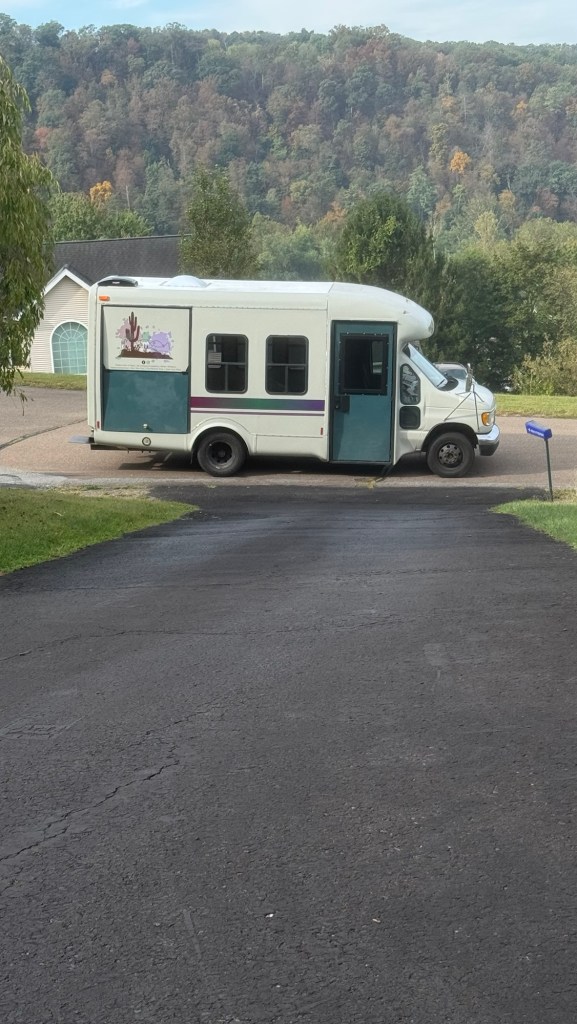
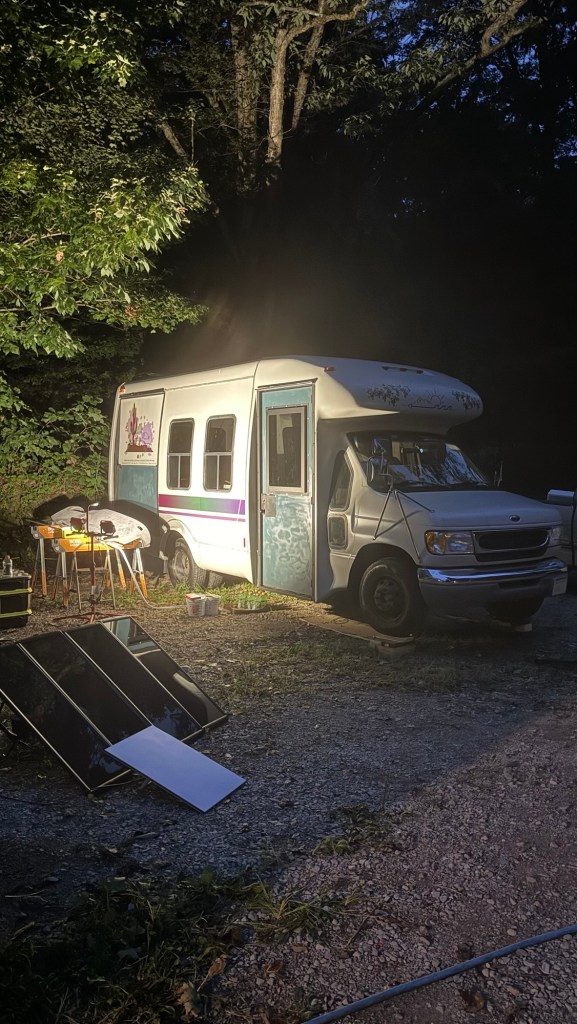
As I work toward returning to building the bus on a full-time basis again soon (after more of a hiatus than planned), and in many ways there was nothing more I could do as the doors are being completed, I still wish I could simply have it all done. There is a lot to manage yet, and with some of my new realities, I am feeling a bit overwhelmed. I am not sure the best way forward. Just wanting to do what was originally planned is certainly the easiest way. And listening to the professionals, it seems there is a good plan forward that will allow most of that. It is always amazing, regardless how much one plans for contingencies, there are always unexpected (or maybe the less than totally expected) possibilities that can stump us. This gets me back to when it is truly unexpected or simply avoided . . . wished away if you will. While speaking with Anton’s father this past week (I have been pondering this blog for a while, so I am now in Denmark, with trips to Poland and Spain still to come.), he offered a wise response in our conversation using the prepositions of “from” or “with.” It was an incredible insight I had not expected.

The last few days have been a bit of a world wind as I am working to manage a multitude of issues on both sides of the pond. I do think I am on top of things for the most part. Some serious organization of both personal and business issues as well as some immediate and long term planning. What I have learned about myself is I seem to be Dickens’s Tale of Two Cities at times. The oxymoronic ability to be both on top of things and seemingly clueless is the proverbial blessing and curse. I remember being told of a particular diagnosis of this had me quite angry at one point, and perhaps more frightened and embarrassed. Even though the psychologist assured me that I was very capable. My response at that time was to tell her to f-off. Now 20 years later, I might finally be willing to believe it is possible. Some of it comes out as OCD, which I believe I can handle most of the time. Some of it comes out as feeling inadequate and under-performing, not living up to my standards (and they are probably self-imposed). I wonder if being retired will change those expectations? I am really not sure. So much to imagine and ponder; so much to realize and reflect upon. Life has never been boring, that is for sure. One of my favorite movies is Last of the Mohicans. This version of the theme is haunting, but life is quite honestly that.

Thanks to those who have reached out and as always thanks for reading.

Michael

Hej fra Humlebæk

Indeed, Hej fra Humlebæk!

I am back two years later almost to the day to visit Anton, Carla, Anne Marie, and Hans Christian. My first visit for Anton’s graduation from gymnasium was wonderful, and now, returning again to their beautiful little village on the coast is as tremendous as the first time, but having a bit of familiarity makes it even nicer. I often told my students after education, the best way to spend (invest) your money is on travel. It is also an education, but has long term benefits of a different kind, paying you back for that investment, long after the trip is completed. It is a cultural education, having the potential to teach you as much about yourself as about others. While I have only “technically” had two exchange students, Anton from here in Denmark and Georg from Estonia, I claim Ana from Russia as a third because she spent significant time at the Acre, and she continues to be a profound blessing in my life. In fact, six years ago today, I was in Moscow having dinner with her and her friend Dasha. What a wonderful dinner on the 86th floor of a building in Moscow City.

My first full day back in Denmark has been both relaxing and enjoyable. Anton and I took a walk down to the train station, where I arrived yesterday, and we had a wonderful pastry and a cup of something (he had iced coffee and I an iced chai). We spent the time reminiscing about his year in Bloomsburg and then talking about what he is studying. He is pursuing a degree in Architectural Engineering, and it is both not surprising, but interesting how his commitment to sustainability corresponds to that of his sister, Carla’s, who is completing her Masters in Electrical Engineering. They are both so incredibly intelligent and lovely people. I have teased they are twins, though a different age and opposite gender. Their resemblance as siblings is undeniable on multiple levels. And as importantly, their mutual love and care for the other might be unmatched and beyond what some could imagine. While I learned some of this long before I met Carla in person, in the three times I have now been in her physical presence, the reality of my belief has been substantiated beyond any doubt. And in the two years since I last saw them all in person (almost to the day), Anton has grown and matured profoundly, and his love and care for her and his family has also matured in a beautiful manner. What I know even more is how blessed I was to have him live with me for his exchange year.

My exposure to anything Danish started when my Lutheran Youth Encounter (LYE) team visited the campus of Dana College during the fall of 1978. Having some experience with Scandinavians because of my family’s Norwegian heritage (and particularly from my Great-aunt Martha (Hannestad), I had some understanding of each country’s strong national pride. I can still remember her saying some of her prayers in Norwegian. She had immigrated to Iowa from the Bergen area of the Norwegian Peninsula. Of course, as mentioned in earlier postings, Mr. Larry Flom (my high school history teacher) whose intense love of his Norwegian heritage, which was proudly on display in his classes, influenced that perception too. Likewise, my grandmother (and even as an adopted person- my grandmother and my adopted father were cousins) was also a Hannestad. The name of my Grandmother’s bakery was Scandinavian Bakery. So the memory of krumkake, fattigman, lefse, and yes, lutefisk are not merely conceptual. Arriving in Blair, however, that Viking mindset would become widened and culinary traditions of æbleskiver, frikadeller, herring, medisterpølser, or even the smörgåsbord (though technically Swedish) became part of my go-to daily existence. In fact, the most amazing smörgåsbord I ever experienced was in the main train station in København during my first trip to Europe. Perhaps my favorite Danish sweet might be Kringle. Of course, Sights and Sounds of Christmas, the yearly gift from the campus to the Blair community, taught me about the heart-shaped Christmas decorations, Santa Lucia, and even composers like Buxtehude. One of my favorite Lutheran hymns is “Kirken den er et gammelt hus.”

From that first visit to Denmark as a 25 year old until now, at almost 70, the person I am is quite different, though, as recently written, the foundation of the me of today probably occurred during that journey. I remember walking through the streets, the cathedrals, the museums, and yes, a night in a bar in Østerport, where I was introduced to Akvavit and Carlsberg beer. I also remember the statues of the Apostles located in the National Cathedral of Denmark. I can still see in my mind the particularly striking one of St. Bartholomew. In fact, I might try to visit it 45 years later to refresh my memory. As a soon to be septuagenarian, my perception of Denmark and appreciation for the culture has exponentially increased and grown. Some of that significant growth is because Anton spent his year with me. His intuitive and critical thought process was apparent even in the early hours of his jet-lagged 16 year old self those last days of August 2019. His ability to respond to the narrow/minded, sheltered, classmates who quizzed him on whether he was a Democrat or Republican a number of times as they walked around the Bloomsburg Fair still makes me smile. He responded calmly, “I’m Danish.” In fact, I think he was (and is) wiser than some adults I am currently engaged with in a political discussion. The larger picture view of Danish society is evident on a daily basis, from their social awareness to their involvement with more global issues. I think it summed up again by both the 16 and the 21 year old Anton. When asked why his English was so strong or why he would learn it, even as a 16 year old he thoughtfully responded, “There are only 5 million Danish people in the world.” Now as a 21 year old, and one even more globally experienced and aware, he studies architectural engineering and is committed to understanding sustainable architecture. He is a thoughtfully and honestly sincere global citizen. However, additionally, and perhaps more importantly, I think he epitomizes what I see in Denmark in general.

As I walk the streets of Humlebæk, I cannot help but be impressed with how well people care for their properties. Hedges surround the houses, lining the streets, and even in the areas that are more apartment-prone, care for the land is apparent. Things are clean and people of all ages are biking. The care of all things and all people is so apparent and admired. It’s now a couple days later, and now 5:00 a.m.. Last evening, I had the opportunity to celebrate Skt. Hans Day, for a second time. It is the Danish celebration of Midsommer, the day that is considered to be the night before John the Baptist was martyred, and also to gather with family and friends. It was a lovely time. Just like my previous experience of two years ago, people were quite gracious with my less-than-minimal ability to speak or understand Danish. I had the most meaningful conversation with two about the politics of the world right now. There was really quite a bit of grace for all going on and a beautiful willingness to share and listen. It was inspiring and gave me a sense of hope that the world can still move forward. As I noted toward the beginning of the post, travel is a cultural education, a time to learn about others as well as an opportunity for self-reflection. I leave you all with the hymn I noted above. I still remember singing it in Danish while at Dana.

Thank you as always for reading.

Michael

Prayers and Promises

Hello on another rainy evening in Pennsylvania,

While I asserted we needed some substantial rain back in April, when showers are expected, it is now mid-June and the showers, drizzle, downpours, and incessant forms of precipitation continue. There have been flood warnings more than once, and yet, on a positive note, things are as green as I ever remember in my 16 years here in Bloomsburg. I heard during this past weekend, which was complete with rain once again, that the last 14 weekends have been predominantly rainy.

The title above is a partial title of one of John Denver’s early albums, and each of the terms used are central to my life, to my piety, and central elements of my core. Prayer is such an interesting concept for some; for others it is a practice or habit; and yet for others, it is something that comes to mind when there is some crisis in their life. Promises, again, are conceptual for some, merely a hallow expression for others; and for some uttering a promise to another is a deeply moral contract of sorts. In either case, each term and the practice of either has taken both different forms and altered significance at various points in my life.

Prayers were early a part of my life, and something I remember even as a small child at my grandmother’s house, where my sister and I lived in our pre-school years. I remember kneeling and folding hands in that classic pose by my bed. I do not remember when I was taught that classic “Now I lay me down to sleep . . .”, but I do know that is the first prayer I can recall knowing. As I try to recollect what I must have believed or felt as that 2-3 year old, I think I probably believed it was not only a good or nice thing to do, but I am quite sure I believed my prayers were heard. As I got to my adopted house, and life was very different from the unconditional love I felt on Harrison Street, the prayer changed to something like “Keep me from getting spanked, and I promise I will never do it again.” In this circumstance, one had both the prayer and the promise. Perhaps the issues were multiple though . . . the request to avoid a spanking was a bit self-centered; certainly, the avoidance of accountability is worth noting; and finally, the sincerity of the promise was probably lacking when such a promise was made in the haste of the moment and the imminent reality that a yardstick was soon to meet my behind. Of course, to think a five or six year old had this all figured out is a bit of a stretch. I am not sure I could articulate my own piety about prayer until decades later.

I think the first time I ever prayed what I believed to be an unselfish prayer was when my older brother was in a coma following a fall at a construction site. As the husband of a 25 year-old, and the father of three young children all below the age of 5, I prayed that he might live (and I am pretty sure the prayer did not go beyond that). He would die from the brain injury, and at the time, I was disillusioned by what seems to be an ignoring of a genuinely thoughtful, unselfish, and appropriate request. Many years later, I believe my prayer was answered, and as importantly, answered in a manner that probably had the most gracious outcome for all. Eventually, mostly likely grounded in my seminary work, and solidified by my experience as a parish pastor, I now understand prayers are answered much like what a parent might do and say. Depending on the prayer and the circumstance, the answer could be in the affirmative, the negative, or then in a manner that is difficult for us. Perhaps the answer is a “not yet.” That answer predisposes we there are times we cannot handle the outcome of an affirmative answer at the moment. There are times where an opportunity to wait is prudent thing. In spite of ourselves, I believe what is best probably happens more often than not.

As noted, the promises made as a small child were often made in the stress of a moment, and while I was told about the importance of keeping a promise, the reality of that was seldom understood. As I write and ponder the when I perhaps understood the significance of keeping a promise, I am not sure I have a specific moment. And if I am to be honest, I think that change to working diligently to keep my promise or my word occurred much later than it should have. In fact, there is more than once I failed miserably. My father’s adage of “if you don’t have your word, you have nothing.” rings more true for me now than ever before in my life. Promises, I now realize, are often times not even spoken, but they occur in or through our actions. Being where you say you will be and on time is a promise. Following through on an obligation or plan with another is a promise. Too often, in an attempt to be kind or accommodating, I will offer something. Earlier in life, when I failed in my follow-through, I might have felt badly, somewhat guilty, but I am not sure I saw it as a promise broken. Even as I write this there is a list of a half dozen things I need to get completed because I said I would. To some extent, and more than I am often comfortable admitting, an unkept, a broken, promise is a lie. It not only creates a chasm between two people, it is hurtful and has consequence.

As I think back through my life, I know there has been both a transformation (that word again) and an inconsistency in my life when it comes to both praying and promising. I think over the last decade-plus, my intentional work to be more disciplined, more constant, good things have happened, but there is always room for growth, for improvement. It is something I am striving to manage more effectively, even now. The last three months have pushed me to work toward that improvement because I have been on the receiving end of that not happening in a few significant situations. And what made it even more profound was how the entity worked desperately to avoid accountability. That was stunning to me. Promises or even intentions should have a sense of genuineness to them, and when something occurs that results in a very different outcome, those involved need to communicate, to accept the reality and responsibility they might have. Within that response is fairness and integrity; within that response is hope and respect. As the summer is upon us, there is a lot on my plate, and as I finish this post, it is early morning, and I am in the airport. The next few weeks will be exciting, and they are needed. I pray for meaningful experiences, and I promise to post pictures.

Thanks as always for reading,

Michael

How and Why

Hello on a quiet, but beautiful June morning,

The time from Winter to impending Summer has another season, and it is transitional, but this concluding last couple weeks of that connection between the shortest to the longest day of the year seemed anything but predictable. Some warm days in the 80s in early April spoiled up, but what has followed since then has been cool, incredibly damp with incessant rain (which was probably more needed that most might realize), and finally, this last week we have returned to the 80s. The continued rain has kept things blooming, keeping allergy medications close by, and the vegetation (and corresponding greens) is (are) lush and beautiful.

The recent response of someone about my blog caused me to ponder a number of things, and most importantly the role my undergraduate education played (and continues to play) in my life, and perhaps as importantly, how that happened as well as why it matters to me more than four decades later. While Dana and its influence have been a significant thread in my writing, this blog is about the how and why. As it is the rationale for much of what I write, I hope that some find my musing is relatable, and that it might offer them some reflection on their own experiences. As a professor, I worked diligently to not tell people what to think, but rather to teach them how to think. One of the things I found most disturbing, particularly in the last decade in the classroom, was the propensity for many well-meaning students to merely want a recipe card. I think that is the first thing I realized when I enrolled at Dana as a soon-to-be 24 year old veteran. While I arrived in Blair quite unsure of my scholarly abilities, my professors with Danish names like Jorgensen, Nielsen, Hansen, or Neve, as well as a Warman, Hutton, or Bienz, not quite as Danish, each of them pushed us to participate actively in their class. Generally, they welcomed questions, and would require us to ponder and integrate. This expectation of integration is what prepared me for life, fostering my desire to understand and learn in a way never anticipated. That first year’s interim class, an in-depth consideration of the Civil War, with King Rich, opened my eyes to the conflict that wracked the fabric of our country. Years later, after being assigned to the NEPA Synod of the newly formed ELCA, I found myself walking the fields of Gettysburg. Some of Dr. Jorgensen’s insights bubbled to the surface a decade later. When I traveled to Europe for another interim, the reality of what it meant to learn was finally realized. Memorization had its place, but learning was being a sponge and soaking up as much as possible. Those 3:00 a.m.conversations with Dr. Nielsen on a train from Venice to Paris changed my life. They were not in the curriculum or a syllabus, but they mattered as much as our planned tours in København, in München, or in Paris. All these years later, I know the pneumonia I managed to catch while traveling that January were the initial symptoms of what has been a life-long health struggle. That trip to Europe is integrally connected to my own taking of students to Eastern and Central Europe or to my choice of studying Polish two summers, hoping to teach in Kraków the fall of 2020, which COVID scuttled.

Too often, which is not surprising, we compartmentalize things, we become too granular, failing to see the connective elements that explain our lives. I believe my Dana education taught me, instilled in me an appreciation for the complexity of life that integrates the philosophical, the physical, and the spiritual. I remember struggling to wrap my head around determinism in that first Introduction to Philosophy class. Dr. Clifford Hanson, in his soft-spoken way, admonished my consternation, “Michael, you do not have to agree with it, you merely need to understand it.” That sentence has served me well now almost a half century later. There is little in my life that was not either formed or solidified at Dana. It is so apparent to me with minimal reflection. The why that happened can be considered from two different points.

When I arrived at seminary, other Dana students were there, a Grorud, a Tyler, a Holz, a Brockhoff, but I often called LNTS the Norwegian pipeline to ministry. Certainly the sister institutions (most of them in Minnesota) were outstanding in their own right, but what I received in my classes at Dana not only prepared me for seminary, but for my eventual PhD.. And yet, as importantly, it taught and established a profound foundation on what it meant to me an informed and critical thinker. Dana took what I learned in the Marine Corps about respect and decorum, adding an evaluative, an interpretative element to it that serves me to this day. Much like the person questioning the why I might write and post, which is a perfectly legitimate, honest, inquiry, it caused my own consideration of how I might, how I should respond. When I walked the oval across the steps of Old Main that May day of 1983, I had a nascent understanding of what Dana meant, but I was looking forward to what would happen next.

Much like the footings of a building, what is build upon them obscures their appearance, and as the years go by, it is only when the building remains steady and true that their true value becomes apparent. If the appropriate care is not given when the footings are dug, the concrete poured, and the bricks laid, what happens does not show through immediately. It is the reality of time, the result of weather, seasons, or years that will provide the evidence of what happened at the outset. Similar to what I say about my father who passed that late December day in 1997, in spite of his quarter or a century as a memory, he is still getting smarter. The lessons learned in classes, at Hum Events, in choir concerts, sitting with classmates in the Dragon’s Head or at campfires, I still see and experience their consequence today. I still have all of my Humanities classes’s notebooks. The number of times I referred to them as I prepared something in my own class decades later are too many to count. This past week I got my Heritage Center newsletter; two words written on the back of the envelope are more meaningful than words can express.

So the how and the why of Dana are basic to the individual I am today. Most certainly there is an element of nostalgia in this, definitely there is a reminiscence that creates some degree of wistfulness for those times that were so influential. More importantly, there is a thankfulness and gratitude for what a visit on a Lutheran Youth Encounter team, and yes, a Grorud, a Beltz, a Kendall, a Rowland, a Brockhoff, and a Merc, who made Dana more than a stop on a year-long journey. Those people changed my life; Dana and those individuals blessed my life. They started me on a path that has made me much of who I am. The how is still being realized. The why is because that is what the Holy Spirit does.

Hail fair Dana, and thank you for reading.

Michael (Class of 1983)

Dreaming and Beyond

Hello from Williamsport,

I have been here in Williamsport more in the last 10 days than perhaps in the entire time I lived in Bloomsburg (16 years). Between meeting with Pennsylvania College of Technology, helping some with Social Security issues, and now getting my Real ID, I could probably put my car on autopilot to get to the Basin Street exit. I like the downtown area of Williamsport; it is welcoming, clean, and quaint.

Over the past couple weeks more than once I was asked if I remember dreams. Generally the answer is no. There are a couple of exceptions, and sometimes, I might have a fleeting glimpse of what might I have dreamt, but then it is gone. And there there is a different aspect of the word dream that I believe is perhaps as essential to the nightly things that drift through our minds or psyche as we sleep. Those are the hopes or aspirations we might have. This morning I listened to someone’s thoughts about those things that might propel us forward. We were all asked at some point, and probably more often than we might realize, what do you want to be or do when you grow up? The only thing I remember want to be when I was growing up was a funeral director, which mortified my adopted mother. When her 8 year old rushed to get the daily afternoon paper to read the obituaries, it caused her some serious consternation. The irony that I ended up working with funeral directors often as a parish pastor does not go unnoticed. And yet, I am not sure I ever had a dream or hope that corresponded with some vocational goal.

And now as someone retired, it might be worth asking what are my current dreams, hopes, or aspirations. Somewhat amazingly, as I ponder, I think my dreams were always more about actions or character than job or some level of achievement. Even as a very young person I was always questioning the why of something, but more often than not, it was the why about the why? I remember when I had my second major abdominal surgery at Mayo Clinic in Scottsdale, AZ in April of 1991. While staying with my Great-aunt Helen, my grandmother’s elder sister, and that grandmother being my mother from ages 2-5, I spoke of things I remembered as a small child. My great-aunt was stunned telling me that I was barely two. And yet somehow, I remembered. She told me that her recollections of me at that point were that I was always happy, and I wanted others to be happy. There is a significant consistency in that attitude as almost 7 decades later I abhor drama, and I work diligently to keep things on an even keel. In an effort to be transparent, I did have a period in my life I did not manage that, but I think that was more in response to others than emanating from or originating in me. Even now, I work intentionally to minimize disharmony in any circumstance I encounter.

Somewhere within my time teaching here in Bloomsburg, someone asked if I could give them my life’s philosophy. My initial response was “In 30 words or less?” Yet, I responded rather immediately, and said, “If my life makes other lives more meaningful, I make my own life more meaningful.” I still believe that was an answer with the help of the Holy Spirit, but that sentence has remained with me since that first articulation. And as I write this it seems that is also my dream – to simply make the lives of those around me better. I think making the lives of those I meet more enjoyable is fulfilling the most gracious thing, the most impossible dream I could ever hope to accomplish. There is no real materialism or financial gain, but there is a profound emotional, a significant mental, benefit. Growing up in a household that always had me walking on eggshells was difficult. And it taught me how I did not want to live. This is not to say I have no standards or preferences. And in fact, I struggle mightily at times with both my own OCD and propensity for perfectionism. In fact, two good friends tease me regularly about how I set my own personal dining space before I eat.

What I realize now is that I have never been profoundly intent in becoming rich or important. Most certainly I appreciate nice things, but my father’s admonishment of “if you pay for it take care of it.” has served me well. My second notable characteristic is my willingness to give. I must admit it gets me in trouble (and has). I remember a bank branch manager telling me if I wrote another check loaning money, she would close my bank account. What I learned in all of that is if you cannot afford to lose the money, do not lend it. I will not reveal how much I have provided, but it is significant. Even when I left Bloomsburg, the number of things I gave away was extensive. But my reason for doing so was simple: if someone can get good use of those items, why not do it? Lydia, my Austrian neighbor, used to chide me for being too kind. When I told her there was no such thing or I had no complaints, she would respond in her Austrian accent, “That’s disgusting.” I would tell her regularly I was brought into her life to counter-balance her pessimism. Optimism is for me a sort of dreaming; it believes in possibilities; it hopes for things not yet realized. It is akin to the verse that describes faith in Hebrews 11:1. It is acting in a manner that makes the world immediately around you better. I choose to dream. When I was growing up, my sister, who was an incredibly talented pianist, used to play this song and we sang it together. What a memory that is. The initial picture is one of the earliest I have of my sister and me.

Bless your dreams, may they come to fruition, and thank you for reading.

Michael

Harmony: Difficult to Create; Harder to Maintain

Hello from the Former F&F, now Cafe Martha,

It’s a day off with an actual feeling of solitude, something that is difficult to come by as of late, and for a number of reasons. Retired life seems anything, but, and yet there is a freedom, even in the busyness of lately, perhaps because I know there is the power of choice. That always exists in reality, but often we abdicate too much of our own power to exercise it as freely as we might hope.

When I grew up I began singing at an early age, in church choirs, eventually school choirs and choruses, eventually in a quintet as a member of a Lutheran Youth Encounter (LYE) Team, college choirs, and select choirs where I participated in the Messiah and Brahm’s Requiem (twice – once in English and once in German). Learning to play guitar as a member of the team, I even had my own solo gig playing and singing. So music and vocal participation is engrained in who I am. And yet, perhaps my favorite music to sing is Lutheran Chorales. The harmonies, the significant contributions of each part, and the sound created is both beautiful and soul-stirring to me. The movement and interplay of the parts, the movement from major chords to diminishing chords, from expected progressions to the occasional Picardy Third always astounds. Time changes, the reciprocity of parts, and how the lyrics and the music complement the other give me both pause and solace.

And yet, the true beauty of any composition is the ability of the musicians to harmonize, both in terms of blend and tone. I remember the struggle of singing in one group where the person on one side of me had a propensity for singing on the bottom side of a note. The person on the other side did the opposite, seeming to be on the top side of the note. It felt like my ears were being pulled in opposite directions. Oh my goodness. And in an entirely different experience, I believe my LYE team had incredible blend and I believe we created an amazing sound.

However, the concept and consequence of harmony is applicable to a substantially wider array of elements beyond music. Harmony when related to life is working together in the same direction; creating a vision that is mutually agreed upon; establishing a process that accomplishes a shared goal. All of that seems logical, but implementing it is much more difficult. It matters not whether we are talking about an individual encounter or working within a group. I remember my senior pastor and colleague requiring our staff to take a personality inventory test. The intent was to better understand how each person thought, acted, and responded the way they did. As I look back, it was a profoundly wise thing to do. I ponder if it could be helpful in what I am working on now. In spite of my general lack of surprise by most anything now, I still try to understand why people act as they do. I have a pretty good handle on my own self at this point, and I am pretty astute at figuring out the other. Perhaps that is why I still struggle that we seem to work way too readily in a selfish manner versus a more reciprocating way. Often a lack of harmony is based on the fear of giving up power or control. I know this from my early life. It is certainly frightening to allow another influence when the result is unknown. It is easy to get caught up in the minutiae, and fear is a powerful motivator. The response to fear is often instantaneous, but the consequences are longer lasting.

Earlier in life, I spent an exhaustive amount of time trying to project my fragility, to make sure I was liked by everyone. Fragility is not wrong; it is normal. It also creates vulnerability, increasing our fragility, a seemingly terrible circle. Being liked or appreciated is not wrong, but when it is done at the expense of ourselves, it is problematic. It is amazing the pain I’ve endured as I look back upon the energy I put into things unattainable. Even now, as a person retired, it is important to question what is achievable, reasonable, manageable. It is true that my idealism is not as unfettered as it once was, but I still hold on to the hope that most will do the right thing, act in a manner that makes other’s lives better, be willing to live their lives in a benevolent way. I know these statements are all akin to the ideal. Part of it is I want to believe that most desire harmony. And while achieving it is difficult, I think maintaining it might be more challenging. Much like staying toned or in shape, one must nurture harmony. One must practice its maintenance. Perhaps the difficulty is knowing if and when it is obtained. A person with perfect pitch knows when harmony is achieved, but if only one in the group has it, getting to that place can be tough. Moreover, keeping it is exponentially tougher. And so it is in the other areas of life. What is the equivalent of perfect pitch in other harmonic attempts? Does such a thing even exist? I am not sure it does. Ponder for even a moment, at what point did your life seem to be in perfect balance, in a completely harmonic state? Too often, I think we are only aware of when it occurred after the fact. In other words, it was not maintained because we are seldom, if ever, aware of the possibility we actually had it. If I try to imagine a time of balance, I am not sure when or if that has ever occurred for a significant (or even a brief) period of time that I can easily recall it has such. Perhaps that is more of my own making than external forces, again something worth examining, but that is a rather grim realization. What is necessary for harmony?

There is a level of thinking (writing) out loud here, but perhaps the first element of harmony is internal – feeling content with who we are, with what we do, and with whom we are associated. That does not mean that everything is perfect, but we are generally positive with all that affects us. Second, I think the effect of external influences, everything from family and friends to our world and what occurs contributes to our own profoundly personal feelings of balance. As I grew up, my mother struggled to be happy, which was due to a number of issues, but I remember once writing, “She was not a happy person, for many understandable reasons, but it made life difficult.” Difficult is an incredibly understated word. The point is she affected everything and everyone, both with in her immediate proximity as well as even those further away. I have learned some of that in conversations with extended family and childhood friends in this past year. Her lack of balance, her inability to be harmonious was because of her own life experiences.

My point is simple. Harmony is both essential for living a comfortable and meaningful life, but it often seems unattainable or fleeting at best. And yet does that mean we should not strive for it? I believe harmony and balance are essential if my life is be beneficial and meaningful, not only for myself, but for those I meet. To maintain that harmony and balance, to develop a meaningful existence, I need emotional, physical, and spiritual health. For me, that requires intentionality; it requires time, thought, and support. Perhaps what is most significant as I ponder this is it is worth working toward. Second, it is something that requires consistent, and considerable, effort, but the results are worth it. Even as I write this I am facing issues of balance on multiple levels, but the desire to maintain balance is there Imagine?

Thank you as always for reading.

Michael

Sacramental Transformation

Hello from Starbucks,

It’s been a few days beyond two months since I drove across I-80 to make my way back to Bloomsburg, and the path has been anything but predictable. I am busy working, but not at what was expected. The bus is still in Iowa, while I try to remain patient with the process of fabricating the two metal doors that are needed to replace what was there and make the bus safe, waterproof, and more usable. So the reality is there is little to nothing I could be doing in Iowa at all, so working at the restaurant is keeping me more than occupied. In fact, two phone calls have put more on my plate. Organization and management seem to be the catch words of the day.

Some of my personal growth work of late has focused on the importance of my sacramental cognizance. I remember the day of my ordination feeling overwhelmed to the point of being sick to my stomach by what I had just vowed to do. It seems a bit akin to what was written about the first time Luther presided over the sacrament of Holy Communion. Rather than this mass being a celebration of his ordination, he was so filled with fear and trembling that he almost dropped the bread and chalice. The vows of ordination are still part of who I am in spite of my no longer on the clergy roster. I would dare say I probably practice those demands more precisely today than I did almost 4 decades ago. One of the most significant things in those vows, at least for me, was to “institute sacraments with integrity.” To do that I think it is essential to understand what a sacrament is. Both in terms of essence as well as significance. Sacrament is etymologically related to sacred and for good reason. As outward symbols of the grace of the Creator, as tangible experiences of God’s graciousness, the importance of a sacrament cannot be overstated. They are both the easiest and most complete way to participate in a personal faith journey. In a recent blog post I noted my own somewhat roller coaster struggle with church attendance, but I do know without regular attendance, participation in the sacraments is limited. Experiences the most visible, tangible elements of grace are lost, or certainly missed out upon.

As I have considered the idea of sacrament in the Roman Church, where there are seven rather than two, the sacraments correspond with inflection points in someone’s life, when participation in that sacrament changes the relationship with the Creator; it transforms the relationship. The clichés about life and its process are legion (relational pun intended), but matching a sacrament with those significant point when life’s moments move one into a new stage, a new understanding of their identity and potentiality. Think the work potentiality is integrally related to transformation. We are continually recasting or remaking ourselves, sometimes consciously and other times perhaps more unaware. As we approach Transfiguration in the liturgical year (which was the first text I ever had to preach on in preaching class) it’s perhaps apropos that I consider transformation and its connection to the transfiguration of Jesus. Perhaps, even more important that the sacraments are visible examples of God’s grace as our Lord is no longer visible as He was in the first decades of the change from BCE to AD.

When I think about those transformative moments, confirmation was that time I felt important because in the Lutheran church it meant the time you gained an opportunity to experience the Eucharist. And while marriage was (and is) not a sacrament in the Lutheran Church, I think I appreciate that sacramental importance placed on those vows. Furthermore, the irony of that position is not lost on me as a person twice-divorced. I think about my adopted parents and their marriage and I am conflicted when I ponder what they had or did not have, but there is some profound admiration for their loyalty to their vows. I actually wrote quite a revealing blog about my perception of their marriage in a blog the summer of 2014. There are moments I struggle to imagine what I believe demonstrates a healthy marriage. I did address my own emotional connection to ordination earlier in this very blog, and I remember that I cried when I gave my stoles to a seminary classmate after resigning the clergy roster. That was a difficult day. The Sacrament of Reconciliation, and the very action of being penitential is also something I find deeply personal. Luther speaks of the Office of the Keys, and the power one holds in the act of forgiveness. Certainly, one of most important things we can do, both for ourselves and those we meet, is ready admit mistakes as well as working hard to forgive those who have wronged us. Life would be far less dramatic. Too often we discount apologies, which is an act of contrition. We respond with an understated, “no worries” or “it’s okay” which undervalues their request for forgiveness. We inadvertently fail to free the other, failing to unlock the door. Perhaps the act of penance when viewed sacramentally might help us realize the importance of forgiving the other.

When my father passed away, I was still on the clergy roster, and I presided at his committal service. it was a bitterly cold early January day. I still find the point in that service where, as you stand at the opened grave, you recite the scripture, “This is the gate to eternal life.” The stark reality of both death and life beyond are connected at that point like no other time. Perhaps what was once called Last Rites, also known as Extreme Unction, or now Sacrament of the Sick, might be one of the times we most need the visible grace of God. I think the idea of God being visible in the daily elements or experiences of life offers a sense of comfort to the search for faithfulness in such wonderful simple way. Faith is an incredible exercise, folly for some and necessary for others. As I work to find a deeper meaning in the sacraments for myself, I feel a fervor about my own faith process that has been missing for some time. The renewed appreciation of these inflection points pushes me, calls me to care about others more thoughtfully or intentionally than I perhaps have. Where will it lead, I am reminded of the song sung at my ordination, the song by the John Michael Talbot, “Prayer of St. Francis.” It is a song that has instructed me many times, and a song for which I have particular affinity.

Thank you for reading and blessing to you,

Michael

Faith, Piety, and Practice

Hello from a McDonalds on Interstate 80,

I am on my way to a pinning ceremony for a former Lock Haven student, one of the more incredible students I ever had the opportunity to have in my class(es). She ended up with me by accident when I took over a class at a sister institution because of an emergency leave. She would follow up an take my technical writing course. Industrious, intentional, organized, and intelligent are apropos when considering her work, but what made her even more astounding was a combination of her background and the fact she was a full-time, experienced, and well-respected EMT on top of her full academic load. In the group work required for her TW class, she was the final editor and regularly went above and beyond to research and respond to the intricacies of what the questions implied. Her group had no idea how much she helped them because she just did the work. It’s an hour to be invited to her ceremony. If the role I had returned for had happened I would be here anyway. Now I merely get to celebrate with her. It’s all good.

The importance of the medical profession and those who commit their lives to the care of others has always been significant, but it seems it is more important now than ever. When I listen to the public comments about what we should or should not do, it certainly gives me a sense of pause, wondering if everything I have believed should be tossed out the door, or it is merely we have become so suspicious of anything and everyone that we trust nothing or believe in no one. I would question why anyone would want to subject themselves to working in such an atmosphere? When I think of the amazing care I have received for three decades since I was first diagnosed with Crohn’s Disease, there is no doubt that I have been the recipient of outstanding medical care from one end of the country to the other. From doctors to attending, from PCPs to specialists, from nurses to patient advocates, the number of people are more than I have fingers and toes.

As a child I grew up in the church, attending Sunday School and Sunday services regularly. I went through confirmation, a vibrant youth group, and yearly youth group trips to a winter conference. Church and youth group were a central part of my social fabric. When I was in the Marine Corps, I attended the protestant church service, though sporadically. When I returned to the service, the pastor at my home congregation changed my understanding of church and theology in general, and his becoming a somewhat surrogate father to me probably saved me from what might have been a much more difficult path in life. But I think it was at Dana College, which followed a year travels on a Lutheran Youth Encounter Team, where my faith finally became my faith, and not the simple imitation of what I had learned growing up. It was that first Religion 111 class, titled Introduction to Religion, taught by Dr. John W. Nielsen (“The Pope”) and eventually his Religion 342 (I think that was the number), titled Christian Thought, where I first read Bonhoeffer, St. Augustine, Black Elk, and other things that made me question what it meant to believe, and ask what were the consequences of believing? It was a letter written to my inquiries about what it meant to be called that probably influenced my choice to choose ordination as a path (thanks Father Fred!) as much as anything or anyone. I actually loved my time at seminary, both the classes and my classmates. I was intrigued, and I am still am, though perhaps not realizing it at the time, by systematics. When I realized what happens in baptism, and how it changes the question from “do I?” to “what do I do with it?” faith came alive for me. While this statement might shock, what I realize now is the church did as much to cause my struggle with faith and piety as to foster it. The apparatus of the church became the very thing I detested the most, and it caused both pain and harm to a faith I believed to be rather unshakeable. In spite of my theological education or my church upbringing, my faith was fragile. Since that encounter with a bishop a quarter century plus ago, I have spent my own time in a theological wilderness, some of my own choosing and some from my own integrity. The soul searching has been a constant, although not always in the foreground.

Returning to Bonhoeffer’s concept of Religionless Christianity, he asserted requires one to live a life rooted in Christian faith without being bound by traditional religious rituals and structures. It’s about embracing a living faith that actively engages with the world and tackles the challenges of life, rather than simply practicing it. I think it is important to realize that much of this came from Bonhoeffer’s personal struggle with the significant element of the church, which was unwilling or unable to question the actions of Hitler and the Nazis. I think that context is important if one is to understand the choices both visible and not visible that Bonhoeffer chose. As I taught a Bible as Literature course the past 15 years, as I attended church again sporadically, I once again wandered and pondered what do I need to feel faithful? What is necessary for me to feel connected to a more formal practice of my personal piety? In a number of ways, I think I was practicing what Bonhoeffer would refer to as a faith free from ritual, but one that questions and tackles the tough questions. In someways, perhaps this blog has become my scriptural reflection on both the Bible and the Church. And yet, what I realize now is while it has sustained me to some degree, my sacramental self has been missing, the ritual of worship, which to some degree offers safety, was absent. The importance of ordinaries and propers has a place for me. It does serve a place for me both individually and corporately. The systematic work toward faithfulness does not, at least for me, take away from the opportunity of individual expression, but instead creates a foundation from which I can more intentionally imagine the possibilities of faithful living. I remember some of my own parishioners telling me that my sermons made them think all week. My response at the time was a simple “Good.” What I thought was that the hearing of the word in preaching needed to influence the other 167 hours a week. Luther asserted “preaching is not just a way to impart knowledge, but also a way to usher people into God’s presence and bring about spiritual transformation.” It is where the reality of God in daily life can be so intentionally considered. It is about the practical application of the word in our earthly existence.

When I consider some of those who helped me understand this, it is a combination of people. Father Fred, mentioned earlier, was my pastor when I came home from the service. He was the person who most profoundly revealed to me that pastors are human. That was an important lesson for me, both as a 20 something as well as someone who would eventually be ordained. It was Dr. John W. Nielsen, whose ability to live out his faith as both a person and a scholar, who taught be importance of faith as both a spiritual as well as a thinking process. It was Dr. Fredrick Gaiser, my Old Testament professor at LNTS, whose incredible heart and brilliant mind, perhaps taught be more about the grace of God than anyone. And now, in spite of my never meeting them, it is both the late Pope Francis and my perception of the newly elected Pope Leo XIV, who inspire me to refocus my energies to be more intentional in my expression of faith.

The Holy Spirit is an incredible thing. As I write this now, a couple days after I began, I am sitting in Panera before I go into the restaurant for what will be an incredibly long day. The day started cloud and ominous, and how it is pouring raining and lightening. I am reminded of the song “Lightning Crashes”, by the group Live (which is a Pennsylvania group from York). The circle of life is interesting, but what happens in between is even more astounding. From that gift received in baptism, the Spirit has always been there, but like Jesus standing at the door in that famous painting, it never chooses to take over. It is like a beautifully wrapped gift, but we need to unwrap it. I feel like there are times I have started to unwrap it, amazed by what I might find, but somehow never really completing the process. The faith has always been there, but not always considered, the piety has also been an important part of my life, but the how to manage it has often been decided by others expectations, by institutional demands, and even though I have a clear sense of what I believe important, to say I have been inconsistent would be a bit of an understatement. It is for that reason my practice has been less than stellar. What is it about now that has me searching anew? I am not completely sure, but I am searching, and I am working on asking the questions and being open to the answers. There is so much to imagine and I am excited about the possibilities. Here is that video from Live. The idea of an ethereal angel of sorts, of how there is a spiritual that is around us at all times seems more apparent to me than perhaps ever before. Perhaps the gift will finally get unwrapped.

Bless you all and thank you for reading.

Michael (the wandering soul)

Elementary Art

Good morning,

As I drove to Burger King this morning, I heard it was 5-7-0 Day here in North Central PA, which is the area code of the majority of phone numbers here. According to the radio, it was initially noted when we were locked down for COVID, and was meant to remind people of their connection regionally even while isolated. It has grown into a more profound celebration of the area, which is probably a good thing as we seem more divided across the board. I am actually stunned at moments when I consider the discontent that seems so significantly prevalent in our daily lives today. I am sure there are other times in our national history that we were much the same (the Civil -quite the oxymoronic term – War; the Great Depression; even the struggle to create a nation). Is there a difference now? Indeed, as is always the case, there are similarities and differences. Perhaps the similarity is there has always been a xenophobic nature to this nation of immigrants (ask your grandparents or great-grand parents if they are still around). There has always been a certain us versus them mentality to our melting pot. There is no small irony to either of these statements. Perhaps the difference that I find most apparent (and again perhaps sardonic) is in spite of our technological connectedness, we are more isolated than ever. We have more access to information, but seem more willfully ignorant than anytime in our history. I always say not knowing can be a difficulty, but not wanting to know is far beyond . . . for me it is unconscionable. I know those are rather mordant statements, but I believe the consequence of our self-imposed “head-in-the-sand” has been shown to be profound. I should note I made it through another weekend (and it was a busy one with Mother’s Day yesterday). The next week will also be a bit crazy with a graduation weekend at the University.

While I do not consider myself any sort of artist in the realms of drawing, painting, or those more sorts of tactile forms of artistry, I am always amazed my colors, hues, tints, and it is a bit surprising that though I grew up with no sense of decorating, I have a pretty good idea or eye for aesthetics. Perhaps so much so that I have been asked to help others decorate their spaces. I remember elementary art classes with a certain sense of angst because I was not particularly creative at that point of my life. I found it interesting, but seldom did my hands and fingers seem to have the talent to create something that would wow anyone. I think the difficulties were two-fold: first, I am not sure my mind worked in a particularly creative manner; and second, I was not the most coordinated little guy. Thinking back I wonder how much my sight difficulties might have created some of that? I think there were other reasons that connected to my own difficulties in my upbringing, but all of these thoughts are my sort of thinking out loud. And yet, as noted colors actually fascinate me. The ability of the color of something (like a room, the color of the house, the accountramenss of a space can completely change someone’s perception and their emotions about a space and themselves. I remember when I first painted the Acre house and people were stunned by the difference. I have found that a moss green (muted and more dusty in hue) is one of my favorite colors. I also like a lavender. Both colors are secondary colors, they require the blending of two primary colors (green, of course, being yellow and blue and purple being red and blue). Perhaps it is not surprising that my favor color is blue, the simple primary color. What I realize is that it is in the blending of things we come away with something more comforting, more accepting of possibility, more open to the vast array of change or chance.

Perhaps those colors and the reality that complexity can bring opportunity is a good realization as we seem to be more inclined to only do what we can understand or participate in the things we find comfortable. I remember when I chose to enlist in the Marine Corps at 17, looking like I was 13 and only weighing enough to pass the physical after a Gunnery Sergeant gave both the money and the directions to go across the street to a bakery and eat all $5.00 worth the bakery goods. While my father thought I had lost whatever small amount of common sense I had, I was determined to prove I could survive the notorious bootcamp. That was far outside my comfort zone. I remember enrolling in college at Dana College after I had flunked out of Iowa State a couple years before, again wondering if I was smart enough to be there. It was both frightening and exciting. Some of the most significant things in my life would have never occurred if I had opened to remain static, to fail to move outside what I knew. Even now, whether it is the bus build, the taking a chance to return to Bloomsburg with somewhat of a plan (in spite of what happened), or even now being in something I understand, but it still being new, change and chance creates opportunity, not only for me, but for others. Recently I did a training for servers . . . the most noteworthy takeaway for them (at least I hoped) would be for them to understand the importance of teamwork and seeing themselves first and foremost as a sales person. They are more than order takers or food runners and check collectors. They are psychologists, creators, and movie directors. The complexity of what happens at a table is controlled by them. What the table might experience is determined by how well they present and orchestra that encounter. They need to be able to walk up to a table and scan faces and expressions and determine on the fly what is possible. The faire available at the restaurant is outside the basic meat and potatoes I grew up on for Sunday dinner. The very first restaurant I waited tables in was called Aunt Maude’s and is still located in Ames, Iowa. At that time it had flaming desserts and flaming entrées. We used a Flambérechaud and that was not anything I had ever experienced. It was where I found that food and dining could become an experience. I am always amazed when complexity becomes a hinderance versus seeing it as an opportunity for growth. It can be discomforting initially, that is what change does to most of us. We are certainly creatures of habit. We like consistency. And yet, too much of that placates us, lulls us into complacency. Those who know me know I love to learn, to ponder, to explore. My foray into the culinary world in that first serving position was where I learned to love food, to experience food, to ponder what one might do with it. It is where I first learned about wine, alcohol, and how even that is a craft. Craft bartending is something now I never expected. I love what one can do. And why does it matter? An important and relevant question.

Time at a table with those we love brings us joy, it deepen relationships, and it changes how we experience nutrition. Too often we merely shove things in our mouths, and then we wonder why there are so many health issues. Everything is connected; it all matters. The crayon above is something given to smaller people (or maybe even some older ones) when they come into a restaurant in the area. The second one is yellow and green. There is something interesting in the combination crayon. It moves us beyond the simple. Even here there is a complexity. I am sure that Crayola, the preeminent maker of crayons, did this for simplicity, but I like the idea that there is a combining of possibilities. When I got up this morning, I was immediately thinking about the weekend and what is coming at the restaurant. What can I do to put pieces into place now that will make things run smoother? What can I do that will allow for both the front of the house and bar, the various stations in the kitchen and the line work for effectively as a team? What can we do to prepare ahead of time so that when we are slammed on every front to make it go as smoothly as possible. I am always thinking. As I have noted, I am a planner, a process person. Again, there can be complexity in the task, but when it is structured and orderly, the complexity is minimized.

I am a believer in perpetual learning. I am a practitioner of always moving forward. I am a adherent of treating the other with respect and care. For me that is elementary like the colors I learned as a small child. While it can be complex at times, and the colors take on different hues, tints, and possibilities, when managed it is elementary. I wish I could remember the name of that first art teacher in Elementary School. I have a former student in Minnesota who is an art teacher, and I know she is fabulous. I have a former colleague at the University of Wisconsin-Stout and she is the more incredible artist I have ever met. Thank you to you both for reminding me that art is life.

Thanks as always for reading.

Michael