Throwing a Rope

IMG_3082[1]

Good morning from Costa and Kraków.

We are down to the last 48 hours in Kraków and I got up early to do some work. Students have the morning off, though, as usual, some did not read the syllabus and were clueless about the morning schedule. Others are certainly sleeping in as I heard their frivolity as they got home about 1:45 or so this morning. Costa, by the way, is a British owned coffee company along the lines of Starbucks. I have to admit I have had coffee while I have been hear, but I have had more water and juice than anything. The weather this morning is chilly, but I heard yesterday that we might get snow by day’s end. At the moment, the sun is radiant, but deceiving as it offers little warmth. At least from my little window seat in Costa, it appears that the morning is welcoming. Both the students and I have noticed how quickly in the afternoon it becomes dark – by 4:30 or so. It makes for long nights. I am sure it is, in part, where we are in the time zone.

It is a bit early, but I am going to bed shortly. It is a day since I began this post, but I would like to finish one last posting before I pack the computer away for the trip. It has been an outstanding trip. Students have done work and managed the classes, which were not gimme classes in any way. They have been engaged in significant learning about Eastern/Central Europe and even today was another phenomenally different experience for them. They received a certificate of attendance and this award or certificate ceremony was in one of the most prestigious places in the university. As I sat in this room, it was certainly possible to feel both insignificant, but profoundly humbled to be in a place where some of the brightest and best of Europe have sat and decided things about philosophy, theology, law, medicine, astronomy, and the list could go on. What was more impressive is the Vice President of the entire Jagiellonian University spoke with our students in a personal and appealing way to encourage them to take what they had learned in the past three weeks and pay it forward to their colleagues back in the states. The warmth and camaraderie that was exhibited by these amazing gentlemen was an amazing gift. I was proud of the group, but humbled to be in this place. Again, I will post pictures from the day. Our two scholars, Dr. Annamaria Orla-Bukowska and Dr. Maciej Stroinski were also in attendance. They worked so intentionally and kindly with our students. I was blessed to sit in the presence of both these outstanding academes. There is so much I have learned and will take with me, in both an informational way, but more importantly in a cultural way.

When I was in Poland last year, it was for a brief 5 days. This time I had three weeks. If I got an appetizer last time, this time I was blessed to have a three or four course meal. Yet, it is not enough. I want to return and do some of my own work. I have spoken with the Director of the University, Dr. Piotr Horbatowski, and he has graciously given me the name of a history professor to do some work with. In addition, he is going to work with me to take an intensive Polish language class this coming summer. So I have a lot of work to do to set all of this up,  but I am incredibly excited. So much to learn and so little time. This is where  my title comes in . . . we are often provided opportunities. Thrown a rope, if you will, that allows us to experience, learn, and grow in ways never anticipated. There were four or five students in particular, on this trip, who astounded me with their academic acumen. This is in no way to say that I did not expect such a possibility, but rather, I have not been blessed enough to have them in classes. Two are political science and Russian students, one is Microbiology, one is accounting, and another is marketing. I think I have it correct. Each one of them asked important and thoughtful questions at times. Each one of them managed their academics and cultural experiences in a way that both the university and their parents should be proud of them. It was a joy to watch and listen to them; it was outstanding to see their smiles and their interactions; they give me hope that the world has the possibility of being in good hands in the next couple of generations. They were thrown a rope. There were moments they needed it to manage the balance, but for the most part, they were willing to provide that same rope for another person, both in class and out and about. While there were moments that they will remember for a lifetime, there are other moments where they had to learn things, but that is one of the most important things that can happen when one is over 4,000 miles away and the language is unknown. There were other very capable students too and as I glanced at papers as they were returned, there was some keen insights into what they have both heard and experienced. There were some good connections between what they experience as students and citizens of the United States and what they were seeing, hearing, and immersing themselves in (on a daily basis) here. Of all the students, there was one whose face lit up in ways beyond description as they walked from place to place and as they experienced the beauty that is Krakow, Prague, and beyond. They so reminded me of myself when I did my first similar experience 35 years ago at this same time. That first trip to Europe as a student was life changing and I believe the same will happen for some others. It is something that comes over one gradually. As I did 35 years ago, I felt the historical significance of so much as I listened, wandered and observed. Building over a millennium in age, borders that have been negotiated and redrawn, hallways and rooms where some of the greatest minds of all time have walked and studied: it all has a way of creating a sense of awe and wonderment that is beyond any words.

As I write this, I am in my little room with things packed and wondering what the last few hours of the trip might bring. There is little that can be done to predict. One of the students had brought a blanket from home and at 5:30 this morning I got a knock on my door because she had a fishhook embedded in her lower side. What the heck are the possibilities of such a thing? So Dr. P spent another few hours in the emergency room with yet another student. Fortunately, he is Polish/Ukrainian so language is no issue. How do you plan for such an incident? You don’t, you just manage the circumstance. That is life. It just is. My Dominican brother always says, “This is the life” (But you need his accent to really make it work :)). As I get ready to return to the States there is so much to consider and the memories of the trip will almost instantly be pushed into the recesses and other more pressing issues will take precedence. There is only about 48 hours after the return that I will be back in class and in front of people. There is a lot to do and then there is managing being away from Bloomsburg for three weeks to begin with. I know if I come back there are so many logistical things I will have to plan and manage. I have my little ear-buds in and I am listening to Irish music sitting in Poland. If I do accomplish getting back here, which I do intend to do, I think a trip to the British Isles will have to be in the mix as well as a trip to see Elena in Murcia. That was certainly a highlight of this trip. To meet face to face with my former student and see how much she has grown and to learn more about her life as a city engineer was such a wonderful gift to me. She is such an outstanding and fun person. She is serious, but has this playful side. Watching her in the snow was magical.

So how do we use the rope we are offered in life? How do we use it as a lifeline for those around us? How do we use it to bind ourselves to one another for the common good? Those are things I have wondered as I have listened to the millennial-old plight of the Hebrew people. What does it mean when they have been discriminated against because they value literacy? What does it mean when they have been discriminated against because they value their faith and the promise given to them by their creator? What does it mean when they have been discriminated against because their faith required washing and food that kept them safer than most from the infamous plague that swept Europe in the 13th and 14th centuries? I so admire my Jewish brothers and sisters in ways I could have never before this class and the amazing overview provided by Dr. Annamaria. Her knowledge and insight is second to none. It seems even yet it would take a miracle to change our human propensity to fear the different, to ostracize the other. I am reminded as I listen to Celtic Woman once again of this song.

How do we make this change in our own lives? One of the things that currently gives me hope is so many of my students are willing to accept diversity in ways my generation could or would not. It is such an interesting dichotomous behavior. I watched them need to speak with their parents on almost a daily basis, which is something most 18-22 year olds of my generation could not imagine, and yet they are willing to understand the complexity of humanity in ways we could not fathom. This is the rope that binds us together as a community, a community of humans, of brothers and sisters who are related by our DNA and not our color, our faith, our orientation, or language. These are the things that give me hope. And with that, I will offer yet a second video from this amazing group that brings me back to my ethnic roots and expands my desire to visit that Emerald Isle in ways I cannot begin to verbalize. To Jaclyn, Meredith, Illiana, and Nick . . .  this is for you.

To the others, thank you as always for reading and use that rope to care and help the other.

Dr. Martin

The Complexity of History

trabant-601-limousine

Hello from the bus once again,

We have completed our two days in the Czech capital of Praha (the Czech spelling of Prague). Yesterday we were in various areas of Prague, the new area, the palace area, and we walked through some of the lesser area. Today we spent most of our time in the Jewish area (known as Josefov). While I thought I had some understanding and appreciation for Jewish culture, the humility and admiration I have for them now is exponentially increased. Their history is so complicated, so tortured, and simultaneously so consistent, so understandable, if one merely considers it and the repeating scenes with some sense of continuity and analysis. Because of my background with Hebrew and my study of Biblical scholarship, what I have come to realize is how narrowly I was seeing them. Even though I had a pretty strong sense of how their faith was (and is) connected to their identity, I have come to realize that there is so much more there. From their language to their study of scripture, from their ritual requirements throughout their daily lives from birth to beyond death, from the cultural stigma imposed upon them to their important contributions to any society where they might end up living, the giftedness the Jewish community offers to the whole is tremendous. That is merely the beginning of what both the classroom and the larger contextual classroom had taught me. I wish I would have been much better in my learning Hebrew in seminary than I was. If I had done even 50% as well as I did in Greek the trip would have been even more amazing than it has been.

Today I had the opportunity to visit another Jewish cemetery and these visits are once more something that humbles me, but connects me to the centuries of life that has preceded me. To know that some of this was from as year as the 14th or 15th centuries means that the continuity of Judaism cannot be discounted nor ignored. At the same time Luther was questioning the Catholic Church, this Jewish community was maintaining a life and tradition that began with Abraham, Issac and Jacob. As Christians, be they Roman, Orthodox, or Protestant, try to understand their two-millennium  history, the Jewish people with their promise to Abraham in Genesis 15:6 had already been faithful to their God for over a millennium. It is those sort of realizations that move me to want to study and understand even more about that faith upon which other monotheistic faiths must see as their religious parent or ancestor. If other monotheistic believers truly consider their foundations, the fact that the Jewish faith continues to be so maligned should be  ludicrous, at least to me. . . . By the time I got back to the room from our bus trip back to Krakow, I had no energy to finish this posting and today has been a bit hectic, It is now early morning on the 12th, but I want to get some more things written. Today, gratefully, we spent more time in the Eastern European Culture course examining the history of Judaism and, more specifically today, its expansion from what would now be referred to as orthodoxy to some of the changes that would become both part of the Hassidic movement as well as the reformed movements within the Jewish faith. Learning the differences as well as their subsequent points in a historical dating was quite helpful to me. I am thoroughly mesmerized by what I am learning about this faith of Abraham, Isaac, and Jacob.

Tonight was another night at dinner and that was yet another dining experience. I love listening to, and learning from, students. What makes the quartet of dining experimenters so enjoyable is a profound appreciation for good cuisine and being willing to step outside a comfort zone. It takes a mature and thoughtful person, especially when it comes to food, to take those chances. There are so many people who miss out on amazing options. Food, after language, is, for me, the most truthful and culturally appropriate way to learn about another person and their identity. Our choices about, and our preparation of, food say so much about what we value as well as where we see ourselves in the world. Paul Mabrey, a food blogger, writes, “Food is part of our identity performance. What you eat, how you eat it, where you eat it, where your food was produced; each aspect is part of your identity. Taste might a great example of the relationship between food and identity performance. Taste, like any of the characteristics of our identity, is not natural. Taste does not come from our genes or biology. Taste is taught, learned and performed. Tastes change” (You are what you eat). The name of the posting is certainly a bit cliché, but nonetheless, I believe that Mr. Mabrey is spot on in what he notes about our eating habits. Some of you know that I tried to eliminate processed sugar from my diet. I did quite well for about 14 or 15 months, but it is time to double-down and renew my efforts. I also need to get back on the regiment that I was one pretty carefully for more than a year. One thing that has been good is I have walked more in the last two and a half weeks than I probably did in the previous year. I think what amazes me is I am continuously bombarded by beauty at every turn. It is not that every sight I observe is gorgeous, but rather that the comprehensive experience of all the senses offers this sort of time-travel through more than a millennium. It is both realistically and virtually impossible to process all of it. This morning in the basilica (and this was my second visit) all I could think is I need to come back yet again to truly appreciate the overwhelming beauty of this place of worship. I have posted pictures on my FB page and will put together an album on Instagram yet today. All of this takes longer than anticipated, however, because the use of the internet is so different here than what we are used to in the United States. (It is actually Wednesday almost midnight here as I continue to write this and two sentences before, it was about 36 hours earlier.) Yesterday, we took a tour of a section of Krakow called Nowa Huta (please see https://en.wikipedia.org/wiki/Nowa_Huta). This area of Krakow was a city actually planned out and designed by Stalin as the ultimate socialist experimental city. We spent a good part of the afternoon there and while some of us were on a sort of luxury mini-bus, others took turns being driving in Trabants, a little car built in the former East Germany. It was a little two-stroke pregnant roller-skate little thing that was loud and soot-bellowing in its exhaust. It was supposedly able to hold four adults and luggage, but you better pack lightly.  I think it would be a serious hoot to have one of these things. We did get a tour around the town, which was put together outside of a steel factory, which is still in operation. The town itself has about 200,000 inhabitants, but was built as the model socialist city. We went into a typical apartment and a restaurant. It was like stepping into a history book.

Today, Dr. P. and I had the opportunity to meet with the Director of Jagiellonian University. I spoke to him about my research and writing project and he was quite supportive in helping me see if I can get someone in the history department to work with me because it would take archival work. He also spoke really specifically about my working on learning Polish, which would be amazing. I think it would be an interesting spring and summer and beyond. This is so exciting for me. The world is both complex, but amazingly manageable if one will take the time to communicate and listen. I think that is the problem for many. There is noise being made, but little actual communication . . .  and that does not even begin to address the issue of listening. It is one thing to hear someone; it is something quite different to truly listen to them. This is something I essentially say when I note in the writing process that understanding audience is so much more than “saying or writing want you want.” It is much more important to realize what it is they need to hear or read. One of the things I am working on is to listen more and speak less. That is not an easy thing for me because sometimes (way too often) I let my mouth get in front of my brain. That is not the easiest thing for me to admit, but  it happens. I am reminded of a woman who did my Clinical Pastoral Education (CPE) rotation with me and she (her name was Anna Clock-truly it was) wrote in her final evaluation of me that I needed to speak less and listen more. She was correct and probably still is. She was an amazingly wonderful colleague that summer of CPE, the summer of 1984. It is actually the first time I have thought of her in many years. There is another complexity of our lives. People come in and they move out. Sometimes it is merely geography; sometimes it is because of other things. However, each one leaves something for us, but all too often we fail to see those minute, but significant gifts their presence brings. At times, we are fortunate enough, blessed enough to reconnect. That has happened to me as of late. In fact, as I am writing this, I am also messaging a former classmate. She was a person for whom I had more admiration and interest than known at the time. It has been such a joy to merely write back and forth and share insights and reflections. I am reminded of my friends, Lee and Judy Swenson. Judy once told me that she had probably loved more than one person in her life with whom she could have been happily married to that one, but the timing was not right. She is such a wise lady. They are an example of two people who even now inspire me. They have taught me more and guided me more than they will ever realize. Little did I know that the summer of 1978 would bring two such amazing people into my life. We have so little idea of what will influence or change us. We have so little control of who comes and who goes. There is a complexity in that, but there is also a remarkable simplicity in that. All we need to do is take the time to observe, listen, and process.

There has been a lot of that for me in the past three weeks as I have traveled with 30 students and a wonderful colleague. While there have been moments of amazement for a plethora of reasons, there are so many remarkable and capable students on this trip. It has been inspiring and there have been wonderful moments of realization and joy. As the hours are ticking off and soon, the time that was Europe with be a memory for these students. It is also a life-changing event for me because I am better off by their collective experiences and sharing with me. I know that my life was changed 35 years ago during another January as I traveled to Europe. It is amazing that I am on the other side of that equation today, but I am just as amazed and excited as I was then. The initial picture is of a seriously-customized little Trabi . . .  not quite like the ones we were in yesterday, but I would love to have one.

Thanks for reading!

Dr. Martin

A New Experience

Prague

Hello from a bus seat, early in the morning,

Our not so little group is bus-bound for the Czech Republic. We are actually  at the border as I write this. There is little that happens for us, however, as passport checks are random. I guess if we were coming from Hungary, things would be a bit more strict because of the Syrian refugee crisis. It is about 12:45 a.m. and we have been on the bus for about three hours or so. I think of the numerous times I have driven back and forth to Wisconsin from Pennsylvania. By the time I have made it through PA, I could have driven through two or three countries here in Europe, and more significantly needed two or three languages.

Today was an astounding day for me. I have noted both times I have visited Auschwitz that I am astounded, really speechless, as I have left, but that astonishment or inability to verbalize was because of the reflection on the events. While there are still some barracks and the ruins of the crematoria, it is not the building artifacts as much as the combination of reading, the displays, the weather (both years it has been bitter), and ultimately walking the sacred ground where so many Jewish people were needlessly exterminated. Late this morning (or technically now yesterday morning), we visited Schindler’s factory where he protected so many Jewish people. The factory has been turned into a museum and it is a walking, listening and seeing tour of what happened in Kraków as the Nazis invaded Poland on September 1, 1939. I have posted a number of pictures on my Facebook page. The tour today might have brought me closer historically and emotionally to the consequence of the German invasion than anything else I have ever witnessed. I think having walked the Jewish quarter earlier this week was probably significant in preparing me for this visits, though I did not realize it the other day. The manner in which the factory/museum was laid out allowed the viewer to come to terms with the extreme nature of the German Blitzkrieg. From the extensive signage to the pictures of the destruction; from the pictures of men hanging to the pictures of the Nazi high command; from the air-raid sirens wailing to the recorded German announcements, it felt as if you could imagine being on the streets of Kraków on those fall days of 1939. As I saw the picture of the SS raising the Nazi flag above Wawel Castle to walking between the actually Nazi flags hanging from the ceiling, it was nearly impossible to not feel as if I had been transported to Poland in the days and weeks following their defeat. Yet, this was not the most profound thing I witnessed in the famous factory. It was the realization that I was again walking in the Jewish ghetto, where so many either lost their lives, and so many more would still end up with the same fate. The German sign that said Krakau Haupt Bahnhof or the trolley with the sign on the side stating “Benutzen durch Juden Verboten” transported me to thought of Rosa Parks and how we did the same things to blacks in America. In the case of Poland, the switching of signs to German was another way to strip the Polish population of their identity. As I walked through the museum it was impossible to feel any sense of immunity from the travesty that was Poland or Kraków in 1939 and beyond until the end of the war. Of course, then Stalin and the Soviets took over and, at least from my Western mindset, one totalitarian regime replaced another.

Following our visit to the factory/museum, we returned to theJewish quarter in search of an authentic Jewish restaurant for lunch. We actually had lunch in a small place that was on a block of Jewish shops and restaurants that was used in the movie, Schindler’s List. I had, I think, my first glass of Kosher red wine. As I am writing this again, I should note it is almost 6:00 a.m. and we are close to Prague at this point. It does seem we will have a bit of a long day. I have gotten some sleep on this bus, but I am not sure how restful it had been. There is another language to navigate and another exchange rate to understand, but all of those things are manageable. . . . It is Saturday evening in Prague and today after a morning nap, we had about a 4 hour tour of parts of the city. Prague is without comparison everywhere you look. It is certainly a tourist city also, but the palace, the cathedral, the old town and lesser town are all phenomenal. I think I could just eat my way across Europe and be perfectly content. There is no eat and run; it is about making each meal an experience. Those of you who know me, know I am all about that. I have so enjoyed getting to know some of the students. There are some very thoughtful and inquisitive students. One in particular reminds me of how I was my first time in Europe feeling as if I am in a history book and walking through the pages. The amazement in the eyes like a little one seeing the Christmas tree lit for the first time makes the entire trip worth it. The desire to be the sponge soaking up everything is what it is all about. During the time here, students have been exposed to a number of experiences as well as classes. They are taking two classes, one on Eastern European Film and the other on Eastern European culture, with a specialized sort of case study emphasis on the Jewish culture and their historical processes. The film class is rather Avant guard, but the professor, Dr. Majiec Stroinski, is brilliant, challenging, and himself a bit Avant guard, but that is what makes the class so amazing. You are someone disarmed by his sort of playful attitude, but do not fear, his understanding of film and its ability to teach us about ourselves is spot-on. The second class on culture is being provided by one of the foremost cultural anthropologists certainly in Eastern Europe if not globally. Dr. Annamaria Orla-Bukovska is passionate, kind, challenging and astounding. There are times the students are quite unaware of the opportunity they have to sit and listen, speak and learn from some of the brightest minds the world has to offer them. Every day I am in awe of what I am hearing and learning. Then there is the experiential element of the class, merely to walk around and be that sponge, the one referred to earlier in the post. Some are soaking up other things from time to time, but that too is learning.

There is yet another part to my being in the Czech Republic. This morning I had the opportunity to walk around with Dr. Polyuha, who is much more knowledgeable about Eastern Europe than I am. He is Polish and Ukrainian, and a serious polyglot. He is also brilliant. It was so helpful to ask his opinion about things this morning and get a quick history lesson on the differences of the former Soviet-bloc countries. During the early part of WWII, the Sudetenland was annexed by the Germans. This is where Lydia was from. “Ethnic Germans and ethnic Hungarians who accepted German or Hungarian citizenship during the war lost their Czechoslovakian citizenship and were forcefully deported; while some ethnic Hungarians had their citizenship restored by 1948, the ethnic Germans were never given such forgiveness, and as a result about 1,600,000 ethnic Germans were deported to the American-occupied zone of Germany and about 750,000 to the Soviet-occupied zone. Somewhere between 20,000 to 250,000 ethnic Germans died during this period, most from starvation and illness, but there were reports of many murders and suicides” (World War II Database). Lydia was directly affected by this action and never forgave the provisional Czech government for what happened to her parents. History is such a complex thing. Even now we heard about struggles in the Czech Republic regarding their current president. While under Soviet rule there as the Prague Spring as it is called in 1968. They (as Czechoslovakia) were freed from Soviet rule in 1989. Within three years, the Slovakian portion of the country moved for and was granted autonomy and  in 1993, the Czech Republic again became a country. They are much more like their German neighbors in attitudes (according to what I can find), but their language is more Slavic.

Again, this is an interesting combination. Language-wise they are much more like Poland. There are things I can say here like good morning or thank you and there is not a lot of difference from Polish, the spellings and the sounds are also similar. Yet, it seems they relate much more to their German neighbors. The former Slovak portion of the country is much more Slavic or Russian. What an amazing area of Europe. Today when talking about the palace and cathedral here in Prague (Praha), we learned of a 1,000 year building history. The old town was founded in the 12th century, the new town, so much younger, in the 14th. Oh my! And I thought my house was old being build in 1905. Amazing how perspective changes. These are the things we are walking amongst during this next couple days. There is so much to learn and see. I am so blessed to be on this trip with my colleague and these students. I too feel like there is part of my sponge that needs to soak up this experience.

Until I wring out some more in another post, thanks for reading.

Dr. Martin

Understanding that which is Illogical

Pope John's Message

Hello once again from the dorm room,

I am back after a bit of a long, albeit enjoyable and enlightening, day. It was a great day as far as class and culture and that is really what this trip is about. Dr. Polyuha and I have spoken about the importance of the academics as well as the experiential aspect of the course. Yesterday was a combination of both things as we visited Auschwitz and Auschwitz-Birkenau II. It was my second time there, a year and a day apart. Last year I wrote about the visit because it so overwhelmed me I did not know what to do with the sensory overload I had just been walked through. It was cold, damp, windy, snowy, and miserable, but ironically appropriate because I tried to imagine what the victims of that camp must have experienced. Yesterday it was also quite cold, and while there was no wind, it was bitter outside. The camp was just as stunning to me again and I saw some of the same things, but also a few different things. The walk through either gate at Auschwitz I or Auschwitz-Birkenau II cannot be understood through either a verbal or written description. It is, at least for me, quite impossible to adequately illustrate the sense of dread, horror, humility, or simple awe of this memorial. There is no way you can realize the magnitude of the extermination that occurred in such a relatively small area. Indeed the second camp is ten times the size of the first, but to imagine that every single person from both of the Dakotas died in this place in a four year period (in fact, there are 1/5/ of the states in the country that would have lost their entire population just in Auschwitz). In terms of the loss of 6,000,000 Jewish persons, 21 of the states would have lost their entire population in the concentration camps. Again, it is not the fact that the final solution was decided in 1942 that is the most illogical part of the Shoal, it is the fact that the Germans worked so diligently to do it so effectively, efficiently, and completely. That is not to say that I find Hitler’s decision to implement the solution is in anyway logical or acceptable.

Working through the humanities major when I was a student at Dana, one cannot help by be impressed with the intelligence, the creativity and phenomenal influence the Germanic people had on almost every discipline that affects Western culture. The natural sciences of chemistry, biology, physics, medicine, the humanities of music, art, painting, drama, literature, there is not a single field in which you will not find one or more Germans who contributed significantly. Yet somehow, a single person, and not even a German, but technically an Austrian was persuasive enough to convince them that the great majority of Germany’s and the world’s problems could be traced back to the Jews. However, it is more complicated than that. That is what I have learned in the last 8 days of class with @Dr. Annamaria Orla-Bukovska. The term “stateless minority” still sort of boggles me. I know what it means and it is pretty straightforward, but it is the very idea that such a profoundly important group with such a significant history was characterized by this moniker. This circumstance is intertwined with their entire historical footprint. Again, for me the fact that there is a student in our group who can trace the loss of great-grandparents and other family members to this specific camp was both terrifically poignant and unbelievably heart-breaking.

This past year, they estimate 3,000,000 people have walked through the gates of Auschwitz. That is a positive thing for me because I do not know how anyone who has visited this place cannot be profoundly affected. What is more important, however, is what do you do with that experience? How do you take it with you and channel it into something much more positive. People often use the phrase never forget, but that is not enough if you do little with it. Ask those in Dafur, Bosnia-Herzegovina, Serbia, the Congo if we have learned to act differently since Hitler’s pogrom. As Gilles Deleuze noted, “If philosophy has a positive and direct relation to things, it is only insofar as philosophy claims to grasp the thing itself, according to what it is, in its difference from everything it is not, in other words, in its internal difference” (Desert Island). What happens when we see our differences as separating, but separating in a manner that creates a hierarchy of value? What happens when those in power see the difference as something to be avoided or exterminated? This is the problem. Little did I know that reading Guattari and Deleuze during my time at Michigan Tech would end up in my blog. Yesterday we also walked around the Jewish Quarter in Kazimierz. We went to an amazing Jewish Museum and heard a number of things about the Ghetto there and what happened in Krakow from 1939-1942 when the final solution was implemented. There is so much about Poland to learn and admire. I am stunned by the complexity of this county’s history. It is beautiful in its culture and in its political history and resilience.

There is so much more I want to know. Fortunately, I think there are some possibilities regarding eventual return visits and my own work. . .

It is actually the morning of the 6th of January and it is both Epiphany for the Christians of the world, but it is Christmas for those of the orthodox persuasion. I need to write to my friend, former graduate school colleague, Nela. She is Yugoslavian. I actually caught up with her this past year, but need to get back to her and as today is her Christmas, it seems an appropriate time to do so. In addition, one of my former students, from the time when I was a graduate student at Michigan Tech, who was in a second semester writing class that was comprised of all non-American students is coming from Spain to spend the next day and a half. I am so excited to see Elena. She is one of the two students with whom I am still in contact. I could probably look some of the rest of them up on Facebook. She is flying in this evening and I am working on housing arrangements for her yet this morning. I think we have them figured out, but I am working with Dr. Polyuha on the last pieces. I have not seen Elena in person since 1997-98. We did Skype about almost two years ago and actually chatted for a while. As she and I have both noted, how do you catch up on 18 years in a day and a half. I am not really expecting to do so. Tomorrow would be my Grandmother Louise’s birthday. She would be 103. It is hard to believe that next year will be 40 years ago she passed away and the same for my brother. Elena and I, in messages the other evening were commenting both on the length of our knowing each other and staying in contact. We were also noting how much had changed. It occurred to me that she is the age now I was then when she was in my class: a bit of an irony. Time is such a fickle, yet complex companion. There is always this dual nature of understanding or perceiving time. I am not sure what we will do all day tomorrow. She will be here for the day and we will be together part of Friday and she will fly back. What an opportunity to catch up and reconnect. She is an engineer in her town and she seems to be able to work on a lot of things that interest her. Two generations is significant in the passage of time. I was 20 and thinking about college; I was finishing the service and America was getting ready to celebrate a Bi-centennial. I thought my pastor’s daughter, Barb, was the most beautiful person in the world. I had no idea in the next couple years I would lose both my brother and my grandmother. We plan, but we merely live. We imagine, but not nearly to the degree perhaps we should.

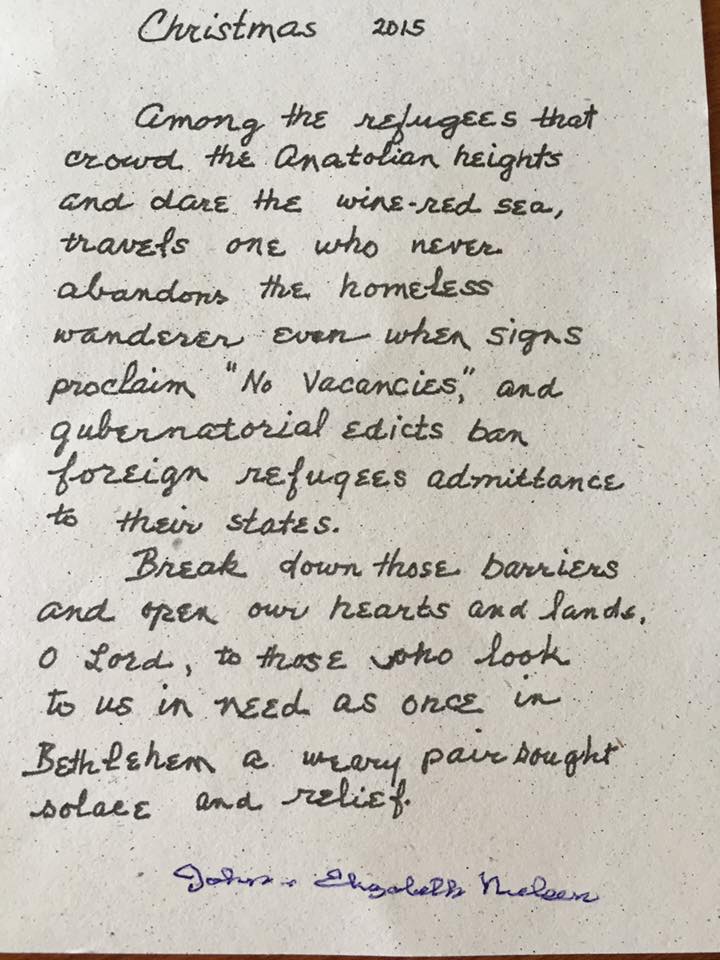
On another front, today students are going to see a production of Hamlet. It sounds like it is a sort of Avant guard production and knowing the professor who was able to procure the tickets for us, it could be a bit out of the ordinary. They do not have class today and most took advantage of that opportunity last night and are sleeping in this morning. In some ways, if they think carefully about Auschwitz and what they experienced on Sunday, this is how people do forget to some extent almost immediately. We go on with our lives. As I noted above, we have little idea what will happen and that which is past seems to fade away more that it should and more quickly that we might imagine. It is for these reasons that we have places like Auschwitz. We need to understand the reality of our differences. We need to ponder the consequences of our acting on those differences. We need to each, in our own piety, search our hearts and souls and come up with a logical answer for our illogical behavior and then try to make a change. I have taken the opportunity to screen capture the Christmas greeting from Dr. John W. Nielsen, my advisor, mentor, and the first person to take me to Europe. As we see what happens to the “stateless minorities” and even those who have states, but flee, Dr. Nielsen calls on us to think. As always, he puts into words so eloquently things I imagine.

Thanks as always for reading and Merry Christmas to my orthodox friends.

Dr. Martin


525,600 Minutes

Lydia_posed_3 sized

Hello from my dorm room in Krakow,

Most of you will see this title and instantly think of the Broadway play or the movie of the same title, Rent. It is actually one of my favorite movies and the song ranks right up there also. But this measure for me as I begin to type this next entry in my blog is because before I probably finish it, it will be a year to the minute that I got the call that Lydia had passed from this world. I am both stunned that the year has come and gone so quickly as well as wondering what the future holds as I continue through my own years. I am stunned even now that someone who mean so very much to me in life, and in a relatively short time frame so profoundly changed my existence. I would note that if it is possible, her life and memory means even more in her absence. I am grateful for some of the people I still have in my life because of her, all those COH people who cared for her so tirelessly and lovingly. I am blessed yet today that I have been given so many opportunities to care for others and give because of what she gave me. I remember after the phone call I spent the first hour making the appropriate phone calls to the United States and then laid in my bed and sobbed because I had lost yet another parent. However, this mother was the closest thing to what it seemed a mother should be. She was the most loving person I had in my life since the time of my grandmother, who had been my mother (because I had lived with those grandparents) when I was small, had been. Lydia had an incredible capacity to love and give that was actually very different that the demeanor that most perceived her to have. She loved those for whom she cared profoundly and boundlessly. The stories I could tell about her love for the “little ones,” as she called every four-legged critter that was blessed enough to find her backyard. They were fed as if they were the king of the forest and there was not enough dog food that could be bought to care for them. You could have fed three or four people in the early days of hunting from the size of the squirrels that roamed her back stoop. The crows were the size of eagles. Lydia loved to have lunch at Burger King, and while I do not think she ever saw a potato she did not love, she would keep extra fries so she could take them back to the house and feed her menagerie with a different treat.

There have been moments I wished I had met Lydia earlier in her life. The pictures of her in her 30s and 40s illustrate a person with that same forceful and determined attitude, but she was elegant. Her colleagues at UW-Stout noted that her appearance was always impeccable and she always had her hair done weekly. She never changed those habits. When I met her she would work in her yard and spend long hours daily with her broom and dustpan, but if we were going out, she would change into presentable jeans and a clean LL Bean button-down or a polo shirt. I once went shopping with her and we had to buy children’s polo shirts at Old Navy. I remember her once wanting me to go bra shopping with her when she had advanced in her struggle with dementia. I told her I drew the line there; that was not an option. She told me I was being stupid. I ended up doing camisole shopping for an 88 year old woman. Oh my!! Every Tuesday before she went to live at COH, I took her to Georgie to get her hair done. Georgie, bless her heart, continued to come to COH long after Lydia was there to still care for her hair needs. Even after Lydia moved to COH, she had her own way of doing things, all the way down to which hallway she would walk down, or push her walker down (and she was cruising let me tell you), or eventually which hallway she would push her wheelchair down. She had her own particular way the table should be set or how the napkins should be folded or how things would be set up in the middle of the table or where she would set her Wall Street Journal. And heaven forbid you think you could or should change it. She could give a look that would melt ice from 50 feet away.

I remember spending the day a year ago with Robert and Katarzyna. We had been out on New Year’s Even together and this year I was in the same place with students from the trip. I have been trying to catch up with Robert since coming this time and that has not happened yet. I know they have also had a difficult year. She too is an elegant person and Robert has a kind heart and an optimism that is unparalleled. We went out the day after I went to Auschwitz that one last night. It was so enjoyable. I remember talking with them about Lydia and I cried. I could not share what I wrote without tears welling up in my eyes. That still occurs for me at times. How do you measure the moments in a year as the song asks? What do we remember and what fades into the blur of events that somehow get lost deep in the recesses of our mind, if they even get there? There were some really difficult moments for me this past year. The first was when I went back in March to do Lydia’s committal service. The burial was a small and private service and I conducted it. I maintained until I had to commit her to the ground. It was extremely cold that day and was trembling from both the cold and the reality of her passing. As I knelt down on the cold snowy ground and kissed the urn, my tears fell and probably froze before they could touch the snow. Earlier that morning I had gone to her room at COH for the first time. That was when things really hit me. Her room was empty and the chair I had held vigil for her in December was still there. I sat in that chair one last time and I cried. It felt good to cry in that place. It felt good to be among the people who had cared for her so caringly and unpretentiously. It felt good when two days later we had a memorial service at the facility and those terrific caregivers who had become her family were there to celebrate this amazing woman. She would have been disgusted that a fuss was made over her, but that service was not for her, it was for them, and her colleagues and others who understand, and still understand, and loved, and continue to love, this marvelous woman.

The next time I went back was in May. This was going to be the difficult time because it was the time that I was going to really say good bye to Wisconsin. Here is that rhetoric of place issue once again. Menomonie had such a wide range of memories and experiences for me to process. Her amazing home and become my sanctuary when I was back there. I called that room on the third floor “The Upper Sanctum.” I knew when I packed a truck and emptied that room, it was finished. My former colleague, and friend, Barbara Button sent me a note in the days following noting sadly that my energy had left that little space on the circle. It was a profound statement. Indeed, 10 years of connection to the town was ending. While I have important friends there yet, and particularly the Lacksonens and Amy, Charles, and Simon and some others on the circle (or not far from it, Barb and Larry). I have an amazing mentor in Dan and former colleagues in Jane, Susanne, Beth, or David, the requirement to return there is not the same. As I got into the U-Haul truck that day, again I cried. In fact, I wanted to get back before the end of the year and that did not happen. Shortly after returning, summer school began and I have been in class somehow ever since. There was not an inkling that I would be here in Poland again for New Year’s but it happened.

As I watch the students who are along on this trip, I have been given an amazing gift. There are some wonderfully intelligent and thoughtful students here. They have been serious about the classes and they have been enjoyable to observe and speak with. It is one thing to be capable, and many of them are; it is another thing to be a good person, one with some standards and a strong moral foundation. I have witnessed that among a number of the students and they seem to get along well. That too is impressive. I am pretty sure that none of them thought about going to Poland a year ago, but I know that none of them will be the same after they return. That is the amazing thing about traveling. If you honestly attempt to become part of the culture in which you are living and breathing substantive things will happen. There are two students who are Political Science and Russian majors. They are both phenomenal. There are Speech Path students and they are working hard and thinking carefully and they are all good people. I have two students that I have had in classes previously and it is fun to watch them here and relate to them in a different manner than in the typical classroom setting. I know there are some specialized biology students who I can only admire with their intelligence, work ethic, and goodness, or accounting. There are more, but I cannot remember all 30. The point is that the gift they have given me is hope. I am sure that our world has a chance when I see them and listen to them and that is important.

525, 600 minutes, how do you measure the moments in a year? Indeed, how about love? In this world that seems to want to exclude, ostracize, blame, or anything else that marginalizes could we change our frame of reference? As I have listened in my Central European History class this past week, the consequence of marginalization for the Jews began much earlier than I realized, but anyone not living under a rock for the last 80+ years certainly knows the result of the final solution. Tomorrow I will visit Auschwitz for a second time. This too is related to Lydia and George. George spent time in Dachau, another notorious camp (but for anyone held in any of the camps, the belief would be the same) as a political prisoner. I need to work on how long he was there and get more specifics, but how did he measure the minutes in a year under such duress? Lydia was sent to live with relative in Wien (Vienna) to escape what would happen to those with German or Hungarian citizenship at the end of the war? How did she measure the minutes as she and 1000s of others walked from the Sudetenland to Vienna (I think in a straight line it would be about 200 miles or over three hundred km)? How did she measure the minutes when she never saw her parents again? Why is it we spend so many minutes hating or despising or separating ourselves from those around us who are also human? I am reminded of Sting’s song, “If the Russians Love their Children too”. I have actually posted the video in an earlier blog. It has been a year since the world lost a phenomenal lady. She understood hardship, but she persevered. She understood loss, but decided to continue and strive to move forward. What I know of Lydia and many of the others who came to America in the 1950s is they left the continent behind them, seldom speaking of it, and worked to begin a new life, but the world they left behind has amazing culture. It has phenomenal beauty. It is a treasure to merely walk the streets and soak up the centuries of history. The minutes of time that amount to so much more.

Lydia, I am in Poland and the Czech Republic in a few days because of you. You taught me about this world by your stories and the things you shared with me. You have left me, but you are here with me. I wish I could be walking these streets with you. I wish I could hear what you might say about your life in this world in the 1920s and 1930s. I know the decade of the war was horrible for you. I know it scarred you, but as you seemed to always do, you put your head down and kept going. You never complained or felt sorry for yourself. When I was blessed to hear your accent that first time I walked up the driveway, I had no idea how much you would become a part of me. It has been a year and now a year and a day since I got the news that you had left this world. The minutes since have been a blur at times. They have been difficult and I still miss you. I still wake up and imagine you standing there looking at me and asking if I am awake. I still hear the soft patter of your feet coming up my steps. You make me smile even yet. The 525, 600 minutes have not been the same without you. There is no denying that. I hope I can change a few lives in the minutes I have left as you have changed mine.

Meine Liebe Lydia,

Es ist ein Jahr her, seit Sie Ihre strahlenden Augen geschlossen, dass die letzte Zeit. Ich war nicht da, und ich bedauere, dass immer noch. Es ist ein Jahr her, seit ich fühlte deine Berührung und Ihr sagt mir, Sie wüssten, dass du meine Mutter waren. Es war ein Jahr, und die Schmerz und Verlust bleibt. Ich liebe dich noch immer und immer. Segne euch meine Mutter, jetzt und immer.

Ihr sohn,

Michael.

For those of you who do not speak German, I offer this.

My dear Lydia,

It has been a year since your radiant eyes closed that final time. I was not there and I still regret that. It has been a year since I felt your touch and your telling me you knew you were my mother. It has been a year and the hurt and loss remains. I love you still and always will. Bless you my mother, now and always.

Your son,

Michael

To everyone else, thank you for reading,

Dr. Martin

Imagining Someone, Somewhere, Something Different

Winter on the Homefront

Good late afternoon (but it is already dark)

Hello from my little room in the dorm. It is barely 4:30 in the afternoon, but it is already dark. The students went to the salt mine in Wiekiczka this afternoon following morning culture class and lunch. I came back to the dorm and did a bit of work, then took a lengthy nap, and now I am up and working on some things I hope to accomplish for the evening. I am slightly hungry, but I want to wait for the others to come back to eat. I do have some food in the room from our foray into the neighborhood and the market the other day, so I am fine. At lunch today, I was fortune enough to share time with a couple of students and Dr. Orla-Bukovska. We began some initial conversations about an option of coming back to Poland to learn the language for a summer term. I am also considering applying for a Fulbright Scholarship. I know they are harder to get, but it could certainly make the possibilities of learning Polish and studying much more likely. There are other things to work out also, but I think I just need to get going. I have always had a tendency to imagine things, but I have not been as likely to try to see them through to reality. I have probably lost some opportunities because of this.

I think it is in our imagination where we first begin to understand ourselves. Scholar Susan Babbitt notes in her 1996 article titled “Impossible Dreams: Rationality, Integrity and Moral Imagination” wrote, “Conventional wisdom and commonsense morality tend to take the integrity of persons for granted.” So much to unpack in this statement because it considers both the ethical possibilities for us as humans, but conversely forces us to consider what happens when people act with something less than a certain level of moral turpitude. Is it because our dreams or imagining of the other forces us to think outside what we have? Does that thinking lead to selfishness? Should or must it? These are some of the things I wonder about. One of my struggles with imagining the other, if you will, is I already feel I am living it. The other occurred when I went to live with my grandparents by the time I was two years old. The other occurred when I was adopted shortly before I turned five years old. The other occurred when I left for college and attempted to live a life that had never occurred in my biological or adopted family. Finally the other occurred as I have moved through the various levels of education and now to become a college professor, which is not anything that was ever expected or planned until I was probably in my 30s, the time when many others have already completed their studies. Therefore, the idea that I should still consider the possibility of the other seems fundamentally absurd to me on some level. Yet, my desire to learn, to grow, and to experience more keeps me wondering, and wandering, or so it seems.

If I were to be someone else, there are some things I might change. I would wish to not be a person suffering with Crohn’s and a person who has endured almost double-digit numbers of abdominal surgeries. I would wish that perhaps I really had been a parent. I would wish that somehow I might have been a bit taller, a bit more coordinated, a bit more handsome. How’s that for true confessions? And yet, as is always the case, those changes would have compounded and created yet other changes, and the likelihood that I would be writing this blog is probably beyond the area of remote. What, might you  ask, if anything, do I like about being me? Well, I do believe that I have a giving-spirit and a kind and generally gentle heart. As I generally tell others, I will never enter or win a beauty contest, but I do not have to sneak up on a glass of water to get a drink. So . . . I guess I do wish I was a little taller, a bit more in shape, but that is my own fault, and I certainly might not be feeling sad had the Crohn’s not been a companion for over three decades. In fact, I have now lived longer with this malady than without it. Yet, not surprisingly, even the most difficult of things are part of who I am, they are my story, my narrative, and as such my identity. What is identity? Those are things I have pondered before. How much of our identity is self-created and how much of it is foisted upon us, perhaps even decided for us? I know that I have spent much more time in my life worrying about what others thought and that influenced who I understood myself to be than I might like to admit. What would another version of me even begin to be, to look like, or act like, or . . .

The imagining of somewhere is probably the easiest for me. There are a variety of reasons for that, and some of those things have been topics in previous blog posts (see June of 2014 where I speak about my  mother or November 2014 when I address issues of identity and place). What gives a person a sense of place has been one of my haunting themes throughout my life. Again, I know from where these trepidations come and I know how I have managed them, generally speaking. I know that I have learned to make wherever I am home, but I also have this profound sense of wanderlust. I am always interested in what is around that next corner. As a child, we took to vacations and both of them were primarily in the Midwest. The Black Hills of South Dakota are a bit more western, but that is certainly the farthest I got away from Sioux City as a child. As I have noted in other blogs, I have traveled pretty extensively and the last couple of years have only increased those opportunities. There are certainly things on my bucket list that cause some addition hopes, but I now see that as merely another way to learn and manage. What has become exceedingly apparent to me as I travel and experience things is that is when I am truly alive and learning. Somewhere is much more than place to me. I think somewhere has much more to do with both place and context. If you think about a sense of place, it has something to do with the geographical attributes, but it has as much to do with the “what”. What happened in that geographical place is what you remember and it affects your memory in a more complete and emotional manner. Over the past few days as I have walked the streets and looked at the signs in the windows or listened to the voices around me, comprehending even minimally would be kind, I have felt like the stranger or the other. It is interesting to me how I am able to find a way to feel some degree of comfortableness wherever I happen to be. Sometimes it is in merely walking around and observing; sometimes it is in realizing that I have a sort of inner strength because of some of the things that have occurred in my life that have taught be to keep going and never quitting. I know that it is another experience from which I can learn yet something else about the world and myself. One of the classes the students are taking is a class on Central European Cinema. The movies we have watched are much different that what a typical American film would be. We actually got the first lecture yesterday and it was interesting to see how film actors in Central Europe tend to be dramatic stage actors and then do film as a sort of an extra curricular thing. It is the opposite of what happens in the states. The second thing that is quite different about the films we have watched is they are much different in their budgeting and, as such probably in their expectations. The are much more realistic, sort of in your face. I wonder if that realism is because the culture here seems much more honest in dealing with the world. I know that is a significant statement that needs to be unpacked a bit, but I need to think more about it before I try to do that.

Imagining something different for me is actually a bit difficult. I am doing what I love to do even though it was not what I expected my life to be. I know that begs the question of what did I expect, but what I am realizing more and more is I had no expectations. I am not sure what I thought I would be or where I wanted to be. I am not sure that I had expectations in terms of marriage, children, or any other such thing. When I consider these statements, what I realize is I had little to no sense of what I might become, where I might be doing it, why I would even have decided to be or do something. I am wondering if that makes me abnormal or if many of us are really not sure where it would all go and how it would turn out. I was asked today if I had any regrets in my life or things I would have done differently. This made me think on a couple of different levels. There are small things we wish might have been different, and I think we all can see those things. What about the major things in our lives? My answer to that question at the time was perhaps I wish I would have been a real biological parent. I do believe that part is a truism for me. I do wonder what it might have been like to actually succeeded at being married. I wish at times that might have been the case. I have noted to some who know him, sometimes I worry that I am going to be this generations version of my Uncle Clare, or even my grandmother. I think I am probably more like her. She lost her husband when she was only 43 years old. That was pretty young to be a widow and she lived for another 21 years single. I have been single for 15 and counting. There are times I think I want to take a chance and then there are times I am quite content as I am. So do I really imagine something different. I am not sure I do. Probably because I so enjoy what I do most of the time. I love that I can meet so many amazing students and the fact that I have been given the opportunity to travel with them right now is something I had only dreamt of once upon a time. I know that my first trip to Europe with Dr. Nielsen was life changing and perhaps some of the same will happen for a student now.

The group of students that is here with Dr. P and me are quite amazing. They are working and thinking. They are experiencing beyond what one might imagine. Many today were taking the writing task they have coming up this week this some real seriousness. It was enjoyable to speak with them and ask some questions and get them to think. Well, it is actually a few hours until I want to write about another issue, but I will close this blog up and again, as is always the case . . .

Thank you for reading.

Dr. Martin

Critically Thinking in a Surface-Oriented World

IMG_0648

Hello from Bydgoska 19C,

My brain is whirling,  but my body is tired, so I might sleep a bit and come back . . . we’ll see what happens. Well . . . the typical happened; much like when I make a road trip and need a break, the power nap works very well. Though this was about twice the length of what I call the optimal nap (45 minutes or so), I am awake. Brushing my teeth and a little face washing always seems to do the trick. Today we continued to attend classes and some of the students are struggling with finding their bearings and as such, did a scenic walking tour around City Center Krakow today. The sociological view of Jewish emigration and identity is a very interesting class. It is also quite interesting that in my reading I have found a number of things I can use. We went to a second class today, which is a film studies class. We will watch a number of films in 9 different languages over the next three weeks. We watched on in class today, which was a bit bizarre and I watched the second assigned film this evening back here at the dorm on the computer. While I have watched foreign films before, I am analyzing then a bit differently. My immediate reaction to both of these films is they are not your typical American Rom-Com and you would not go to the movies to feel good or escape life for a while. It is not your typical American entertainment. There is an article accompanying these first two films assigned and that is going to hopefully help me see where the professor is headed. He is a very young and rather amusing person in the class. In addition it is evident he knows his craft and there is much more to what is going on than merely a surface sort of analysis.

It is the sort of surface analysis that is really the point of this posting. I remember back to high school when Mr. Littlejohn (I know it sounds rather Sherwood-ish in nature, but let me assure you there was nothing easy for the taking here), my chemistry teacher failed me for attempting to merely get by. I can still see him when he would get angry and pound the lab table with his fist and explain, “You have no drive! You must produce!” If there is anyone who when to Riverside Junior/Senior High School who had chemistry or physics and reads this blog, I am sure they can remember him. He was perhaps the first person who really pushed me to consider the option (really the need) to do more than phone things in, as my colleague, Dr. Decker, calls it. I think I actually had a string of teachers in that realm. I remember my 7th grade geography teacher giving me a C at midterm and telling me I should never have grades as low as that. I remember being embarrassed when she said that to me. In college, probably because I had already failed out of Iowa State University, when I got to Dana College, I knew I had to get to work. What I knew more keenly, however, was the simple fact that I had never really tried very hard. Even in the service when I got accused of cheating in Communications and Electronics School because I had a 100% average after three weeks, I had not really tried that hard. I merely memorized and did my work. Perhaps it was the Delvin Huttons in the world, my Greek and Religion professor at Dana, who first challenged me. Yet even then, with a C in a couple of his classes, I did not feel challenged I felt put upon. How dare he??!! Perhaps it was more telling when he said to me that I was not smart enough to take a summer Greek class that someone really pushed me to prove to them, but more importantly myself that I was capable. It was the Donald Juels, who wrote on a paper that he “hope[d] that I learned more in the class than was exhibited by my paper.” that finally pushed me in a manner that forced me to look at myself honestly and figure it out. There was someone at each level. When I was working on my doctoral degree it was Patty Sotirin, a person for whom I still have the utmost respect and admiration. As late a year ago she was still disagreeing with me and pushing me to consider other options on a paper. Her insight and accuracy into any given situation is unparalleled. What all of this says to me is pretty simple, without challenge, at least for me, I too am content to merely do enough, but who is my challenger now? Honestly, it has to be myself. I have to be willing to work harder, see clearer (more clearly), think profounder (more profoundly) . . .  (yes, I know there is grammatical structure issues, but I was working on the parallelism of the list — I can’t help it).

What are the consequences of not doing this? What are the consequences personally and beyond? The consequence personally becomes a lack of initiative. It becomes a loss of truly dreaming. It becomes a lack of curiosity and ultimately hope. Dr. Donald Juel, my New Testament professor, wrote in my PhD recommendation, which I was allowed to see after I graduated, that he did not know my best work yet, and probably neither did I still had not done it or something to that effect. He did say that I had a tenaciousness that he had seldom seen and that I was willing to work harder than most anyone. He did believe that I would see it. To this day, I am not sure I have. I do believe I work hard, but I have too many things going on all the time, and that is of my own doing. I claim to be the victim of my circumstance, but I am not sure that is as true as I would like to make it. I need to do more succinctly what I tell my students, prioritize and then have the discipline to follow those things. I think I go through phases where I do this well and then other times not so much. I wish I knew more about more things that is the problem, and while I know that seems to be a generalized statement, there is more specificity to it than appears. If you really know me, you know that I have this insatiable desire to learn and to learn about most anything. I am more of a cultural inquisitor than I realized. I want to understand the connections and that is why this current history class the students are taking (and I get to lurk in for free) is so fascinating to me. The question that creates a foundation to this course is why is it that a stateless minority has been able to maintain its existence and prominence in world history? She is referring to the Jewish people. What she has already forced upon me is an appreciation for their tenacity and a connecting between scripture and history that goes beyond anything I had previously considered. She did that in less than two hours and she did it simply and thoughtfully. There have been moments I have felt like an undergraduate student again, wishing I might have taken the opportunity to study abroad and work on issues of culture and language. I wish I would have not given up my Goethe Scholarship to study German in Bremen before moving to Pennsylvania the first time. I do hope to figure out how to manage coming back to Poland next summer and studying Polish for 6 weeks or so intensively. I would need to do some other work in the Spring to prepare, but it would allow me to do some other traveling and learning also. I have said on more than one occasion that if I would do my life again, at least educationally, I would want to learn five or six languages fluently and then study linguistics. There is a student on the trip who hopes to work as an interpreter at the United Nations. When she told me this, she almost apologized for her dream, and I told her to not ever apologize for having a dream. She is a strong and thoughtful young woman and that is what the world needs.

Too many people are willing to merely scratch the surface, and too many educators, bosses, or others are willing to let them. What does it mean to really strive for something? Most of our students have a better conceptual understanding of this than they might admit. Anyone who has participated in a sport or learning some art form (music, art, dance) and really put in their practice time to excel does understand reaching for more than merely going through the motions. This is where the practice of everyone needing to succeed has its problems. Some are merely better and some work to be better, but we need to be honest. This does not mean we need to be brutal or uncaring, but going to far to the side of needing everyone to win or embarrassing or hurting people through nasty demeaning behavior on the other is not what competition needs to be. The consequence of these extremes is exactly what has occurred and why should be surprised. If you encourage those who need the improvement to actually work to do it, most will step up to the plate. If you help them over the elevated bar, two things happen. They will put in more effort and they will appreciate that you helped them improve. I am often told you have to work hard to fail my course. I do not let people merely fall between the cracks, but as my ACT 101 students from the fall found out, and should have known from the summer, I do expect you to step up to the plate and do what needs to be done to be successful.

What are the consequences societally? We get people like Donald Trump bullying people and an absolutely horrendous number of people supporting his boorish behavior. Bullying is not thought-provoking, it is merely provoking. Insulting takes little intelligence, it requires an unbelievable amount of fear and arrogance. It allows assholes with power to merely scream, “You’re fired!” So why is it that so many are paying attention and following this sad excuse? Because his lack of decorum on the public stage is how many of them act in their personal lives. He gives them license to continue their own sad behavior. Xenophobia, or any phobia for that matter, comes from fear and ignorance of the actual facts. It is exactly what Dr. Orla-Buskowska has been showing us in her class the last couple of days. This license for a lack of decorum has other consequences. If such behavior is tolerated, and in the case of Donald Trump’s example, encouraged, no one is required to examine or analyze the issues. Difficult problems are not managed or understood, they are merely rolled over. The extreme of that behavior will be witnessed by the students first hand when they visit Auschwitz in a couple of days. And for those of you who want to say that I am comparing Trump to Auschwitz, I do not believe he has gone to that level, but a more logical extension of the extreme than one wants to consider would allow for such things. How does Trump’s call against Latinos/as or Muslims differ from what was done in the United States against the blacks (and too often still is) in the pre-Civil Rights time? How does it differ from what we did to the Japanese post-Pearl Harbor? These are the consequences of not looking deeper or analyzing more carefully. These are the consequences when we fail to really study and understand the complexity of the world in which we live. I for one do not want to live where we should once again create places where the last words one sees on the gate is Arbeit Macht Frei. The picture at the beginning of the post is of my father in WWII. He came to Europe in that war to fight the consequence of not thinking more carefully and being willing to merely accept what was being espoused.

Well, it is about 6:30 a.m. and I have been up for about an hour or more, but I have other work to do.

Thanks for reading, as always,

Dr. Martin

Krakow for a Second Time


IMG_3489Hello from a Polish dormitory room in Krakow,

Today was our first full day in Poland as a group. It was a  busy and interesting day. We began the morning trying to square away things like having the internet in our rooms, seeing if Wifi is a possibility in our rooms, which seems more than likely to be a dream, and then getting to the university and the first day of one of the two classes as well as a sight-seeing trip around the city. I saw some things I saw last year on my stay of only a few days and I saw some other new sites. We were at Wawel Castle where I had the nicest time with Robert a year ago. I also tried to call him today, but have not successfully contacted him yet. I did enjoy the day for the most part, but as I walked around a bit on my own, I realized once again how solitary one can feel in the world. It is always an interesting thing. Because I do not know Polish, almost every banner, street sign or advertisement makes me feel as an alien. There are certain words I can figure out from my other languages, but it is a struggle for me when I feel so illiterate and wish I knew so much more. . . .  It is now about 12:30 a.m. and not surprisingly, I am awake. This is where my hours are still a bit askew. The picture above is from the salt mine outside Krakow that we will be visiting. This carving of Pope John Paul the II, the only Polish pope is one of the amazing chapels in the mine.

This evening I thought about my own first trip to Europe, which would have been about 34 years ago. I went on a Interim Trip with Dr. John W. (The Pope) Nielsen. The interim has been mentioned before in my blog. I had to read books before I left by Ernest Hemingway and Thomas Mann and we visited a number of places they wrote about. We traveled from Germany to Denmark, going back through Germany (only the West then) to Italy and then to France, Switzerland and Spain. It was a significant trip for me because it was my first time to Europe and it changed my life. Second, there were a couple of interesting occurrences, including my getting ill and having to go to Germany on my own. Long story short, I ended up on my own for about two weeks and learned more Germany and got to visit more things than I could have ever imagined. For those of you old enough to think of the time period. I was in Germany when the hostages had gotten out of Iran, Reagan was just inaugurated, and the world still had some similarities. A  disco in Germany was bombed at that time. As noted it changed my life. I learned how to learn. What I mean is that learning was no longer merely memorizing the writing the answers down. So many people are content to merely consider the surface or what is in front of them and they refuse to ask the tough questions. Today in the Eastern European History class, the professor, Dr. Annamarie Orla-Buskovska, who was phenomenal, noted that she wanted students to think critically and to be original in their thoughts when they wrote a response paper. I wanted to stand up and cheer.

What does it mean to honestly learn something? What does it mean to question the why? That is something that has always been a part of who I am. My poor mother. As I was merely walking down the street today in Krakow, my senses were bombarded from every direction by the sounds, the sights, and there was so much to take in. The culture is both similar and profoundly different at the same time. A couple of students noted that Krakow streets made them feel like they were in NYC, but it was so much older. Both the student who is working as a sort of tour-guide/helper, who is a college student himself and the actual tour guide who spent time with us this afternoon, were and are, so passionate about their town. There is so much history and once again, as I felt the very first time I was in Europe, I am walking through the pages of history, the centuries of what others experienced, struggled to build, died to change, dreamed to fashion, so that others can have a life they did  not have. The lecture this morning about Jewish identity and what they have managed as a people to do, which is exist and matter when they are “a stateless minority,” was fascinating to me. When there are three students along on this trip (I think that is correct) who claim Jewish ancestry, I cannot imagine what it means to listen to what we heard today. As much as I have been accustomed to considering the Jewish history because of my previous life as a pastor or as someone who studied Holocaust, and still does, some of what I heard today made me think in ways I never had. That is exciting to me. I love when what I have become comfortable with gets shaken up and I have to rethink.

I took the time this evening to read the first pages of Paul Johnson’s book, History of the Jews, as we were asked to do. It was also intriguing and made me realize a number of things I could do with my Bible as Literature course, things I have not done. I have an entire couple lectures that I could do for that class that I had never considered and as literature would work terrifically well. It does not take much to make me happy sometimes. There is so much more to consider about the Old Testament and beyond the Torah or the history. There are issues of feminist writing in a patriarchal culture; there are other writings that exist outside the Bible about Biblical characters, if I can use that term, and that goes beyond Philo and Josephus. That is what I learned the most about in my reading this evening. What is also strange is I feel somewhat like I did when I was often up in my dorm room at Dana College. I remember classmates asking why my lights were on at 3:00 or 4:00 a.m. and I would tell them I was still studying. That is where I learned to honestly study and realize what it meant to actually learn something.

How is it we really come to know ourselves? How is it begin to really understand our place in a world that is so complex and difficult? I do not necessarily subscribe to the idea that the world is more difficult. I think it has always been so. It might be true that we are more aware of our interdependence on each other, but one can hope that would be beneficial rather than malevolent as it seems it is. From where can we find that soft inner voice that pushes us to do for others rather than for ourselves? Can we be selfless even some times rather than selfish most of the time? I am reminded of a song by Celtic Woman . . .  It is called “The Voice” and I will add a link to it at the end of the post. How does the world speak to us? How does our history speak to us? How do we hear the voices we need so desperately need to listen to as we wander on our own paths? I think I am reminded of this every time I go to another place. As Americans we forget there is so much more to the world than our little corner . .  .  most of us are parochial enough we are not even able to understand our own country let alone the rest of the world. When I am standing in a castle that has a history of more than a millennium I am reminded there was a lot of world before there was a United States and the culture that comes with such a spans of time needs to be valued. Their language needs to be valued. What they have brought to the world long before we existed needs to continue to be celebrated. Now before you believe I am not proud or patriotic, put it away. I merely realize there is so much more beyond Texas where I was born, the Midwest where I was raised, or the East where I now live. One of the things most impressive about our country is its diversity, not only in its people, but in its landscapes. Indeed, in a scant 235 years +, the country has had an amazing impact on civilization, but with great giftedness comes even greater responsibility to the rest of the world. I do not mean that as a political statement, but rather an ethical one.

As it is now about 3:30 in the morning in Poland, I am going to try to get some sleep. I plan to be up in about three hours and I am looking forward to another day of learning.  It has been nice to sit in my little room and ponder. Here is the link for the video.


Thank you as always for reading and I will be trying to post regularly as I travel with 3o amazing Bloomsburg students.

Dr. Martin


Remembering an Amazing Life

Hello from JFK,

It is exactly a year ago today that I would be leaving Lydia for a last time. It was an amazing day because Carissa was able to get the little tornado into the shower and wash her hair and get her a bit more comfortable. The picture here is of her that morning. My thoughts these last days have certainly been about her often. It seems impossible that a year has already past. I would be leaving for Poland on the 28th, so it is a couple days sooner, but this time I will be there for three weeks.

As I have lived through another calendar year, the reality of losing someone who affected me so significantly almost a year ago has really struck the core of my being in a profoundly different way. Seldom does an entire week go by that somehow, somewhere, some way my thoughts are not focused upon this strong, vibrant, and determined little two-digit-midget, as I called her. The loss of her stunning blue eyes, her infectious smile, and her strong Austrian accent are all things that  miss seeing, hearing, or experiencing. And she was an experience. Her interest in things economic and the world in general never ceased to astound those who knew her. Even for some time after she was living at COH, she watched for the mail like a hawk waiting for her Wall Street Journal (WSJ). She read the complete journal article by article and she had such disdain for those who did not care to understand such things. I remember her telling me a couple years before the 2009 economic meltdown that it was coming. She was so brilliant about such things.

I have heard her classes were very difficult, but she certainly knew her subject matter. Shortly after I started living next to her, she asked to see how I had my WPS pension invested. When I told her what I had done she said I was too conservative. She then performed a 10 year analysis on my pension, finding that the difference between a fixed account, which is what I had, and have, had performed amazingly close to what she had. She was satisfied, but only after she had done her due diligence. Of course, if you knew Lydia, even a slight bit, none of this would surprise you. She was careful and thoughtful about most things. This is not to say she could not be a bit stubborn about things. She certainly had an opinion about most anything. Well, perhaps that is a bit far-reaching. If it was worth her notice, and certainly some things were not, she probably had an opinion. Usually things that did not interest her she would note, albeit rather curtly and in her distinct Austrian accent, “that is just stupid”. I would have loved to take a class from her because she would have forced me to think. There is a rather successful business person in Menomonie who told me more than once. I had her for two economics classes and I got Ds in both of them.

Even now, there are moments I find it difficult to comprehend, nay, perhaps accept that she is actually no longer there in Menomonie. I wonder at times if it is because she seemed almost larger than life or if it is because I am, and was, in Pennsylvania when she passed? I was actually in Kraków, where I will be later today. I remember earlier that day praying in the church of Pope John Paul II that George might convince her to let go. That was New Year’s Eve day. Even now, a year later, I also have to say a most sincere thank you to the Langtons for coming in from North Carolina to be with her. Then there are all the amazing caregivers who cared for Lydia in the 4 years she lived at Comforts of Home. She changed so much in that time. While she was no longer safe in her home, she was quite an amazing person and still very independent when she came to live in a north Menomonie. She took care of the plants, she helped set the tables, and she was less than pleased when I would cook because I was not sitting next to her. She knew what she wanted and why she wanted it. I remember the first Memorial Day  I did a cookout for everyone. The residents and staff were ecstatic, save one person. She thought it was “okay” as she gave a look of nonchalance and waved her hand as if to say, “Do not think of yourself too highly, Michael.”

To this day I regret that I was not there that last day, but only God knows (and I mean that literally) how long she would have hung on had I stayed. To the last person, we are sure she did not want to put me through seeing her pass. I still feel in my heart that she became and was the mother who did as much for me as my grandmother did when she served as my mother when I was a small boy.  I have in my blogs compared them before. They were both independent; they had both lost their husbands before they were ready to do so; they were both elegant and had a beauty that endured throughout their days. They both had incredibly kind and giving hearts. When I think of either one of them I am profoundly aware of both how loved and how blessed I was, and still am, by their presence in my life. In terms of time, it has been 38 years since my Grandma Louise left this world. For Lydia, I cannot seem to come to grips with the reality of an entire year within the week. What I know is her loss has affected me more significantly than any other loss in my life. Is it because I too am older? Is it because I am still realizing how influential she was and how loved I was?

A year ago I was praying you would let go, only because I wanted you to leave a life that was little more than mere existence. A year later it is me struggling to let go. I cannot seem to finish everything or anything I need to do  (and that seems to be across the board). Too often I seem stuck in a haze of my own existence, but an existence missing its heart. You found your way into my heart, Lydia. You made life worth doing in ways I did not know before. You were my mother, my family. As I write this I am struggling to see the screen through the tears that have welled up in my eyes and now trace their paths down my cheeks. It is not the first time this has happened, and it will probably not be the last. I remember last Spring in class I cried more than once in class. My image as a hard-ass professor was pretty well blown.

I remember writing last year at this time you are my guardian angel and I would try to not make your job too difficult. As you know, once again, I am in George’s country; you also know that I wrote a sabbatical proposal to work on the historical fictional novel I promised I would write. I am hoping that proposal is approved. We’ll see what happens. As I approach the first anniversary of your passing, ironically I am in the same place I was a year ago. I remember lying in bed and sobbing, sobbing that you were released from the shell of the phenomenal woman you had once been; sobbing because of the hurt from the profound loss I was experiencing. Sobbing because I was not with you. As I am preparing to land in Kraków I have been up for about 36 hours and I am tired, but I am thinking of you, remembering with both joy for the amazing life you lived and how I was blessed that you loved me so much, and a sadness that I am writing about your memory, about your beautiful eyes, the radiance of your smile and that amazing accent calling my name. What I wouldn’t give to see and hear you again. What I wouldn’t give to have one of the caregivers, usually Leighann, calling to tell me you wanted to talk to me. What I wouldn’t give to have Carissa sending me another picture of you and her. I love you still and forever.

Michael

The Fundamentals of College (and Life)

 Hello from my office,

We are back to the last week of classes and the finals the week following. This semester has gone much more rapidly (at least it seems to be the case) than any other semester since I first taught the fall of 1992. It has hard to believe that I have been doing this for this long a period of time. Today is the last day of the semester, so yet again it is a couple days since I began this post. Today I met with a student, who like many first year students, the shock of the elevation of expectations and the lack of preparedness from high school is much greater than ever imagined. It is not just that lack of preparedness that concerns me, it is the fundamental lack of critical thinking and the lack of study skills that shocks me. I asked the student about their studying and if they believed everything they had done should have prepared them. They said, yes, but barely passed an exam, twice. When I asked where the problem might be, they could not come up with an answer. In addition, they were somewhat content with where they stood. I understand to some extent the response, “it is what it is.” What I am not sure of is if they were trying to merely move forward, or they had somewhat given up, or they just did not even care. I am hoping it is the middle choice, but I am honestly not sure.

I must also say I do not put the entire weight of this on the student’s shoulders. They certainly have some responsibility, but our system, both public K12 and now the university must bear some of the fault. I see so many freshman under prepared. In this particular group of summer students, we structure them to the maximum in the summer and naively believe they have learned to manage their time and academic demands in six weeks. So in the fall they are left to their own to try to figure it out. Many of them fail miserably. The consequence is academic probation, a grade point they might never recover from, and a sense of disillusionment, where once they believed in a dream of moving beyond where they come from. Of my 22 summer students, it will be interesting to see how they have done. The seven or eight I am continuing to mentor show an overwhelming sense of struggle. Only one is where I think they should be. I wish there was an easy answer to this issue, but there isn’t. It would take a number of systemic changes. Yet, I guess if a couple figure it out there is some sense of achievement or success. It is my idealism wanting everyone to figure it out.

Since starting this post, another shooting, another connection to ISIS/ISIL, another reason to wonder what had happened. Again there is no easy answer and whoever becomes the next president (and I hope it is almost anyone but Trump-well not quite) will have a significant problem on their hands. When I first heard reports of the shooting and got names, the Arabic nature of the names automatically had me wondering. That reaction demonstrates the consequence of 911 and the incidences since then. How is this different from what happened to the Jews in Germany or the Japanese in the United States post-Pearl Harbor? It isn’t and I am mortified that I am in this position. I have Muslim students, one in particular who is like my own child, who are normal,  hard working, and would never want such terror to befall their neighbors and friends. How did one faith that was basically built on prayer and giving become so violent for a particular element of the followers of Muhammad? I do not see a call for violence in their five pillars of faith.  Of course, the same can be said for many who proclaim the Christian faith for whom the golden rule is a fundamental tenet, but certainly do not demonstrate such behavior and treat those who are either different or believe differently with such disdain or hatred.

While I did not experience either of those extremes anytime lately, it is always interesting for me to see how so many are so kind or close when they need something, but otherwise they act quite differently. Students are so predictable. It amuses me on one hand and saddens me on the other. The end of the semester panic (or acceptance) that their poor choices for 14 weeks cannot be fixed by extra credit, tears, or avoidance. The belief that it is just something to do over when they have simply thrown away 1000s of dollars. Part of it is immaturity. Part of it is learned selfishness. Part of it is our willingness in our public schools to give something for nothing. Merely show up, stay out of trouble, and turn in something and you can have an A or B. I am witnessing the consequence every semester. That is not to say there are not strong or smart hard working students, but the overwhelming belief that I should go to college merely because I should is misguided. Not everyone should go straight out of high school. Perhaps most shouldn’t. All I know is the fundamentals of discipline and priorities, which are necessary to succeed in college are not fundamental to many of my students. The consequences are consequential: difficulty in finding a job and significant debt for a piece of paper that guarantees nothing.

Just my thoughts. Thanks for reading.

Dr. Martin