
Hello from Main Street in Pennsylvania’s only town,
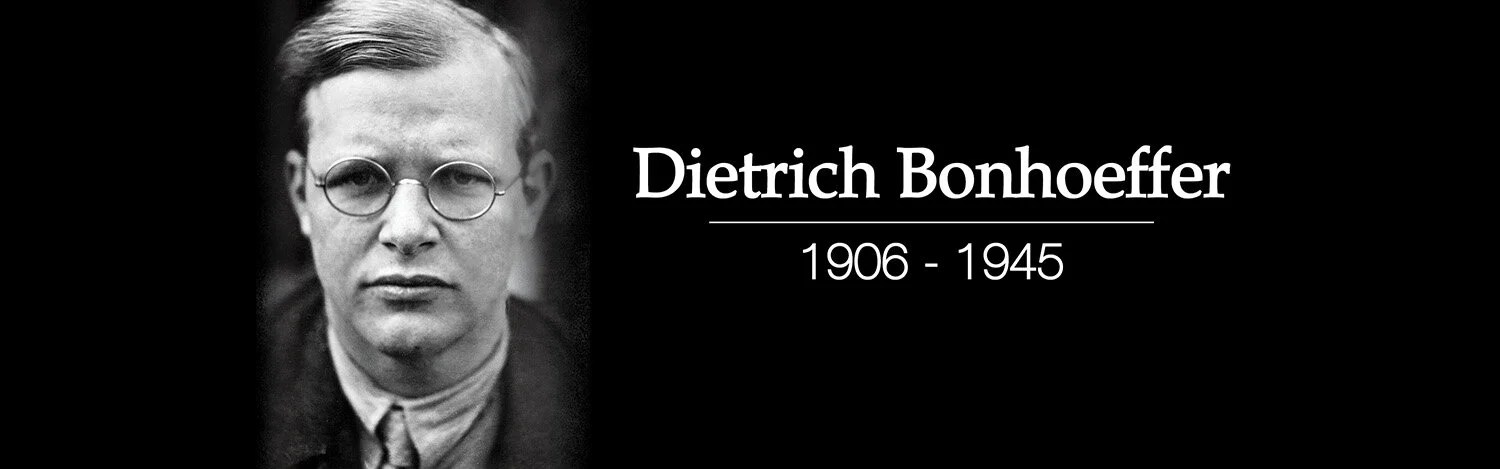
When we are being honest with ourselves, I ponder what that means, or perhaps more significantly, is that even possible? Much like the concept of altruism, as humans can we ever be completely altruistic? Morton Hunt, in his book, The Compassionate Beast, asserts that we are innately wired to help others, challenging selfish, egoistic views of human behavior. I remember using the book in my Major Religions class when I first taught at Suomi College. If we are truly wired to be more kind and compassionate than not, if Hunt is correct, what might we say to our current world situation? As I remember there was an optimism in Hunt’s book that might serve us well at this point in time. When I was working on my dissertation, which would have been chronologically after the use of Hunt, one of the specific documents I examined was Bonhoeffer’s letter to his co-conspirators written when he could not offer the absolution they desired from their co-conspirator, who was also a pastor. Steven P. Miller, the author of the book The Age of Evangelism: America’s Born-Again Years, noted in his sub-stack the following about Bonhoeffer’s letter. “Ten years had gone by, and by the end of those ten years Bonhoeffer had become someone who could contemplate participation in a killing. Bonhoeffer never retreated from his Christian principles and what they said about violence. But he did come to understand that difficult times demand extraordinary choices, and in terrible times only in the mercy and wisdom of God can there be found any way to unravel what is right and what is wrong” (7JUL2025). What Bonhoeffer offered was a confession of sorts, and the only absolution possible was from God, and perhaps history. Bonhoeffer’s reflection on their situation was honest; it was insightful; and it was poignant. He wrote, “Are we still of any use? . . . We have been silent witnesses of evil deeds; we have been drenched by many storms; we have learnt the arts of equivocation and pretence; experience has made us suspicious of others and kept us from being truthful and open; intolerable conflicts have worn us down and even made us cynical” (Bonhoeffer 1942). Written as a sort of Christmas epistle, Bonhoeffer was acutely aware of the profound difficulty their actions caused. He argued that the role of a faithful person (in their relationship to the other), [was to] learn to regard people less in the light of what they do or omit to do, and more in the light of what they suffer.” Furthermore he wrote, “I believe that God is no timeless fate, but that [God] waits for and answers sincere prayers and responsible actions” (After Ten Years). What was our duty as a Christian, be it to the other or to God? “The Christian is called to sympathy and action, not in the first place by his own sufferings, but by the sufferings of [others], for whose sake Christ suffered” (After Ten Years).
If I return to the idea of altruism, were the actions of Bonhoeffer and his group something that could be regarded as altruistic? As something referred to as “costly grace” or “responsible action,” did they act altruistically? It is possible to do something that seems horrendous at its core, or certainly in a surface examination, and yet have it be something completely antithetical? Bonhoeffer spoke regularly about the concept of cheap grace (or as noted above costly). Bonhoeffer openly challenged the what he referred to as the “sanctuary of private virtuousness,” something he believed to be a cowardly retreat from the world’s suffering (Barnett, 2018). From his helping the Jews escape to Switzerland to his refusing to remain in America, Bonhoeffer’s actions were in defense of the other as well as a sacrificial act of rejecting personal safety, also for the other. When I was working on my dissertation, my reading of Bonhoeffer as well as the works of Sisela Bok, I struggled mightily with coming to terms with the idea of lying and maintaining a level of secrecy that was necessary to conceal the murder of another human, regardless of how evil that person was. And yet what I am realizing even now, was the moral dilemma of Bonhoeffer was profound.
In the abstract of an article in the Scottish Journal of Theology, subtitled “Sanctification as the increasing awareness of moral chaos,” Brian Powers writes, “. . . Initially embracing pacifism as a fundamental pillar of Christian life, Bonhoeffer eventually became convinced that there are no pure or ‘right’ moral choices, only competing ‘wrong’ ones. He later wrote from prison that to be like Christ, and to come closer to holiness, was not to seek to avoid guilt, but to take on guilt for the sake of others” (5MAY2020). I think the significance of this citation is not even what it says as much as when it was written. The relevance of Bonhoeffer and his decisions in the face of the Nazi pogrom remain for us today. Assuredly, some will still assert, accuse, if you will, that Bonhoeffer’s decision to become an active participant in the plot is unforgivable. What we have is our own moral dilemma; does Bonhoeffer’s own confession make his actions more altruistic than we are able or willing to consider? What we are forced to ponder is that Bonhoeffer was willing to bear the guilt of taking part in a murder (the plot to kill Hitler) to save others, a concept he approached as “sinning” out of necessity and casting himself upon God’s mercy.
So as I ponder this incredible theologian and his actions some 60+ years later, what I find is his actions while certainly a moral dilemma, were never done for his own personal gain or power, in spite of his inside knowledge of Hitler (Hitler had attended Bonhoeffer’s father’s 80th birthday party and Bonhoeffer’s family by marriage was integrally involved in the Abwehr, the German Intelligence Agency). Bonhoeffer, whose twin sister was married to a Jewish person – Bonhoeffer who was banned from speaking in public or writing publicly, much of his most poignant writing would occur after he was imprisoned, after the plot was discovered. He wrote, “It is not a religious act which makes a Christian but participation in the suffering of God in the life of the world.” Or “To be a Christian does not mean to be religious in a particular way but to be a human being” (Letters and Papers from Prison). As Bonhoeffer faced his own suffering and eventual death, he wrote, “What do we mean by God? . . . Certainly not abstract belief but an encounter with Jesus, the man for others, an encounter with Jesus who had a freedom from self which he maintained to the point of death” (Letters and Papers from Prison). The Reverend Ali Newell, a chaplain at the University of Edinburgh, wrote the following during a Holy Week Homily within this decade. She says, ‘Whoever I am, Thou knowest, O God, I am thine’ are words of Bonhoeffer that echo Jesus on the cross saying ‘into thy hands I commit my spirit’. These words are an utterance of deep surrender and faith in Love – words to hold during this Holy Week and words for all those who are suffering and facing death at this time in our world (24JUN2024). Again, there can be little doubt that Bonhoeffer is as relevant to us in our world today as he was when he was led to the gallows, naked, on a Sunday morning in April 1945. As he was led to the gallows at Flossenbürg Bonhoeffer allegedly said to fellow prisoner Payne Best, ‘This is the end – for me, the beginning of life.’ He reportedly added, “With me, I believe, the last witness is silent” (The Bonhoeffer Project).
Even as he was led to the gallows before that occurred, Bonhoeffer, in the words of camp doctor, H. Fischer-Hullstrung, wrote, “Through the half-open door in one room of the huts I saw Pastor Bonhoeffer before taking off his prison garb, kneeling on the floor praying fervently to his God. I was most deeply moved by the way this loveable man prayed, so devout and so certain that God heard his prayer. At the place of execution, he again said a short prayer and then climbed the steps to the gallows, brave and composed. His death ensured after a few seconds. In the almost fifty years that I worked as a doctor, I have hardly ever seen a man die so entirely submissive to the will of God” (Metaxas, 532). Bonhoeffer did struggle with the road his life had taken, but he was wholly submissive to God’s will as he understood it. He wrote to his fiancée, Maria Wedemeyer, in their last correspondence, “My past life is brim-full of God’s goodness, and my sins are covered by the forgiving love of Christ crucified. I’m most thankful for the people I have met, and I only hope they will never have to grieve for me, but that they too, will always be certain of, and thankful for, God’s mercy and forgiveness” (Summer 1944). Perhaps altruism is possible, even in the most dire of times. Perhaps it is in the confession of our worst moments that altruism exists, and that is the incredible grace of God.
I used the following trailer for the beginning of my dissertation defense on Bonhoeffer. The title of that dissertation was Dietrich Bonhoeffer: Creating Ethos in Uncertain Circumstances. While I believe it was a good faith effort at the time, and there are portions of the diss that I am proud of, I think I could have done so much better.
Blessed Lent to each of you, and thank you as always for reading.
Michael
 thewritingprofessor55