
Hello from my room at my sister-in-law’s house,
I think we are back down to our last day on this trip, which has lasted a bit longer than I planned, but this is where retirement is advantageous. The Christmas holiday has been nice, and I have met members, part of extended family, whom I had not saw in person since 1992. They were children then and now in the 40s. Amazing how much can happen three decades. It was all part of our holiday visits and celebrations. When my sister-in-law, and her now husband married, they brought a total of 9 children into that union, but his children primarily lived with their mother in the Chicago area. As many know blending families and traditions, particularly when there is a geographic difference requires a lot of work. Then there is working to treat everyone equitably. As humans, and duly noted in a conversation this morning, we are too often conditional, even with our best intentions. Emotions, especially when it involves family, are often fragile. I know this from my own background. Currently, it is easier for me to step back and just observe. Perhaps that is because I am single; perhaps it is because I never had children, and that gives me an innate distance from some of the fray that seems to be part of every holiday.
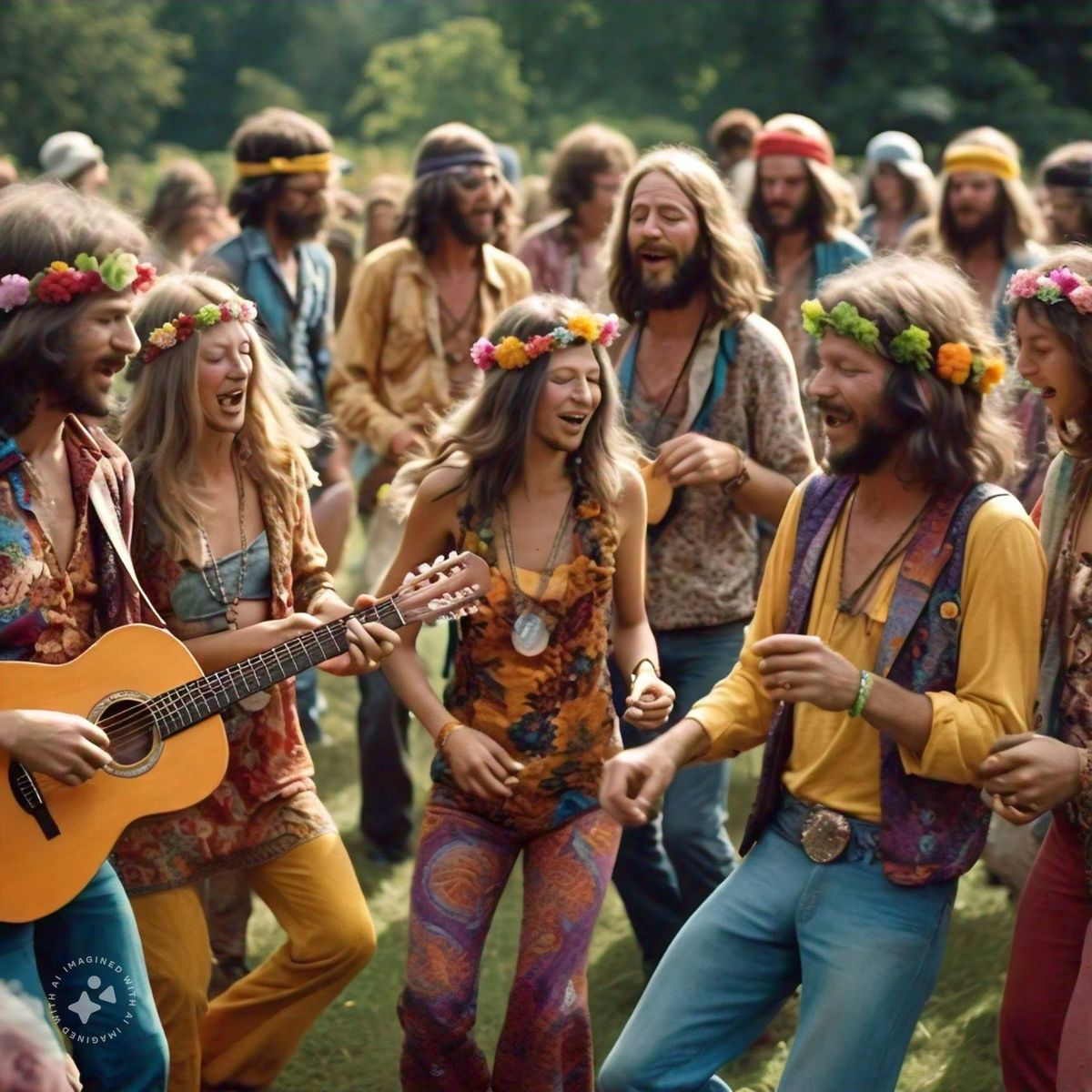
As I age, I find myself reflecting more readily on how things evolve and reset. What is required beyond experience that establishes a seismic shift in cultural norms, practices, or expectations? As someone who was born smack in the middle of the Boomer generation, as well as someone who resided in the relatively protected Midwest (the infamous fly-over states), and additionally, the son of a Depression-graduating father, a blue collar electrician, I had little inclination to protest, burn a draft card, or be posted on the front page of a newspaper. On the other hand, my brother 5 years older, who graduated in 1969, faced the lottery, was much more likely to reject the policies of either the Johnson or Nixon administrations, and would have probably been quite content to slide off to Woodstock or Haight Ashbury. His involvement in a rock-n-roll band (more in the Chicago or BST vein) and traveling on the road after leaving college was much more akin to what people today would call hippies. His college girlfriend, who would become his wife, epitomized the pictures you see of coeds of the time. She had long dark tresses, was tall, slender, elegant, and beyond incredibly intelligent and personable. She could model the bell bottom jeans and alluring top (never risqué, but gorgeous) better than anyone I ever met. She was from another world (New Jersey) and to her 16 year old younger to become brother-in-law, she was an angel. She knew how to handle most any situation and I trusted her. She went through some incredibly difficult events in her life, including becoming a widow with three pre-school aged children at 25, and yet, has accomplished some incredible things. I still give her credit for helping me get my act together at a particularly difficult time in my life.
One of the things that is considered conventional wisdom, but is perhaps more a folk-tale is whether or not the liberals of the 1960s are more connected to the conservative movements of the 21st century, or even the more MAGA extreme of present day Republicans? While there is some connection, the transformation is more nuanced and complex, which, of course, is how most things are, but also something few are willing to figure out. Studies (Pew Institute, Brookings Institute or Center for American Progress) show there is a difference between what was called the “true believers vs. hangers-on.” There were those who were deeply committed to the liberal causes, from anti-war to civil rights, from the environment to the ERA, and there were those who adopted the countercultural aesthetic, but were not quite so left. The point being they are certainly not as much of a seeming 180 as some might believe. If one can point to a strong connection between the two, it is a seeming distrust of the government (the establishment or the man). What constitutes the man has evolved, surely, from a military industrial complex to the issue of a woke bureaucracy (I have to give AI some credit for helping me write this – as I asked some questions, but I wrote what it told me in my own way). Likewise, the regional shift of what was the Southern Democrats, who were conservative and segregationists. would under President Johnson make a significant shift toward Civil Rights, and the Goldwater conservatives of the 1960s gave a foundation to what would become the silent majority, those who did not burn draft cards, protest or demonstrate. Ultimately, what might be most significant in this strong cultural realignment is that again, studies, show that liberals are much more likely to become more conservative as they age versus conservatives become more liberal. And yet, even this is more complex that simply a directional shift.
What amazes me and troubles me in the current culture’s willingness to merely accept what they hear or read, the propensity for listening to only one voice and believing there is some kind of moral insight to what should or should not happen. All news has a bias to it. I believe that has always been the case, but when 24/7 news came on the scene, there was a profound change in the landscape. The idea that news was objective, which is what I grew up with, moved toward a model of speed over verification, of infotainment and analysis or commentary versus “just the facts”. The change is understandable because the network had to fill up the time, and time was money. The 24/7 model became dependent on audience like never before, which meant a change in what occurred. Targeted reporting (ideological) and therefore a simplicity or narrowing changed what people heard and what they expected. CNN, which debuted in 1980, and the proliferation of news sites since means the entire world has experienced a sort of fatigue, and less than a half century later, currently Gen Z’s news consumption is defined by “social first.” Short-term, personality-driven content is what most 18-30 year olds use, and the consequence is significant. The fragmentation of what is accepted or listened to creates a situation where the bias, fatigue or simply avoidance has become commonplace. And consequently, it has transformed public discourse, which is at the foundation of any democratic society. There is the possibility of expanded participation, but simultaneously the ability for the public to become vulnerable to misinformation is exponentially increased. The rise of influencers is something we hear of on a daily basis.
As I finished high school in the early 1970s, I had the black felt, and psychedelic black-light colored posters in my bedroom lamenting Richard Nixon, and I was listening to the likes of Jethro Tull, Black Sabbath, and Deep Purple, which was much different than the Anne Murray and Glen Campbell music of my sister, and yet, I would enlist in the United States Marine Corps. My brother, the same one earlier mentioned, (and this is something my father and I spoke of often later) if he had drawn a number that would have resulted in his being drafted would have moved to that other country that is a bit north. It would be interesting to see where he might have turned politically later in life. Most of my immediate as well as somewhat extended family are much more supportive of the current administration than I am, and that is said even as some of them still claim to be registered Democrats. It makes for some spirited conversations or at other times, as I am significantly outnumbered, I merely stay quiet. Even then I am not sure what is best in terms of how to manage it. As someone with an advanced degree in Rhetoric, I wonder what is the best avenue, but I too experience the fatigue that I believe many in the country are feeling. It does not go unnoticed that today is January 6th, which I believe is a second day in infamy for our country. I am always amazed by who we are as people, and the complexity of our country. I am reminded of the words of Anton’s father, Hans Christian (Anton is my former Danish exchange student). In spite of our current tribulations as a country (and of course, President Trump’s current words about Greenland are probably worth considering, and I have not spoken with them in the last week or so), he believed America was still the most incredible democracy in the world. He noted that we still have the ability to vote; we still have freedom of the press; and we still have scheduled elections and two parties. It was actually good to hear his perspective. It gave me some hope in the midst of my own angst.
So where does it all leave me? I am unsure at the moment. Certainly there has been some transformational change in the America I knew as I was graduating from high school and where we are now. Most assuredly, our relationship with our elected leaders (regardless of party) has changed and what we believe about them is fundamentally different than what I experienced as I entered adulthood. Furthermore, it seems there is a greater degree of fear and uncertainty in both the country and the world than what I remember, though I was young and maybe I simply was too naïve. It does seem that the idea of peace and love that supposedly characterized the late 1960s (and I am aware of the simplicity of that statement) at least for the late teens through their 20s is quite different than what the people of the same age would say characterizes now. Did those boomers transform or change? I am not sure I have an answer even now after researching some and reading throughout the day. What I do know is perhaps I need to merely hold on to what my wise Danish friend notes. With it, I can still feel hopeful.
Thanks as always for reading.
Michael
 thewritingprofessor55